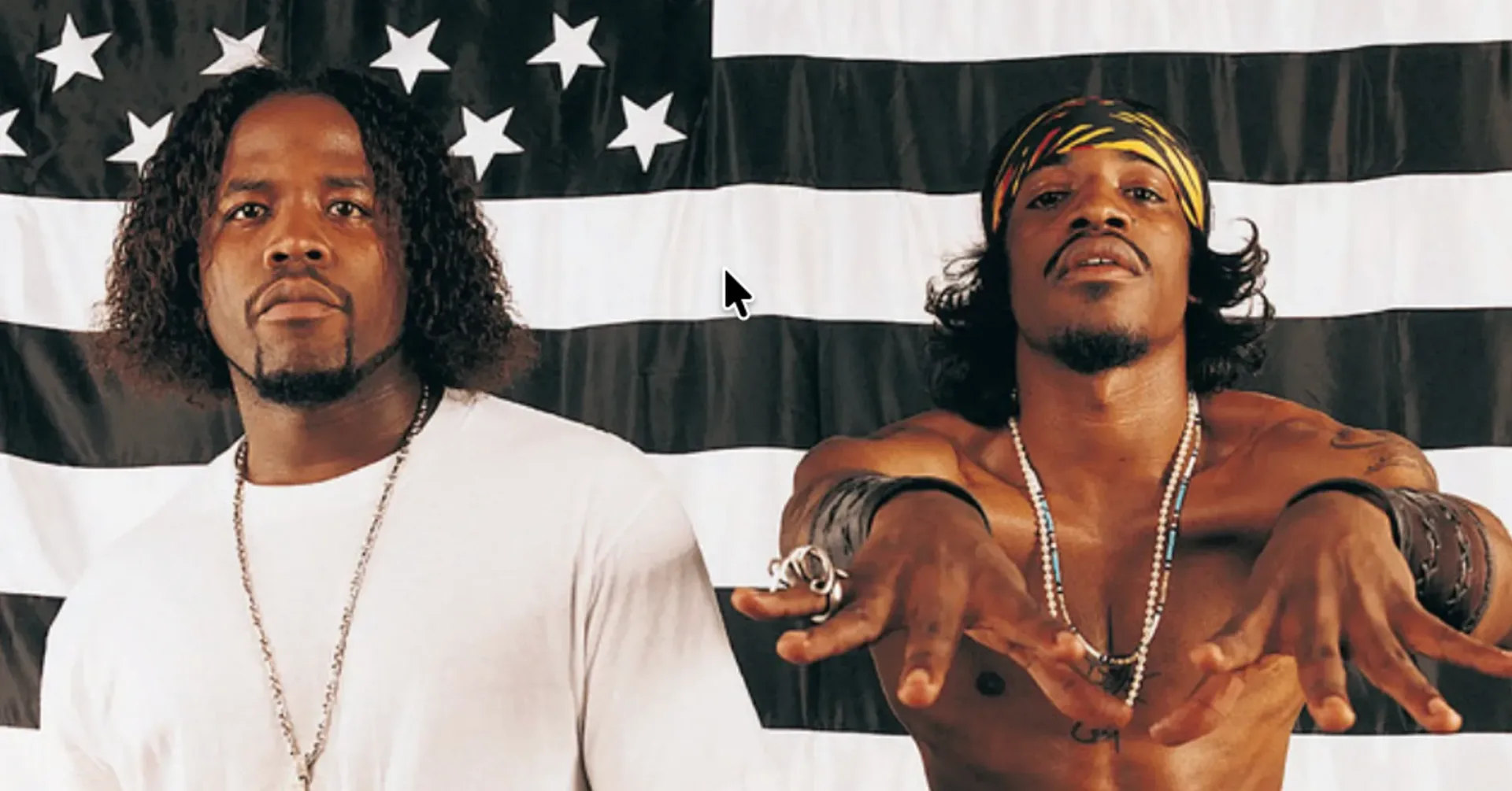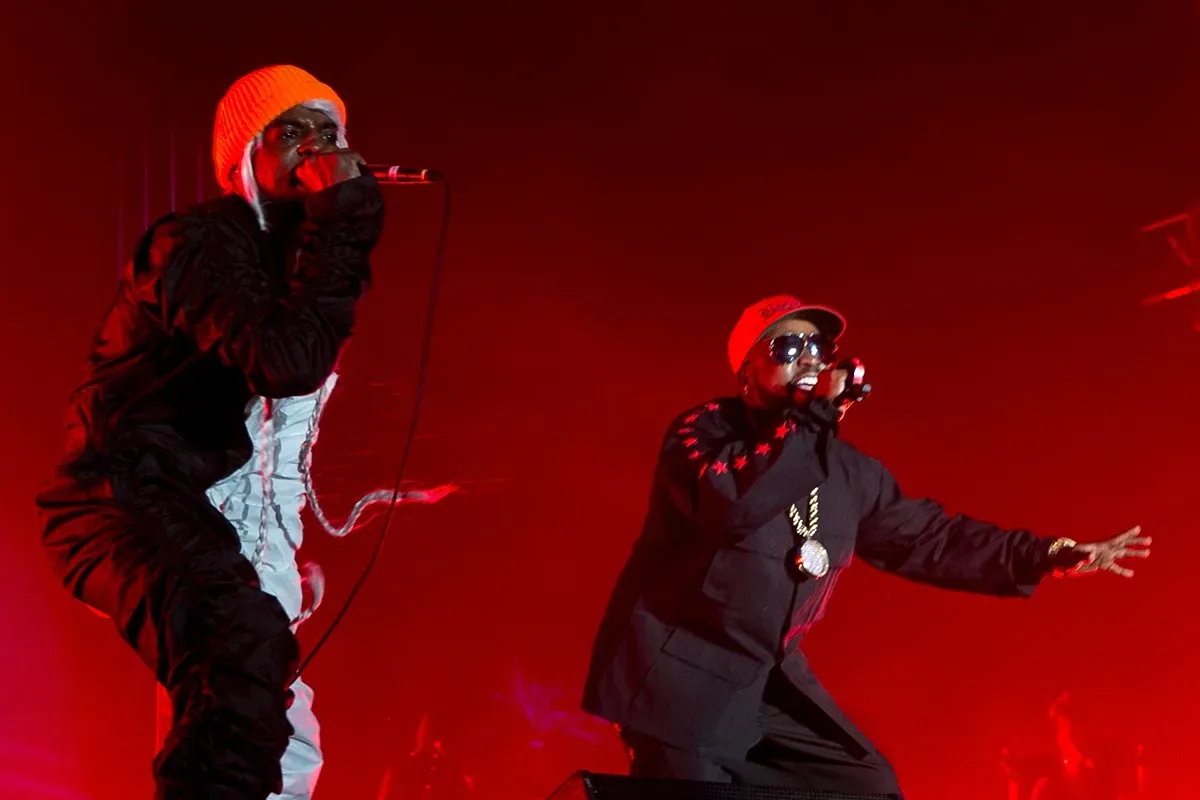

Some music-industry breaks arrive with an obvious spotlight attached. Others arrive dressed as a Christmas-compilation slot, which is not necessarily the assignment two young Atlanta rappers would pick while trying to establish their city’s sound.
Big Boi has revisited how OutKast encountered that exact detour before “Player’s Ball” became the single that helped introduce the duo beyond the holiday season. His account places two earlier rejections before the opportunity, and frames the eventual release not as a straightforward seasonal song, but as a case of two artists adapting a narrow brief to fit their own world.
The story surfaced on Bloodlines & Basslines, the podcast Big Boi launched with his sons Bamboo and Cross. The discussion is especially fitting for a show built around family and the different directions people take after setbacks: an early “no” did not end OutKast’s path, and neither did a seemingly ill-suited chance to record for a Christmas project.
An opening that did not feel like an opening
Big Boi recalled the group finally being offered a shot at a single, only to discover that it was tied to a holiday compilation. His immediate reaction was blunt: “It was like they’re trying to end our career before it even started!”
That response makes sense within the limited choice the pair faced. A seasonal release can be highly specific in mood and marketing. It may have a limited promotional window, and a conventional Christmas track could easily obscure an emerging act’s identity. For a duo intent on making Atlanta heard, simply following familiar holiday-song rules would not have communicated much about OutKast.
Big Boi and André 3000 instead chose to work from a setting they knew. The first title was “Socks and Drawers,” and Big Boi explained that the writing focused on spending the day at the Dungeon, where making music was the priority. Rather than inventing a Christmas scenario that felt foreign to them, the duo rooted the song in its creative surroundings.
That is the key distinction in the story. The holiday compilation supplied the assignment, but OutKast found its voice by declining to treat the assignment as a reason to imitate someone else. The seasonal starting point remained part of the record’s history; it did not have to define the record’s entire identity.
The beat choice behind the breakthrough
The song’s origin also involved a consequential production decision. Sleepy Brown recalled that Organized Noize producer Ray Murray had been developing the beat for Left Eye’s group before Rico Wade heard it. Big Boi later remembered being offered a choice between the instrumental that became OutKast’s single and the beat later used by TLC for “Sleigh Ride.” OutKast selected the former.
Related coverage includes Big Boi Reflects on How a Christmas Compilation Led OutKast to “Player’s Ball”.
That detail illustrates the collaborative, fluid nature of studio work. A beat is the instrumental framework of a song: its rhythm, harmony, texture and overall musical feel. Before lyrics and a hook turn it into a finished track, it may be considered for multiple performers. The ultimately chosen beat gave OutKast the foundation for “Player’s Ball,” while the other found a separate destination with TLC.
Sleepy Brown said Rico Wade began sketching the scene in the studio, giving Brown the idea for the hook. In pop and rap songwriting, the hook is the particularly memorable musical or lyrical passage designed to pull listeners back in. Brown also pointed to Curtis Mayfield’s falsetto as a guide to the sound. Falsetto refers to a vocal register above a singer’s usual range, and the reference helps explain the lighter, higher vocal character associated with the hook.
The result was not merely a rapper-and-producer transaction. The recollections connect Murray’s beat work, Wade’s studio sketch, Brown’s hook and OutKast’s writing choices. Each element contributed to a recording that could begin with a Christmas-compilation premise but reach farther than one calendar moment.
Why the released version could outlast December
Big Boi said LaFace later removed the sleigh bells and changed the holiday reference in the hook so the track could continue receiving radio play after Christmas. Those changes are a practical example of how arrangement and wording can alter a song’s commercial lifespan without necessarily changing its central character.
Sleigh bells are a familiar seasonal production cue. They can immediately place a listener in a winter or Christmas context even before a lyric does the same. Removing them made the arrangement less tied to one period of the year. Changing the holiday reference served a similar purpose in the vocal material. The objective, as Big Boi described it, was simple: keep the single viable on radio after the holiday had passed.
There is an important nuance here. This was not presented as an effort to erase the track’s origin completely. RCA dates the release to November 19, 1993, and still lists the Christmas mix. Instead, it shows how a record can exist in more than one version, with a seasonal mix preserving the original framing and a revised single positioned for a broader run.
For listeners revisiting the song’s history, that distinction matters. A “mix” is a version of a recording in which elements such as vocals, percussion or effects are balanced and assembled in a particular way. Different mixes can emphasize different aspects of the same composition. In this case, the reported changes were directly connected to whether “Player’s Ball” sounded like a holiday-only record or a song capable of continuing beyond the season.
The payoff: a debut-era song with a longer life
“Player’s Ball” topped the rap chart and helped carry Southernplayalisticadillacmuzik, OutKast’s 1994 debut, well beyond its original holiday setting. That outcome gives the earlier concern a useful contrast: what looked like an awkward first-single slot became an important part of the group’s opening chapter.
It also clarifies why the two earlier rejections remain central to Big Boi’s telling. The narrative is not that setbacks automatically produce success; the available details do not support such a tidy rule. It is that OutKast received an opportunity after being passed over, then made a series of creative choices that prevented the opportunity from being defined entirely by its limitations.
Those choices included writing from the Dungeon rather than reaching for an unfamiliar Christmas story, selecting a specific beat, building a hook around a studio idea, and revising overtly seasonal elements for radio longevity. None of that makes the initial assignment less unusual. It does show how the duo and their collaborators found room to make it their own.
The broader lesson is particularly relevant to early-career artists, even without treating it as a guarantee. A first opening can arrive with conditions, genre expectations or timing that seem poorly matched to an artist’s ambitions. The productive question is not always whether the condition is ideal. It can be whether the artist has a clear enough point of view to reshape the work inside that condition.
OutKast’s case is unusually resonant because the group’s later stature is already established: the duo entered the Rock & Roll Hall of Fame in 2025. But the account of “Player’s Ball” is valuable precisely because it returns to a moment before the accolades, when the next move looked uncertain and the proposed route sounded restrictive.
A family conversation about hearing “no”
Big Boi’s decision to discuss the story with Bamboo and Cross gives it a generational dimension. He had initially turned down the idea of making a podcast, then reconsidered when it could become a conversation with his children. The format makes room for an account of creative persistence without reducing it to a speech about perseverance.
There is a related entertainment-industry reminder in Mahershala Ali’s discussion of how major awards did not guarantee the roles he wanted: recognition and access do not necessarily move in a straight line. Big Boi’s recollection comes from a much earlier stage of a career, but it similarly challenges the assumption that talent makes the path frictionless.
For OutKast, the pivotal answer to being passed over was not to wait for a perfectly tailored introduction. It was to use the eventual opening to make something distinct. “Player’s Ball” began with a Christmas context, took shape through a network of Atlanta collaborators, was adjusted to remain on radio after the season, and went on to help establish the duo’s debut era.
That sequence is why the song’s origin story remains more interesting than a trivia note about sleigh bells. It is a compact account of artistic identity under constraint: take the available brief, find the part that is true to your experience, and make the result broad enough to travel.