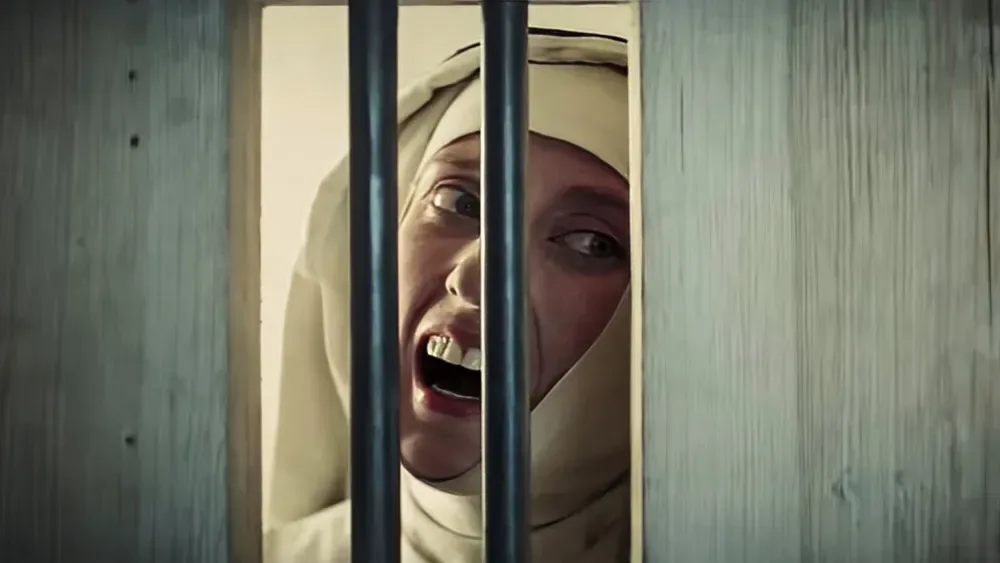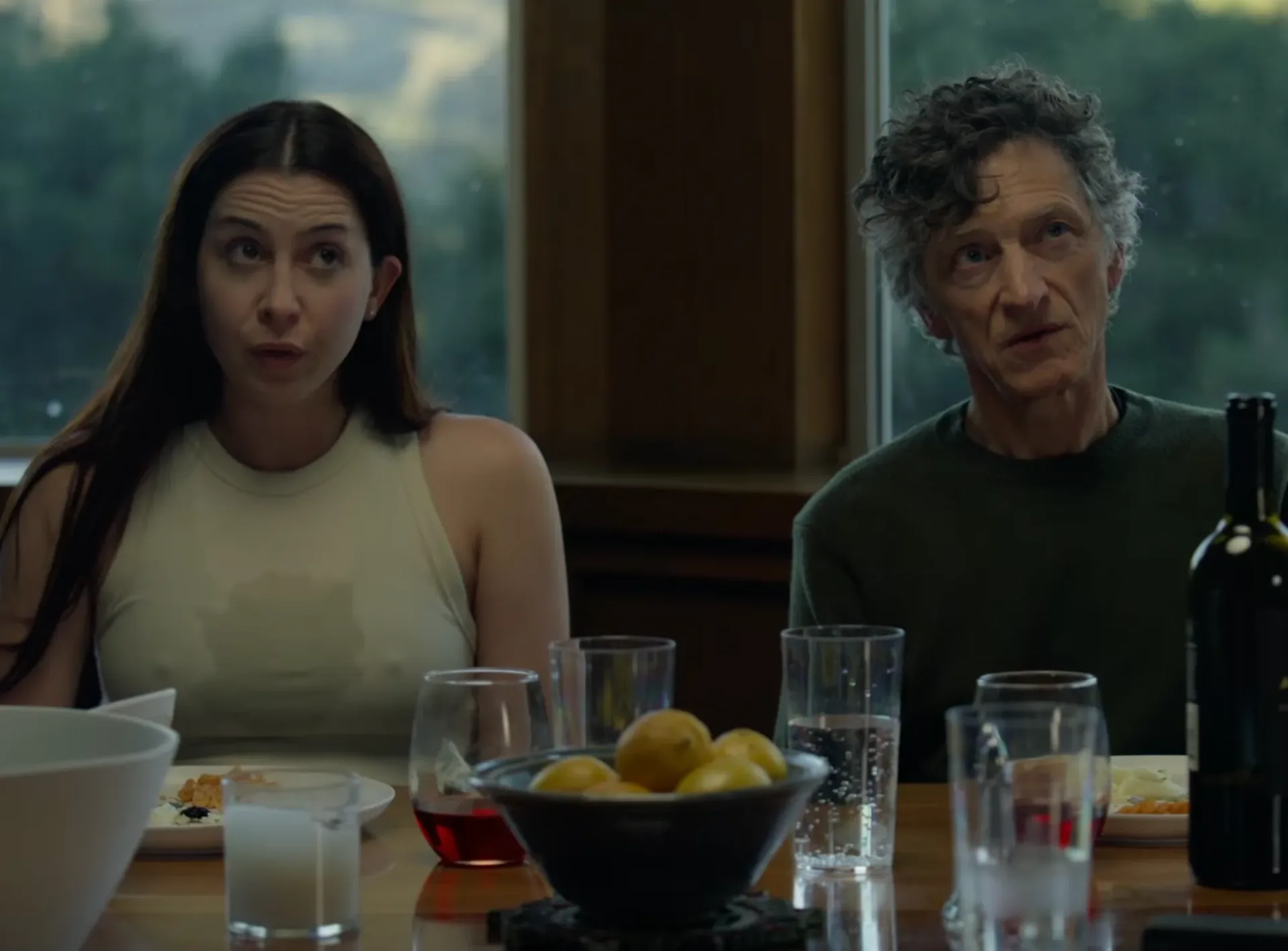
Beyond Fest is nearing the end of its Los Angeles run, which continues through October 5, with an audience expected to reach roughly 37,000 people. The number matters less as a scoreboard than as a useful illustration of what the event has become: a major gathering for viewers who do not treat theatrical moviegoing as a passive errand. They plan around it, travel across a sprawling city for it, and, in the most competitive cases, wage a small administrative campaign simply to obtain a seat.
That demand has made tickets a defining part of the festival’s identity. This year brings a newly revised ticketing system through the American Cinematheque, intended to make the high-pressure process more efficient. It does not eliminate the underlying problem, however: some screenings have substantially more interested viewers than available seats. For prospective attendees, the useful expectation is not that an improved system makes every event accessible, but that it should make the competition for limited capacity more orderly.
Beyond Fest’s continued appeal is also not reducible to October horror programming, even though its calendar position and titles such as the original Friday the 13th and the Carrie television series make that association understandable. Its program works by moving between new work, cult favorites, repertory titles, shorts, restorations and films that otherwise might have little local visibility. That broad approach is embedded in the festival’s name: “beyond” is not just a genre slogan, but a programming philosophy.
A festival built around the room, not just the movie
Christian Parkes, a co-founder of Beyond Fest, has described the event’s tastes as deliberately wide-ranging from its earliest years. The point is not to reject genre cinema; it is to avoid treating genre as a fence. A program can accommodate Dog Day Afternoon, a Shyamalan retrospective, an inexpensive first feature from Glasgow and a Jackie Chan crowd-pleaser because the intended throughline is curiosity rather than a narrow label.
That idea is especially clear in the festival’s emphasis on live introductions, filmmaker appearances and location-specific screenings. A movie may be available elsewhere, but a screening can become distinct when an artist, admirer or community puts it into context in real time. The “event” is therefore partly the film and partly the conditions around it: a particular print, a packed auditorium, a guest speaker, a neighborhood connection or a chance to encounter a title with people who arrived ready to react.
Parkes has pointed to a growing appetite for repertory cinema among younger Los Angeles audiences since the pandemic, with Letterboxd helping fuel interest. Repertory cinema, often shortened to “rep,” refers to the programming of older, historically notable, cult or otherwise non-current films, rather than a venue’s standard first-run release schedule. The attraction can be a restoration, a rare format, a themed series or an in-person guest. It is a form of programming that asks viewers to see films as an ongoing conversation instead of disposable content.
That communal appeal is not unique to film, of course. Fandom becomes more durable when a shared interest has a place to happen in public rather than remaining an isolated feed or watchlist. The same broad dynamic is behind events trying to turn enthusiasm into face-to-face participation, including New York’s IRL Advantage Summit. Beyond Fest’s version is built around auditoriums and programming choices rather than a convention floor, but the principle is familiar: people return for a community as much as for an individual item on the schedule.
Why the logistical foundation matters
The festival has an advantage that many events spend years trying to establish: a close relationship with the American Cinematheque. Grant Moninger, the Cinematheque’s artistic director, is also a Beyond Fest co-founder. That connection means the festival is not starting from zero each year in its search for venues.
Screenings span the Cinematheque’s theaters: the Aero in Santa Monica, the Egyptian in Hollywood, the Los Feliz 3 and Directors Village in Westwood Village. For an audience willing to drive from one side of Los Angeles to another for a sought-after title, the multi-venue design becomes part of the experience. It also means that attending requires practical planning beyond buying a ticket: confirm the specific theater, do not assume every event is in the same neighborhood, and account for the fact that an in-demand screening may necessitate a significant cross-city trip.
The venues also give the programming different kinds of meaning. Donnie Darko, for example, is scheduled at the Aero, where it was shot. That does not change the film itself, but it can change the audience’s relationship to the setting. Place-specific presentations turn local geography into an added layer of context.
The revised ticketing setup arrives amid unusually visible scarcity. Parkes specifically identified demand for Your Mother, Your Mother, Your Mother and Primetime as exceeding the available space for their Los Angeles screenings. That is the fundamental issue a ticketing platform cannot solve: a venue has a fixed number of seats, while attention can grow much larger. A better system can reduce friction; it cannot conjure additional capacity.
There is a tension in that scarcity. Missing out is plainly disappointing, but a crowded room of viewers who have actively chosen to be there can be central to the kind of festival Beyond Fest wants to be. The goal is not merely a transaction in which every viewer acquires every desired ticket. It is to preserve a live, responsive environment around the films. Whether that tradeoff feels worthwhile will depend on the individual attendee, but it explains why ticket access has become such a recurring conversation around the event.
Seven screenings that show the program’s range
With the final stretch underway, these seven selections stand out not because they fit one genre or era, but because together they demonstrate the festival’s larger model: use a screening to connect a film with a person, a format, a place or an emerging filmmaker.
Rumble in the Bronx
Bob Odenkirk is set to introduce Rumble in the Bronx, with the appearance rooted in his enthusiasm for Jackie Chan. That is a smart example of an introduction doing more than delaying the opening credits. A recognizable guest can provide an entry point for viewers unfamiliar with the movie while giving established fans a different frame through which to revisit it. The screening pairs a martial-arts favorite with an advocate whose interest is part of the presentation.
Donnie Darko
The Aero presentation of Donnie Darko has the extra resonance of taking place at the theater where the film was shot. Location-aware moviegoing is one of the simplest, most tangible ways a repertory event can offer something distinct from an ordinary viewing. For local attendees, the building itself becomes part of the night’s context.
Miami Vice
The festival is screening a new cut of Miami Vice, a film that has recently experienced a renewed wave of attention. A “cut” means a particular edited version of a film. It is worth separating that idea from restoration: a new or alternate cut concerns editorial assembly, while a restoration concerns the process of preserving or improving a film’s presentation from available materials. The supplied program details identify this as a new cut, making it an opportunity for audiences interested in how a familiar title can return in a different form.
Welcome to G-Town
Welcome to G-Town represents the discovery side of the lineup. It was made by two brothers from Glasgow for less than $10,000 after they left school, and it has been characterized as carrying early Peter Jackson energy alongside distinctly Scottish humor. The budget figure is notable not as a guarantee of quality or a marketing gimmick, but because it signals the scale of the production. Festival programs can make room for films that arrive without the visibility of major new releases, giving a live audience a chance to meet their makers and encounter a project outside conventional release pathways.
Ten Will
Max DeFalco’s Ten Will offers another low-budget, locally rooted entry. The film was shot in Los Angeles on a $75,000 budget. Placing that alongside bigger repertory attractions reinforces one of the festival’s more practical functions: it provides a public setting for filmmakers at different stages of their careers. Ersoy has said studios and agencies attend the shorts blocks at the Los Feliz Theater to find filmmakers for potential next steps, so the festival’s emerging-talent ecosystem is not confined to features alone.
Wicker
Wicker arrives with BookTok interest already in the conversation. The relevant point is not to presume that online enthusiasm automatically translates into a theatrical crowd, but to recognize that reading communities can create a motivated audience for an adaptation or adjacent film event. Beyond Fest’s programming is responsive to those communities rather than acting as if film culture exists apart from them.
Ken Russell’s The Devils
The most technically distinctive presentation is the West Coast premiere of the 4K restoration director’s cut of Ken Russell’s The Devils. It is scheduled to screen simultaneously at the Egyptian and the Aero, with both presentations on 35mm.
The terminology is important here. 35mm refers to the width of a motion-picture film format and is associated with physical film projection. A 4K restoration is a high-resolution restoration of a film, with “4K” referring to its image-resolution category. A director’s cut is a version identified with the director’s intended edit. Those terms describe different aspects of a presentation, which is why they can appear together in one event description. The two-theater setup gives the screening unusual scale while still keeping the focus on a format-specific theatrical experience.
What Beyond Fest says about moviegoing now
The festival’s 14-year growth has not happened because it found a single perfect category. Its strength appears to be the opposite: it has built trust with viewers who expect surprise, history, discovery and a sense of occasion in the same program. New titles including Primetime and Musk sit alongside retrospectives that range from Hoffa to Pan’s Labyrinth. Some lesser-known films are being shown free at Los Feliz 3 through Mubi sponsorship. M. Night Shyamalan’s Los Angeles retrospective sold out immediately.
That mixture is an argument against the idea that audience interest is only driven by familiarity or giant intellectual property. Familiarity remains useful: people may attend for Jackie Chan, Shyamalan, Donnie Darko or Miami Vice. But the surrounding program can guide them toward something they did not already have on a list. A festival earns repeat attendance when its curators demonstrate that a recognizable title and an unknown one can belong in the same conversation.
For anyone trying to catch the closing days, the practical lesson is straightforward. Treat the ticket system as competitive, verify the venue for every event, stay alert to the distinction between a film’s title and the specific version being screened, and consider titles beyond the most obvious sellouts. Beyond Fest has made scarcity part of the story, but its real draw is the possibility that the seat you do get leads to a movie, a format or a shared reaction you would not find by staying home.