Below arrives with the elemental ingredients of a creature thriller: an isolated coastal settlement, foul-smelling water, increasingly alarming behavior from townspeople and something immense moving beneath the surface. But this six-episode Netflix limited series has more on its mind than simply timing the next scare. Created by Jesse McKeown, it uses the terror in the water to examine a family tethered to an old catastrophe and a Newfoundland community facing the slow loss of the life it once knew.
That combination gives the series its pull. The monster is important, and the show does not conceal that it is building toward frightening encounters. Still, the most unsettling idea in Below is that disaster does not arrive in a vacuum. It reaches Snook’s Arm, a place already depleted by the disappearance of its fishing livelihood, and finds people who are scared, grieving, financially vulnerable and divided over what survival should look like. The result is a horror story in which the supernatural threat sharpens very human instincts: denial, desperation, possessiveness and greed.
The climate stakes surrounding Below are integral rather than decorative. The series connects a massive iceberg, changes in the water and the fragility of the town’s economy without treating its setting as a disposable backdrop for monster mayhem.
A past tragedy gives the threat emotional weight
The story begins in 1986, when nine-year-old Calvin Penney, played by Azriel Dalman, travels with his family from Little Pot Rock to the somewhat larger island of Snook’s Arm. Their boat pulls their home behind it. What begins as a precarious but ordinary relocation turns catastrophic after a mysterious event forces Calvin to sever the tow, leaving his father to drown.
For more context, explore Star Wars: Galactic Racer Is Targeting Six-Player Parties in a Post-Launch Update.
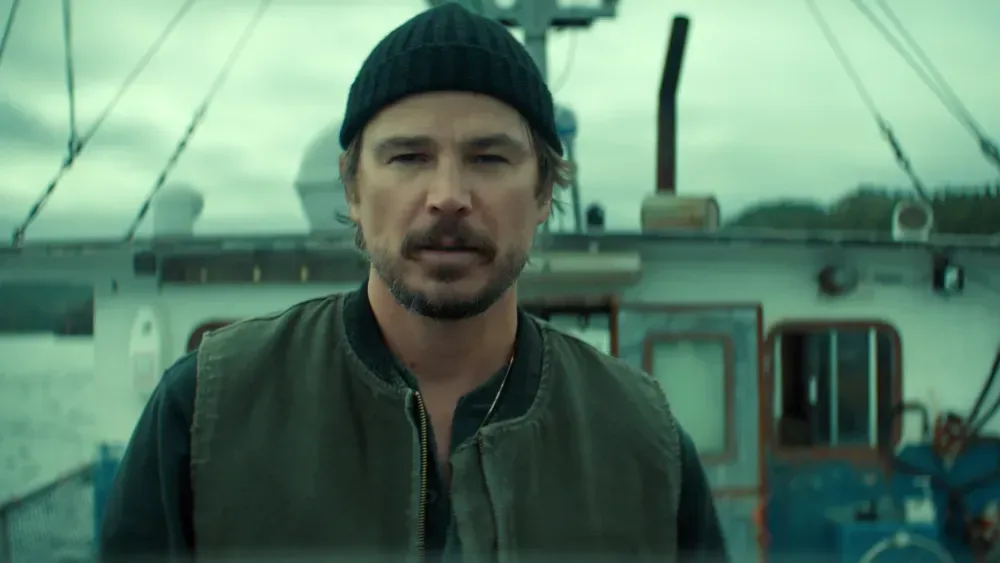
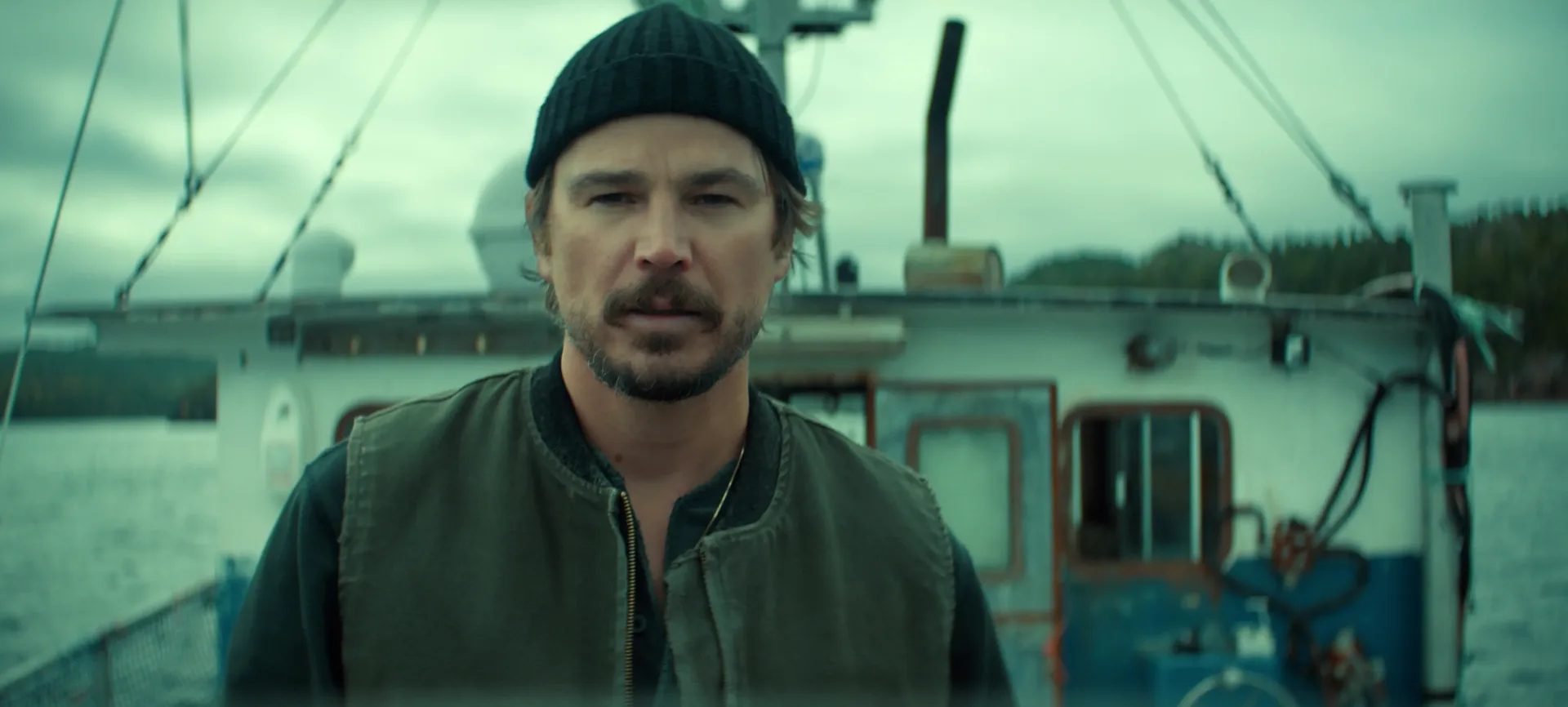
Four decades later, Josh Hartnett plays Calvin as a widower who remains defined by that terrible choice and its consequences. He is described through the daily labor of holding a household together rather than through the conventions of a brooding genre hero. Fishing has dried up, so Calvin and his son Wade collect ice for a local vodka brewery and rent out rooms through Airbnb. That work matters because it establishes an economy built from improvisation. The town is not merely remote; it is trying to make do after the basis of its former life has eroded.
Calvin hopes that Come Home Year will offer a rare moment of repair. His children Mary, played by Ruby Stokes, and Jay, played by Rohan Campbell, return for a week, joining Wade, played by Charlie Heaton. But the homecoming does not provide the uncomplicated reunion Calvin wants. His loss has not stayed neatly in the past, and neither have the pressures facing the place where his family lives.
This is where Below finds a useful dramatic engine. Calvin’s desire to preserve his home, community and family is sympathetic. Yet a determination to save what is vanishing can turn into a refusal to recognize that the old conditions are gone. The series frames adaptation as its central challenge. Change is frightening, but insisting that nothing must change can become its own danger.
Rotten ice and a town on edge
The new crisis begins with something tangible and wrong: the brewery rejects Calvin’s most recent ice haul because of its stench. He brings the problem to Dr. Fonda Howander, the operator of the local science center, played by Mackenzie Davis. Fonda’s role gives the show a grounded investigative perspective, though the mystery rapidly expands past one spoiled delivery.
Wade is then involved in a horrific accident, while residents of the area begin to behave strangely. Wade also lives with ADHD and uses alcohol and mushrooms to self-medicate, a detail that adds to the uncertainty around events without reducing the broader problem to one person’s condition or choices. Calvin and Fonda come to understand that something is wrong in the water, just as the community begins to come undone.
In creature fiction, water often works as an ideal source of dread because it hides scale, movement and motive. Below makes especially effective use of that uncertainty. The ocean is a working environment, a source of local memory and a barrier around the community before it becomes a site of terror. When the water changes, it threatens income, relationships and the basic confidence that people understand the land and sea around them.
The arrival of a massive iceberg further unsettles the town. It also draws the present-day danger closer to Calvin’s childhood trauma, suggesting that the fatal journey from Little Pot Rock may not be as disconnected from current events as it first appears. That structure makes the historical opening more than a prologue: the past becomes an active pressure on every attempt Calvin makes to respond.
The creature is only one kind of monster
The show’s best decision is its refusal to make the sea creature the sole explanation for its darkness. The monster provides the horror premise, but the series is just as interested in the choices people make once they believe scarcity has arrived—or once they see a way to profit from it. In that sense, Below is a suspense drama about competing definitions of survival.
Episode four, “The Ocean Will Have Us All,” appears to be a key turning point. Its focus on the creature is matched by a harsher examination of who people are prepared to endanger or abandon in pursuit of their own advantage. The episode’s final stretch reportedly contains especially brutal acts, while the penultimate episode, “Little Pot Rock,” supplies context that reshapes what those choices mean.
That approach gives the limited series a moral dimension without requiring it to stop and lecture. Climate crisis, as used here, is not simply a topical label placed on top of a monster narrative. It describes a setting in which environmental shifts and economic precarity leave people exposed. The show’s concern is not only whether an unknown creature can be defeated, but whether a damaged community can respond to change without sacrificing its remaining humanity.
A compact story with a strong ensemble center
At six episodes of 45 minutes or less, Below has the advantage of being built for momentum. The format avoids asking viewers to spend a season waiting for the premise to become clear. The strange ice, Wade’s accident, the altered behavior in town and the iceberg all tighten the atmosphere around the Penneys and their neighbors.
Hartnett is positioned at the center of that tightening spiral as Calvin, a hardworking and outwardly friendly man whose unresolved grief makes every new revelation personal. His performance carries an intentionally conspicuous Newfoundland accent that can land more broadly than the surrounding drama. It is an occasional distraction in a series otherwise committed to a sober, ominous mood. Yet the character’s emotional function remains clear: Calvin is not merely confronting an external threat. He is confronting the possibility that his effort to keep the past alive has limited his ability to protect anyone in the present.
Davis’s Fonda is an essential counterweight, representing inquiry in a community where the unknown is rapidly becoming impossible to ignore. Heaton’s Wade brings another unstable point of view into the family. Stokes and Campbell, as Mary and Jay, return to a place that Calvin treats as home and refuge but that may look, from their distance, like a place with little left to offer. Willow Kean plays Ruth, Calvin’s sister and the harbor master, another figure with practical reason to understand just how few resources remain.
The ensemble setup matters because the show does not treat Snook’s Arm as an anonymous victim of its monster plot. It is a close-knit community with shared history, buried resentments and competing attachments to the island. The danger is therefore intimate. Every decision can affect a neighbor, relative or someone connected to the town’s dwindling means of survival.
Why the setting matters to the horror
“Climate horror” can be a loose term, but it is useful here when understood precisely. It does not mean that a story needs to turn weather or environmental science into a conventional villain. Instead, it describes horror that takes seriously the fear produced by an altered, unstable environment and the social pressures that follow. Below uses that foundation to show that the loss of a place is not only physical. It can mean losing work, routine, identity and a shared image of the future.
Snook’s Arm embodies that instability. The town’s fishing economy is gone. Calvin’s ice work has become suspect. A visit intended as a celebration of return instead exposes the difficulty of asking younger family members to invest in a future there. The story’s sea creature makes these anxieties visceral, but the problem was already present before anything surfaced.
That is what distinguishes Below within familiar monster-thriller territory. Its scares are connected to grief, economic decline and environmental dread, not merely to the shock of seeing something unexplained. The show understands that people are often most vulnerable not when they know nothing, but when they know enough to realize the old answers will not work.
For viewers seeking a brisk horror series with a strong character spine, Below offers a tense and unusually focused ride. It makes room for spectacle, suspense and the mystery of the deep while keeping its attention on a family and town struggling to accept an unbearable truth: the ocean may be frightening, but the hardest thing can be letting go of the shore.