Marvel’s newly revealed Avengers: Doomsday poster set is built as a single 11-part montage, and its message is not especially subtle: the Avengers, X-Men and Fantastic Four are all headed toward the same enormous fight. Doctor Doom, played by Robert Downey Jr., stands opposite that alliance with Sentinels and Doombots at his disposal.
There is still plenty of room for mystery inside that big-picture premise. The posters supply a closer look at Alan Cumming’s costumed Nightcrawler and the first shown imagery of Doom’s robotic attendants. They also use deliberate character pairings that may be simple visual composition—or may be hints about who shares scenes, missions or conflicts when the film arrives in theaters on December 18.
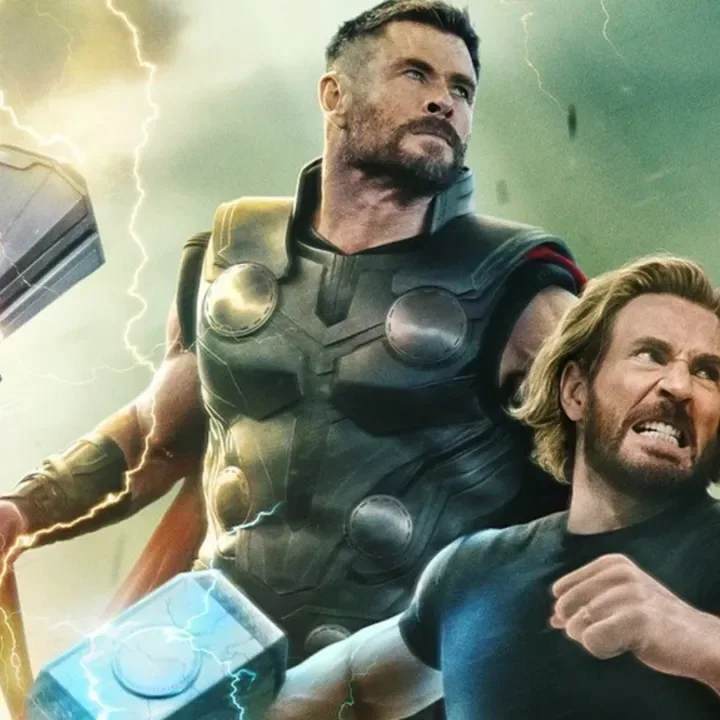
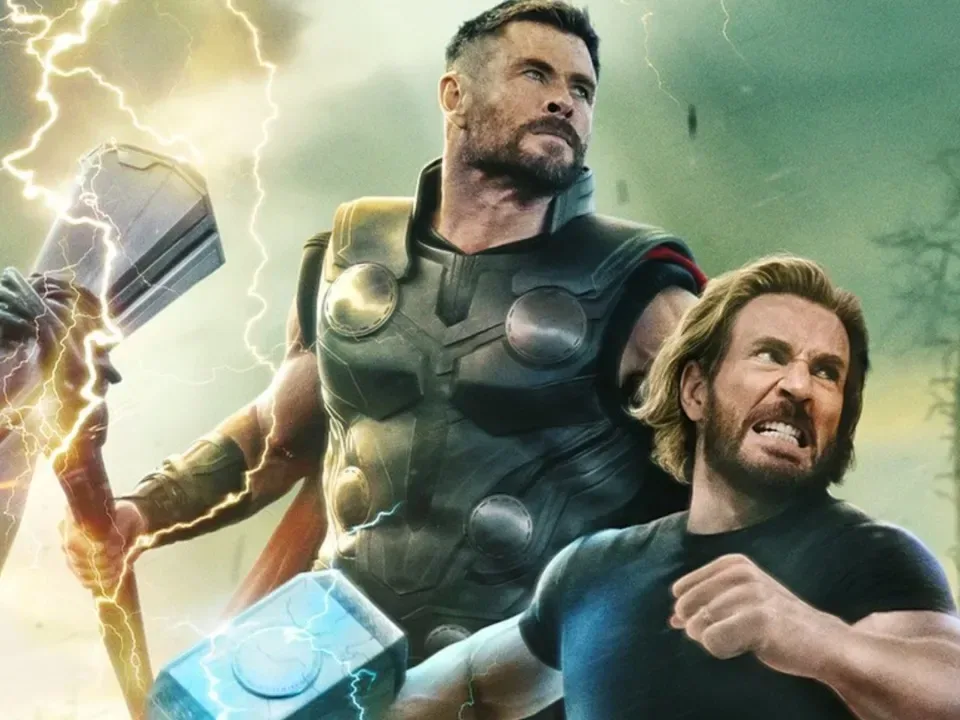
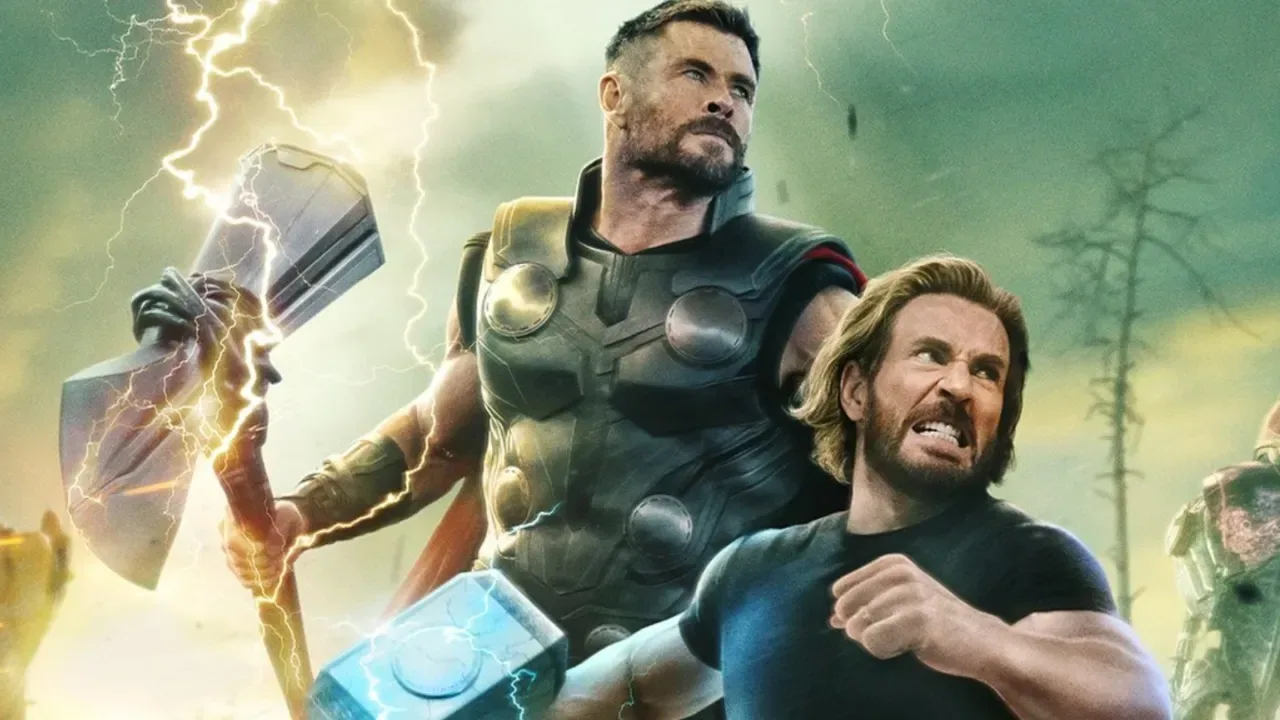
The detail generating the loudest speculation is in the Thor and Steve Rogers image. Chris Evans’ Steve holds Mjolnir amid the hammer’s familiar blue lightning, while Chris Hemsworth’s Thor wields Stormbreaker as yellow lightning gathers around it. That shift has prompted fans to wonder whether Thor has gained the Odinforce, a name associated with the immense power of Odin in Marvel stories.
It is an intriguing reading, but it remains a reading rather than a confirmed plot point. A color change in promotional art can communicate power, mood, faction or nothing more than a striking contrast. Still, placing the yellow energy beside Mjolnir’s blue lightning invites audiences to notice the difference, and it gives Marvel fans a specific visual mystery to pick apart before release.
A poster montage that makes the crossover scale clear
Eleven individual posters can function as character spotlights. Joined together, these ones operate more like a statement of intent. The image brings together teams that have often occupied separate corners of Marvel screen storytelling: the Avengers, the Fantastic Four and the X-Men. The opposing side is equally expansive, led by Doom and reinforced by both Sentinels and Doombots.
That distinction matters because the two robotic forces carry different implications even before the film explains their roles. The supplied material describes Doombots as Doctor Doom’s android servants and bodyguards. They are, therefore, a direct extension of Doom’s authority and protection. Sentinels, meanwhile, add another threatening mechanical presence to the montage. Together, the visuals suggest Doom is not simply an individual adversary who must be confronted face-to-face; he commands forces capable of widening the conflict beyond a conventional superhero showdown.
The reveal is also significant for Nightcrawler. The posters offer a better look at Alan Cumming in costume, giving the character a more tangible place in the film’s ensemble. In a project whose appeal rests heavily on the collision of recognizable heroes and teams, small costume details can do a lot of work. They tell viewers that a returning character is not merely being referenced but is part of the larger visual world being assembled for the movie.
Thor’s lightning: what the Odinforce theory does—and does not—establish
The Thor image has invited a very particular line of speculation because Stormbreaker’s lightning is yellow rather than blue. Fans have connected that color to the Odinforce, which can be understood here as a possible signifier of power linked to Odin. If that interpretation proves correct, it would represent a major upgrade for Thor, who is already one of the film universe’s most formidable heroes.
Related coverage includes Avengers: Doomsday Posters Tease Thor's Odinforce and Major Marvel Team-Ups.
However, the posters do not name the force, explain its origin or establish how it works. It is more accurate to say that the art suggests a possible change in Thor’s power than to state that the Odinforce has been confirmed. Promotional images are designed to create questions, and a different lightning color is an efficient way to do exactly that without revealing the narrative answer.
Steve’s presence makes the comparison sharper. He is shown wielding Mjolnir and surrounded by its signature blue electrical effect. With the two heroes placed together, the artwork effectively sets a visual baseline: blue energy is tied to Mjolnir in this image, while yellow energy is tied to Thor’s Stormbreaker. That contrast is why the theory has gained traction.
Even a meaningful power increase may not solve the story’s central problem. The existing Doomsday trailers have suggested that Doom will remain an overwhelming threat. The montage reinforces that scale by making the heroes look like a coalition assembled in response to an army, not simply a few characters gathering for a one-on-one duel.
The pairings may be the posters’ real clues
Marvel’s connected artwork does more than identify who is in the film. It chooses who stands beside whom. The obvious pairing is Thor and Steve Rogers, characters with a long shared history. Their image has immediate emotional and visual logic: one hero holds Mjolnir, while the weapon’s traditional owner stands at his side with Stormbreaker.
Another pairing is Vanessa Kirby’s Invisible Woman and Tenoch Huerta’s Namor. Their placement is especially noticeable because the characters have a mostly one-sided romantic attachment in the comics. That does not establish that the film will adapt the relationship, or even that either character’s role will mirror comic-book stories closely. It does make the pairing a sensible candidate for deliberate teasing rather than a random arrangement.
Other combinations are harder to decode. Channing Tatum’s Gambit appears alongside Florence Pugh’s Yelena Belova, raising the possibility of an unexpected partnership. Tom Hiddleston’s Loki is paired with Rebecca Romijn’s Mystique, another combination that creates immediate questions about motive, allegiance and the shape of the film’s team dynamics.
Those questions should remain questions. A poster can tease a meeting, a temporary alliance, a confrontation or simply a piece of ensemble marketing. Yet character pairings are a useful way to build anticipation for a movie with this many major figures. Rather than promising a complete plot map, the artwork lets audiences imagine small-team stories within the larger battle against Doom.
Why the Doombots deserve attention
The Doombots are perhaps the most concrete new element in the artwork. Defined here as Doom’s android servants and bodyguards, they make Doctor Doom’s threat feel systematic. Their purpose is not just to fill the background with enemies. As servants and protectors, they imply that approaching Doom may involve confronting his constructed defenses first.
That is a useful distinction in a crossover of this size. A villain with a personal army can pressure multiple groups at once, force heroes into different locations or give the story a way to stage conflicts without placing Doom in every encounter. None of those outcomes has been confirmed for the film, but the presence of Doombots opens those possibilities in a way that a lone villain would not.
The Sentinels broaden the mechanical menace further. The montage’s core image is therefore not merely “heroes versus Doom.” It is a united collection of heroes facing a leader backed by a visible infrastructure of machines. That scale is likely why the posters have been released as interlocking components: the format itself mirrors the idea of separate factions joining one battlefield.
What this could mean for Secret Wars and Deadpool and Wolverine
Avengers: Doomsday is not being positioned as an isolated endpoint. Its sequel, Avengers: Secret Wars, is slated for 2027 and has already been described as very different in tone and genre. That framing makes the present poster campaign feel like the opening movement of a larger story rather than a standalone exercise in assembling familiar faces.
There is another point of interest behind the camera: Ryan Reynolds and Hugh Jackman have writing credits on Doomsday. That fact suggests Deadpool and Wolverine may appear, though their presence has not been formally confirmed by the poster lineup described here. It is an important distinction. Writing-credit information supports the possibility, but it does not provide a definitive cast reveal or explain the size of any potential role.
For now, the most reliable takeaways are on the page: a broad alliance of Avengers, X-Men and Fantastic Four; Doctor Doom with Sentinels and newly shown Doombots; a closer look at Nightcrawler; and an intentionally conspicuous change in Thor’s lightning. The Odinforce reading is plausible fan analysis, not settled fact. The same caution applies to every apparent team-up embedded in the art.
That ambiguity is part of the campaign’s appeal. The montage gives viewers a large-scale promise while preserving the details that matter most: what Doom wants, why the heroes are united, which partnerships hold, and whether Thor’s yellow lightning represents a genuine transformation. Until December 18, those are the puzzle pieces the posters are inviting audiences to examine.
For a separate look at why GTA 6’s control and HUD options have also been a major point of conversation, see Joking Joystick’s guide.