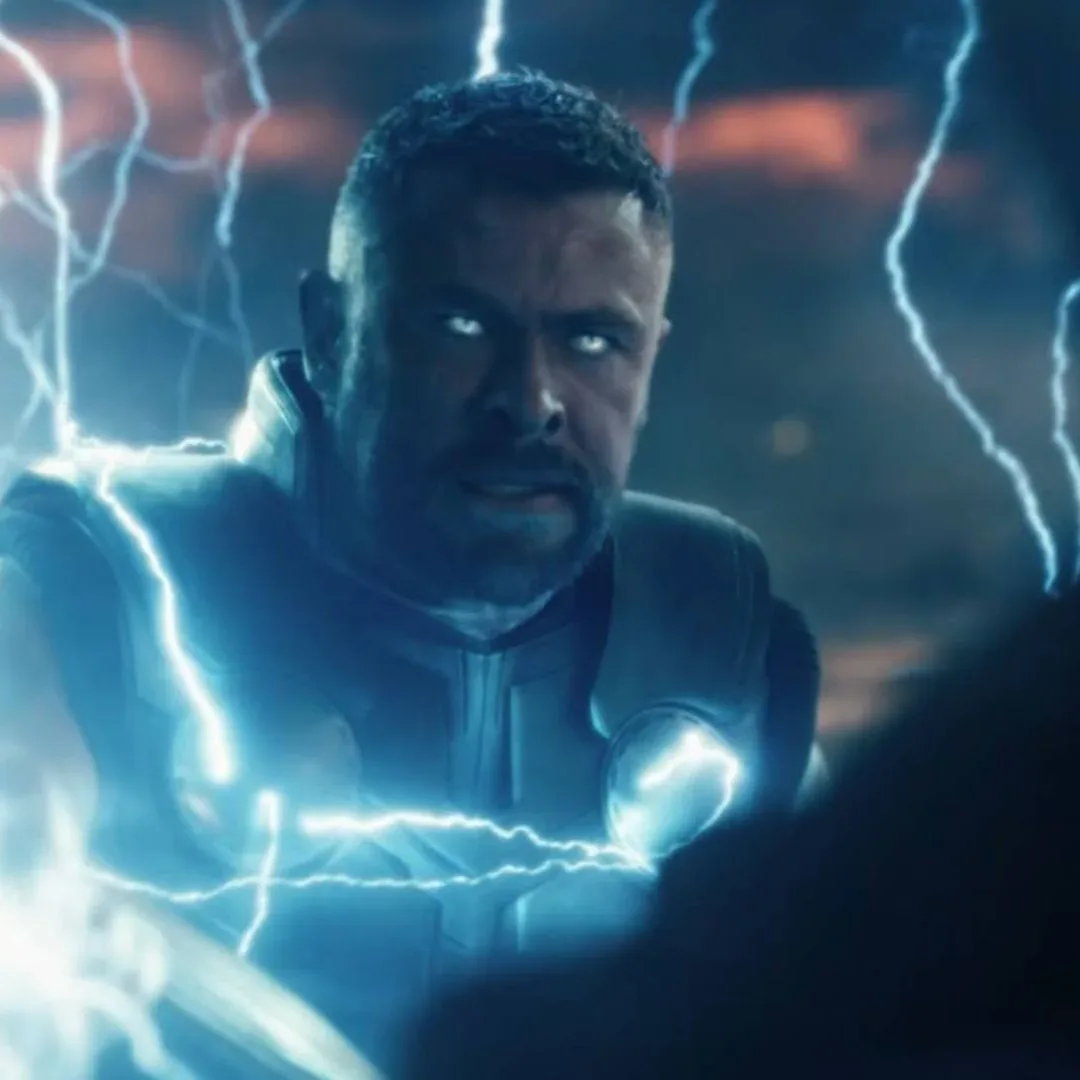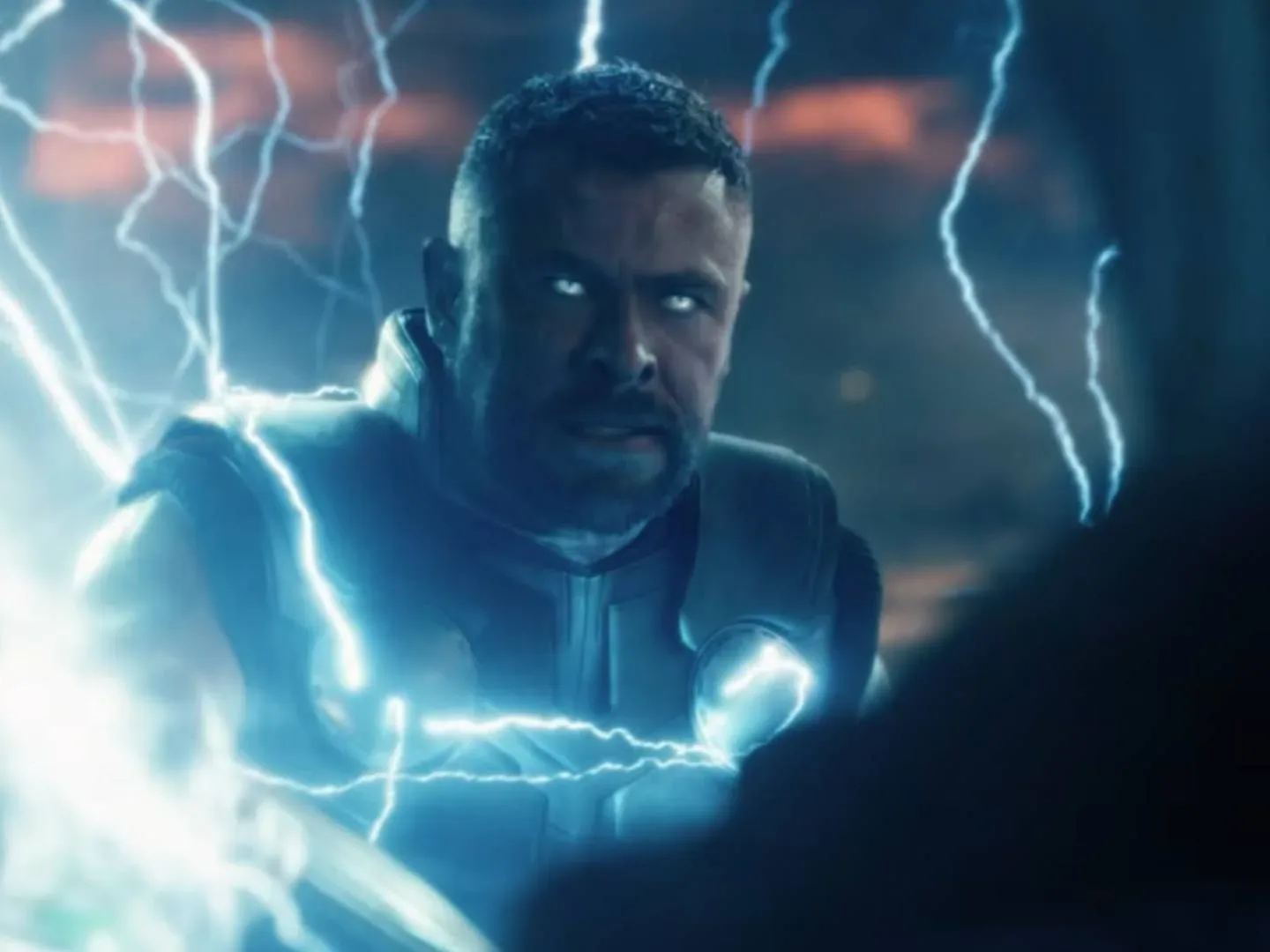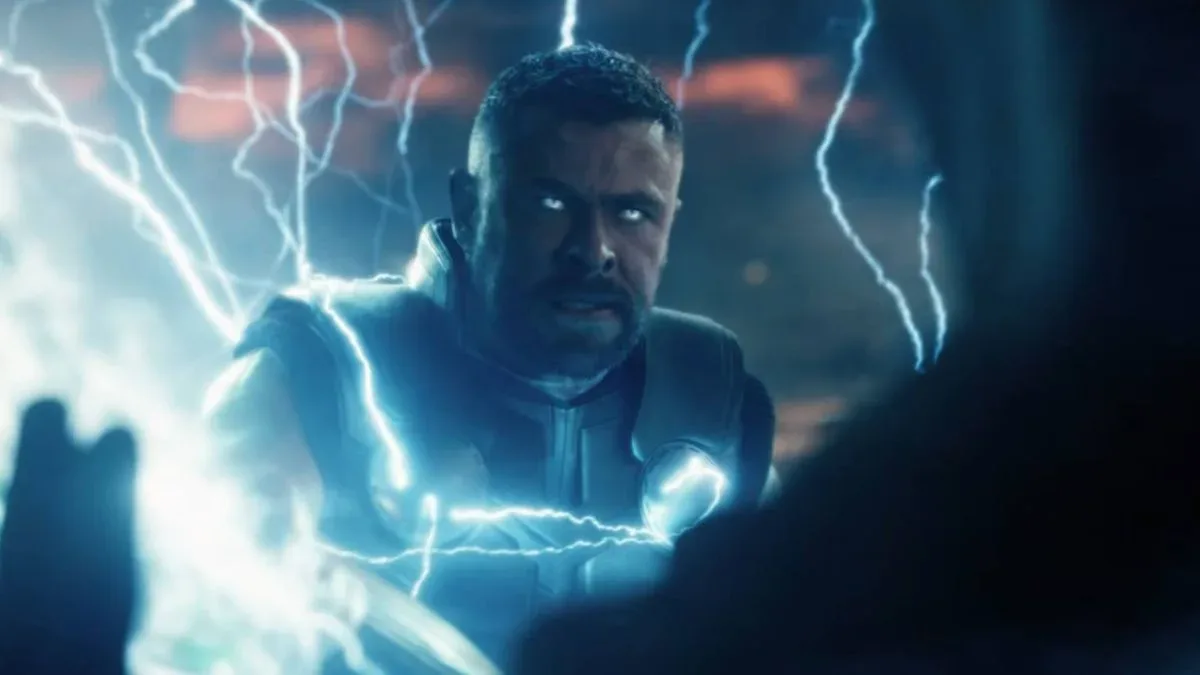
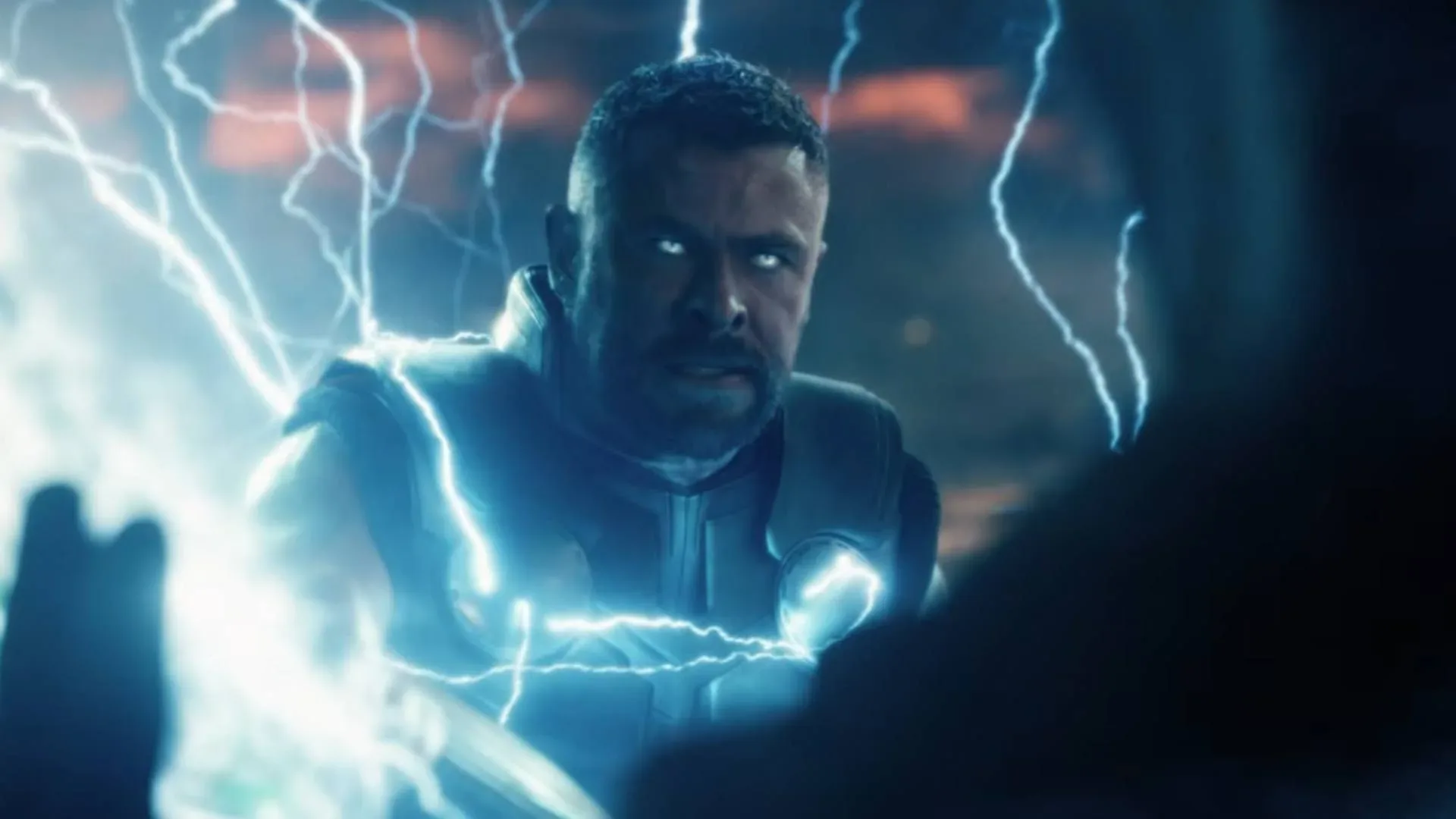
A piece of Avengers: Doomsday marketing has put a very particular shade of lightning under a microscope. A billboard depicts Chris Hemsworth’s Thor surrounded by yellow energy rather than the blue lightning normally associated with the character’s on-screen power set. That colour choice has led fans to speculate that Thor could be using the Odinforce in the forthcoming Marvel ensemble film.
The theory is understandable, but it remains a theory. Marketing art can communicate mood, contrast and character importance as readily as it can establish a plot point. Still, this is not an isolated colour oddity: yellow lightning has also appeared on an action figure and a poster for the film. Meanwhile, trailers have shown Thor employing his familiar blue lightning. The result is a small but unusually pointed question for a giant crossover movie: is the colour shift simply a promotional-art decision, or an intentional indication that Thor is operating at a different level?
Why the billboard is attracting so much attention
The billboard’s composition makes the contrast difficult to miss. Thor is represented with yellow lightning, while blue lightning appears around Mjolnir, the hammer being wielded by Chris Evans’s Steve Rogers. In other words, the image does not merely render every electrical effect in a warm colour. It places blue and yellow side by side, inviting viewers to treat them as distinct visual signals.
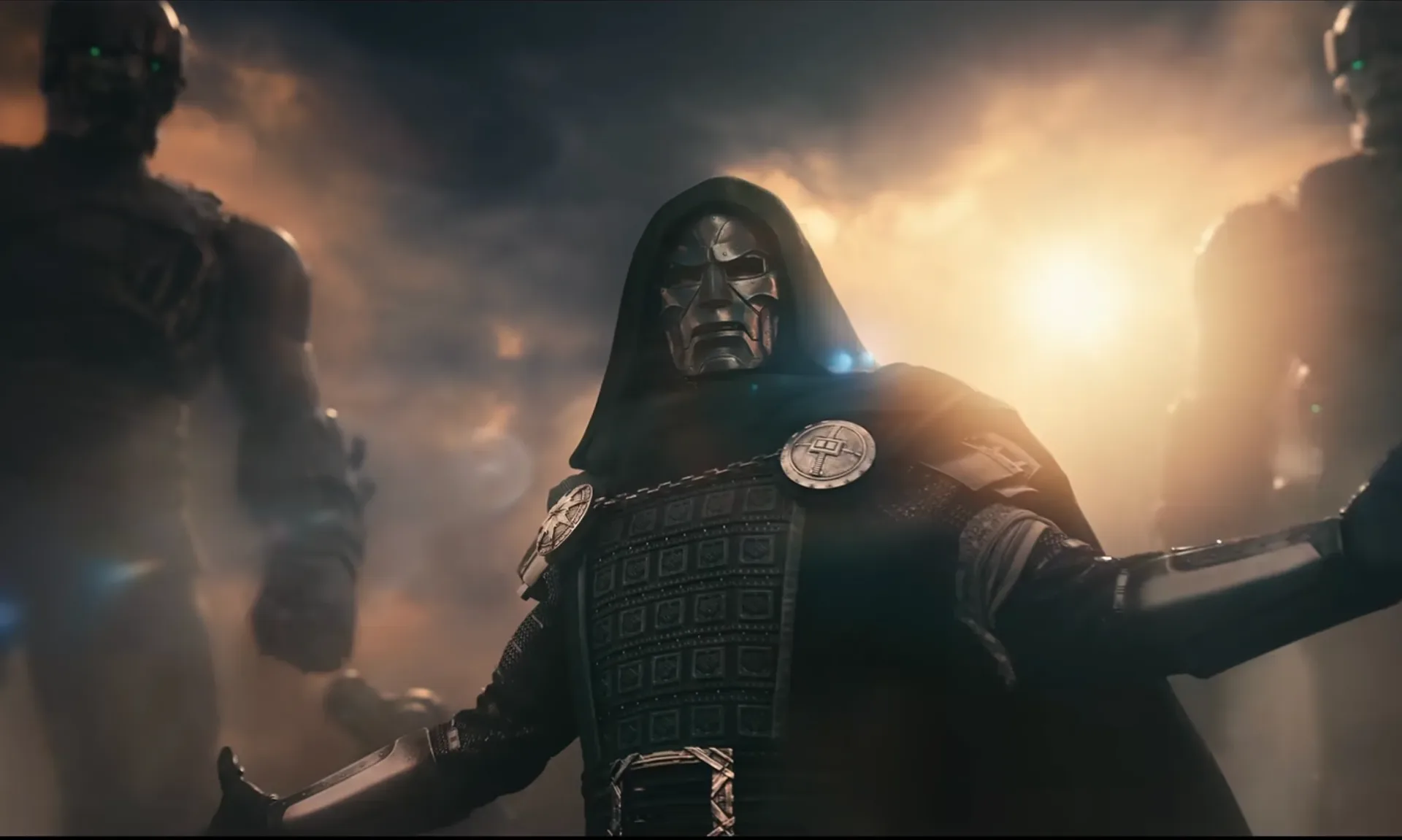
That distinction is why the Odinforce has become the leading fan interpretation. In the terminology being used by fans, the Odinforce is an immensely powerful ability associated with Odin and represented by yellow energy. If the film does identify Thor’s yellow lightning with that power, it could imply a substantial increase in his capabilities. The basic appeal of the theory is straightforward: a high-stakes Avengers story facing Robert Downey Jr.’s Doctor Doom is exactly the kind of setting where audiences expect familiar heroes to reach for extraordinary resources.
But viewers should separate what is actually visible from the conclusion being drawn from it. The visible evidence is yellow lightning in promotional material. The Odinforce connection is an interpretation based on that image and on the colour fans associate with the ability. Neither the billboard nor the trailers described so far confirm the name of the power, explain why Thor’s lightning looks different, or establish the conditions under which he might use it.
The billboard has turned a colour choice into a full-scale Marvel speculation engine: blue around Mjolnir, yellow around Thor, and plenty of room for fans to fill in the cosmic paperwork.
What the Odinforce theory would mean
At its simplest, the Odinforce is being discussed as a major power upgrade. That matters because a power upgrade in a crossover film is rarely just a matter of making an action scene louder. It can change a character’s role in the group. A Thor with access to an overwhelming source of power could become a decisive counterweight in a fight involving Doctor Doom, but it could also create a storytelling problem: if one hero can solve every problem without meaningful cost, tension disappears faster than a lightning bolt.
That is where the alleged limitation becomes important. Fans discussing the theory point to the Odinsleep, a consequence said to be triggered when the Odinforce is used too heavily. The term matters because it reframes the potential ability as something other than a no-strings-attached victory button. Thor may be extraordinarily powerful if he has it, but overuse could remove him from the action at a crucial moment.
In practical story terms, that creates several possible functions for the power without confirming that any will happen. It could be a last-resort tool, an ability Thor is reluctant to use, or a resource the wider team has to protect. It could also raise a tactical question for his allies: is the immediate gain worth the risk that Thor becomes unavailable afterward? Those are narrative implications of the theory, not reported details of the film.
The idea also explains why some fans have treated the image as a possible spoiler. A major change to Thor’s power level can be the kind of revelation a film might otherwise reserve for a pivotal scene. Yet the fact that the image appears on a public billboard complicates the spoiler argument. Marketing that large is built to be noticed. If yellow lightning is meant to mean Odinforce, it may be an overt part of the film’s promotional identity rather than a concealed third-act surprise.
Marketing clue, visual shorthand, or both?
Promotional material has a different job from a trailer. A trailer presents moving scenes selected to establish tone, characters and conflict. A poster, toy image or billboard must often communicate its message in a glance. Brightly colour-coded effects can help distinguish people, weapons and factions at a distance. They can also create a clean visual hierarchy: eyes move to the strongest colour contrast before they start asking lore questions.
That does not make the billboard meaningless. It simply means that a single image has more than one plausible reading. The repeated use of yellow on a billboard, a poster and an action figure is stronger evidence of a deliberate branding choice than one piece of art would be. At the same time, the trailers retaining blue lightning leave the exact significance unresolved. If the yellow colour represents a new state or ability, the trailers may simply not have shown it yet. If it does not, the blue footage may better reflect Thor’s standard presentation in the film.
There is also an important difference between a visual motif and a plot explanation. The promotional campaign can consistently give Thor yellow energy without the movie pausing to announce a formal new power name. Conversely, a trailer can show blue lightning without disproving a later transformation or temporary enhancement. The existing material supports attention, not certainty.
A sensible way to read the evidence
- Confirmed: Thor has been shown with yellow lightning on a billboard, and that colour has also appeared on a poster and an action figure.
- Also confirmed: The trailers shown so far depict Thor with his traditional blue lightning.
- Fan interpretation: Yellow energy may indicate the Odinforce.
- Unconfirmed: Whether the movie uses that name, whether Thor possesses the ability, how it works, and whether the Odinsleep will play any role.
That framework is useful because it lets the image remain intriguing without declaring the mystery solved. It is easy for franchise marketing to turn a familiar piece of iconography into a countdown-clock clue. It is also easy for a carefully designed character image to collect more lore weight than it can bear. For now, both possibilities are still alive.
Why Thor’s imagery carries extra weight in this lineup
Avengers: Doomsday has a notably broad roster. Alongside Hemsworth’s Thor are Anthony Mackie’s Captain America, Evans’s Steve Rogers, Letitia Wright’s Shuri, the Fantastic Four, the X-Men and the Thunderbolts, with Doctor Doom positioned as the central threat. In a cast this crowded, a distinctive visual detail is one of the fastest ways to imply that a character has a specific role in the coming conflict.
The Steve Rogers/Mjolnir image intensifies that effect. Mjolnir is already a highly recognizable object, and the billboard’s blue lightning links the hammer to Thor’s established visual language. Placing Thor in yellow beside it creates a visual separation between the weapon’s familiar energy and whatever Thor himself is doing. Whether that gap is lore-driven or purely artistic, it gives fans a clear reason to look twice.
It also illustrates the delicate balance of ensemble marketing. The campaign needs to sell scale: heroes from multiple corners of the Marvel world sharing one canvas. It also needs to give each character enough individuality that the image does not become a crowd scene. A different lightning colour is economical visual storytelling, even before anyone labels it a spoiler.
For audiences trying to avoid speculation, the simplest answer is to treat the billboard as a teaser rather than a reveal. It establishes a question about Thor, but trailers have not answered it. For audiences who enjoy decoding promotional art, the Odinforce theory has a coherent basis: repeated yellow energy, a well-known power association among fans, and a film whose premise appears large enough to justify extreme stakes.
The eventual answer arrives with Avengers: Doomsday, which is scheduled for December 18 in the US and December 16 in the UK. Until then, the safest verdict is that Thor’s yellow lightning is a deliberate and recurring image—but not yet definitive proof of what the movie calls it or what it costs him to use it.
For more entertainment coverage beyond the superhero multiverse, see Lil Baby’s FRESH opening forecast.