Sir Patrick Stewart’s work as Captain Jean-Luc Picard in Star Trek: The Next Generation and Professor Charles Xavier in the X-Men films created two enduring touchstones for collectors. That appeal is visible across very different types of memorabilia: a widely distributed early-1990s action figure, entertainment trading cards with certified signatures, and a newer autograph release whose asking prices have already climbed well beyond the cost of a typical modern card.
Following Stewart’s death on October 28, 2026, at age 86, collectors may understandably be revisiting the objects tied to those performances. The meaningful distinction is that these pieces are not interchangeable. A Playmates Picard figure is principally an accessible display item with nostalgia at its core. Signed cards are far more dependent on the specific set, design, signature format, and current market activity. Knowing which qualities matter to each category is more useful than treating every item bearing Stewart’s likeness as a high-value rarity.
Three items in particular offer a concise cross-section of the market: the Playmates Captain Picard figure, the 2011 Leaf Pop Century Family Guy autograph, and the 2026 Topps Allen & Ginter autograph.
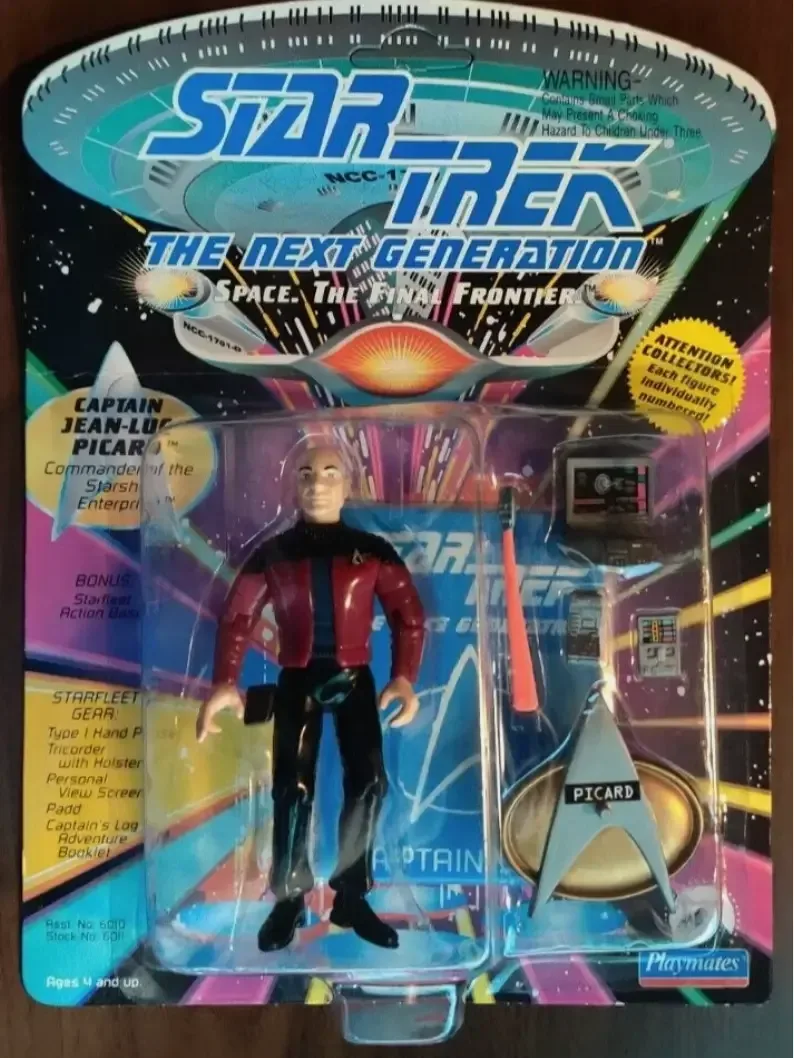
Playmates Captain Jean-Luc Picard: a nostalgic, mass-produced figure
By 1992, Star Trek: The Next Generation had grown into both a fan favorite and a ratings success. A Playmates toy line followed, with its first assortment covering the principal characters, including Stewart’s Captain Picard.
The Picard figure’s appeal is straightforward. It was designed as a toy rather than a luxury collectible, with articulation at most major joints and a recognizable likeness for an early-1990s release. That design makes it a pleasing physical reminder of the era in which television tie-in toys were meant to be handled, posed, and played with—not merely sealed away.
Its widespread production is also essential context for a buyer. Mass production does not make a figure unimportant; it means scarcity is not the central reason to own it. Reported values sit roughly between $10 and $50, with condition making the difference. A clean loose figure can be an inexpensive way to represent Picard on a shelf, while packaging condition may matter more to a collector seeking an untouched example.
What “condition” means for this type of collectible
Condition is a broad term, but it should be applied practically. For a loose figure, collectors can look for intact joints, clean paint, complete accessories where applicable, and the absence of obvious wear. For a packaged example, the state of the card, bubble, printing, and seals can materially affect its desirability. A figure can remain an enjoyable display piece without being pristine, but buyers should avoid paying a premium appropriate to sealed packaging for an item with substantial wear.
This is an accessible collectible precisely because it does not require an auction-sized budget. Its value is in the combination of Picard’s cultural presence and the toy line’s period character. Collectors who want a broad Stewart display can use the figure as the foundation, then reserve more of their budget for a card with a genuine signature.
Related coverage includes Patrick Stewart Collectibles: Three Key Cards and Figures.
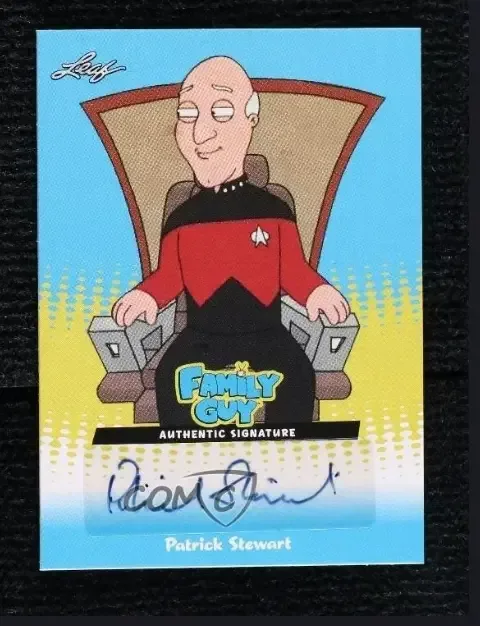
2011 Leaf Pop Century Family Guy autograph: a highly specific crossover
Leaf Pop Century has issued celebrity autographs across multiple years, giving collectors several routes to a Stewart signature. Among those cards, the 2011 Family Guy autograph has a notably unusual identity. It pairs Stewart’s autograph with cartoon art of Captain Picard in the show’s visual style.
The design has added significance because Stewart was a frequent collaborator with Family Guy creator Seth MacFarlane and also voiced characters on American Dad. Rather than representing only one role or franchise, the card connects Stewart’s best-known science-fiction captain with a different strand of his screen and voice work. That crossover quality gives the release a clear personality that a conventional portrait autograph may not have.
The card is described as Stewart’s first Leaf autograph. Recent sales data places it in the $200 to $300 range, though a reported range should be read as a snapshot, not a permanent price guide. A sale is evidence of what a buyer paid for a particular copy at a particular time. It does not guarantee that every listing, especially one with a higher asking price, will achieve the same result.
Autograph card terms worth knowing
An autograph card is a trading card that includes a signature as part of the product. The appeal rests on more than the autograph itself: collectors may care about the set, the card art, the signer’s connection to the subject, and whether the card is part of a numbered or parallel release. A parallel is a variant version of a card, often distinguished by a different color, finish, or limited production treatment. Stewart’s 2024 Pink Holo is one example of another recognized Leaf-era card variant.
For the 2011 card, the core attraction is not simply that it is signed. It is the unusual Family Guy-styled Picard image and its link to Stewart’s collaboration with MacFarlane. A prospective buyer should therefore make sure the card being considered is the specific 2011 design they want, rather than relying solely on a generic search for “Patrick Stewart autograph.”
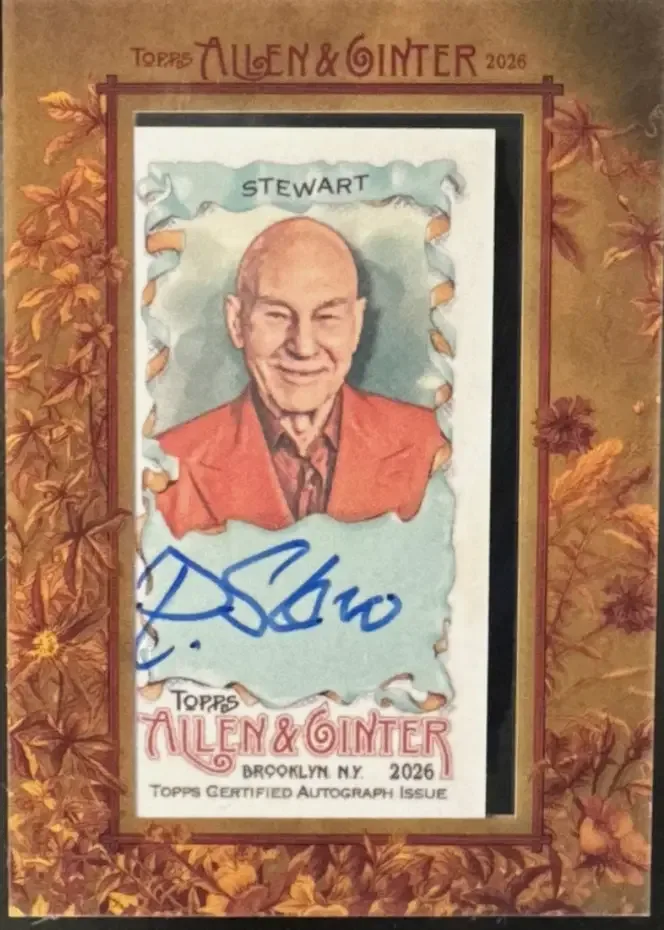
2026 Topps Allen & Ginter: a premium modern autograph
Topps Allen & Ginter occupies a distinct place in card collecting because it blends its throwback presentation with athletes, celebrities, and other non-sports subjects. The broad mix can produce unexpectedly eclectic autograph checklists; the set has included names such as Tommy Wiseau, Seth Meyers, and Daddy Yankee.
The 2026 release includes Sir Patrick Stewart autograph cards. These have particular emotional and collecting weight because they may be the last on-card Stewart autographs released. That possibility remains necessarily qualified: it is a reasonable expectation based on the timing, rather than a certainty that can establish the status of every future product.
On-card autograph means the signature was written directly on the trading card itself. That differs from a sticker autograph, where a signed adhesive label is applied to the card later. Collectors often make a strong distinction between the two formats because an on-card signature feels more integrated with the finished card and its artwork. The format alone does not dictate a card’s worth, but it can be an important preference, especially for a performer with a dedicated following.
There were no recorded sales available in the cited market data at the time examined, while active eBay listings and auctions exceeded $1,000. That is an especially important divide. An active auction or buy-it-now listing shows what a seller hopes to receive; it is not a completed transaction. Without confirmed sales, the market has not yet established a dependable public price range for the card.
How to interpret the $1,000-plus listings
The current listings signal strong early interest and the perception that the release is important. They do not, on their own, demonstrate that the market value is above $1,000. Collectors deciding whether to pursue one should distinguish between an asking price and a completed sale, then weigh whether they are buying chiefly for a personal Stewart collection or for a card whose market may still be settling.
This distinction is useful across the hobby. Newer autographs can attract intense attention when a signer’s catalog is relatively limited, when the release uses an on-card format, or when the card arrives at a moment of renewed public interest. The long-term picture may become clearer only after more copies change hands publicly.
Choosing the right Stewart collectible for a collection
These three items suit different goals. The Playmates Picard figure is the lower-cost choice for a fan who wants an iconic character on display. The 2011 Leaf Pop Century card offers a distinctive, signed crossover between Picard and Stewart’s animation work. The 2026 Allen & Ginter autograph is the more expensive and uncertain modern option, defined by its direct-on-card signature and a market with high live listings but no recorded sales in the available data.
- For display and nostalgia: the Playmates Captain Picard figure is accessible, with condition and packaging being the major variables.
- For a themed autograph collection: the 2011 Leaf Family Guy card has a specific visual concept and a clear connection to Stewart’s work with Seth MacFarlane.
- For a modern premium card: the 2026 Allen & Ginter autograph offers the on-card format, but buyers should treat present-day listings as seller expectations rather than established values.
Collectors interested in the intersection of cards and games may also appreciate how collecting is becoming a subject in games itself, as seen in a recent card-collector game release on PC. For physical Stewart memorabilia, however, the sensible approach remains focused: identify the exact item, assess its condition or autograph format, and keep live listing prices separate from completed-sale evidence.
Stewart’s body of work gives each of these objects more resonance than a simple licensed product or celebrity card. Picard and Xavier brought generations of viewers to his performances, while his comedy and voice roles broadened the range of collectibles available. Whether the goal is a modest action figure or a center-piece signature card, the strongest acquisition is the one that reflects the part of Stewart’s career a collector most wants to remember.