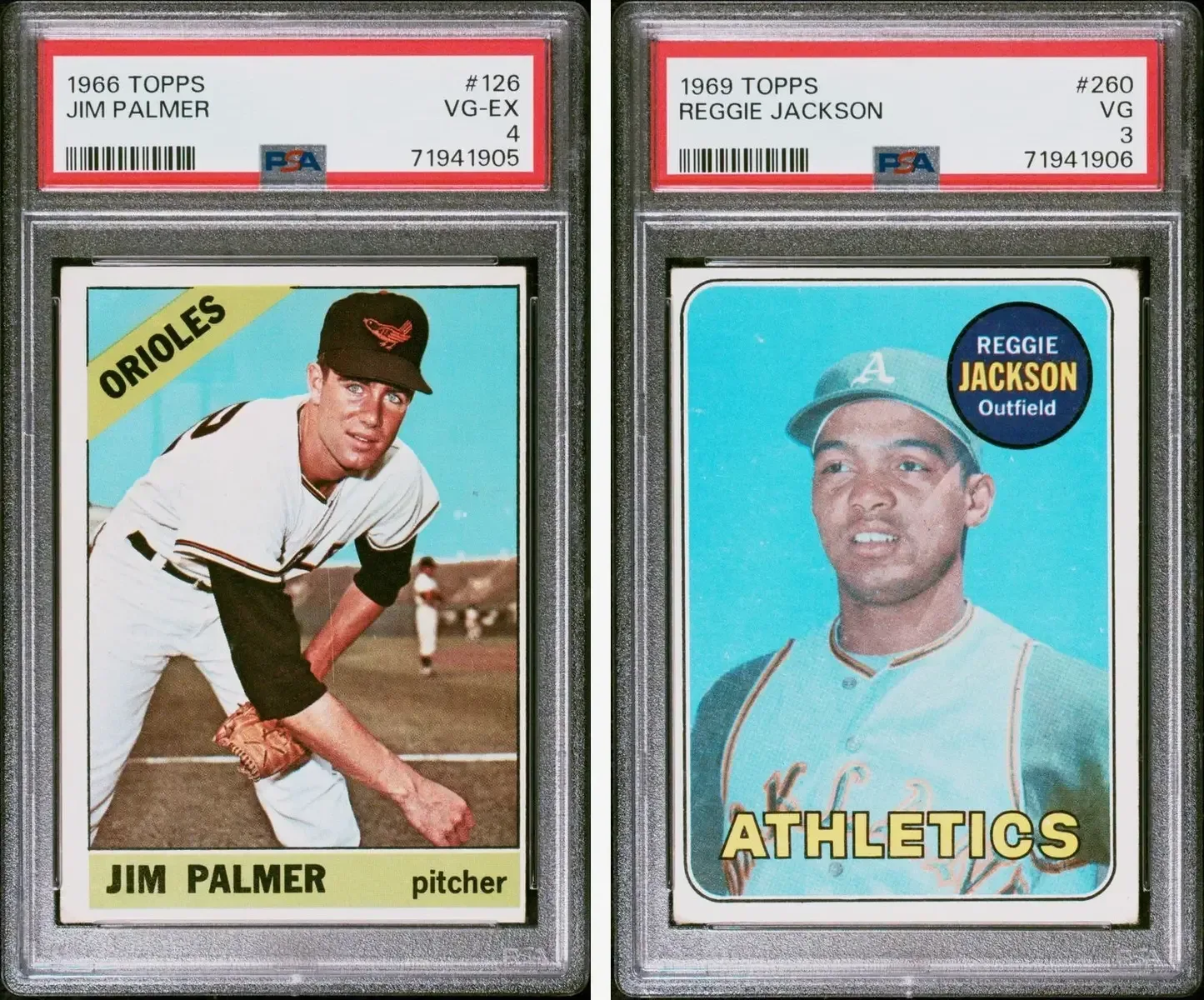
Most sports collections begin with a chase: a card pulled from a pack, a signed ball bought at a show, a poster rescued from a childhood bedroom. Bob Rotella’s collection came together another way. The performance psychologist’s basement is filled with thank-yous from the athletes and coaches whose careers he has helped shape—objects that carry sporting history, but also the unusually personal stories behind it.
There are signed photos, flags, jerseys, posters, discs, championship rings and trophies. There is an Ernie Banks photo that connects Rotella to the model fielder’s glove he used as a child in Rutland, Vermont. There is a color poster signed by Ben Hogan, depicting one of golf’s most famous shots. There are reminders of college basketball’s biggest moments, including Kentucky’s 2012 title and George Mason’s 2006 Final Four run.
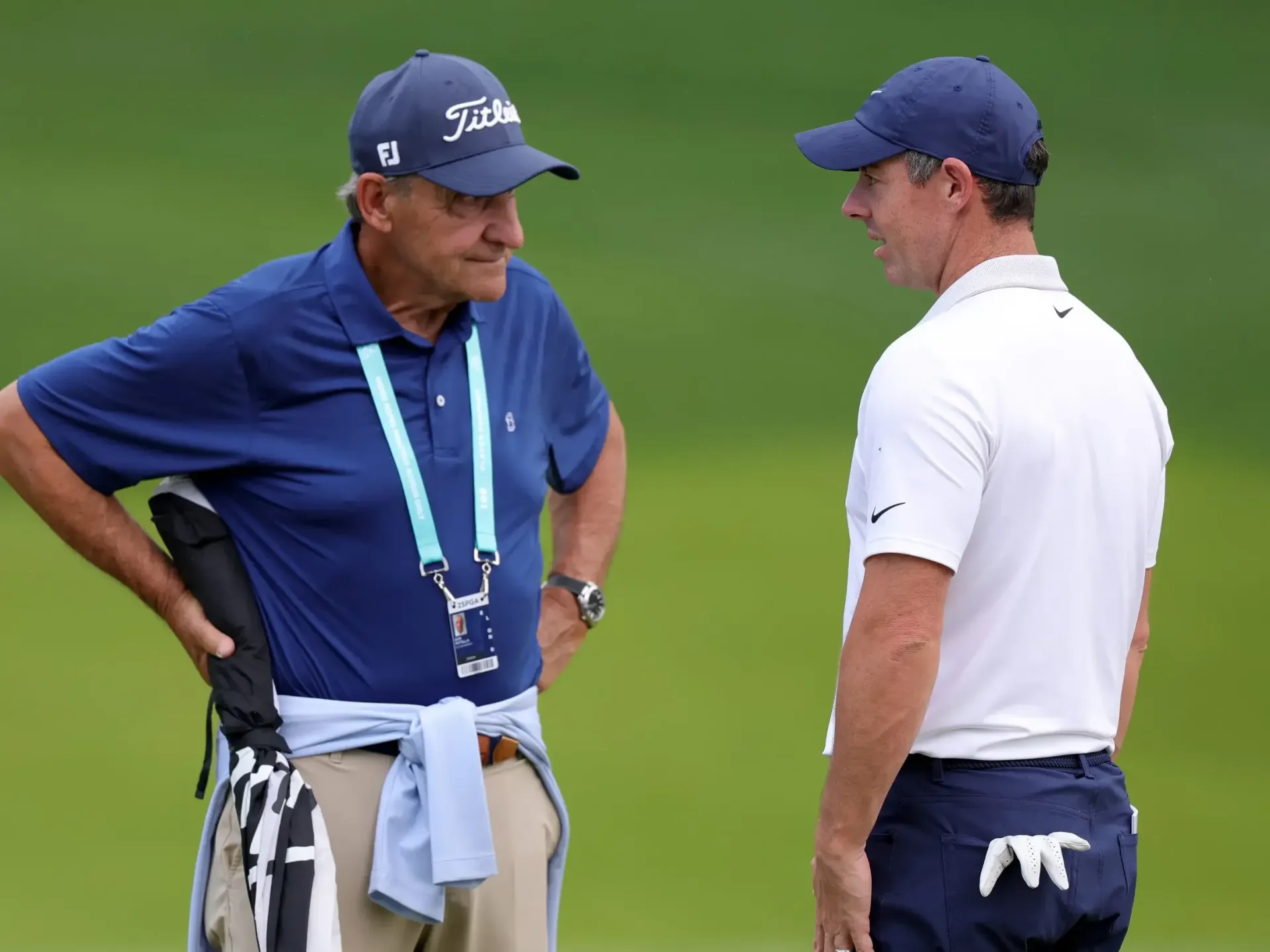
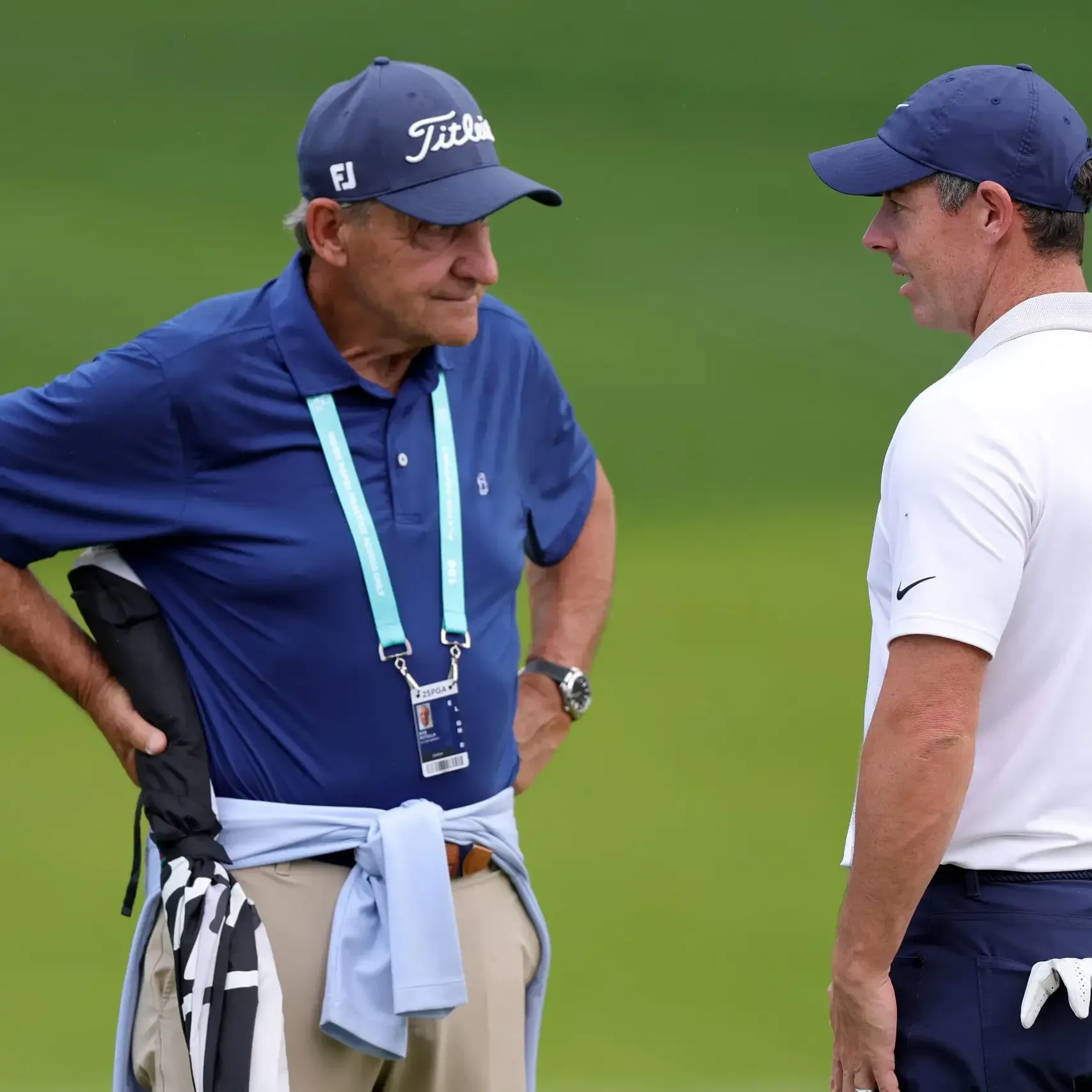
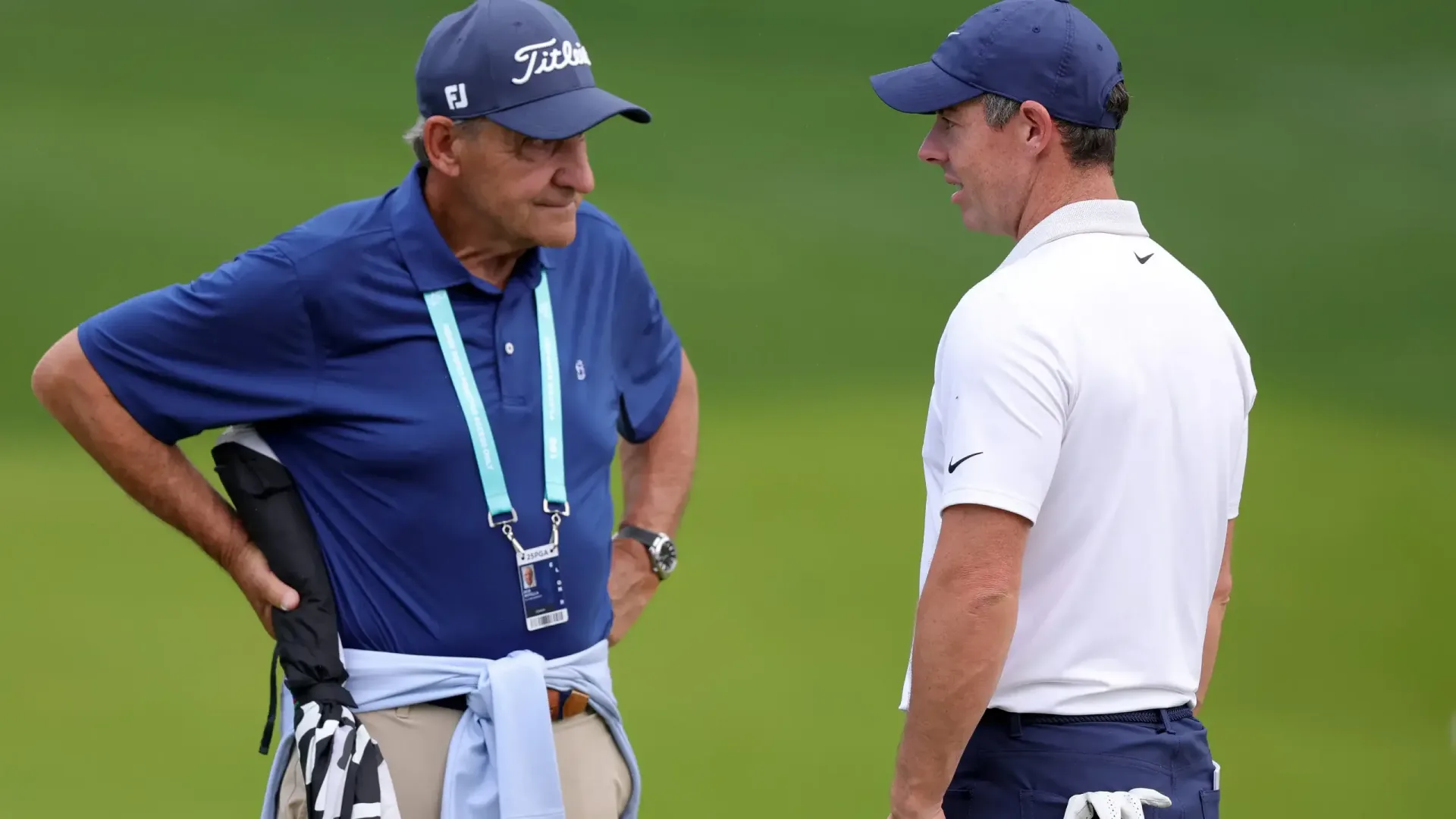
And there is a Rolex given to Rotella by Rory McIlroy after the golfer’s 2025 Masters victory. The watch is an extraordinary collectible on its face, but its place in this group matters because it is not presented as a retail trophy. It is a gesture of appreciation from one person in a high-pressure sport to another whose job is to help competitors prepare mentally for those exact moments.
A collection organized by relationships, not categories
Rotella says the display fills the lower level of his Charlottesville, Virginia, home, including the room where visiting players stay. Wall space has become scarce enough that pieces not mounted may lean against it on the floor. That is the useful distinction between this collection and a conventional checklist-driven one: its organizing principle is a career of relationships.
Its sports reach is wide. Rotella has worked with athletes including LeBron James, Greg Maddux, Randy Johnson and Ken Griffey Jr. His keepsakes reflect golf, baseball, football and basketball, as well as music. A framed presentation tied to Goo Goo Dolls singer John Rzeznik includes a performance photo and discs from Dizzy Up the Girl, the band’s Grammy Award-winning, multi-platinum album.
For collectors, that variety provides a practical lesson. A room can look coherent even when it mixes formats and sports, provided the pieces share a real theme. Here, the theme is not “every signed item from a particular team” or “every championship from a particular decade.” It is the record of work, mentorship and friendship. The inscriptions are therefore central rather than decorative.
That emphasis also separates a personalized item from a merely signed one. An autograph confirms an athlete’s hand; a personalized inscription can explain why the object exists. Jim Larranaga’s signed photo from George Mason’s run to the 2006 Final Four credits Rotella’s help. Rick Carlisle’s photo, taken after he coached the Dallas Mavericks to the 2011 NBA championship, thanks him for three decades of friendship and guidance. Trevor Immelman’s 2008 Masters display pairs an image of the green jacket with a yellow pin flag and a note recognizing Rotella’s support and advice.
Those messages do not establish market value, and the available details do not put values on any of these pieces. But they establish something arguably more interesting: provenance.
Related coverage includes Bob Rotella’s Sports Memorabilia Collection Tells the Story of a Career Shaping Champions.
What provenance means in a personal collection
Provenance is the documented history of an object—who owned it, where it came from and how it changed hands. In the world of autographs and memorabilia, provenance can be especially important because it gives context to an item beyond the signature itself.
Rotella’s objects have unusually direct provenance as gifts from the people associated with them. The Rolex traces to McIlroy. Padraig Harrington’s replica Claret Jug came in its box from The Royal and Ancient Golf Club of St. Andrews. The Kentucky items connect to coach John Calipari and the Wildcats’ 2012 championship. Even so, a collector considering an eventual sale or insurance record would still want to preserve gift correspondence, photographs, letters, original presentation boxes and any other supporting material alongside the object. The story is strongest when it is retained in more than memory.
That attention to context also applies to framed pieces. A collage of clippings and photographs associated with George Mason includes a March 27, 2006 magazine cover featuring Lamar Butler and the words “Sweet Surprises.” Its appeal is not simply that it contains printed material from a celebrated tournament run. The frame tells a broader story of an unexpected Final Four team and the people around it.
Golf is the collection’s clearest through line
Although Rotella’s professional connections cross numerous sports, golf dominates the collection. It is a natural fit. His childhood experience caddying for four-time British Open champion Bobby Locke at Rutland Country Club helped form a lifelong attachment to the game. In 1978, a sports-psychology speech he gave at Madison Square Garden led to an opportunity to teach golf’s mental side at an instructional school, beginning work that would bring him to PGA Tour players.
His books make that focus tangible. Rotella has written 15 golf books, including Golf Is Not a Game of Perfect, The Golfer’s Mind and Your 15th Club. The first title succinctly summarizes a core idea associated with his work: elite performance does not require an athlete to avoid every mistake. It requires an athlete to respond effectively when mistakes arrive.
That is why the Hogan poster has particular resonance. The image shows Hogan striking a 1-iron toward the 18th green during the final round of the 1950 U.S. Open at Merion Golf Club, with spectators gathered along both sides of the fairway. Hogan won in an 18-hole playoff by four strokes, in his first tournament back after a near-fatal car accident. The moment is often called the “Miracle at Merion.”
Rotella spent a day with Hogan at Shady Oaks in Fort Worth in 1989 and received a signed color poster of the shot. The color format and direct dedication distinguish it from the more familiar black-and-white reproductions of the image. More importantly, it joins personal encounter to historical moment. It is a story that cannot be recreated by simply acquiring a famous picture.
Other golf artifacts capture different kinds of access and appreciation: an autographed photo with Jack Nicklaus, a photograph of Rotella’s parents playing golf on their 50th anniversary with John Havlicek and Brad Faxon, posters from the 2016 Ryder Cup at Hazeltine National signed by captains Davis Love and Darren Clarke, and a photograph with Tom Kite and instructor Harvey Penick.
Harrington’s replica of the Claret Jug is another standout. The Claret Jug is the trophy awarded to the winner of The Open, and Harrington won the tournament in 2007 and 2008, as well as the 2008 PGA Championship. A replica is not the original championship trophy, but that is not a shortcoming in this context. It is a presentation piece whose importance comes from who gave it, why they gave it and its connection to a two-time winner.
McIlroy’s gift and the work behind it
The newest major chapter represented in the room is McIlroy’s 2025 Masters win. Rotella worked with him in the lead-up to events, building a plan around mindset, attitude and strategy, then sending detailed reminders that McIlroy could revisit during tournament week. Adjustments could follow from what occurred in the previous round.
Performance psychology, in this setting, refers to the mental preparation that supports competition: focus, emotional responses, confidence, decision-making and routines. It should not be confused with a claim that mindset overrides skill. In golf, a player still has to execute the shot. The practical point is that an athlete can have an approach ready for an imperfect lie, a missed fairway or the pressure of a slim lead rather than treating any one error as a disaster.
McIlroy’s final hole at the 2025 Masters offers the available example. Protecting a narrow lead, his tee shot found pine straw after missing the fairway. His next shot went into a bunker. He then played from the sand to within 12 feet and took two putts to finish one shot ahead of Scottie Scheffler. Rotella’s stated lesson is acceptance: even great players miss shots, and success means continuing to score in spite of those misses.
That sequence explains why a large black-and-white poster of McIlroy on his knees after the victory matters as more than wall art. The photograph documents a major triumph; the relationship behind it gives the image a private dimension. The Rolex does the same in a different form. Neither needs an auction estimate to communicate its significance.
Championship reminders beyond the fairway
Basketball provides several of the collection’s most direct reminders of Rotella’s earlier coaching and academic career. While pursuing his doctorate at UConn, he coached defensive lacrosse for the Huskies. His subsequent role at the University of Virginia included teaching performance psychology and launching a doctoral program in the field. Ralph Sampson, later an NBA standout and a three-time NCAA National Player of the Year, was among his students.
Virginia remains strongly represented. A framed poster from the program’s 2019 national championship bears a message from coach Tony Bennett crediting Rotella with playing a meaningful role in the title. The Carlisle photo reaches back to the former Virginia co-captain’s 1984 Final Four team and forward to his later NBA championship as Mavericks coach.
Then there are the physical symbols of winning: rings from the Philadelphia Eagles’ 2018 Super Bowl championship and the Kentucky Wildcats’ 2012 NCAA basketball title, plus Calipari’s signed basketball. A framed photograph of the packed New Orleans Superdome commemorates Kentucky’s 67–59 victory over Kansas, with the final score noted on a small plaque.
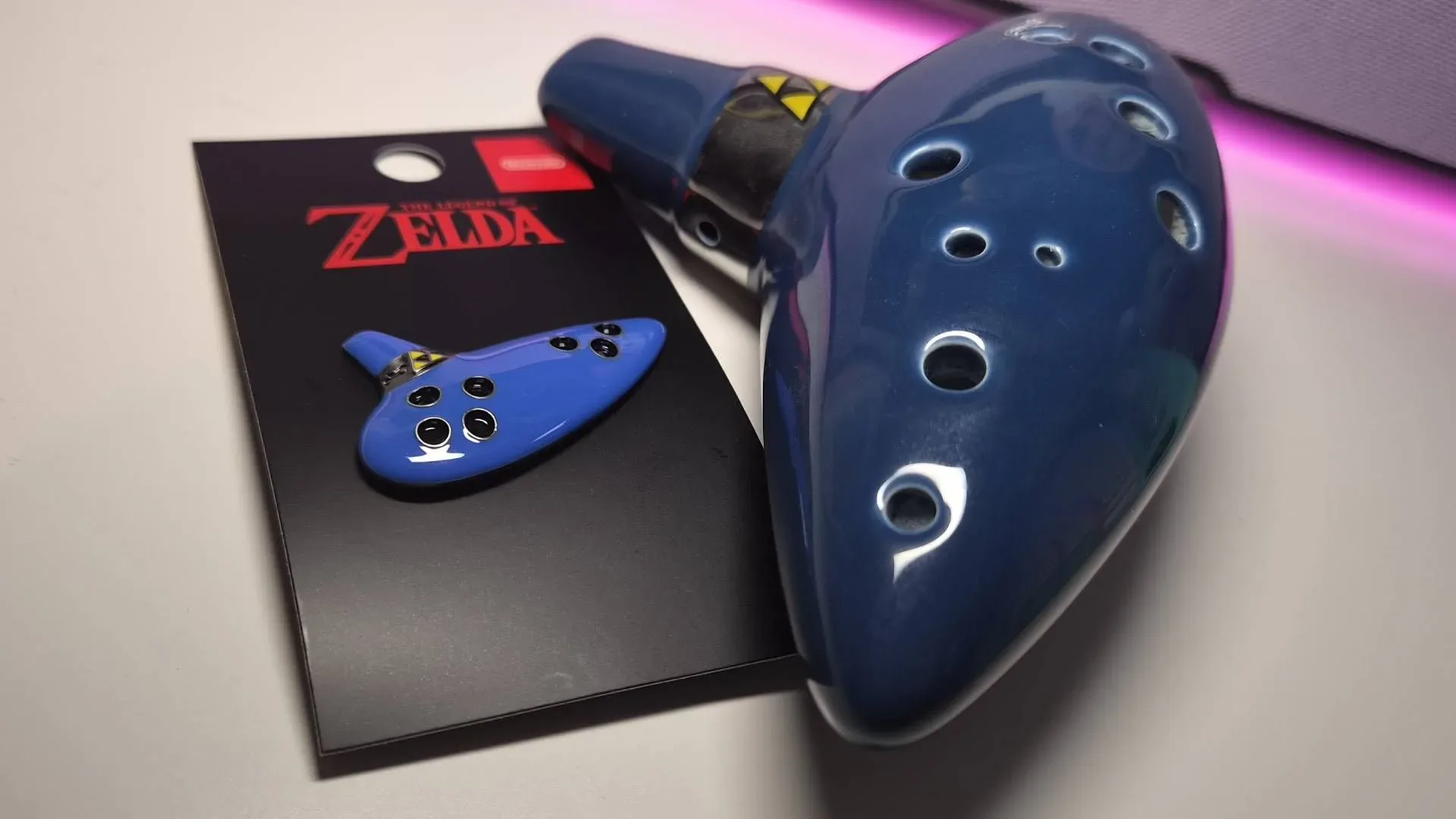
Rings are compact objects, but their display needs thought. They are vulnerable to loss, scratches and casual handling in ways a mounted poster is not. A collector displaying comparable items should consider secure cases, low handling and a reliable inventory with photographs. The point is not to turn a home display into a vault; it is to preserve the evidence and condition that make each item meaningful. For a related example of why exact collectible details—not simply urgency—matter, see this look at a Nintendo Ocarina of Time pin bundle.
The durable appeal of a story-first display
Rotella’s memorabilia is notable precisely because it resists easy comparison. It contains celebrated names and landmark sporting achievements, from Hogan and Nicklaus to McIlroy, Harrington, Banks, Maddux and Bill Walsh. Yet the collection’s strongest feature is that it documents the quieter work around those public accomplishments.
The signed objects also trace Rotella’s route from a multi-sport athlete in Rutland to a coach, teacher, author and consultant. His early dream was to coach basketball at Mount St. Joseph Academy, where his own boyhood sports heroes played. He later described teaching basketball and swimming at a nearby school for special-needs students as one of his most rewarding college experiences. Those details help explain why the gifts on the walls are not presented as detached trophies.
They are reminders of people, pivotal competitions and long-running partnerships. In a hobby sometimes reduced to price tags, population reports and scarcity, that is a welcome alternative standard. The best item in a collection may be the one with the clearest human story—and, in Rotella’s case, there is no shortage of them.