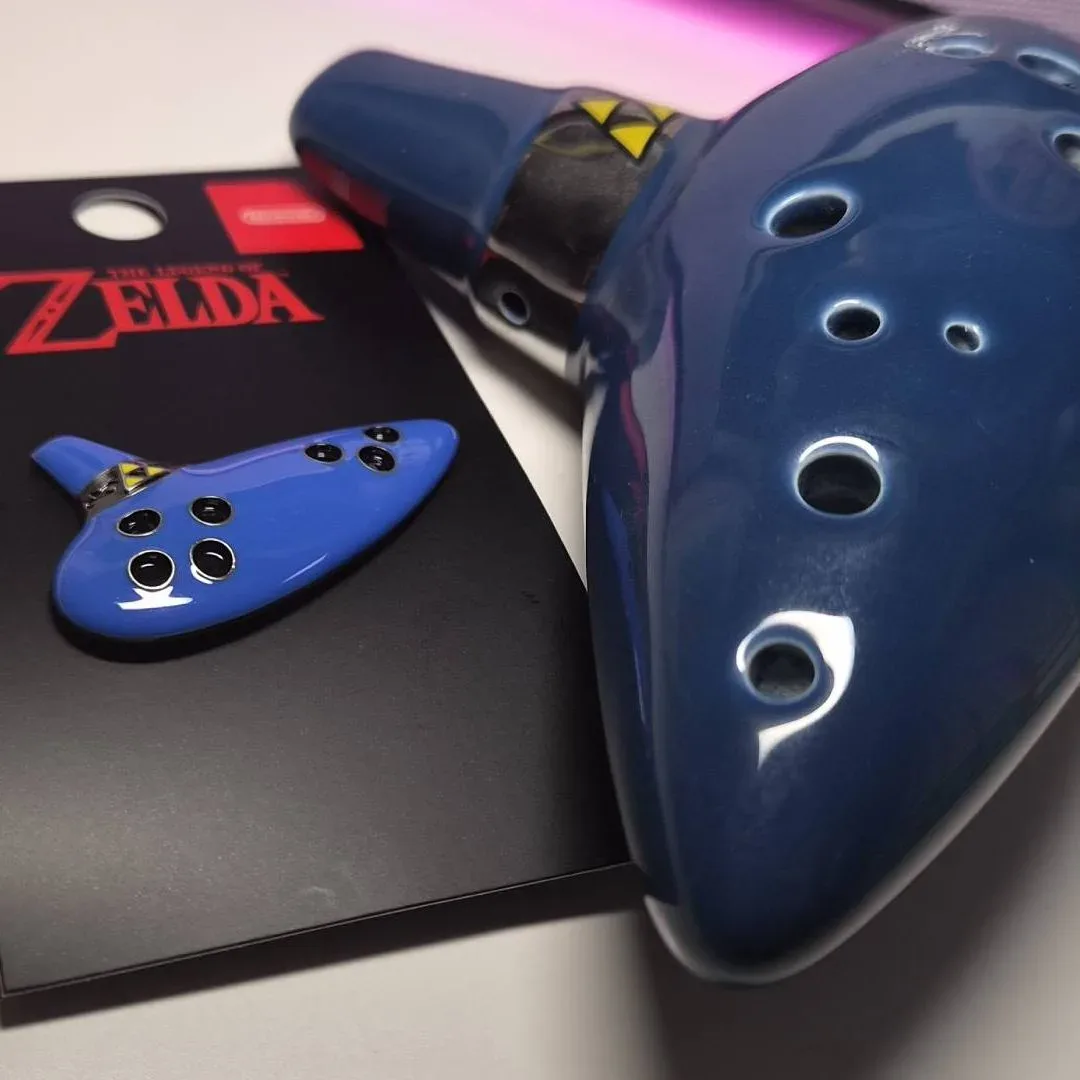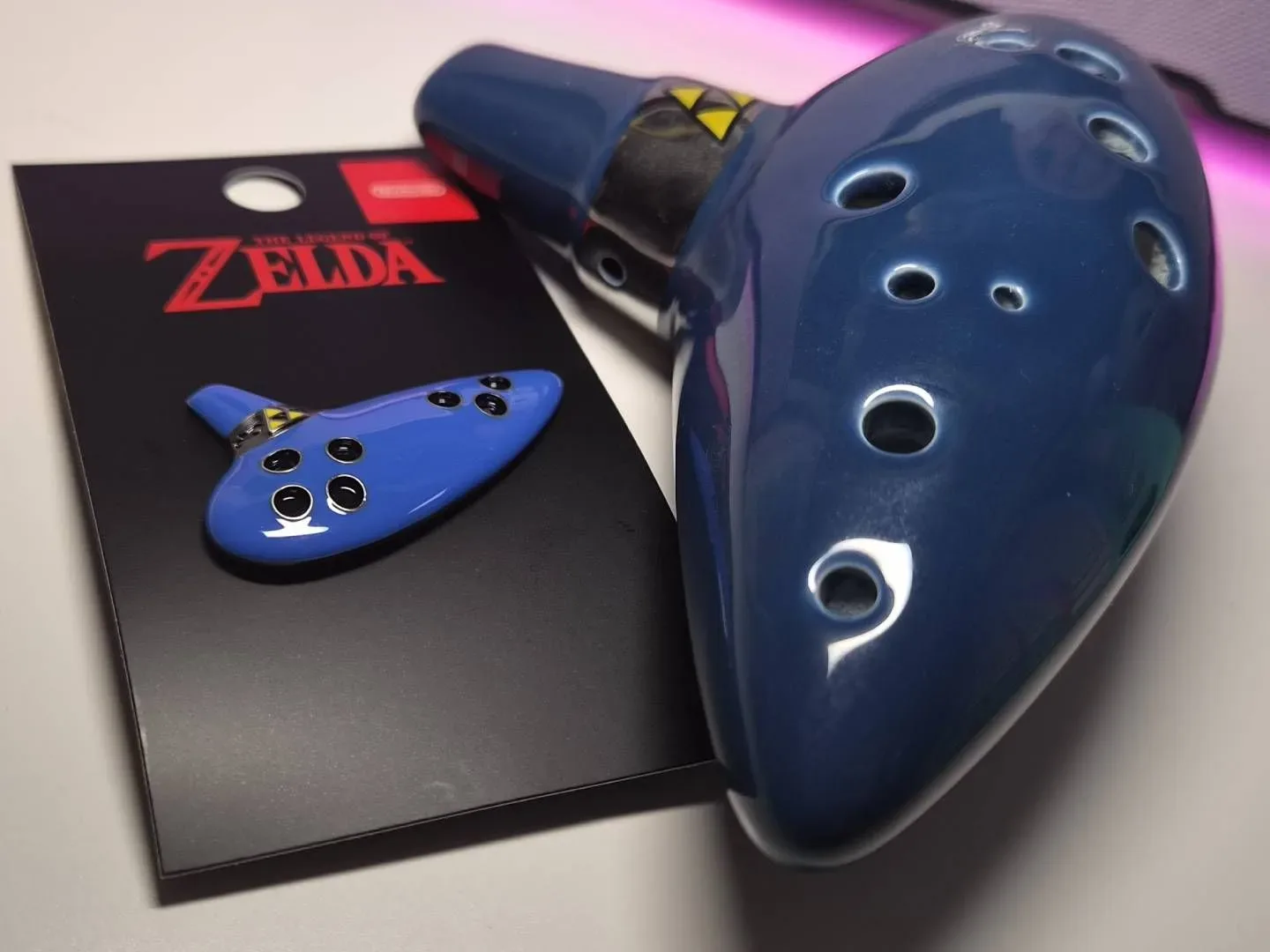
Nintendo UK’s Ocarina of Time Remake bundle has sold out after offering buyers an official Ocarina of Time pin alongside the game for £61.98. The pin was not described as a newly created preorder exclusive; it had previously been sold separately through Nintendo UK for £12.99. That distinction is important for collectors, even if it will do little to soothe anyone who saw the bundle disappear before checkout.
The separate pin is now sold out as well, while the reported bundle listing was also unavailable. A digital version was said to be out of stock at the time of the report. With the bundle expected to reach buyers on November 5, people who secured one have a little more certainty about the small physical extra headed their way: it is a dimensional metal recreation of Link’s seven-hole instrument, not merely a printed badge.
Separate coverage of the Nintendo UK bundle’s sellout likewise points to the unusual position of the item: it has become harder to obtain before the bundle’s stated delivery date, despite having been a regular standalone product for months.
What the Ocarina pin actually is
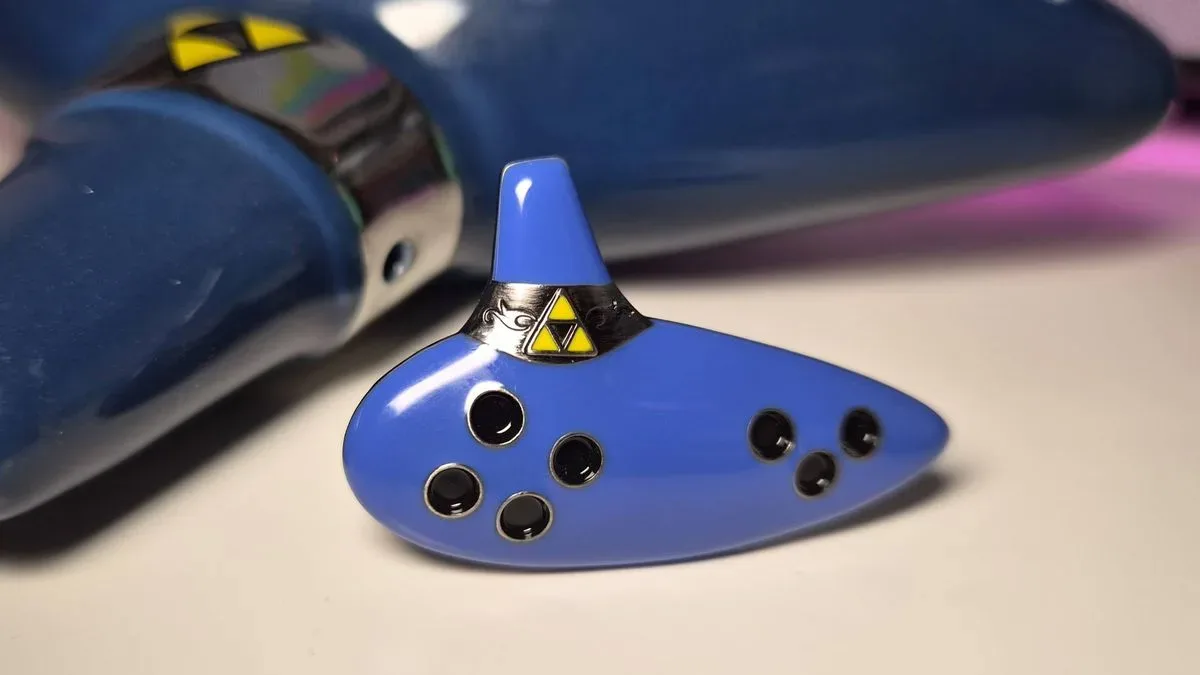
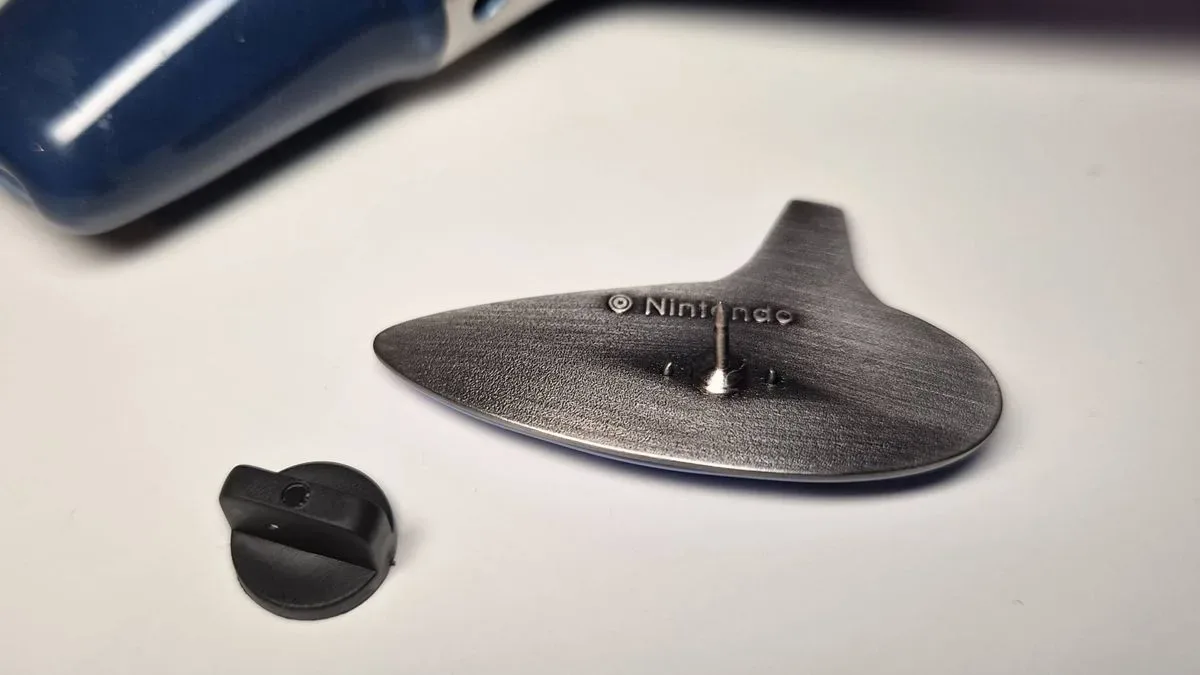
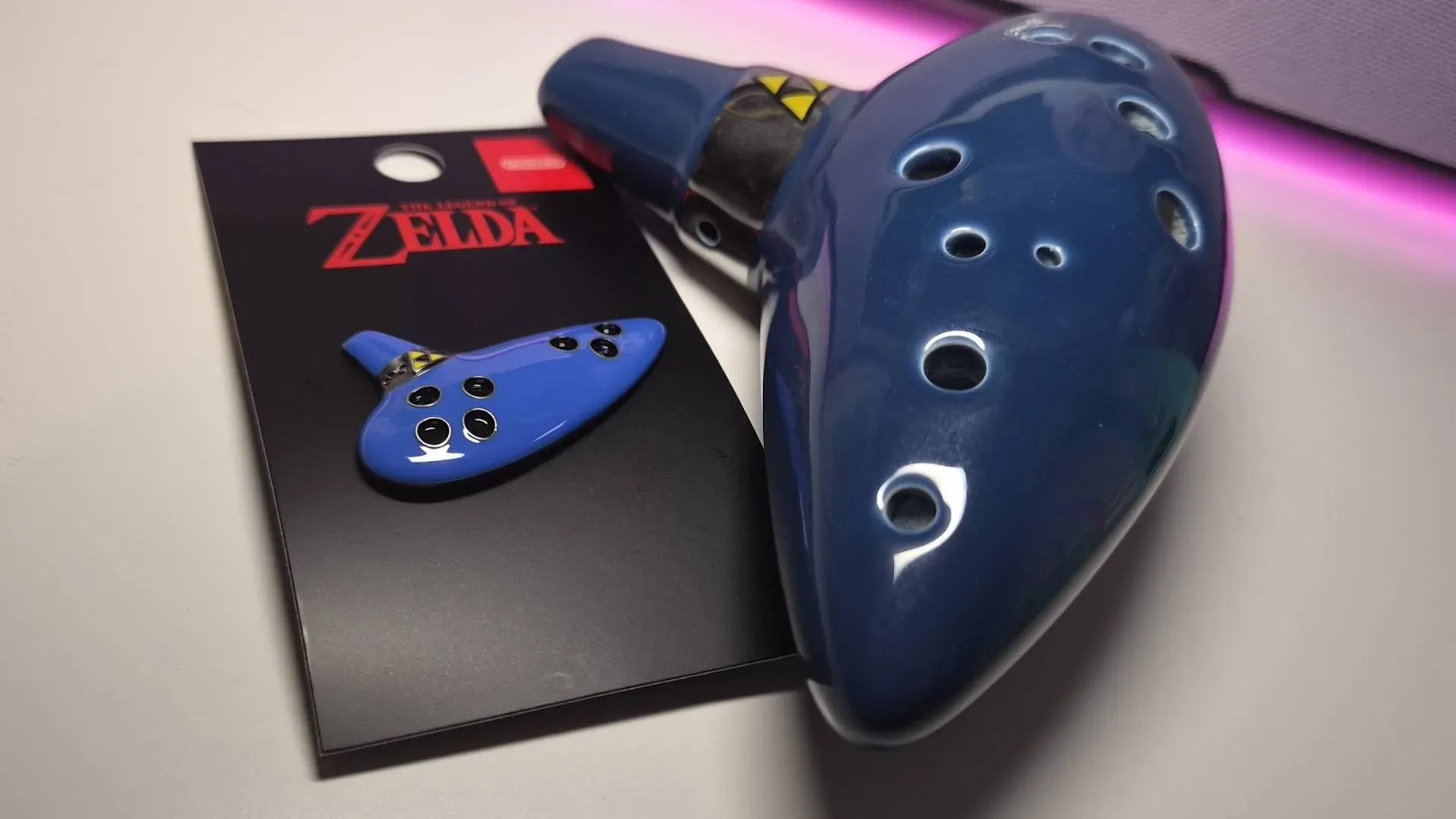
The official pin is presented as a miniature version of the blue Ocarina of Time rather than a flat illustration of it. Its construction is described as metal and three-dimensional, with a plain black backing. The pin’s holes are recessed physical details instead of painted circles, which gives the object some texture and better reflects the familiar in-game prop.
For more context, explore World of Warcraft: Forever’s $29.99 Skyborne Race Is Already Dividing Fans.
Other reported details include a deep royal-blue finish, a Triforce motif above the mouthpiece and small engraved silver swirls to either side. Those are the sorts of features that can separate a display collectible from a basic promotional pin: they add shape, depth and recognizable iconography without requiring a large footprint on a shelf or pin board.
“Three-dimensional” here does not mean a moving replica or a playable instrument. It means the design has raised and recessed surfaces, so the silhouette and holes have physical depth. For collectors, that is often a meaningful difference. A flat enamel-style graphic can still look good, but a shaped metal object more directly resembles the item it represents.
The use of metal is another practical consideration. It can make the pin feel more substantial than a lighter badge, but it also places more strain on the fastening when worn. This is not automatically a flaw; it simply changes the sensible way to handle it.
The bundle price puts the pin’s value in perspective
At £61.98, the bundle effectively added £2.99 to the game price referenced by the offer. Since the Ocarina pin had sold separately for £12.99, that made the package attractive on its face for someone who intended to buy both products anyway. It was a bundle built around existing merchandise rather than a conventional “buy early or miss the bonus” setup.
That does not establish a lasting market value for the pin, and it should not be treated as proof of scarcity. The standalone item had been available for months before the game-related bundle appeared. What can be said is narrower: the official retail listings mentioned here are sold out, and at least one resale listing was observed at £21.50. That is notably above the earlier £12.99 retail price, but an asking price is not the same as a completed sale or a reliable valuation.
Collectors weighing resale listings should separate three ideas that tend to get blurred together:
- Retail price: the £12.99 standalone price previously listed by Nintendo UK.
- Bundle uplift: the reported £2.99 extra charged when the pin was paired with the game.
- Reseller ask: a seller’s requested amount, which may or may not reflect what anyone ultimately pays.
That framework makes the situation less mysterious. The pin may be desirable, especially to Zelda display collectors, but a sold-out page and a high marketplace ask do not by themselves transform it into an item worth paying almost twice its former retail price for.
Wear it carefully—or make it a display piece
The pin is supplied with a rubber back, but the advice attached to the item is sensible: anyone putting it on a backpack, jacket lapel or other mobile fabric should consider a locking pin back. A locking back is a replacement fastener designed to grip the pin post more securely than a standard rubber clutch. It is particularly relevant for a heavier metal piece that could be knocked loose during normal use.
The risk is not only losing the pin. Repeated movement on a bag or jacket can lead to scratches, bent hardware or damage to the finish. That makes a locking fastener a modest protective measure, though it cannot make a wearable collectible invulnerable. Check the fit before heading out, avoid attaching it through especially thin or loose fabric, and do not assume the original rubber clasp will be enough for every use case.
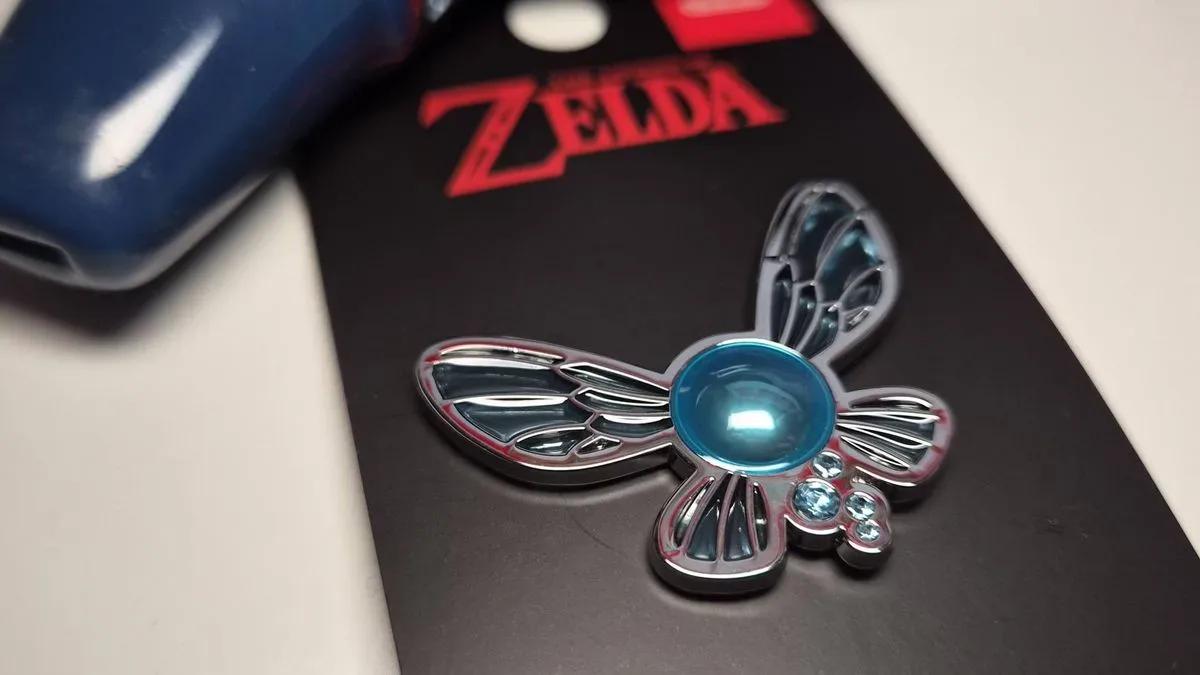
For buyers who want the cleanest long-term presentation, display is the lower-risk route. The reported owner of the pin has kept it on a shelf alongside other Zelda merchandise, including a Fairy Pin that resembles Navi. A shelf, shadow-box-style pin display or a secured pin board avoids the chance of a clasp failure while still letting the sculpted details do their job.
The choice comes down to purpose. Wearing it makes the pin a personal accessory, with the normal knocks and loss risk that entails. Displaying it preserves a small piece of game merchandise in a more controlled setting. Neither approach is more authentic; the important part is recognizing that this is a relatively weighty metal collectible, not a disposable convention freebie.
Sold out does not mean buyers need to panic
The Ocarina pin’s appeal is easy to understand. It is directly tied to one of The Legend of Zelda’s most recognizable objects, it uses a sculpted design instead of a flat print, and it was briefly available as a low-cost addition to a larger Nintendo UK purchase. Those facts give it a stronger identity than generic branded accessories.
Still, the available evidence supports patience rather than panic buying. Nintendo UK had sold it as a standalone product before the bundle, and it remains an existing official collectible rather than a clearly identified one-off reward created solely for this preorder campaign. There is no supplied indication of a production total, a numbered edition or a permanent discontinuation. The current sellout is real, but its long-term significance is uncertain.
For people awaiting the bundle, the useful takeaway is straightforward: expect a small, blue, shaped metal Ocarina replica with physical hole details, a black backing and a rubber clasp. If it is destined for a bag or jacket, reinforce the fastening. If the aim is collection condition, give it a safe display spot and resist treating inflated resale asks as a verdict on what the pin must be worth.