World of Warcraft: Forever has arrived with a promise that should sound enticing to players who want a renewed take on the MMO’s early-era appeal: updated visuals, a large slate of new quests, and a reimagined version of a game with more than two decades of history behind it. Yet one part of the reveal has quickly become a point of friction. The newly introduced Skyborne race will not simply be available to everyone who starts the game.
Access to the Skyborne is priced at at least $29.99 ahead of World of Warcraft: Forever’s planned November release. More expensive purchase options exist, including a Skyborne Epic Pack priced roughly $20 higher than the base option and a Warcraft Forever Collection listed at $79.99. Those larger packages include additional items beyond the race, but the fundamental concern being voiced is straightforward: the entry price to make a Skyborne character is $30.
For a game leaning into nostalgia, that decision matters beyond the dollar amount. In an MMO, a playable race is not merely a cosmetic selection. It is often a player’s first long-term choice: the body model they see through hundreds of hours, the visual identity other players recognize, and, depending on the game’s systems, a potential connection to classes, faction culture, story, and social groups. The early response suggests that the Skyborne’s price and presentation are testing whether World of Warcraft: Forever can balance new material with the broad-access feeling many players expect from a Classic-adjacent project.
What the Skyborne purchase includes—and what is causing the dispute
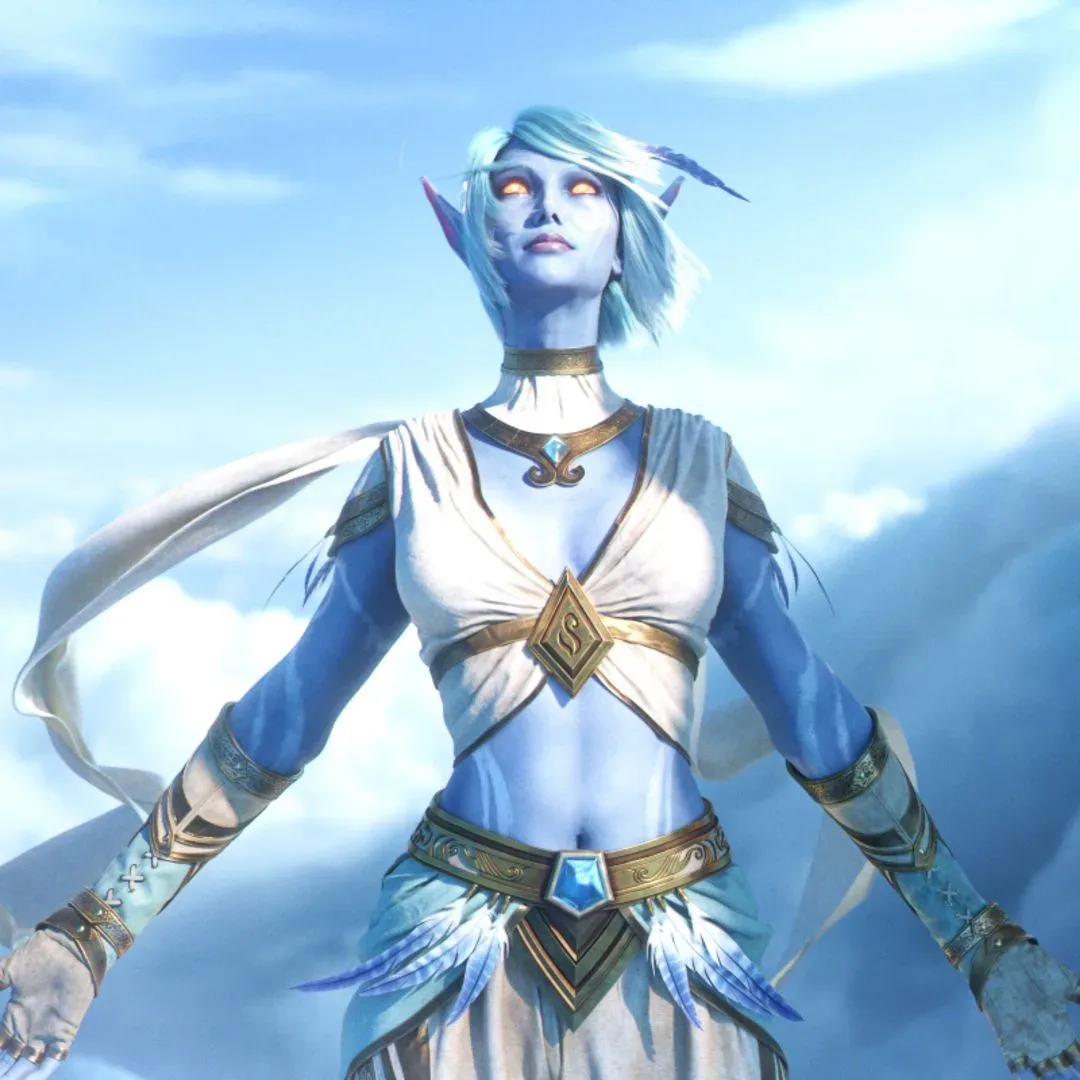
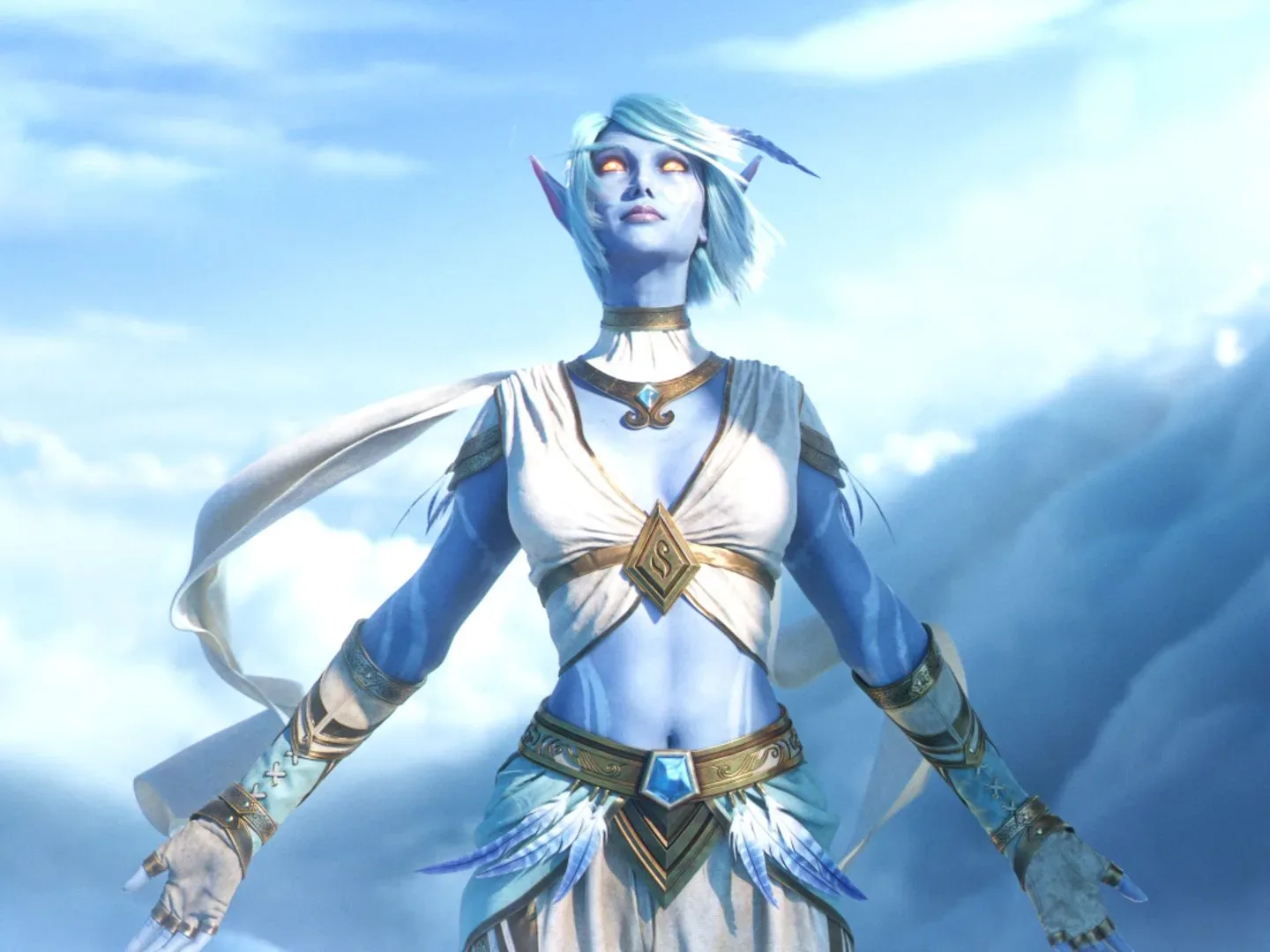
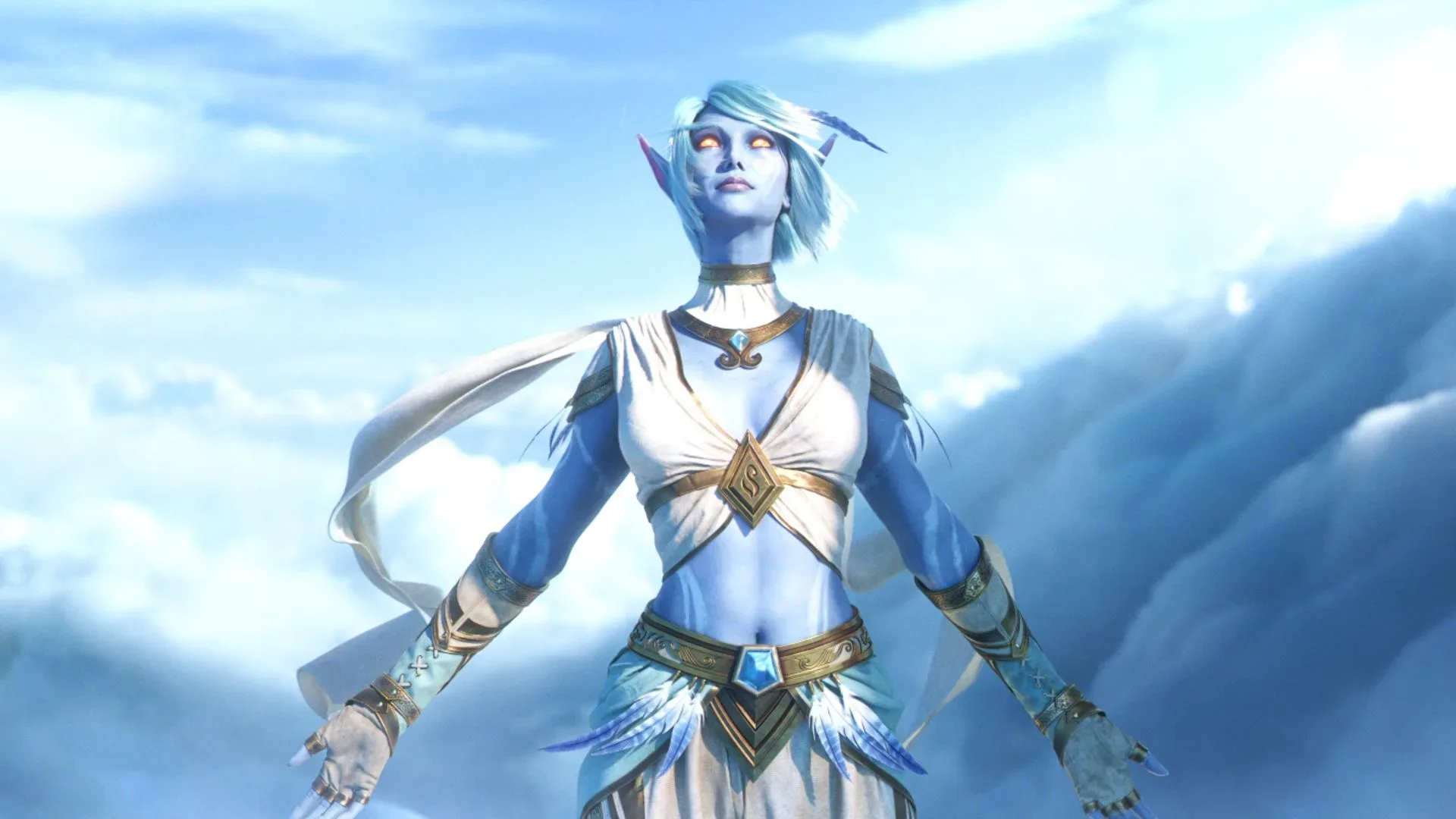
The Skyborne are a previously unseen race for World of Warcraft: Forever. Their revealed look has been described as soft periwinkle, with an elf-like silhouette. That visual has supporters; some players plainly like the design on its own terms. The dispute is not a uniform rejection of their appearance, nor is it solely an argument over the price.
Instead, the conversation has converged around two connected questions:
- Should a newly playable race in this kind of MMO be sold as paid access at all?
- Does the Skyborne design feel distinctive and at home in the game’s intended old-school-inspired setting?
The first question is the clearest practical issue. A $29.99 purchase is a meaningful additional cost for someone whose preferred character concept is a Skyborne. Players who do not care about the option can ignore it, and those who value the race or accompanying items in bigger packs may see a different proposition. But players who want only the basic race access are still looking at the same minimum price.
That distinction is important when assessing the reaction. The larger editions cannot be treated as an answer to the base concern simply because they contain more material. A bundle has added value only for buyers who want what is bundled. For a player focused on a single character race, the relevant question remains whether the race itself justifies the standalone threshold.
What “paywalled” means in this case
A paywall is a feature or piece of content that cannot be used without a separate payment. Here, the term is being used because the Skyborne are gated behind a purchase rather than being part of the accessible race roster at release. It does not necessarily mean every aspect of World of Warcraft: Forever requires an extra charge; it specifically describes the barrier around this playable option.
Related coverage includes World of Warcraft: Forever's $30 Skyborne Race Sparks Early Fan Backlash.
That can carry more weight in a persistent online game than it might in a smaller cosmetic purchase. Character creation is the starting point for a player’s ongoing presence in an MMO. Once friends form guilds, pursue quests, and establish character identities, changing a foundational choice later can feel less attractive than making it at the beginning. As a result, a paid race can be interpreted less as an optional add-on and more as a price placed on a preferred way to participate.
The design debate is about more than the color blue
The other half of the backlash is aesthetic and thematic. Some commenters argue that the Skyborne resemble “blue elves,” invoking the game’s established Night Elves rather than a concept that feels genuinely new. Others have said the race gives off a “retail” feeling—using the community shorthand for elements they associate with the modern live version of World of Warcraft rather than a nostalgic reworking of its earlier identity.
That language should not be confused with a confirmed technical or narrative problem. It is a statement of taste and expectation. The available information establishes that the Skyborne are new and that some players believe their presentation clashes with the project’s tone; it does not establish that the race breaks lore or that it will play identically to an existing option.
Still, perception is especially consequential in a project built partly around familiarity. “Classic+” is commonly used by fans to describe the desire for an expanded version of an older MMO experience: new adventures and systems, but additions that feel as though they belong beside the original material. It is an expectation rather than a precise feature list. One player may want visibly ambitious new races and visual upgrades; another may want additions that are deliberately restrained, with silhouettes and themes that could plausibly have appeared in the original era.
The Skyborne sit right on that fault line. Their periwinkle elf-like design may be attractive, but a handsome model does not automatically satisfy players who wanted a radically different creature type, a stronger faction hook, or a concept more separated from an established elven identity. The criticism is therefore not just “this looks bad.” For many, it is “this does not look different enough to be a premium new race, and it does not look rooted enough in the specific fantasy being revived.”
Faction identity is an unanswered concern
Some of the early discussion also focuses on a perceived lack of faction identity. In a game where player groups and allegiances are central to the social texture, a race’s relationship to a faction can be more than lore dressing. It can affect the sense that a character belongs somewhere and has a defined place in the world.
At present, the available reveal details do not settle how the Skyborne’s faction positioning will work. That uncertainty leaves a lot of room for players to project hopes and worries onto the race. It is reasonable to distinguish that uncertainty from confirmed design facts: concerns about identity are real community feedback, but the underlying implementation has not been established by the material available so far.
There is also a broader creative challenge here. A new race needs enough familiarity to fit into a long-running fantasy setting, yet enough distinction to answer the obvious question: why does this race need to exist? Visual design is part of that answer, but so are story, cultural cues, class expression, transformations such as druid forms, and the way the race interacts with the world. The Skyborne debate indicates that the initial showing has not fully answered that question for everyone.
Why the price and the creative pitch amplify each other
Either complaint could have existed by itself. A free Skyborne race might still have sparked arguments over its look. A markedly unusual and beloved race might still have drawn criticism for costing $29.99. Together, though, they create a much tougher first impression.
A paid option invites players to evaluate its uniqueness more intensely. If people already see familiar elf-like elements in the silhouette, the purchase price can feel like a premium charge for a variation rather than access to a major new fantasy. Conversely, if the race’s design had instantly communicated a widely desired new idea, more players might have been inclined to see the cost as a personal choice rather than an unwelcome restriction. Neither outcome is guaranteed, but the two topics naturally reinforce each other.
This is why the most useful reading of the feedback is not that every player hates the Skyborne or that every objection is the same. Some players remain excited for World of Warcraft: Forever and intend to play at launch while still disliking this particular decision. Others appreciate the visual design but object to the paywall. Others want something they consider more inventive. Those positions can coexist, and they point to a launch conversation that is more nuanced than a simple yes-or-no verdict.
What players can reasonably watch for before November
Blizzard has not yet responded publicly to the specific Skyborne controversy described in the early community discussion. Until it does, players should be cautious about treating speculation as confirmation—particularly claims about lore consequences, gameplay balance, or the exact implications of the race’s faction identity.
The practical details worth monitoring are clear:
- Whether the minimum $29.99 route remains the sole way to gain Skyborne access.
- Whether the contents and value proposition of the Skyborne Epic Pack and $79.99 Warcraft Forever Collection are clarified further.
- How the race’s faction role, lore, class access, and distinctive visual features are explained.
- Whether the developer adjusts the race, its pricing, or its presentation in response to feedback before release.
Players deciding whether to buy should separate confirmed details from expectations. The confirmed core is a new paid race, a minimum listed price of $29.99, higher-cost packages with additional content, and a November target for World of Warcraft: Forever. The rest—including how compelling the Skyborne feel in play and whether the wider community comes around—remains unresolved.
There is a useful parallel in other fantasy role-playing discussions: character options often mean more when they carry a strong identity rather than simply a different coat of paint. Even outside Azeroth, new archetypes and flavorful character concepts are frequently the part that gets players talking, as with a recent look at a necromancer-themed D&D character option. World of Warcraft: Forever now has to make the Skyborne feel like a worthwhile addition in both creative and commercial terms.
For the moment, the Skyborne are a revealing early test for the project. World of Warcraft: Forever’s broader premise has generated enthusiasm, but excitement for a rebuilt nostalgic experience does not automatically extend to every new feature placed behind a separate purchase. Whether the response hardens into lasting resentment or softens with more detail will depend on what players learn before November—and whether the Skyborne become more than the shorthand currently following them around: expensive blue elves.