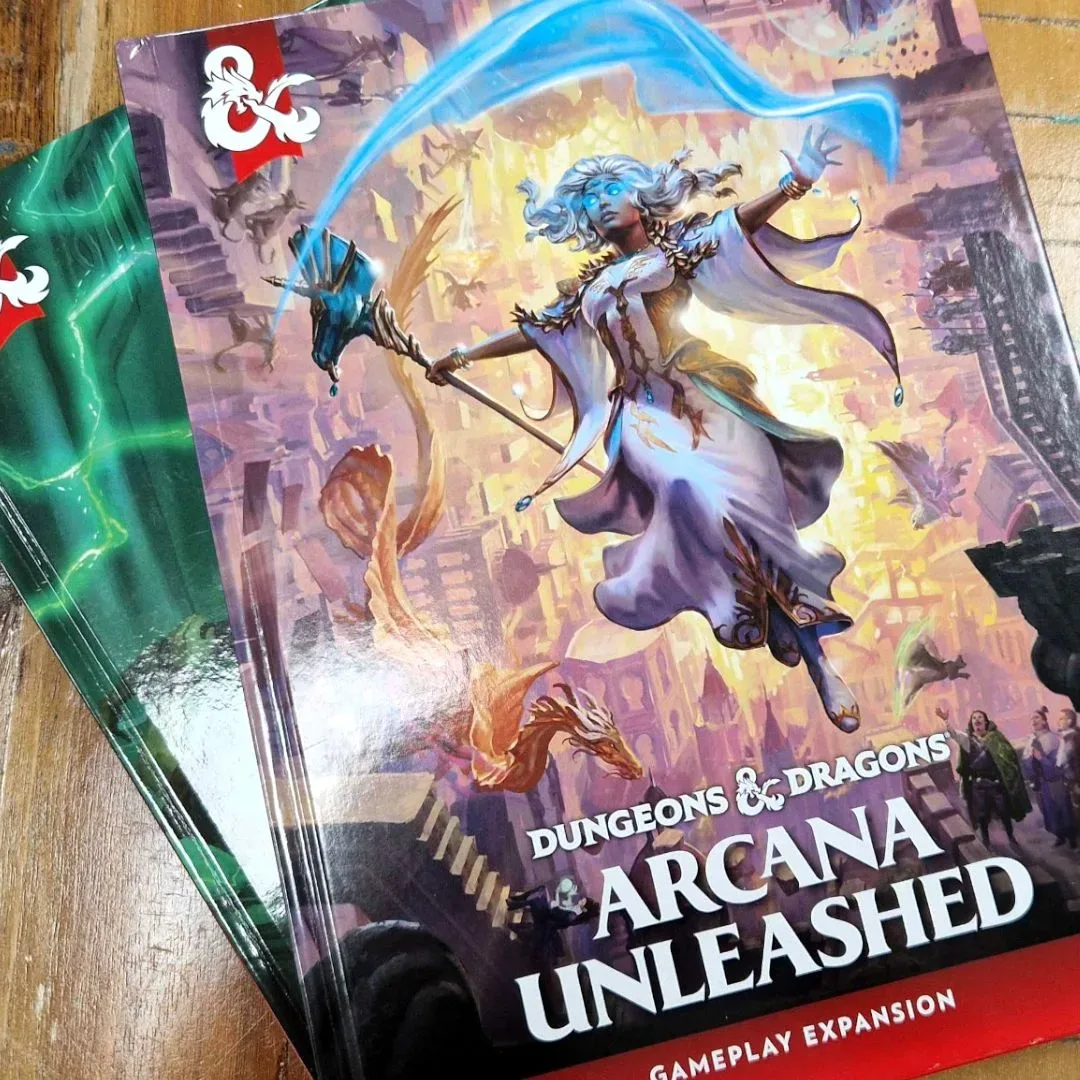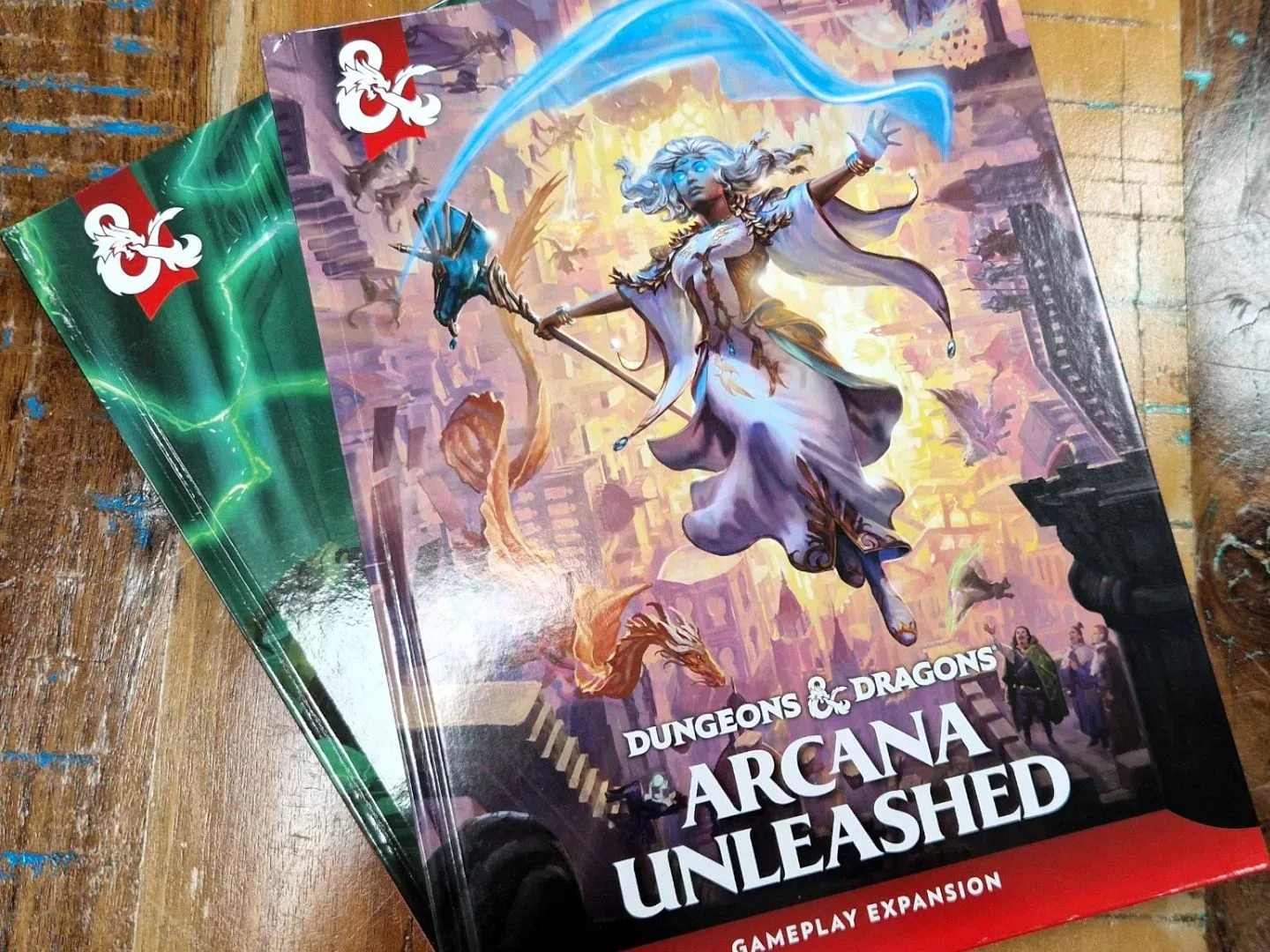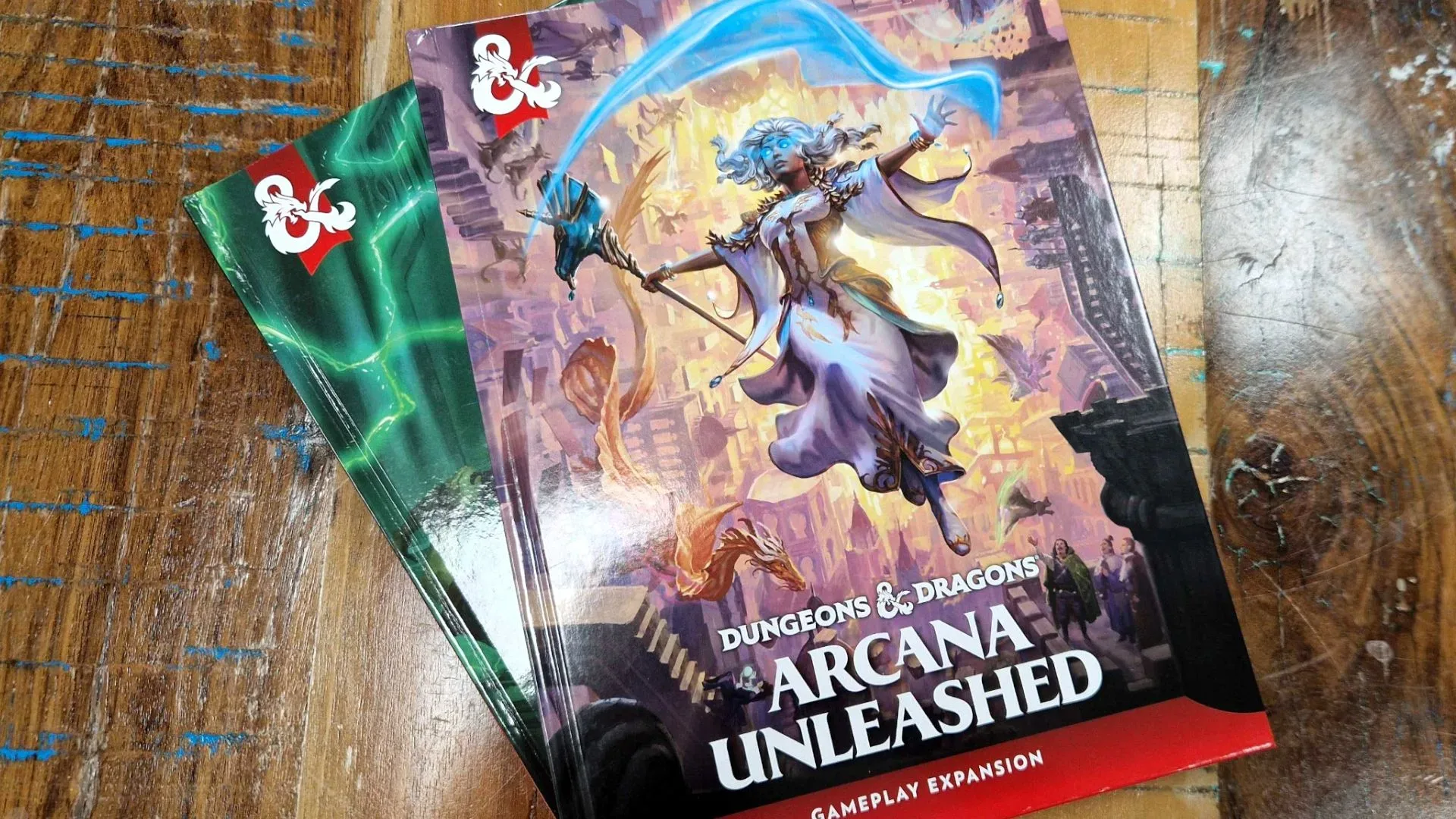
D&D Arcana Unleashed is built around a simple but potent tabletop promise: let magic-focused characters feel magical immediately. The new 160-page book brings eight arcane subclasses to Wizards, Clerics, Fighters, Monks and Warlocks, alongside backgrounds, feats, spells, magic items and tools intended to give Dungeon Masters a more overtly mystical campaign framework.
The most eye-catching option is the new Necromancer Wizard. Its appeal is not merely the reliable fantasy of an adventurer surrounded by obedient bones. The subclass changes the early-level experience of playing a necromantic spellcaster, allowing that identity to arrive at the start of a campaign rather than after a long wait through the level progression.
That player-facing release is paired with D&D Arcana Unleashed: Deadfall, a campaign for characters of levels 11 through 20. Deadfall sends parties into Thay, the homeland of Szass Tam, in an effort to stop his plot. It is framed as a wizardly spy thriller, with at least one early scenario structured around eliminating a group of villains while leaving the party considerable discretion over how to do it.
A Necromancer Wizard that starts acting like one
In tabletop role-playing games, a subclass is a character specialization selected within a broader class. A Wizard may share the basic spellcasting structure of other Wizards while receiving a subclass’s distinct features, spells or tactical focus as they gain levels. The Necromancer in Arcana Unleashed appears designed to close the gap between the theme players expect and what the character can do during the earliest sessions.
The pivotal first-level feature modifies Find Familiar. Normally, that spell calls a magical companion. Under the new Necromancer option, the Wizard can instead summon a zombie or skeleton. That gives the character an undead servant from level one, well before gaining access to Animate Dead, the third-level spell traditionally associated with raising corpses for assistance.
It is a small mechanical adjustment with substantial role-playing consequences. Early campaign levels are often where a player establishes the visual language, personality and party role of a character. A necromancer who begins with an undead familiar can enter the story already looking and behaving like the archetype: a scholar of mortality with a skeletal attendant, a disquieting messenger, a lookout, or simply an extremely literal personal assistant.
The subclass also lets the character use that undead companion as a siphon for recovering health. At level six, it gains the ability to cast Animate Dead once per long rest without spending a spell slot. A spell slot is the game’s limited casting resource; avoiding that expenditure means the Wizard retains more magical capacity for the rest of the adventuring day. A long rest, meanwhile, is the game’s major recovery period, which generally refreshes daily resources.
Together, those elements establish a clear progression. The first-level undead familiar supplies the fantasy and a practical companion. The health-recovery interaction makes the servant matter beyond appearances. The level-six free use of Animate Dead supports the larger undead-master identity without competing directly with every other spell the Wizard might need to prepare or cast.
Related coverage includes D&D Arcana Unleashed Brings Necromancers, Arcane Subclasses and a High-Level Thay Campaign.
That does not automatically make the option the best answer to every encounter. A player still has to account for the party’s needs, the campaign’s tone and the Dungeon Master’s interpretation of the undead in the setting. But it does mean a Necromancer Wizard has a more coherent path from concept to play. The book’s most important apparent contribution is not that it invents necromancy, but that it moves the experience closer to the beginning of a character’s career.
Eight subclasses broaden the arcane menu
Necromancy may be the headline act, but Arcana Unleashed contains eight magic-oriented subclasses spread across five classes. That scope matters because it avoids treating arcane flavor as a Wizard-only concern. Clerics, Fighters, Monks and Warlocks all receive options, allowing a party to approach the book’s magical themes through different mechanical roles.
The Arcane Archer is one example highlighted by the release. Its magical arrows can produce unusual effects, including sending a foe to an alternate dimension for one turn. In game terms, that is a strong illustration of a subclass feature changing the tactical shape of a fight without requiring the character to become a conventional full spellcaster. A Fighter remains a martial character, but can contribute a piece of strange, targeted battlefield magic.
For groups, this broader spread creates room for an arcane-heavy party that is not composed exclusively of Wizards. One player may lean into undead servants, another into enchanted archery, while others select mystical approaches tied to divine magic, martial arts or a pact-making Warlock. The practical result is more potential variety in how a campaign communicates its magical premise.
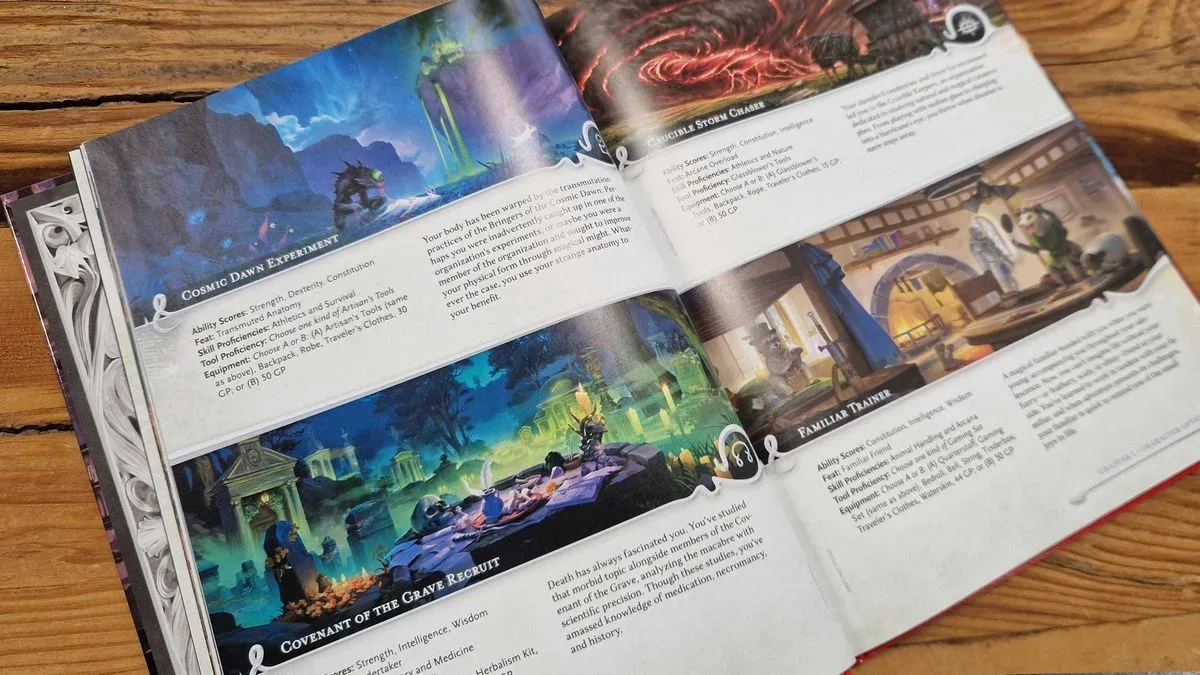
The additional backgrounds and feats reinforce that flexibility. A background helps define where a character comes from and can connect them to the campaign’s themes before class features take over. A feat is an optional character benefit that can add a specialized capability or reinforce a chosen style. Magic-themed versions of both give players more ways to make arcane interests part of a character’s entire identity rather than a detail confined to a subclass choice.
More than a player-options book
Arcana Unleashed also includes spells, magic items and arcane patrons, plus world-building material meant for Dungeon Masters. That is important for tables where a player’s new character concept needs more support than a list of combat rules.
An arcane patron can function as a connective force for a campaign: a magical figure, institution or source of direction that helps give a party a reason to pursue adventures. Used carefully, that kind of element can turn a bundle of character options into an ongoing premise. A group could be investigating magical disturbances, carrying out work for a powerful sponsor, or navigating obligations tied to a supernatural authority.
The value here is potentially greatest for homebrew campaigns. “Homebrew” refers to a setting, rules adjustment or adventure material created or customized by a table rather than played exactly as presented in a published adventure. Dungeon Masters building their own worlds can use a subclass or spell as a starting point, then add patrons, items and magical institutions that make those mechanics feel native to the setting.
The book’s relatively compact 160-page size may therefore be less of a limitation than a signal of focus. It is not presented as an all-purpose expansion for every style of D&D. It is a concentrated package for campaigns interested in spells, strange magical affiliations and characters whose central hook is explicitly arcane.
Deadfall makes Thay the stage
Deadfall shifts from character construction to a high-level adventure. Its level 11–20 range places it firmly beyond the introductory phase of a campaign, where characters usually have more powerful resources and the stakes can support threats tied to major magical villains.
Szass Tam is the campaign’s central adversary, and the adventure also offers more detail on Thay. The setting is described as a place where mages rule cruelly, making it a natural match for a story about intrigue as well as overt magical danger. Rather than presenting every objective as a direct march toward a fight, Deadfall’s spy-thriller framing suggests planning, infiltration and player choice are part of its identity.
That distinction has useful implications for groups. A mission that asks players to remove a cadre of villains, while allowing them latitude in method, invites conversation before initiative is rolled. Players may weigh disguise, deception, reconnaissance, alliances or a direct confrontation. The game’s usual action and spellcasting tools still matter, but the adventure’s premise leaves room for the party to decide what success looks like and how exposed they are willing to become.
For a Dungeon Master, that kind of design can support different player preferences at the same table. The tactician can help map a plan; the social specialist can seek leverage; the spellcaster can look for magical openings; and the combat-focused character remains ready when the careful plan inevitably acquires several unexpected complications. A spy thriller does not remove combat from D&D. It changes the context around combat, making information and timing part of the challenge.
The campaign is also plainly aimed at established groups. A level 11–20 adventure assumes a party with substantial abilities, and its setting and villain are positioned at a scale appropriate for those characters. Groups starting new campaigns may find Arcana Unleashed’s subclasses and campaign-building material easier to use immediately, while Deadfall is a clearer fit for a high-level party already in progress or one deliberately created for that tier.
Who these books are for
Arcana Unleashed is best suited to players who want more than a cosmetic magical theme. Its material gives spellcasting and arcane-adjacent characters new mechanical hooks, particularly the Necromancer Wizard’s early undead companion and later spell-slot-free Animate Dead use. It should also appeal to Dungeon Masters looking to make magic a stronger organizing principle for their worlds.
Deadfall is the more specific proposition: a high-level campaign centered on Thay, Szass Tam and an espionage-minded structure. The physical maps-and-tokens add-on is intended for use with both releases, giving groups a tangible accessory option for their sessions.
The two books ultimately serve complementary purposes. One gives tables more ways to build and frame magic-focused characters and settings. The other puts powerful characters into a dangerous magical state and asks them to outthink a villain’s scheme. For anyone whose D&D wish list has long included a genuinely necromantic Wizard from the first session onward, the skeleton is no longer waiting in the closet until third-level spells arrive.
For a wider look at the business and creative shifts shaping games, see our coverage of Apple’s expanded Arcade bundle.
Shop the products
Check current price, model and availability at the retailer.