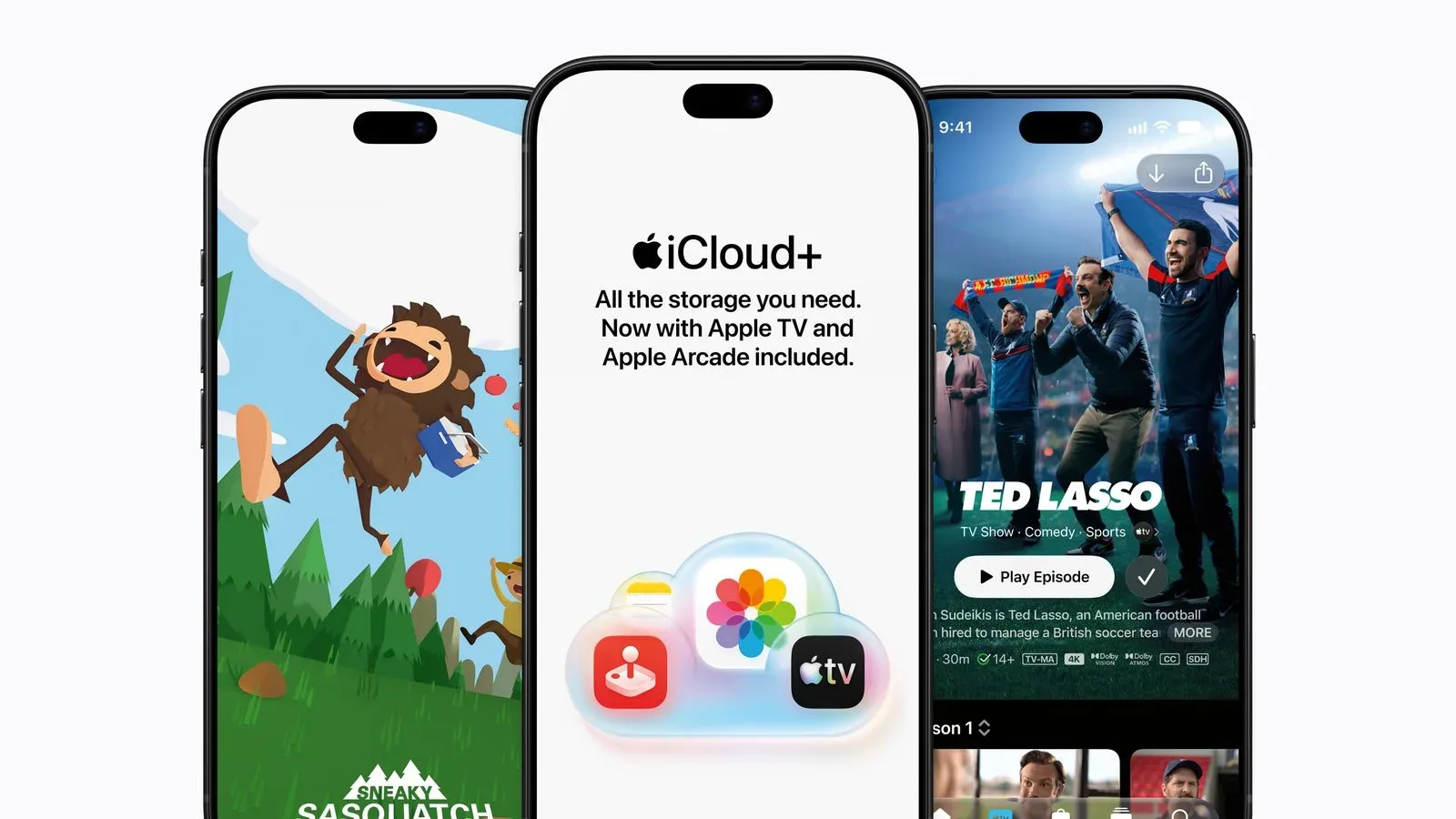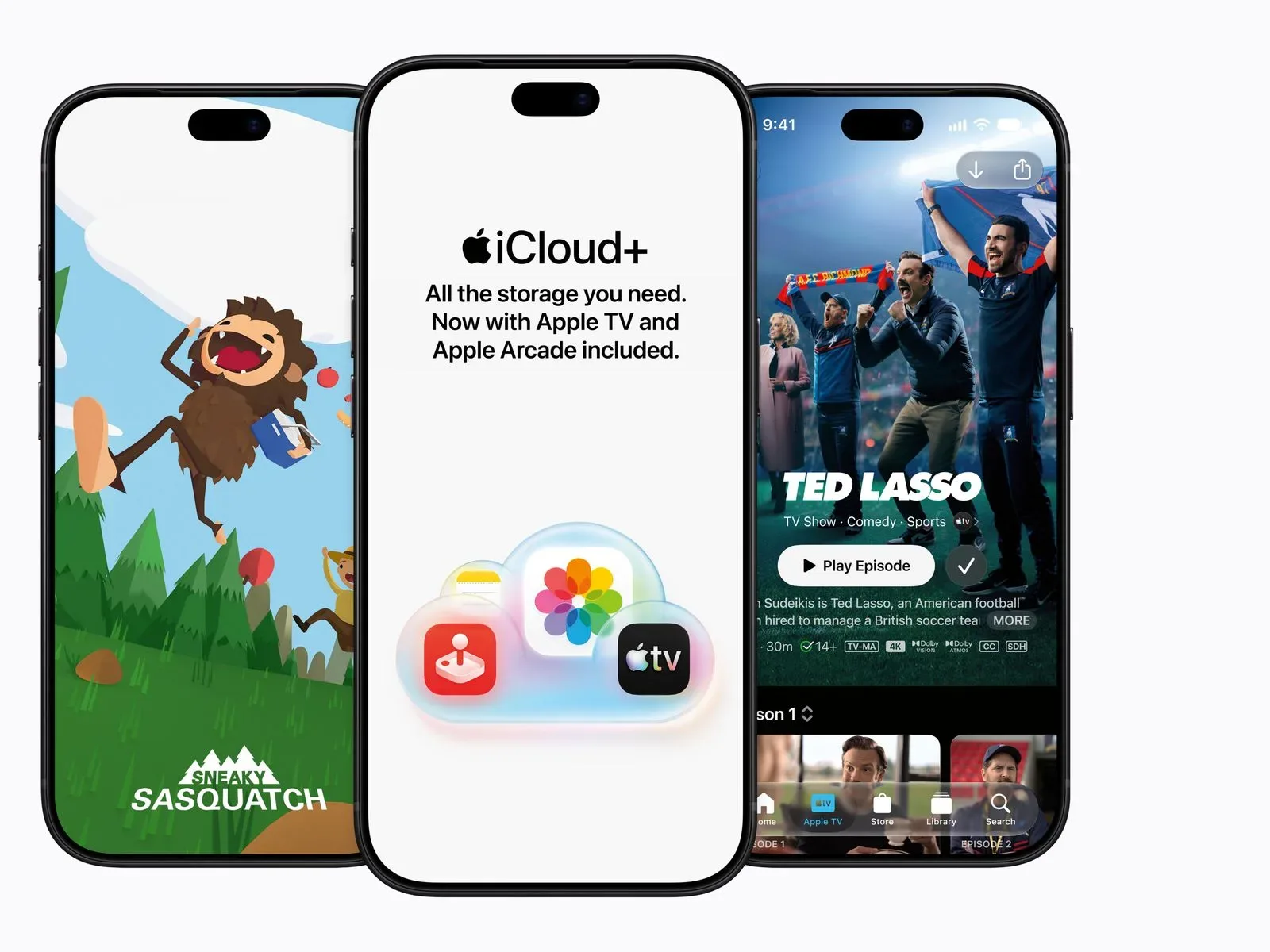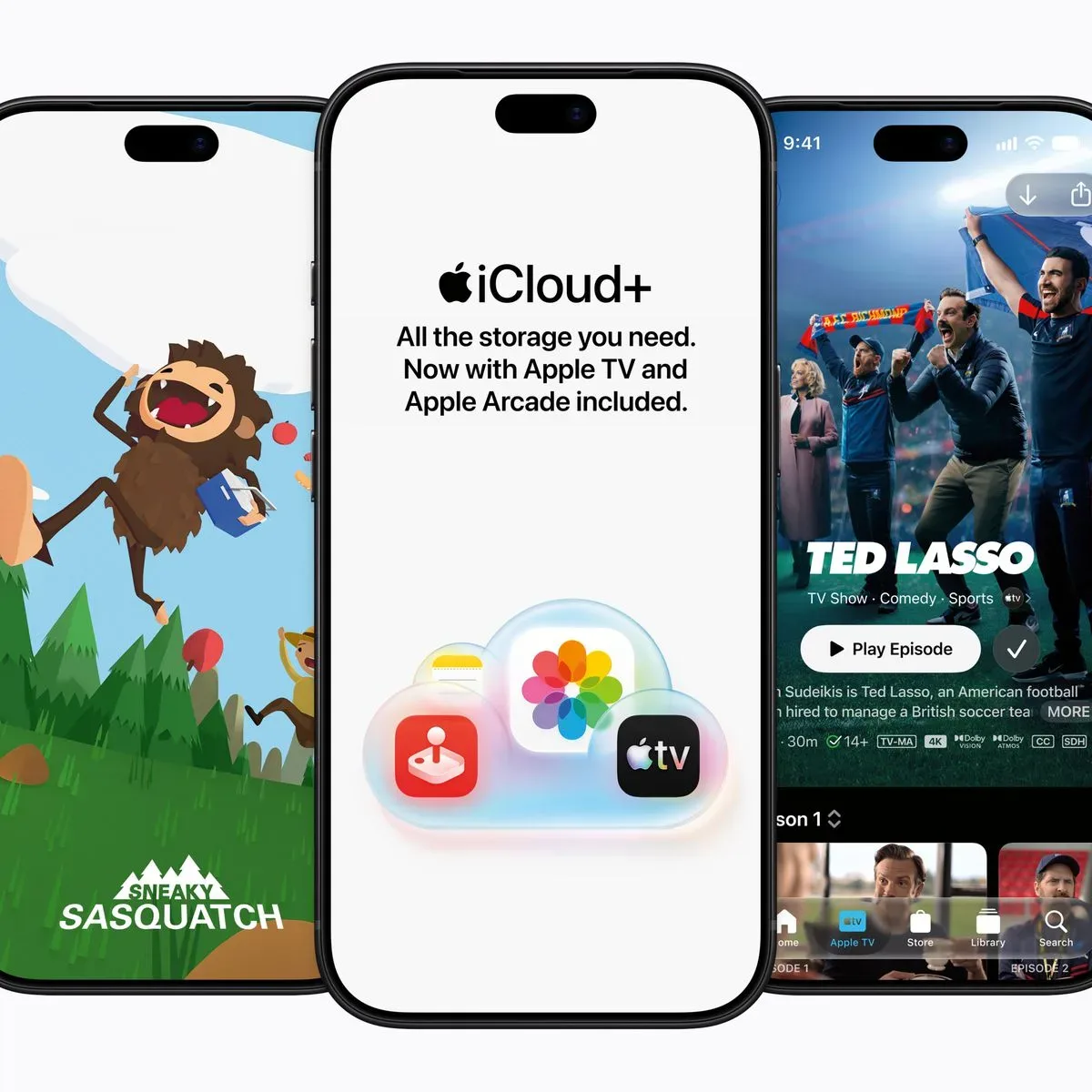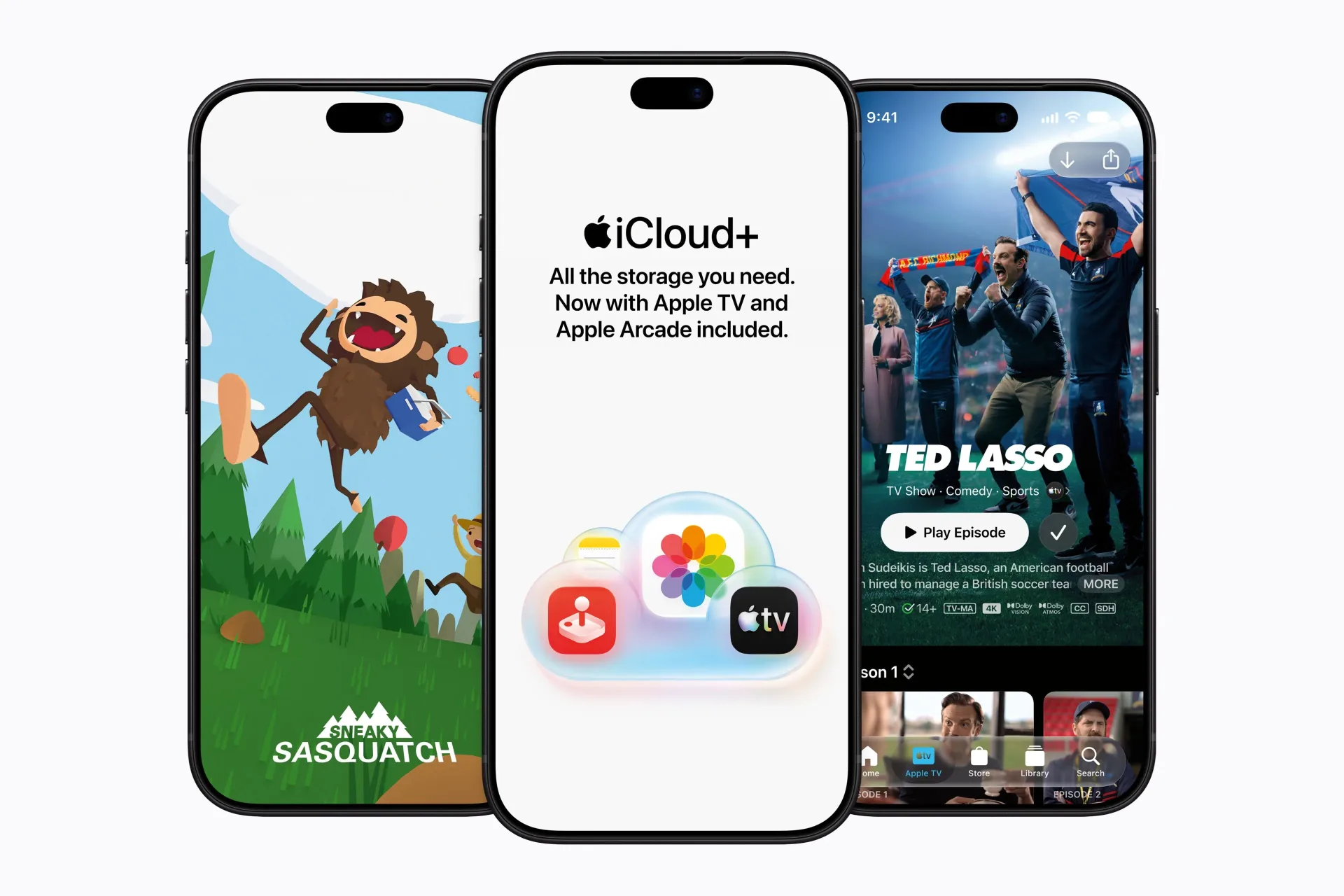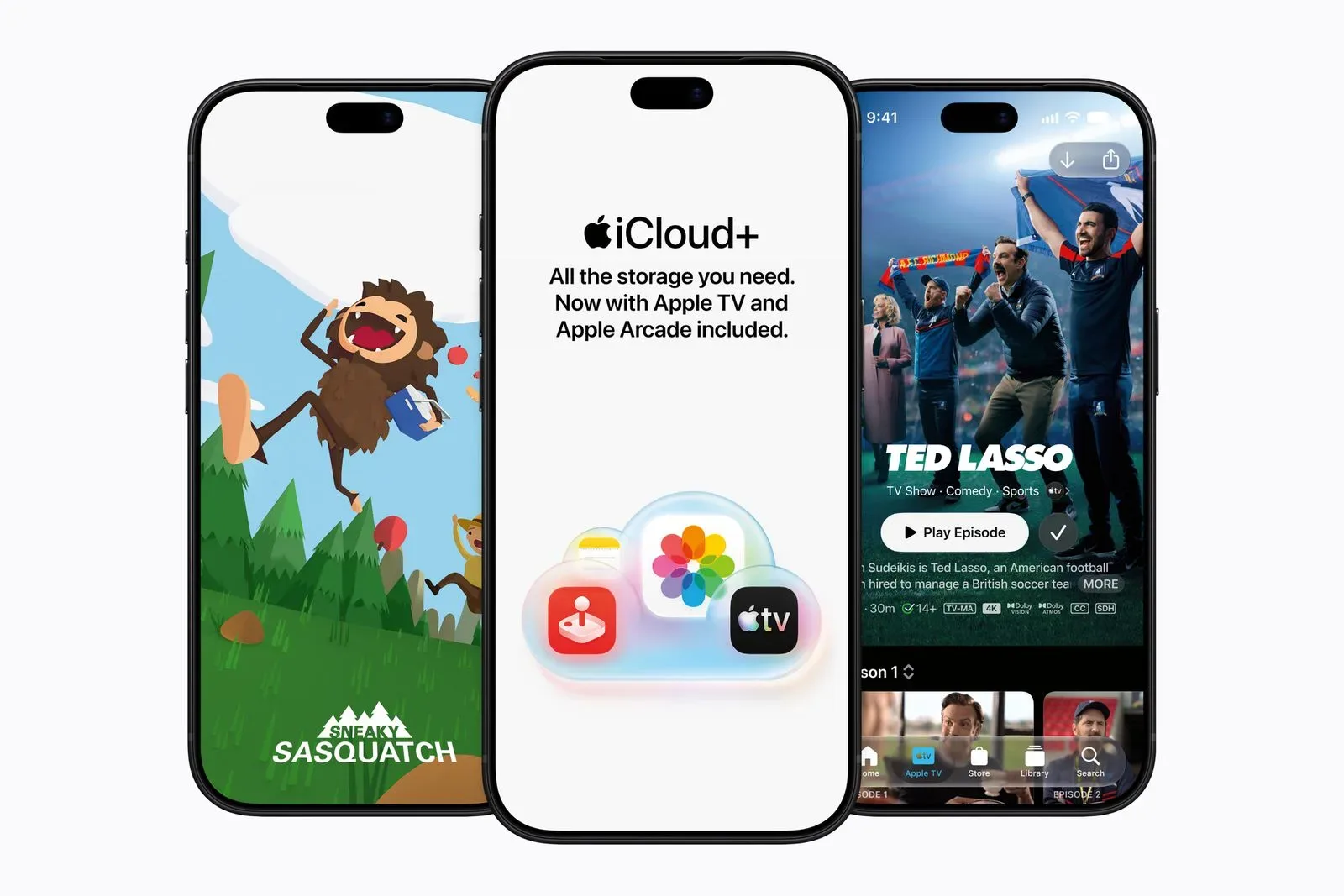
Apple is reshaping the way it sells Apple Arcade in more than 100 countries: every paid iCloud+ storage plan in the participating markets, starting with the 50GB tier, now includes both Apple TV and Apple Arcade at no additional charge. The change ties Apple’s game subscription to a service many device owners already use for cloud storage, rather than asking them to maintain a separate Arcade membership.
It is a meaningful distribution change for Apple Arcade. In the countries where the new arrangement has launched, Apple TV and Apple Arcade will no longer be sold individually through Apple. Existing iCloud+ subscribers will gain access automatically, while standalone TV or Arcade subscribers are set to transition to iCloud+ and have their old individual subscription cancelled. Apple says Apple Arcade saves and game progress will remain intact through that transition.
The offer is not a global replacement for standalone subscriptions. It does not include the United States, Canada, Australia, the United Kingdom, or other European markets. But for players in the eligible territories, the practical takeaway is straightforward: paid iCloud+ is becoming the route to Arcade access.
What is changing for Apple Arcade players
iCloud+ is Apple’s paid cloud-storage service. The new model makes it a services bundle in the participating countries, pairing storage with Apple TV and Apple Arcade. Importantly, the inclusion begins with the entry-level 50GB paid tier; Apple has not limited TV and Arcade access to higher-capacity plans.
Apple Arcade is Apple’s subscription game catalogue. Under this policy, it is no longer an à la carte product in the launch markets. That makes the storage plan—not a separate game-services bill—the subscription customers will need to manage.
For existing paid iCloud+ customers, Apple says access to TV and Arcade arrives automatically. That means there should not be a separate sign-up step merely to activate the newly bundled benefits. For people who only had a standalone Apple TV or Apple Arcade subscription, the company says they will receive a notification that they are now subscribed to iCloud+; their former standalone service subscription will then be cancelled.
That distinction matters. “Included at no additional cost” describes the addition of TV and Arcade to a paid iCloud+ plan; it does not mean iCloud+ itself becomes free. Anyone who did not already pay for iCloud+ should pay close attention to the notification and the plan details associated with the transition, particularly because the available storage amount is now part of the decision to keep access to Apple’s games and TV service.
Your saves are meant to carry over
The most reassuring detail for regular Arcade players is Apple’s statement that game saves and progress are preserved. A subscription migration can sound alarming when a game library includes long-running saves, but the company specifically says the move away from standalone Arcade does not erase that progress.
There is still a sensible housekeeping step for anyone affected: after the account transition, open an Arcade game with an important save and confirm that the expected progress appears. That is not because Apple has announced a problem, but because subscription changes are a useful moment to check that the Apple account in use for games and the one receiving the iCloud+ benefits are the same account. It also gives players a chance to review their active subscriptions so they understand which recurring plan now provides access.
Family Sharing is another substantial part of the change. Apple says the iCloud+ storage, Apple TV, and Apple Arcade benefits can be shared with up to five people. In eligible households, one paid iCloud+ plan can therefore cover shared storage plus the TV and game catalogue for a group of as many as five people. That can make Arcade materially easier to sample for families that had previously viewed it as a separate entertainment expense.
Apple One is no longer the entry point for new customers
The shift also changes Apple’s larger bundle strategy in these markets. New customers will no longer be able to subscribe to Apple One there, although current Apple One subscribers can retain their plans. Apple One has effectively been replaced as the new-customer bundle option by iCloud+ with Apple TV and Apple Arcade.
For gaming, this puts Arcade alongside a basic device utility rather than primarily alongside a broader premium bundle. Cloud storage is something people may choose because their photos, backups, and personal files need room; in the eligible countries, that decision now also unlocks an entertainment library. Apple’s stated framing combines secure storage and sharing of personal content with original TV programming and a catalogue of hundreds of Arcade games.
That is not necessarily the same proposition for every subscriber. A player who previously subscribed only for Arcade must now consider iCloud+ as the product relationship that gives them access. Conversely, an iCloud+ subscriber who never sought a game service will find Arcade available without needing to add an individual subscription. The commercial significance is less about a new game and more about lowering the number of separate choices a potential player has to make.
The approach also revives a familiar subscription lesson: a service can feel “free” once bundled while still being attached to an existing paid commitment. Apple’s earlier music giveaway remains a useful reminder that receiving media automatically and deliberately choosing a service are different experiences; Apple’s U2 album-removal tool remains an unusually clear historical example of why control and clarity matter when entertainment arrives by default.
Apple Music Select adds stations, not full Apple Music
The revised iCloud+ offering also adds Apple Music Select, a service of ad-free Apple-curated music stations. It is not described as the full Apple Music subscription. Instead, Apple is positioning the stations as an included listening benefit and offering iCloud+ subscribers a discounted monthly path to upgrade to full Apple Music.
Apple cited Mozambique as one example, where the discounted rates are $2.79 per month for an Individual plan and $4.49 per month for a Family plan. Those figures are an example from that country, not a universal price for every territory in the launch. The important distinction for customers is that access to curated stations does not automatically mean access to every feature of full Apple Music.
In other words, the new bundle has three different roles: iCloud+ remains the paid storage foundation; Apple TV and Apple Arcade are included entertainment services in eligible markets; and Apple Music Select supplies a limited music component designed to encourage an optional discounted upgrade. Keeping those roles separate will help subscribers understand what has changed on their account and what has not.
Where the iCloud+ bundle is launching
The new model spans markets across Africa, the Caribbean, the Middle East, Asia, and parts of Europe. Participating countries and territories include India, Singapore, Türkiye, Ukraine, the United Arab Emirates, Saudi Arabia, Israel, Egypt, Nigeria, Pakistan, Kenya, Morocco, Kazakhstan, Serbia, Albania, Armenia, Georgia, Moldova, Montenegro, Nepal, Sri Lanka, the Maldives, Fiji, Jamaica, the Bahamas, Barbados, Bermuda, the Cayman Islands, Trinidad and Tobago, and many more.
Apple’s full launch list also includes Algeria, Angola, Anguilla, Antigua and Barbuda, Azerbaijan, Bahrain, Belize, Benin, Bhutan, Bosnia and Herzegovina, Botswana, the British Virgin Islands, Burkina Faso, Cameroon, Cape Verde, Chad, Côte d’Ivoire, the Democratic Republic of the Congo, Dominica, Eswatini, Gabon, Gambia, Ghana, Grenada, Guinea-Bissau, Guyana, Iraq, Jordan, Kuwait, the Kyrgyz Republic, Lebanon, Liberia, Libya, Madagascar, Malawi, Mali, Mauritania, Mauritius, Micronesia, Montserrat, Mozambique, Namibia, Nauru, Niger, North Macedonia, Oman, Palau, Papua New Guinea, Qatar, the Republic of the Congo, Rwanda, Saint Kitts and Nevis, Saint Lucia, Saint Vincent and the Grenadines, São Tomé and Príncipe, Senegal, Seychelles, Sierra Leone, the Solomon Islands, Suriname, Tajikistan, Tanzania, Tonga, Tunisia, Turkmenistan, the Turks and Caicos Islands, Uganda, Uzbekistan, Vanuatu, Yemen, Zambia, and Zimbabwe.
As part of this rollout, Apple TV is expanding into 59 additional countries, bringing its stated worldwide availability to 170 countries. That expansion matters beyond the packaging change: some people in the newly covered locations are gaining access to Apple TV itself at the same time it becomes part of their paid iCloud+ plan.
What subscribers should check now
- Confirm eligibility by country. The bundle is extensive but not universal, and major markets including the US, Canada, Australia, the UK, and other European markets are excluded.
- Check whether you already pay for iCloud+. Eligible paid subscribers should receive TV and Arcade access automatically.
- Watch for a migration notice if you have standalone TV or Arcade. Apple says the old individual subscription will be cancelled as access moves to iCloud+.
- Open a game with a valued save after the switch. Apple says progress is retained, and a quick check confirms everything looks normal on the account.
- Review Family Sharing. The bundle can extend storage, TV, and Arcade access to up to five people.
- Separate Music Select from full Apple Music. The included product is ad-free curated stations; full Apple Music is a separate discounted upgrade opportunity where offered.
For eligible players, the headline is not an expansion of the Arcade catalogue or a newly announced game feature. It is a major change in the subscription doorway. Apple is connecting its games service to paid cloud storage, ending individual Apple Arcade sales in those markets, and preserving existing progress while it does so. The result could put Apple Arcade in front of a much wider group of people who were already paying for storage—and make an iCloud+ plan a more consequential choice for anyone who wants to keep playing.