Apple may have briefly left a pair of mysterious gamepads sitting in plain sight inside macOS Tahoe 26.7 code—or, at minimum, it left evidence that its software teams are working with two controller-shaped pieces of hardware. References found in the first macOS 26.7 release candidate identify devices called T6502 and T1057, each with dedicated GameController profiles and hardware plug-ins.
That is enough to make players imagine an Apple-branded controller entering the ring. It is not enough to establish that one is coming to stores. The distinction matters: code can reveal a product being prepared for a launch, but it can also expose internal prototypes, compatibility fixtures, lab equipment, or development-only devices built to help engineers validate controller support.
The more grounded takeaway is that both identifiers appear to correspond to actual hardware profiles rather than a purely generic software placeholder. The first release candidate reportedly included the references, while a second macOS Tahoe 26.7 release candidate removed them. In leak-watching terms, that is the digital equivalent of someone realizing they left the office whiteboard visible during a video call and quietly wheeling it out of frame.
What the T6502 and T1057 profiles describe
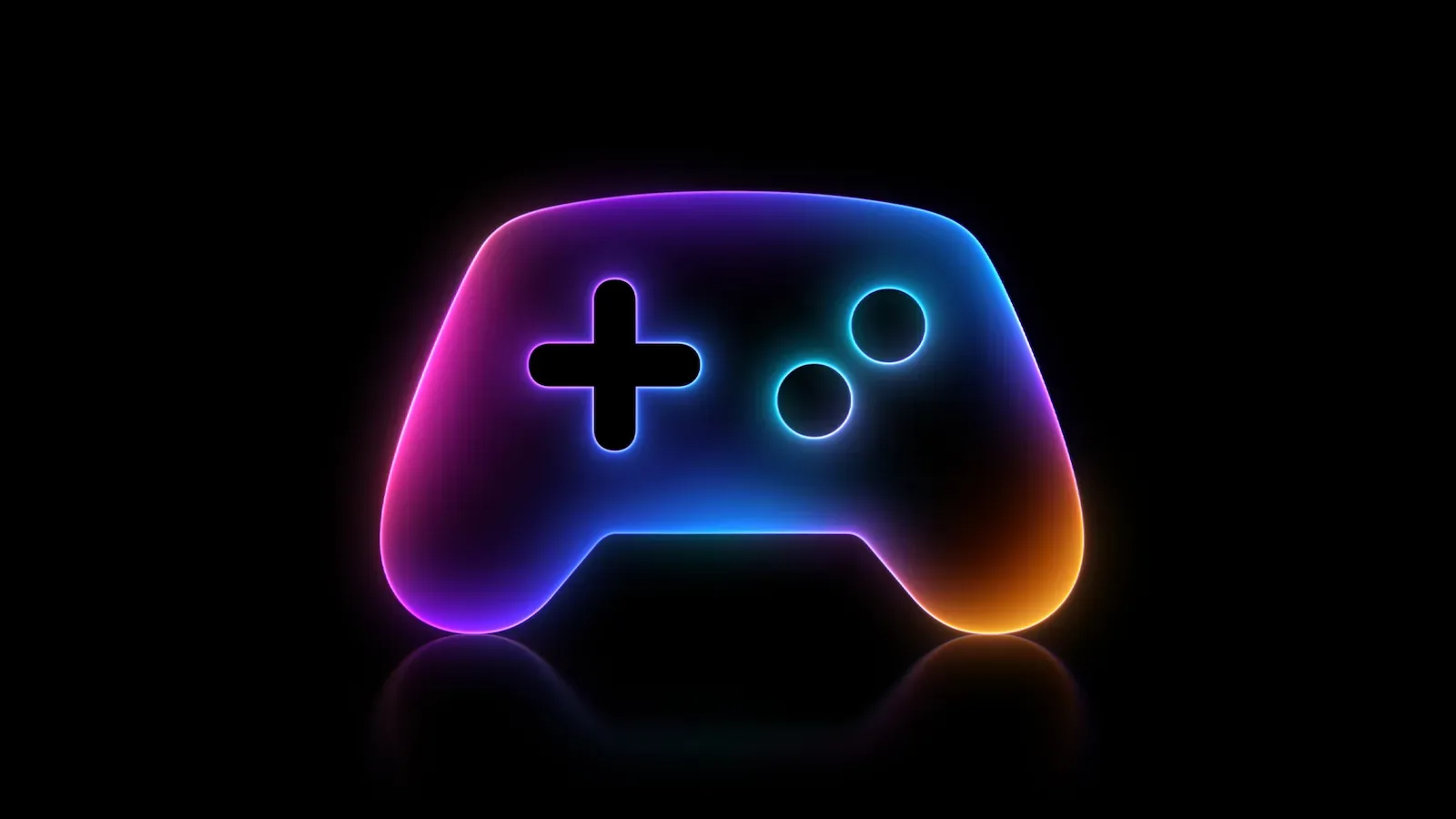
The two device entries point toward conventional game-controller layouts rather than an experimental input method. Both are described with the ingredients players would expect from a modern pad:
- A directional pad
- Two thumbsticks
- Shoulder buttons
- Home and Menu buttons
- Analog triggers
- Haptic features, with different haptic implementations between the two devices
One detail separates the apparent siblings. T1057 includes accelerometer and gyroscope support, while T6502 does not. Motion sensing would give T1057 an extra route for gesture-driven controls, tilting mechanics, aiming systems, or platform-specific interaction ideas. Yet it would be a mistake to read that difference as a finished product lineup. A motion-equipped variant and a non-motion variant could mean two tiers, two prototype directions, two regional configurations, or simply different test targets designed for different software needs.
Dedicated plug-ins for each device are the most notable part of the discovery. They suggest that macOS was expected to recognize specific hardware with distinct behavior. Still, device-specific support is not automatically retail support. Companies use named internal hardware throughout development, especially when maintaining controller frameworks across Macs, Apple TV hardware, mobile devices, and mixed-reality products.
Why this is interesting even without a launch
Apple has long supported gaming accessories made by other companies, and that support is arguably the more important fact for players today. Xbox, PlayStation, and Nintendo controllers are already familiar, broadly available, and deeply embedded in how people play on Apple hardware. Apple’s GameController framework has given developers a path to work with that existing controller ecosystem rather than demanding a proprietary pad.
That approach has made practical sense. A person opening a game on a Mac, iPhone, iPad, or Apple TV may already own a controller from another platform. Asking them to purchase another black rectangle with sticks and triggers would need a very persuasive answer. Controller ergonomics are a hard-won art, not an untouched frontier. Major console makers have spent decades refining grip shapes, triggers, stick placement, wireless performance, accessibility options, and the subtle but vital ability to survive being dropped during a close match.
Apple has also passed several moments when an in-house controller might have seemed like an obvious companion product. Apple TV, Apple Arcade, and Vision Pro each could have provided a clean launch window. None did. Instead, the company continued to emphasize third-party compatibility.
The history is particularly revealing on Apple TV. In 2015, games were initially required to support the Siri Remote as a controller, a policy that did not last long. That episode underscored the gap between a compact media remote and the input hardware many games genuinely need. For Vision Pro, Apple worked with Sony to bring support for PlayStation VR2 Sense controllers rather than introducing its own dedicated motion controllers.
That context turns T6502 and T1057 into a curiosity with real strategic implications, not a guarantee that Apple has suddenly decided to fight PlayStation, Xbox, and Nintendo on their home turf. A controller could be a modest accessory meant to make Apple’s own ecosystem smoother. Or it could remain a behind-the-scenes tool and never earn a product name, packaging, or a place beside anyone’s television.
What an Apple controller would need to do differently
For a consumer product to make sense, it would likely need to lean into advantages created by Apple’s wider hardware and services ecosystem. The code itself does not confirm such features, so these are possibilities rather than reported specifications. The clearest opportunity would be friction reduction: pairing that moves quickly between devices, straightforward switching from a Mac to Apple TV, and an experience designed around the same account and device relationships people already use elsewhere.
Find My integration is another logical differentiator. Controllers are unusually skilled at disappearing. They vanish behind sofas, migrate into bags, and enter a peculiar state of quantum uncertainty whenever guests arrive. A built-in way to locate one would be more useful than it sounds, particularly for households that treat one controller as communal property and several others as folklore.
There is also a potential Vision Pro angle, especially because T1057 has motion sensors. But accelerometer and gyroscope support alone does not make a device a VR controller. The supplied code details do not establish spatial tracking, hand tracking, camera tracking, or a Vision Pro-specific purpose. It may be relevant to games on Macs, Apple TV, iPhone, iPad, or more than one of those platforms. Motion capability is a clue, not a verdict.
The general value of a controller across screens remains easy to understand. Apple’s platform mix spans portable displays, desktops, televisions, and head-worn computing. A single input device that reliably follows a player between those places could be appealing. It could also help developers target more traditional game interfaces without needing to assume every player is interacting through touch controls, a remote, keyboard and mouse, or hand gestures.
For a reminder of why a shared pad still matters once people are in the same room, see The Unwritten Rules of Couch Multiplayer, Now Written Down. Hardware features may change, but negotiations over who gets the better controller remain eternal.
Removal from the later release candidate limits the clues
The references disappearing from the second macOS Tahoe 26.7 release candidate should temper expectations. Their removal might mean the entries were included too early, were not intended for public-facing software, or simply no longer belonged in that build. It does not, by itself, prove cancellation, secrecy around a launch, or that the devices were never real.
Likewise, the model-style labels T6502 and T1057 are not consumer names. They tell us nothing reliable about branding, colors, release timing, regions, pricing, battery design, connection methods, platform compatibility, or whether either device is intended for the public. No game controller announcement has been established by these findings.
The safest reading is also the most useful: Apple’s macOS 26.7 code contained profiles for two Apple-identified controller devices with meaningful differences, including motion sensing on T1057. That is evidence of something being tested or developed. It is not confirmation of an upcoming Apple gamepad.
A familiar rumor, now with more concrete identifiers
Talk of an Apple controller has surfaced repeatedly over the years without becoming a finished hardware category. This time, the discussion has more texture because the software references name two devices and outline their control capabilities. But software archaeology can only take the story so far. Until Apple publicly identifies T6502 or T1057, they remain codenames attached to an interesting possibility.
In the meantime, the company’s existing third-party controller support is still the reality players can act on. That may ultimately be the sensible position even if Apple is exploring its own accessory: work with the controllers people already own, while investigating whether tighter ecosystem features could justify a first-party alternative. The code has opened a door a crack. It has not shown what is on the other side—or whether anyone intends to walk through it.