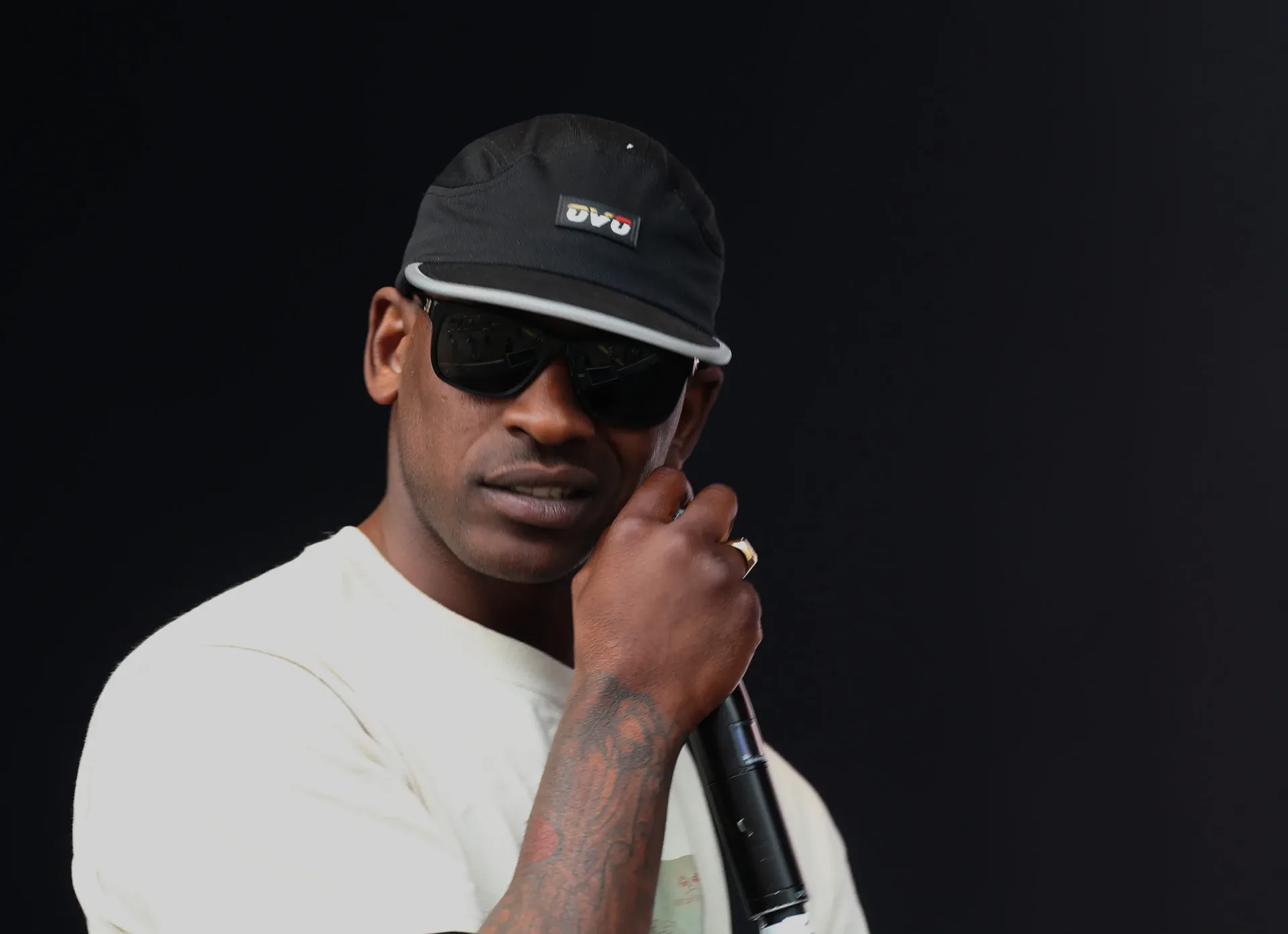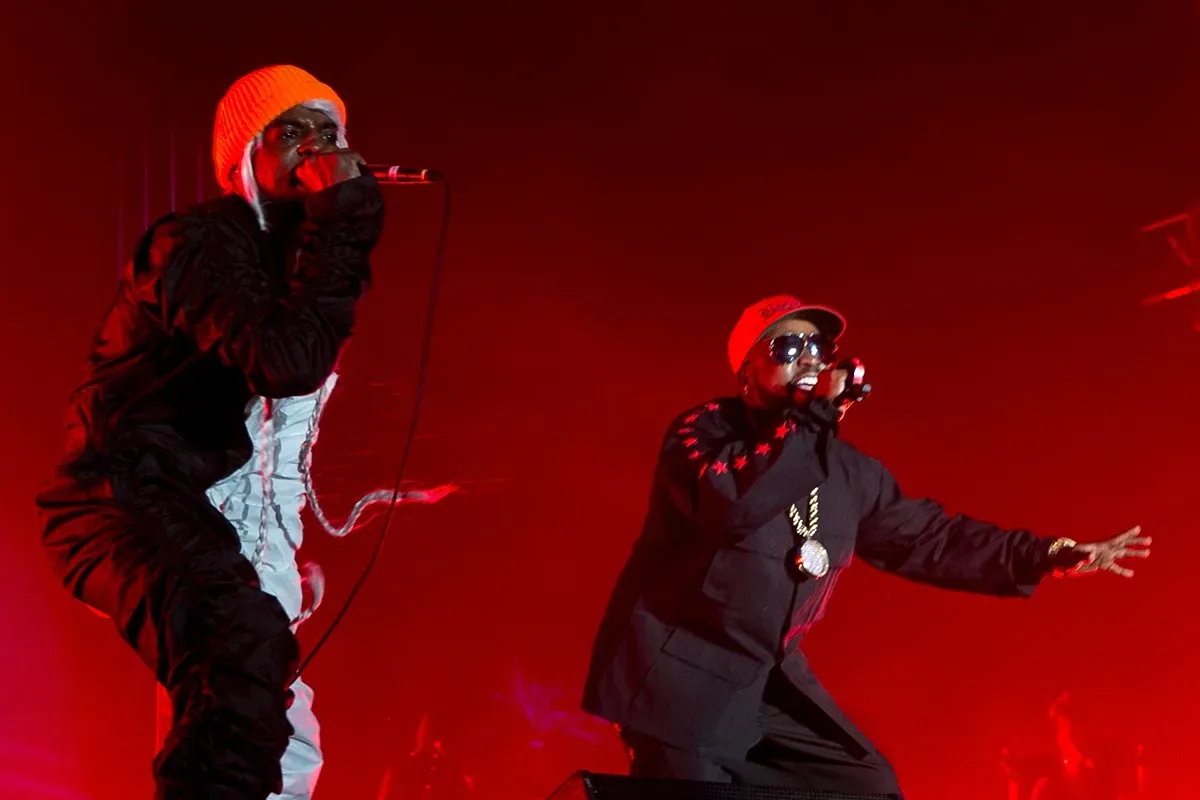
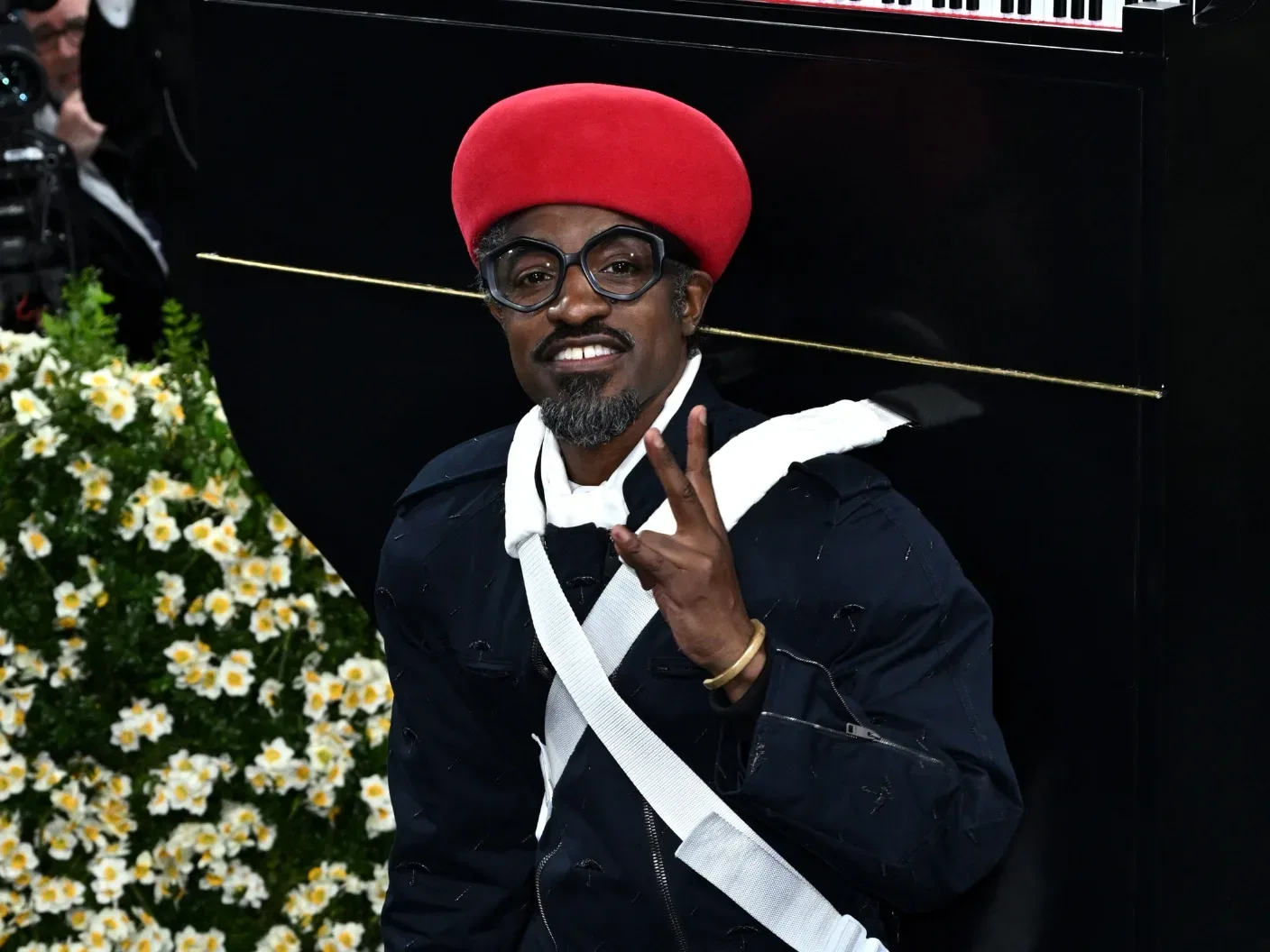
André 3000 has added previously unheard music to Moncler’s Re/Icons campaign, but this is not being presented as a conventional single launch. The new piece was made for a short film connected to the outerwear label’s archive-focused collection, and it remains unnamed with no broader release announced.
That distinction matters. The track is new André 3000 music, but it is currently part of a visual work rather than a standalone recording with an identified title, album placement, or stated streaming plan. For listeners hoping it signals an immediate follow-up release, the available details support a more limited conclusion: it is an unreleased score created for this film.
The campaign also puts André 3000 in a more active role than a standard celebrity appearance. He contributed the music, created a major set image during the shoot, and suggested an unusual styling concept built around carrying a large portion of the collection at once. Photographer and filmmaker Gabriel Moses captured the finished work.
A campaign built around process rather than a simple endorsement
Moncler’s Re/Icons project revisits pieces from its own archive. In this edition, the collection returns to four named designs: the Karakorum, Verone, Himalaya and Tibb. The 2026 range goes beyond a narrow outerwear capsule, however, adding windbreakers, shirts, pants, skirts and accessories. It is the first time the Re/Icons archive project has been expanded into a full ready-to-wear collection.
For more context, explore BloodRayne Comic Series Targets 2027 Return, Continuing BloodRayne 2’s Story.
Ready-to-wear generally refers to finished garments produced in standard sizes for sale rather than clothing made individually for a specific client. Here, the expansion gives the archive concept a larger role: Moncler is connecting technical-looking expedition-rooted pieces with a wider everyday wardrobe.
André 3000’s contribution follows that tension between practical equipment and image-making. He suggested piling jackets and expedition gear onto his body in a sculptural arrangement, an idea that recalls the kind of large loads associated with early mountaineering. The resulting look is not simply about displaying each garment clearly. It treats the clothing as accumulated weight, texture and silhouette.
That approach makes the campaign’s archival focus more tangible. A jacket can be sold as a current fashion item, but it can also carry visual associations from the kind of exploration and harsh-weather use that influenced its design language. By stacking the gear rather than wearing one clean look, the film turns that heritage into a deliberately exaggerated image.
Related coverage includes André 3000 Scores Moncler Re/Icons Film With Unreleased Music.
The chalk mountain is part of the work
The other key image began during the shoot, when André 3000 drew a mountain landscape with white chalk over a black studio backdrop. That spontaneous drawing became central to the film’s visual setting and to the campaign’s idea of making a path rather than following one.
The choice of chalk is significant in purely visual terms. Against a dark surface, it produces an immediate hand-drawn contrast: rough lines, visible marks and a surface that does not pretend to be a polished natural landscape. It places a mountain inside a studio without hiding the fact that it is a constructed image.
That handmade quality also gives the campaign a clearer claim to collaboration. André 3000 did not only arrive to be photographed in clothes. His drawing helped shape the space in which the clothes, the score and the performance were presented. The available details do not define every part of the production process, but they do establish his involvement in the music, set image and clothing concept.
For a fashion campaign, that difference changes the reading of the film. A celebrity-fronted advertisement often begins with a completed visual concept and uses a familiar face to deliver it. This project instead emphasizes a participant whose contribution crosses disciplines. The score is heard within a world whose central backdrop he made, while the styling communicates an idea he proposed.
What is known about the music — and what is not
The Moncler score is André 3000’s first newly released music contribution since 7 piano sketches, which arrived in May 2025. That seven-song project ran for 16 minutes and followed his 2023 instrumental album New Blue Sun.
The word score is useful here because it identifies the music by function. A score is music made to accompany a visual work, shaping atmosphere, pacing or mood in relation to what appears on screen. It may later be released independently, but it does not have to be. In this case, no name for the track and no wider release have been announced, so treating it as a confirmed new single or album preview would go beyond what is known.
That uncertainty should not diminish the project’s importance for people following André 3000’s recent creative direction. It does show a continuation of work that has moved away from a simple album-cycle model. New Blue Sun was instrumental, 7 piano sketches was brief and piano-centered, and this film uses unheard music in a fashion setting shaped by visual-art choices.
The result is a compact example of cross-disciplinary work: sound is not separated from the image, and the image is not separated from clothing design and staging. The film’s music may be brief, but the collaboration gives it a specific setting and purpose rather than leaving it as an isolated fragment.
Why Re/Icons is a useful fit for André 3000
Re/Icons is fundamentally an archive-reinterpretation project, meaning it returns to established Moncler designs and places them in a current collection. André 3000’s recent output has similarly moved between established identities and new modes of expression. He remains connected to Outkast as a co-founder, while his newer public work has included instrumental recordings, performance-oriented ideas, fashion and visual experimentation.
His Benji Bixby fashion line also returned during the 2025 Met Gala, further establishing design as part of his current creative activity. The Moncler project does not require a separate music release to make that pattern visible. It joins music, clothing and image construction in one contained piece.
There is also a practical implication for audiences: the campaign film is presently the only described home for the unreleased track. People interested in the music should approach the visual as part of the listening experience, not as promotional material for a separately detailed release. Without a track title or release announcement, playlists, album assumptions and release-date speculation would be premature.
For fashion viewers, the film offers a similarly specific way to see the collection. Instead of functioning only as an inventory of products, it gives the garments a role in a larger performance: equipment becomes a burden, a sculpture and a reference to mountain travel, while the chalk landscape makes the studio itself feel like an invented route.
Where the new chapter sits in the campaign
The Re/Icons range reached stores worldwide on October 15, following previews in Paris, Tokyo and New York. Cher, Grace Jones and JENNIE appeared in the opening chapter of the campaign. André 3000 joins through a separate film and set, rather than simply repeating that first grouping.
That structure lets each participant inhabit a different visual proposition while remaining connected to the same archive-driven collection. André 3000’s segment is defined by the black studio field, the chalk mountain, the oversized layered load of gear and the newly created score. Those elements give his chapter its own authored identity.
There is no announcement here of a new André 3000 album, commercial single, or future availability for the music beyond the film. What has arrived is narrower but still notable: a collaboration in which an unreleased composition sits inside an image world that André 3000 helped physically build. For a creator increasingly working across formats, that is less a detour than another example of the medium becoming part of the message.