
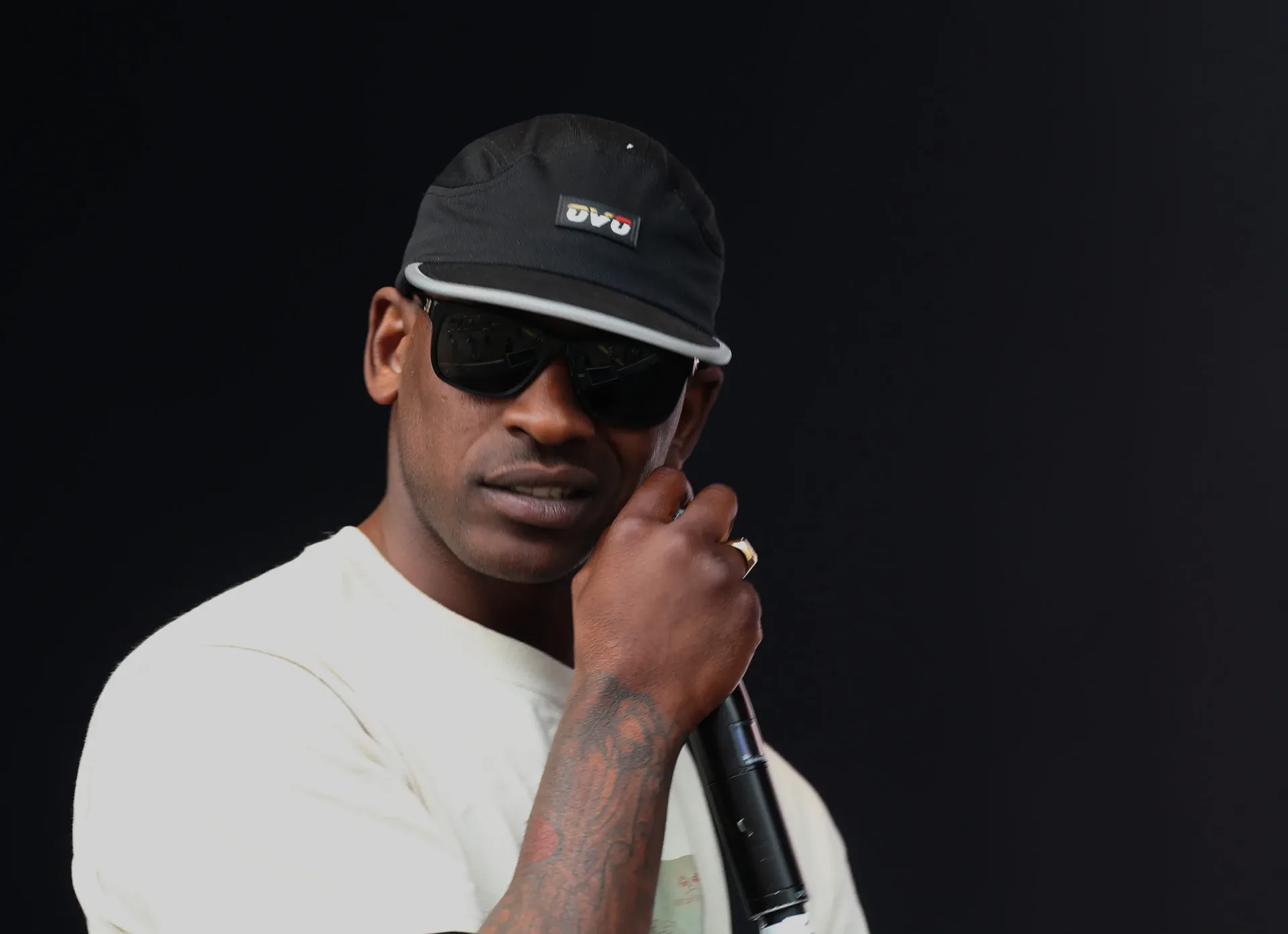
Skepta has put a blunt question to music culture: why does rap so often treat getting older as a reason to retreat, while aging rock performers can remain visibly central to the stage? The 44-year-old artist’s answer is not that rappers must freeze themselves in time, nor that every performer should carry on in precisely the same way. It is that Black artists should be allowed to age in public, keep making work and remain participants in the culture they helped shape.
His comments arrive alongside The Fork and Knife, and they land on a long-running anxiety within rap about when an artist is supposed to move on. Skepta says he has asked himself questions about his own future, but came back to a straightforward conclusion: he still believes he is making his best music. That confidence is the core of his position. Age alone, in this view, is not an artistic disqualification.
The comparison he made was to Iggy Pop, whose enduring, shirtless stage persona represents a kind of longevity rock music often permits and even celebrates. Skepta’s point was not simply about one performer’s wardrobe. It was about the different expectations placed on genres and the people who make them. He argued that Black rappers can begin to panic about aging in their mid-to-late 30s, whereas white rock acts are widely allowed to stay onstage for decades.
Longevity is not the same thing as standing still
Skepta’s argument contains an important qualification: the music and lyrics have to make sense for the artist’s present life. That distinction avoids the easy reading that artists should merely recreate an earlier era because it once worked. Growing older can change a person’s vantage point, responsibilities and interests. For Skepta, the opportunity is to make that evolution part of the art rather than treat it as a reason to disappear.
For more context, explore Daredevil #9 Tops Comics Pull-List Interest for November 11, With Spider-Man and Transformers Close Behind.
That idea matters because rap is often discussed through markers of youth: new scenes, fast-changing slang, early breakthroughs and constant competition for relevance. None of those things automatically prevent a veteran from contributing. But they can create a false choice between chasing a younger identity and leaving music entirely. Skepta is proposing a third route: stay, but speak from where you are.
In practical terms, “age-appropriate” writing does not mean sanding down an artist’s personality or declaring that mature work must be quiet, safe or solemn. It means the subject matter should feel truthful to the performer. An artist can still be ambitious, funny, confrontational, stylish or experimental without pretending that time has not passed. The test is credibility, not a number attached to an age.
“The stuff we’ve got is a blessing, and the kids need more people who are speaking up for the culture, to stay in the culture and carry the work on,” Skepta said.
That framing places value on presence as well as output. Staying in a culture can mean continuing to record, but it can also mean offering perspective, expanding its possibilities and helping ensure that newer artists are not asked to build without visible elders. Skepta’s remarks do not suggest younger voices should surrender space. Rather, they challenge the assumption that culture becomes healthier when experience is quietly removed from it.
André 3000 illustrates the creative question from another angle
The discussion followed a reference to André 3000, who has publicly described the challenge of returning to rap lyrics as he has gotten older. During the 2023 rollout of New Blue Sun, André said that being 48 affected what he felt able to rap about, while also acknowledging that age does not mechanically dictate subject matter.
That is a different, but related, point. Skepta is challenging an industry and cultural pressure that can make older Black rappers feel they ought to stop. André has spoken more personally about the difficulty of finding words that feel right. Those positions can coexist. No artist owes listeners a repeat of a former self, and no artist should be forced to keep rapping. But a creative obstacle for one performer should not become a rule that declares an entire generation finished.
For André, instrumental work became a path forward. He explained that playing flute felt immediate and freeing compared with the increasing difficulty of writing lyrics. New Blue Sun deliberately contained no rapping, and he made that clear to prospective listeners while leaving open the possibility of returning to it. His solo work has also grown to include Moving Day and 7 Piano Sketches; the latter is made up of solo piano recordings, with some pieces begun nearly a decade earlier during time in Texas with his son.
The contrast is useful. André’s recent catalog shows an artist following the form that presently feels possible. Skepta’s new comments argue for remaining in rap when the work still feels strong and relevant. Neither route is a failure of the other. The larger point is that artistic maturity can lead to rap, instrumental music, DJ work, production or combinations of those lanes. It should be a choice made by the artist, not an expiration date imposed by audience habits.
Skepta’s career already reaches beyond a single lane
Skepta is especially well positioned to make the case because his career is not limited to one role. His 2016 album Konnichiwa won the Mercury Prize, a major recognition within British music. He also operates the fashion label MAINS. Those facts do not diminish his claim to rap’s present tense; they demonstrate how an artist can develop multiple creative outlets without abandoning the work that established him.
His Más Tiempo project, launched in 2023 with fellow grime artist Jammer, is another example of that broader musical life. The project’s name now carries a real-world implication: more time. Skepta has been extending his activity into house music and DJing, instead of treating a change in focus as a departure from music itself.
Más Tiempo held its first residency at Hï Ibiza from May 2 through October 3, with Saturday appearances in the venue’s Club Room. During the same Saturday season, Black Coffee performed in the Theatre. The residency followed Skepta’s 2025 appearance at Carl Cox’s Sunday residency at [UNVRS]. Together, those appearances trace an expansion into club-focused work, not a clean break from the artist’s grime foundations.
That distinction is worth preserving. Genre movement is often lazily read as an artist “leaving” one audience behind. Skepta’s current path is better understood as an accumulation of formats: rap records, grime credentials, house-oriented work and DJing. It is a concrete version of his larger argument that a long career need not obey one narrow template. A performer can remain connected to the culture while changing the settings in which they work.
The double-standard question goes beyond age
Skepta’s comparison with rock is ultimately about more than who gets booked at an older age. It concerns which artists are granted complexity, reinvention and endurance. When an aging white rock performer is seen as a veteran, an institution or simply a continuing live act, longevity itself can become part of the appeal. Skepta is asking why Black rappers are so often expected to justify that same continued presence.
His formulation also assigns responsibility within the community, saying Black artists need to stop doing this to themselves. That does not erase the wider standards he is criticizing. Instead, it identifies internalized pressure as one place where the pattern can be interrupted. Artists, audiences and gatekeepers all participate in deciding whether experience is treated as an asset or a liability.
There is no requirement that every rapper make records forever. Retirement, a new genre, a different profession or a reduced public profile can all be valid outcomes. The problem Skepta identifies is the expectation that age itself should force the decision, particularly for Black artists in a genre built through Black creativity. His standard is more demanding and more generous: keep going if the work is excellent, make it honest to the life you live now, and remain part of the cultural conversation.
With The Fork and Knife accompanying these remarks, Skepta is not presenting that argument as an abstract career seminar. He is placing himself inside it. The artist who helped define a generation of grime is asserting that his future in music remains active—and that rap should make room for artists to become older without becoming invisible. For a broader look at the discussion around the album, see this coverage of Skepta’s challenge to rap’s age barrier.