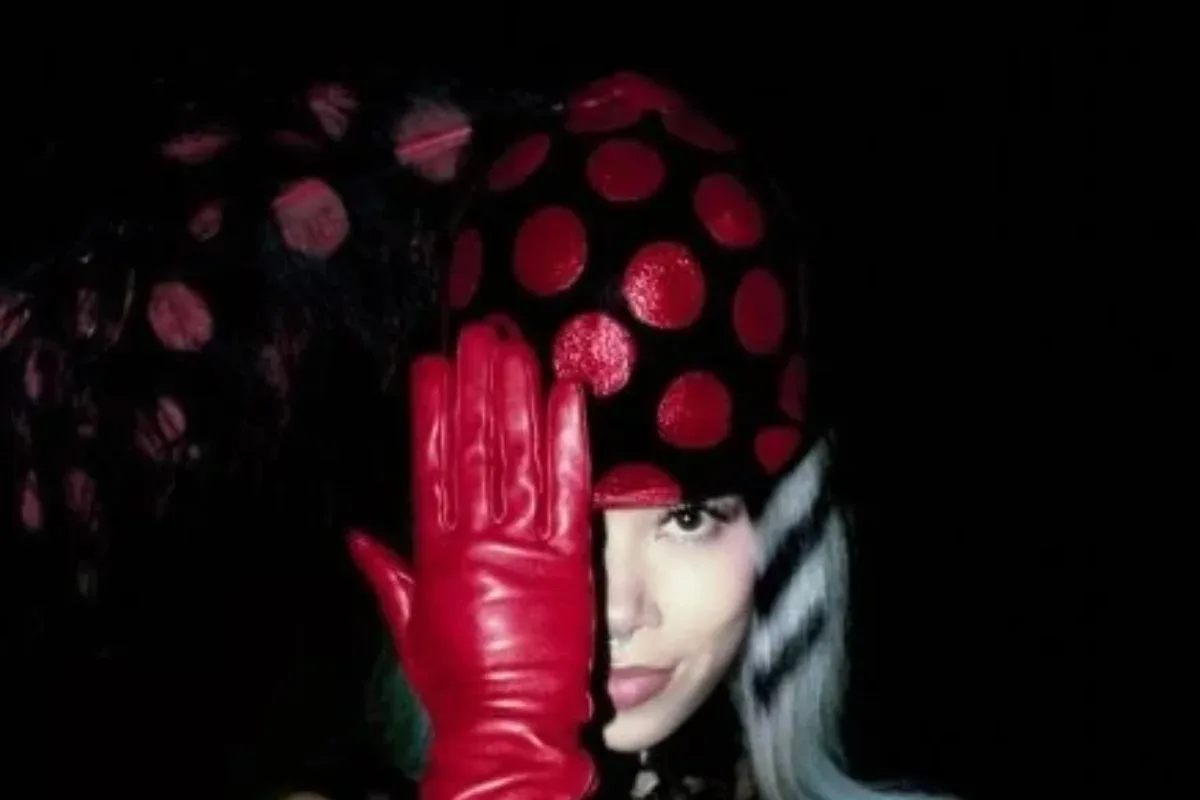
Molly Santana has taken the next step in her career with a deal that places her at Epic Records while keeping Black Punk Music, her own imprint, at the center of the plan. The 22-year-old rapper’s first release connected to the arrangement, “A Girl Is a Gun,” arrived on November 6.
The shape of the partnership matters as much as the label name. Santana is joining Epic as an artist, but Black Punk Music is not being treated as a discarded early-career logo. It is the banner through which the next phase of her work is being presented. In plain terms, the deal links a major-label partner to an artist-led identity that had already started showing up in her release credits.
That distinction gives the news more substance than a routine signing notice. An imprint is a named music brand operating within a larger label framework. It can function as the public-facing home for an artist’s releases and creative direction; the exact financial and operational terms, however, have not been announced here. What is clear is that Santana and Epic are putting Black Punk Music in the foreground rather than framing it as a footnote.
Two connected lanes, one public direction
The arrangement is built around two connected lanes. Santana becomes an Epic artist, while Black Punk Music becomes the umbrella for the work to come. That structure gives a name to the creative platform Santana says she wants to build across music and beyond it.
Her language around Black Punk Music points to ambition broader than a single album cycle. A typical album campaign is the concentrated period around a release: singles, videos, performances, promotion and related projects. Santana is positioning the imprint instead as a durable creative vehicle, one intended to carry an evolving sound and point of view over time.
Epic’s leadership has likewise emphasized Santana’s distinct sound and perspective, presenting the partnership as support for an artist who has already established a direction. That is the key practical implication: the label is entering after Black Punk Music had begun appearing on Santana’s music, rather than introducing the concept from scratch.
There is no announced date for Santana’s next full-length project. For now, “A Girl Is a Gun” is the tangible starting point for the new deal, and the clearest marker that Black Punk Music has moved from release-credit visibility to the center of her business plan.
Momentum arrived before the paperwork became public
The Epic partnership follows a notably active stretch for Santana. Her profile rose after she appeared with Drake and Future on “Ran to Atlanta,” which opened at No. 2 on the Billboard Hot 100. A debut at that level is a meaningful commercial signal, especially for an artist now moving into a new label relationship.
Related coverage includes Molly Santana Launches Black Punk Music With Epic Records Deal.
She also released the solo records “Live Your Life” and “Can’t Touch This.” Black Punk Music was already visible in the credits during that run. In other words, the imprint was not introduced only after the Epic deal; it had a public presence before this expansion.
Santana released Molly & Her Week of Wonders in 2025, making the new agreement a bridge between her prior independent momentum and the larger infrastructure of Epic. The label’s rap roster includes Future, Travis Scott and 21 Savage, a high-profile setting that places Santana’s next moves in a considerably wider corporate and commercial environment.
None of that automatically tells listeners what her next project will sound like, nor does the deal reveal its release schedule. It does, however, establish a clearer framework for interpreting the Black Punk name: it is now both an artistic statement and the formal banner attached to her work at Epic.
Why the Black Punk Music name is the headline
Major-label partnerships can be discussed as though only one detail matters: which company an artist signed with. This announcement puts equal weight on the imprint because it suggests Santana wants the identity around the music to remain legible as her reach expands.
That is especially relevant because Black Punk Music is described as a creative platform. The phrase does not come with a detailed list of future projects, artists or business activity, so it should not be read as confirmation of initiatives that have not been announced. But it does establish intent. Santana is describing an ongoing home for boundary-pushing creative work, not merely a title attached to one song.
For listeners, the immediate takeaway is straightforward: Black Punk Music is the name to watch alongside Santana’s future releases. For the industry side, the deal illustrates how an artist can enter a major-label ecosystem while preserving a separate, artist-led banner in the public presentation of the partnership.
It is also worth separating confirmed facts from speculation. Epic and Santana have confirmed the partnership, Santana’s artist relationship with the label, the role of Black Punk Music, and the arrival of “A Girl Is a Gun.” They have not announced the next album’s title, date, track list, collaborators or a fuller Black Punk Music slate. The sensible read is not that a complete rollout has been revealed, but that its organizational foundation is now in place.
A summer tour plan was shelved, but the creative campaign continued
The new deal arrives after an uneven summer on the live side. Santana and North West announced the nine-city Kimokawaii tour in June, but the run was later shelved before its scheduled opening. No public explanation was given.
That leaves the cancellation as an unresolved piece of the timeline rather than a confirmed clue about Santana’s new agreement or future touring plans. There is no basis to connect the two. What can be said is that a planned live moment did not happen, while Santana’s recorded-music trajectory continued toward a major-label partnership.
Tour disruptions are rarely simple from the audience perspective, particularly when a multi-city event has already been announced. They can reshape how fans follow an artist’s next move, shifting attention from the stage to recorded releases and official updates. Recent live-music coverage has shown how quickly logistical uncertainty can become part of the fan conversation, as with reports surrounding a delayed Atlanta show and competing claims about what happened. Santana’s case is different, and no explanation was publicly provided for the Kimokawaii tour, but the broader lesson remains: clarity matters when concert plans change.
At present, there is no newly announced Santana tour tied to Black Punk Music or Epic. The available evidence centers on the November 6 song release and the label-imprint partnership, not on a replacement live schedule.
What the deal does—and does not—tell us
What is confirmed
- Molly Santana has signed with Epic Records through her Black Punk Music imprint.
- She joins Epic as an artist while Black Punk Music serves as the banner for her next phase.
- “A Girl Is a Gun” is the first release under the deal and arrived on November 6.
- Black Punk Music had already appeared in the credits of earlier Santana releases.
- Santana released Molly & Her Week of Wonders in 2025.
- Her appearance with Drake and Future on “Ran to Atlanta” preceded the agreement; the song opened at No. 2 on the Billboard Hot 100.
What remains unannounced
- A date for Santana’s next full-length project.
- The title or contents of that project.
- Any additional Black Punk Music releases or artists.
- Any future tour schedule connected to the Epic partnership.
- An explanation for the shelved Kimokawaii tour.
Those boundaries are important. The deal is meaningful precisely because it has formalized a creative identity that Santana was already using, not because it comes packaged with a flood of unconfirmed future details. “A Girl Is a Gun” is the first marker; everything beyond that will need to be established by subsequent releases and announcements.
An artist-led banner enters a bigger system
The most interesting tension in the announcement is productive rather than contradictory. On one side is Epic, an established major label with a large rap roster. On the other is Black Punk Music, Santana’s chosen banner and the vehicle she has described as a space for creativity in music and beyond. The partnership attempts to make both visible at once.
For Santana, that means the story is not simply an independent artist joining a major label. It is an artist bringing a named platform into that relationship. The branding was already in circulation through credits, which gives the transition continuity: listeners who noticed Black Punk Music before the deal can now understand it as the organizing identity of Santana’s next chapter.
For Epic, the signing is an investment in an artist whose recent work has already reached a large audience, including the No. 2 opening of “Ran to Atlanta.” For Black Punk Music, it is an elevation from a credit-line presence to a central element of a high-profile partnership.
The next full picture has not yet been revealed. No album timetable is public, and no added touring details have been announced. Still, the immediate message is unusually clear: Santana is moving forward with a major-label partner, and she intends for Black Punk Music to be recognized as more than a name in small type.