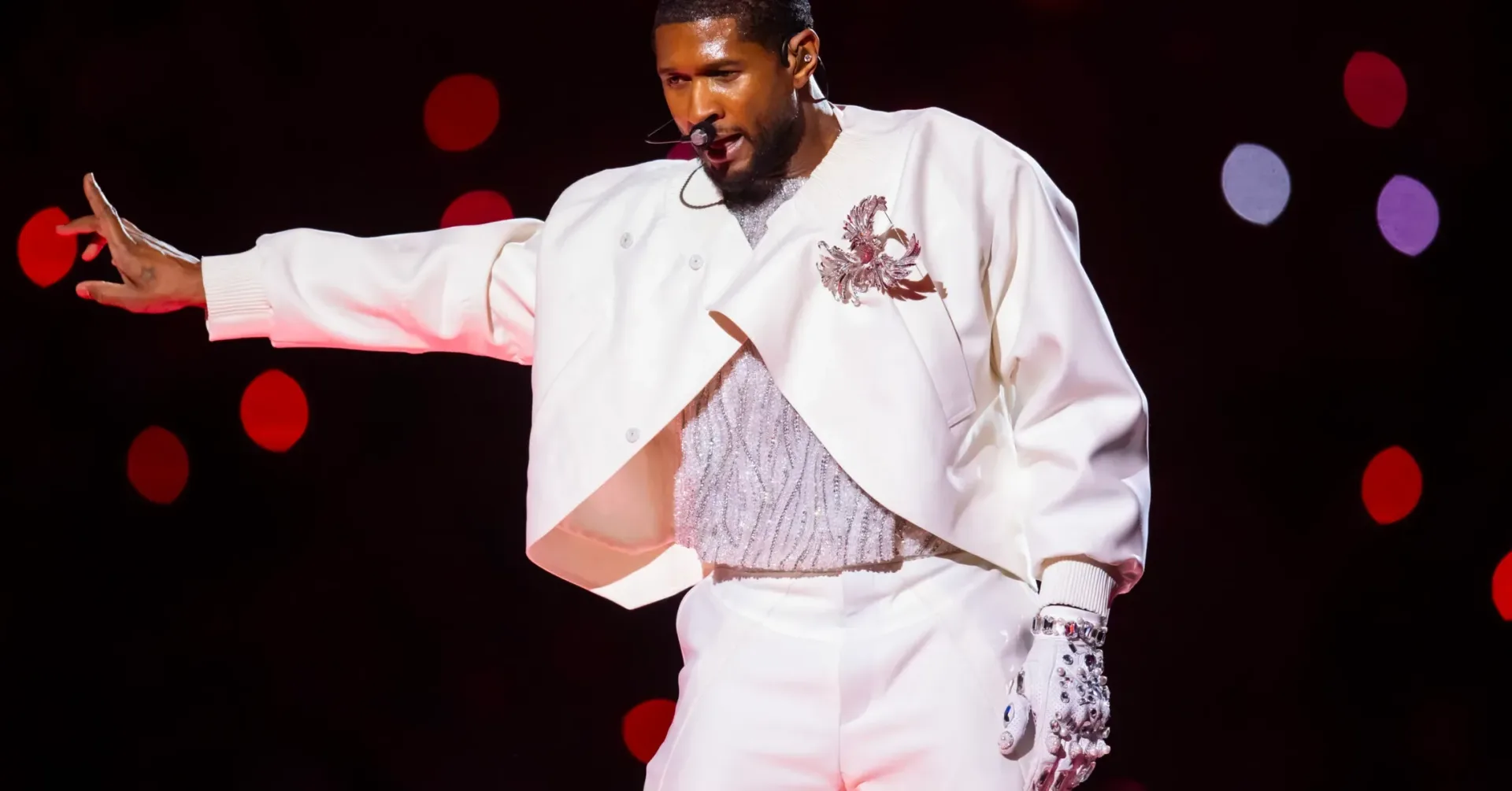
Fans attending the opening night of Usher and Chris Brown’s reported five-date run at Mercedes-Benz Stadium in Atlanta have described a concert that did not unfold as expected. The complaints center on a substantial delay, material reportedly missing from the anticipated show, and the absence of shared performance moments some attendees believed would be part of the co-headlining event.
The available accounts should be treated carefully. They are attendee reports rather than a complete official accounting of the production, and no full, verified setlist or venue explanation is included in the information available. Still, the similarities in those accounts point to a night shaped less by a planned change in artistic direction than by an increasingly tight schedule.
A late start appears to have set the night’s terms
The show was expected to begin at 7:30 p.m., but Usher and Chris Brown reportedly did not take the stage until around 10 p.m. That is roughly a three-hour gap from the advertised starting time. In a stadium production, a delay of that size has consequences beyond the wait itself: it reduces the amount of usable performance time if the venue is required to clear by a particular hour.
Several attendees said a city ordinance required the concert to conclude at about midnight. That specific explanation has not been independently confirmed in the supplied information, but it offers a plausible framework for the reported cuts. If performers begin around 10 p.m. and must end near midnight, the available window is two hours before allowing for transitions, staging, entrances and exits. A co-headlining production has more moving parts than a single uninterrupted set, so a compressed window may force difficult decisions about songs, spectacle and guest-facing segments.
That distinction matters. A curfew is a deadline by which amplified entertainment or a venue event must stop, often established through local regulation, a permit or venue operations. It is not simply a suggestion that can be ignored because a concert began late. When a fixed endpoint collides with a delayed start, performers and production staff may have to shorten the program in real time.
What fans say was missing
Attendees reported that a sizeable portion of the expected set did not make it into the Atlanta opener. Some estimates put the removed material at roughly an hour, while other complaints framed the change as about half of the anticipated setlist. Those are impressions from people in the building, not a confirmed track-by-track comparison, but they express the same essential issue: fans felt the final program was much shorter than the one they had expected.
The criticism was not only about runtime. Reports also said the two singers did not perform songs together. For a co-headlining bill, a joint performance is not automatically guaranteed, but it is an understandable expectation when an event is promoted around two major artists sharing a night. Joint moments can function as the emotional payoff of a dual-headliner format: they make the pairing feel like one occasion rather than two separate concerts booked on the same ticket.
Fans also pointed to absent visual or interactive elements associated with the tour’s online conversation. Usher reportedly did not bring out the cherries, and there were no women brought onstage. These details may sound minor beside the late start, but they help explain why the response was sharper than a standard complaint about a trimmed encore. In modern arena and stadium shows, memorable staging beats become part of the perceived promise of the event. Once clips circulate widely, audiences may arrive expecting not just songs but specific recognizable moments.
That does not establish that every viral element is a formal, nightly commitment. Shows can vary, and a shortened night may require the removal of elaborate segments first. But when multiple expected beats disappear alongside a reduced song count, attendees can reasonably experience the result as a substantially different version of the show.
Feud theories have not been supported by the available facts
The unusually constrained program prompted speculation that Usher and Chris Brown may have had a personal conflict. At present, the supplied information offers no evidence of a physical confrontation or other substantiated incident between the two performers. A missing collaboration and altered staging can invite theories, particularly at an event built around a high-profile pairing, but neither is proof of an argument.
Chris Brown addressed the rumor cycle on social media with a brief message telling followers not to believe it. The post is a denial of the online speculation, not a detailed explanation of the evening’s timing or the reported set changes. It does, however, make one point clear: the feud narrative should not be treated as established fact.
Separating what people observed from why it happened is especially important here. The reported late start, shorter performance and omitted joint moments are the substance of the attendee complaints. The curfew explanation is a reported potential cause. A feud is unsupported speculation that Brown has rejected. Those are three very different levels of certainty, and merging them would make a confusing concert night sound more conclusive than the evidence permits.
What the remaining Atlanta dates may clarify
The Atlanta engagement was reported to continue on November 6, November 8, November 10 and November 11 at Mercedes-Benz Stadium. Those additional shows could clarify whether the opening night was an isolated scheduling problem or a template for the rest of the run. Fans with tickets will likely be watching practical signals: when the performers arrive onstage, how much of the program is performed, whether a shared number happens, and whether the prominent visual moments return.
For ticket holders, the useful takeaway is to distinguish between the scheduled start time and the actual stage time, especially when planning transport, childcare or a ride home. It is also sensible to monitor official venue and artist channels for any day-of-show timing updates. That will not undo a prior delay, but it is more reliable than assuming that a viral clip or an earlier attendee’s recollection guarantees a particular moment on a later date.
The incident also demonstrates why a co-headlining concert has a uniquely delicate audience contract. People are not merely measuring one artist’s set against a clock. They are evaluating whether the event delivered the combined experience suggested by the bill: two catalogs, two star personas and, ideally, a few moments that can only happen when both are present. If time restrictions removed those moments, the disappointment is understandable even if the operational cause was outside the artists’ preferred plan.
For now, the most grounded reading is the least dramatic one. Atlanta attendees describe a night that started late and ended with less performance than they expected. A midnight cutoff has been floated as a reason for the compression. The claim that the headliners were feuding remains unsubstantiated and has been publicly dismissed by Brown. As with any show built around an enormous online footprint, the next performances—not the loudest rumor—will provide the clearest answer about what audiences can expect.
For another look at how music news and online reaction can rapidly shape a wider narrative, see Stove God Cooks’ restarted rollout with Swizz Beatz.