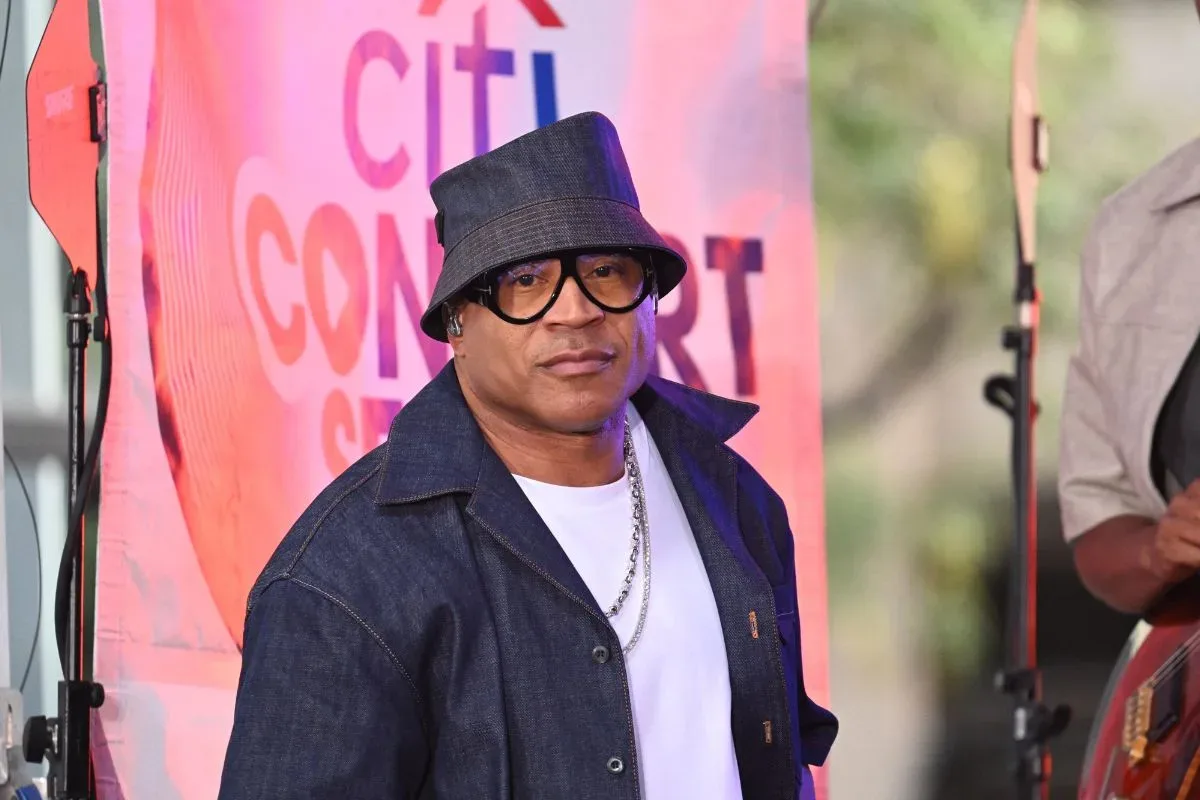
LL Cool J has a straightforward message for rappers and the people deciding which music gets supported: do not confuse immediate attention with a lasting audience.
In a recent conversation on 7PM in Brooklyn, the rapper praised hip-hop while warning that labels can become overly led by data. His concern is not that numbers have no use. It is that a system built around clicks, fast reactions and easily counted activity can overlook the less visible connection between an artist, a song and the people who keep listening.
That distinction matters in an era where a brief social post, a hook-sized excerpt and a stream total can all look like a rapid verdict on a record. LL Cool J’s case is for patience: make the song with care, let it reach people, and understand that a small audience with genuine attachment may be more meaningful than a loud burst of attention that fades as quickly as it arrived.
What LL Cool J means by data “running the show”
Metrics are measurements: streams, follows, subscribers, views, shares and similar figures. They can show whether a track is being heard or whether an artist’s public audience is expanding. Those are useful signals, especially for an independent musician or a label making decisions about where to put time and resources.
But a signal is not the entire story. LL Cool J compared the problem to evaluating athletes only through statistics. A box score can record points, rebounds or other outcomes; it cannot fully capture what happens among teammates, the influence of a player in a locker room, or the ways someone helps a group function. His comparison applies that gap to music: numbers can track activity without measuring every reason a listener is moved by a record.
In practical terms, a high-performing clip may reveal that a particular moment caught attention. It does not automatically establish that listeners care about the artist beyond that moment, will return for future releases, or feel a relationship to the writing. Conversely, a song that begins quietly may be laying the groundwork for exactly that kind of durable audience.
LL Cool J’s warning is therefore less a rejection of measurement than a warning against letting measurement become the sole creative judge. If the chase for a click determines the writing from the start, the artist risks prioritizing a caption-ready line or a moment designed to travel quickly over the larger emotional work of the song.
The difference between reach and connection
Reach is how many people encounter something. Connection is whether the encounter means enough for someone to stay. The first can be immediate and highly visible. The second is slower, harder to count and often more consequential over time.
Related coverage includes LL Cool J Tells Rappers to Build Fans Beyond the Clicks.
That is the core of LL Cool J’s advice that artists should give their songs room to find fans. A listener does not need to arrive all at once for the relationship to matter. A modest group of supporters can grow as new songs give them more reasons to follow an artist’s development. Each release becomes part of a continuing body of work rather than a disposable attempt to win one cycle of online attention.
This framing also acknowledges the disappointment that can follow a release receiving little notice. LL Cool J did not treat that feeling as trivial. Instead, his proposed response is creative persistence: make another strong song. It is a demanding answer because it puts the focus back on the craft after a disappointing result, rather than on trying to force the next result through louder promotion or trend-chasing.
For a developing rapper, that approach suggests several questions worth asking before release day: Does the song say something the artist stands behind? Is the performance strong enough to reward repeat listening? Does the record sound like it belongs to the artist rather than to a passing format? And does the artist have a reason to keep building after this one track?
None of those questions produce a tidy dashboard number. They are nevertheless central to the kind of audience LL Cool J is describing.
His own recent album provides context
LL Cool J’s comments arrive with a recent example from his own work. His 2024 album The FORCE was made with Q-Tip, and LL Cool J has described testing his writing during that process. Before their collaboration, he said that the beats he was receiving were stronger than the songs he had written.
That admission is important because it turns the argument away from vague advice and toward a concrete creative standard. If an artist recognizes that the writing is not meeting the level of the production, the answer is not necessarily to search for a more marketable idea. It can be to improve the writing until the pieces meet each other.
LL Cool J had a lengthy gap between albums, but that did not mean he had left the studio behind. He described a renewed drive that made him take the work more seriously and return to basics. The aim was to be affected by his own words and to make something new, rather than repeat older work or pursue whatever trend might be moving fastest.
That does not make novelty a rule for every artist. Rather, it identifies the principle underneath his process: a song should have a reason to exist beyond its chance of catching a quick wave. For a veteran artist, repeating the familiar can be tempting because it is recognizable. For a new artist, copying an established online format can feel safer than presenting an individual voice. LL Cool J’s position challenges both instincts.
Patience is not the same as ignoring the business
The supplied examples also show that careful audience building and business goals do not have to be opposites. Great Day Records founder Baroline Diaz said in a 2025 interview that she would consider signing an artist with only 200 followers if she believed in the music. That is a clear rejection of treating an existing follower count as the sole measure of potential.
At the same time, Diaz described a practical approach to development. She favored close studio work and steady progress instead of banking everything on a viral moment. She also discussed helping artists prepare for interviews and develop their image before stepping into public view. Those details point to artist development: the longer process of strengthening the music, presentation and ability to communicate with an audience.
She still set monthly targets for streams, followers and subscribers. That nuance is crucial. The alternative to data obsession is not operating blindly. Metrics can be used as goals and checkpoints without being allowed to dictate every creative choice. They may help a team see whether outreach is reaching people or whether interest is growing. They become damaging when they are treated as proof that a song has—or lacks—value all by themselves.
Diaz’s emphasis on supporters who eventually buy tickets and merchandise reinforces LL Cool J’s broader point. A lasting fan relationship has more dimensions than a single view or click. It can support a career in ways that a one-day spike cannot, while giving artists more space to make work that develops from song to song.
What this means for artists and labels
LL Cool J’s message is not a promise that patience automatically brings success. The available facts do not suggest that every carefully made song will find a large audience. What they do support is a more durable definition of progress: strengthen the work, build trust with listeners and avoid letting short-term data erase the human reason music matters.
For artists, that can mean putting the record first. A post can introduce the song, but it should not have to become the song’s entire purpose. A disappointing launch can be taken seriously without being treated as a command to abandon a point of view. And a small community of listeners can be viewed as a beginning rather than evidence of failure.
For labels, it means looking beyond the easiest visible figures when evaluating potential. An artist with few followers may still have music worth investing in. The process may require studio work, preparation and a longer view of growth. It also requires distinguishing between a campaign that produces a moment and a career that produces committed listeners.
For listeners, the argument is a reminder that music culture is shaped by more than recommendation systems and shareable fragments. Returning to an artist, hearing the full song and giving work time can all help make room for records that are not designed merely to win a few seconds of attention.
The music world will continue to measure what it can measure. LL Cool J’s point is that the most important part of a record may not fit neatly into those measurements. If the writing, performance and feeling are there, the next move after a quiet reception remains the same: make another good song.
That patient, artist-centered view also fits a broader conversation around performers building careers beyond a single online moment, including touring news such as Tinashe’s planned North American tour.