North West has responded directly to online commenters who have labeled her personal style “demonic,” drawing a clear line between an outfit and an assumption about who she is.
During a livestream with her mother, Kim Kardashian, North pushed back on the framing in simple terms: “Stop saying I’m demonic.” She followed it with an equally direct appeal not to “judge a book by its cover.” North also affirmed her belief in Jesus, stressing that her fashion choices are not a measure of her faith.
The exchange matters because it addressed the criticism at its actual point of tension. The issue was not whether strangers enjoy her look. North’s objection was to people using visual details as supposed evidence of her character, spirituality, or values.
A look is not a biography
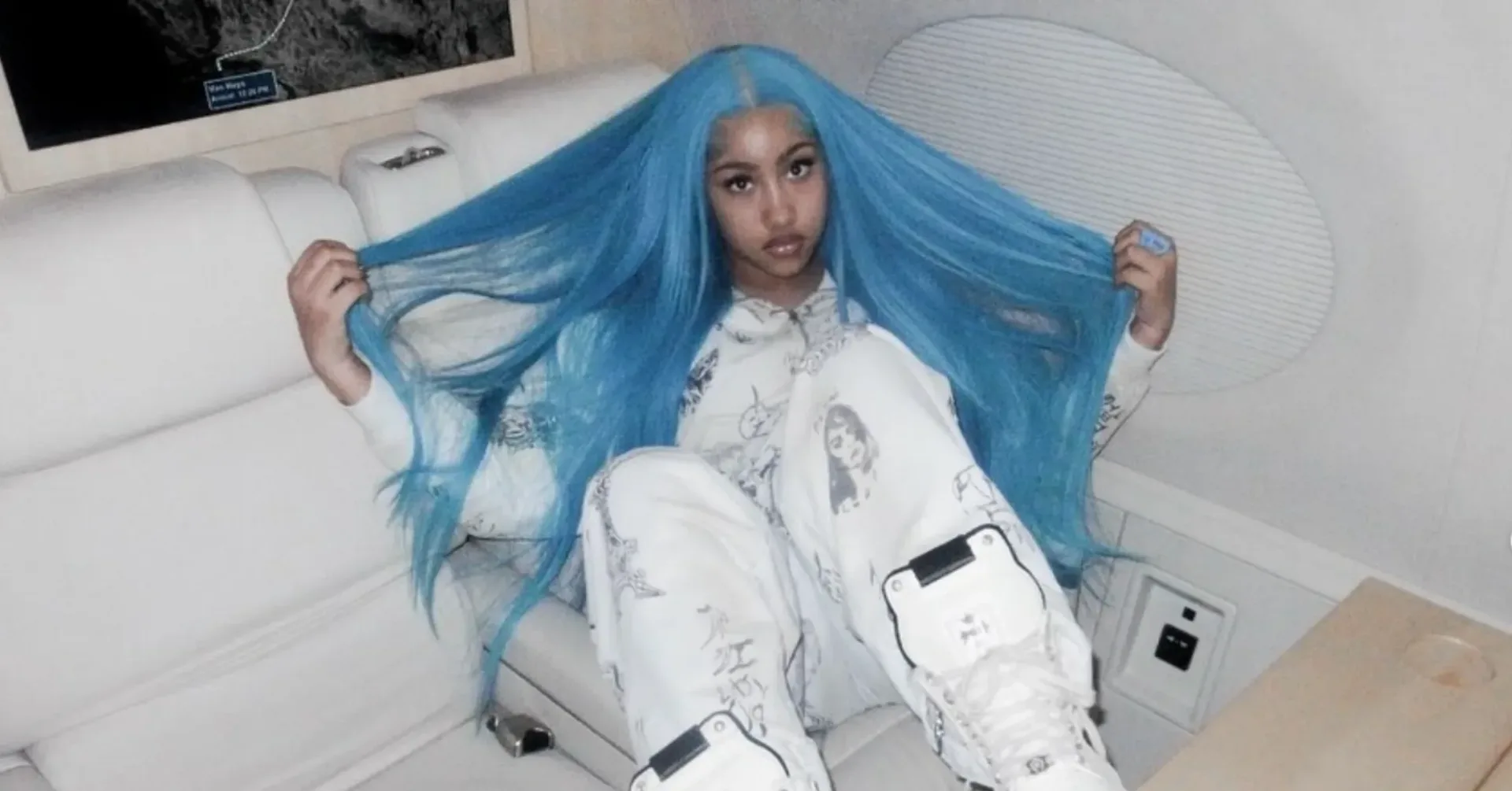
Kardashian was beside North during the livestream and acknowledged some of the details that may be fueling the reactions: black grills and piercings. North has also been seen with blue hair, dark clothing, and prominent accessories while developing an increasingly individual public look.
Those are aesthetic choices: the visible components of a personal presentation. Aesthetic is often used as a shorthand for a recognizable visual mood or style. It does not, by itself, establish a person’s beliefs, intentions, or behavior. North’s remarks challenged precisely that jump from appearance to conclusion.
“Don’t judge a book by its cover.”
That phrase is familiar because the underlying problem is familiar, too. Online reaction tends to reward fast interpretation. A photo, clip, hairstyle, or accessory can become the entire basis for a sprawling claim about someone’s identity. But a visual image provides only what it provides: a visual image. It cannot reliably settle questions of faith or character.
North did not ask everyone to share her taste or praise every fashion decision. The distinction is important. Disagreement about style is ordinary. Assigning spiritual or moral meaning to someone else’s style, particularly without knowing them, is something much larger.
Related coverage includes North West Pushes Back on Claims Her Style Is “Demonic”.
Public self-expression under unusually close attention
North is exploring fashion, music, and her own identity while growing up in one of entertainment’s most visible families. That creates an unusual version of a common experience. Many young people try new looks, change their hair, embrace accessories, or use clothes to signal creativity and independence. Most do so away from a constant stream of public commentary.
For North, even a relatively contained livestream response can be immediately parsed by people who have strong opinions about her family, her image, and what a public figure should look like. Her answer did not suggest that she intends to reshape her style for the comfort of online critics. Instead, she stated the boundary: her appearance is not proof of the accusations being made about her.
Kardashian’s participation also placed the moment in a family context rather than presenting North as isolated in the criticism. By identifying the grills and piercings as details that may have prompted reactions, Kardashian acknowledged the visual conversation without validating the claim that those choices make North “demonic.”
Why the wording matters
The word “demonic” carries far more weight than a casual critique of clothing. It assigns religious and moral significance to a look. North’s affirmation of her faith directly confronted that implication rather than leaving it unanswered.
Her comments also point to a useful distinction between self-expression and self-definition. Self-expression is how a person communicates a mood, interest, or style through choices such as clothing, hair, and accessories. Self-definition is the wider claim of who that person is and what they believe. The two can overlap, but they are not interchangeable. A dark wardrobe does not explain a faith commitment; a piercing does not establish a worldview.
That distinction can get lost when viewers treat an evolving personal image like a fixed brand. It is especially easy to do when the person in question comes from a famous family, since every public-facing choice can be read as a statement. North’s response argued against that shortcut. Her style may be bold and visible, but it should not be mistaken for a complete account of her inner life.
Music adds another layer to the public conversation
The livestream arrives as North continues building a music career. Her debut EP, N0rth4evr, was covered earlier this year, adding another dimension to the public attention around her. Music and fashion are often discussed together because both can be modes of creative expression, but neither gives outsiders a license to reduce an artist to a single image.
In practical terms, the attention around her music may make the same dynamic more persistent. A public-facing musician is often expected to have a recognizable visual identity, and audiences frequently debate that identity as intensely as the work itself. North’s comments establish that a distinctive appearance should not be treated as an invitation for people to define her religion or character on her behalf.
There is a broader pop-culture lesson in that position. Public figures can choose to share a great deal and still retain the right to reject false readings of what they share. Visibility is not the same thing as complete access. A person’s look may be available for public viewing, while their beliefs remain theirs to explain in their own words.
As conversations about music and image continue to overlap, artists are often urged to appear authentic while simultaneously being pressured to make every visual choice legible and acceptable to everyone watching. North’s response resists that contradiction. She did not present self-expression as a demand for universal approval. She asked critics not to convert appearance into an accusation.
That perspective also fits a wider conversation around creative identity in music, including debates over whether an artist’s work should follow trends or maintain a distinct point of view. The tension between artistic direction and public expectation remains a recurring subject in music culture, even if the circumstances differ from North’s.
What North actually said—and what she did not
The clearest reading of the livestream is narrow. North rejected the description “demonic,” said people should not judge her by her appearance, and affirmed her belief in Jesus. Kardashian supported the conversation while noting the fashion elements that may have drawn the criticism.
North did not say that everyone must like blue hair, dark clothing, grills, or piercings. She also did not indicate that she plans to change her style in response to commenters. Her message was about interpretation, not a request for consensus on fashion.
That leaves room for the most reasonable response to any public style: people can have preferences without making character claims. Someone can dislike a look, or simply not understand it, without turning that reaction into an assertion about the wearer’s faith. It is a small standard, but an important one—especially when the subject is a young person navigating creativity under an intense public spotlight.
North answered the comments herself, and her point remained consistent throughout: personal style is not a reliable shortcut to personal belief. The statement was brief, but its boundary was unmistakable.