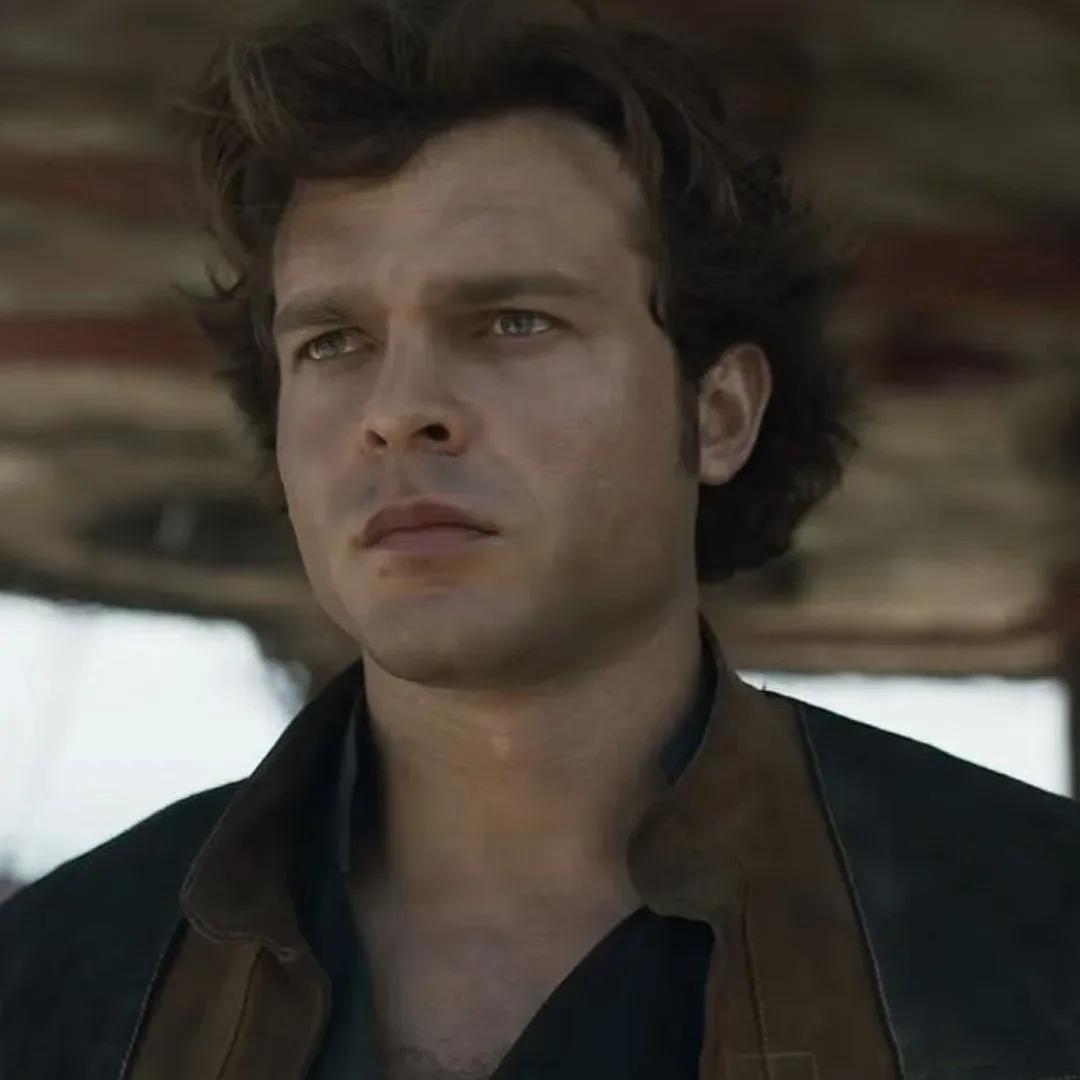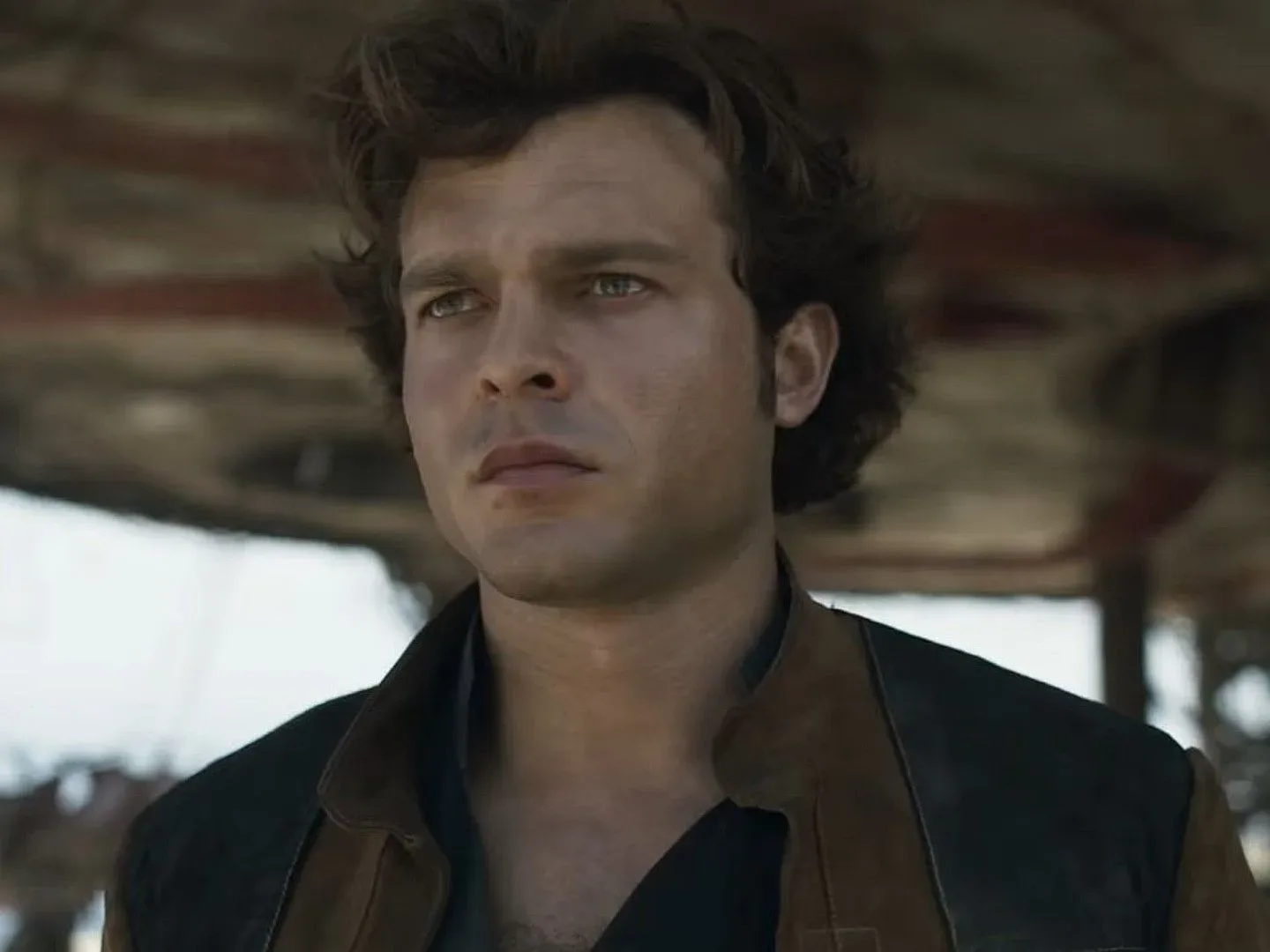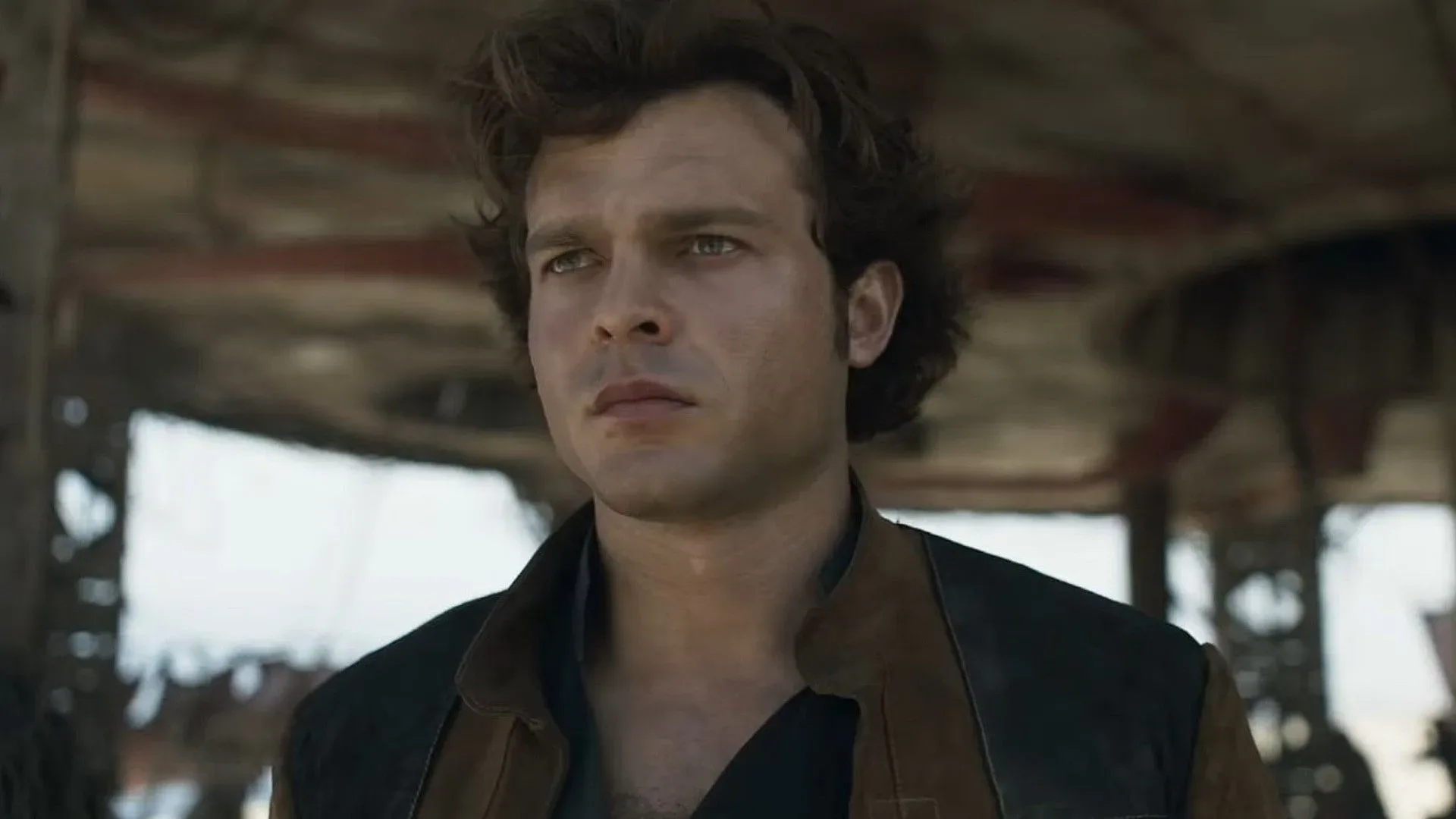
Alden Ehrenreich has offered a notably noncommittal answer on whether he could return as Han Solo. Asked about the prospect of revisiting the role he played in Solo: A Star Wars Story, Ehrenreich’s response was simply: “No idea.”
When the possibility was compared to Andrew Garfield’s later return as Spider-Man, Ehrenreich added, “Oh, interesting. We’ll see.” That is not a rejection, but it is also a long way from confirmation. For fans waiting for a concrete sign that Lucasfilm is preparing another story around the younger Han, the practical takeaway is straightforward: there is no stated commitment from the actor and no follow-up project has been announced.
The distinction matters in franchise reporting. An actor being open to a hypothetical return, a role being contractually possible, and a film being in active development are three very different things. At present, Ehrenreich has not said he is returning, and the available slate information does not establish a new Han Solo production.
What Ehrenreich’s answer does—and does not—mean
“No idea” can sound unsatisfying because it declines to turn a fan hope into a headline-sized yes or no. Yet it is the most accurate position an actor can take when there is no publicly established project to discuss. It leaves multiple possibilities intact: no return may ever materialize; a future story could emerge later; or Han could appear in a project built around another character. None of those outcomes is confirmed by the exchange itself.
It is also important not to treat a comparison to Garfield’s Spider-Man return as evidence of a plan. The comparison points to a broader audience habit: performers can revisit defining franchise roles years later, sometimes after a period when such a return seemed unlikely. But one actor’s path does not create a production schedule for another. Ehrenreich’s answer acknowledges the idea without supplying any indication that it is underway.
That leaves the status of this particular version of Han Solo exactly where it has been: possible in theory, unannounced in practice. The answer may disappoint viewers who wanted the actor to campaign for a sequel, but it avoids manufacturing momentum where no current project has been detailed.
The unfinished shape of Solo
Solo: A Star Wars Story positioned Ehrenreich as a younger incarnation of the character associated with Han’s earlier years. The film was met with a mixed overall reaction: its Rotten Tomatoes score stands at 69%, and the response did not translate into announced follow-up films. That absence is particularly notable because Ehrenreich had been contracted for a trilogy.
A trilogy contract is often misunderstood as a promise that three films will happen. It is better understood as a framework that can make future participation easier if a studio chooses to continue. It may set terms for possible additional appearances, but it does not obligate a studio to write, finance, shoot, or release sequels. The missing ingredient is still the biggest one: an actual announced project.
The first film also left some narrative space that audiences could imagine revisiting. That is not the same as an obligation to resolve every thread onscreen. Franchise stories frequently introduce relationships, rivalries, and destinations that might support later installments without guaranteeing them. In this case, the lack of a confirmed continuation means those possibilities remain possibilities rather than promises.
For a character with Han Solo’s cultural weight, there is an extra layer to the conversation. Audiences are not only asking whether a supporting figure might reappear; they are asking whether a performer will return to a role inseparable from the wider identity of Star Wars. That tends to generate more speculation than the available evidence can carry. Ehrenreich’s response is a useful corrective: interest from viewers does not equal a greenlit production.
Could a Lando project be the route back?
The obvious on-screen route for Ehrenreich’s Han would be a Lando Calrissian project involving Donald Glover, who appeared alongside him in Solo. A Lando spin-off had been in discussion with Glover attached, but there have been no recent updates and its development appears to have stalled. Without current information establishing that it is moving forward, it should not be treated as a vehicle for a Han Solo appearance.
That uncertainty is especially relevant because the two characters’ connection is one of the clearest reasons fans might expect the younger Han to return. The creative logic is easy to see, but creative logic is not a production announcement. A Lando project would first need a settled path of its own before any questions about guest characters, casting, or story era could be answered responsibly.
There is a broader lesson in that gap. Shared-universe franchises make every loose connection feel like a future crossover waiting to happen. Sometimes it is. Other times, an earlier film simply remains a self-contained chapter with doors left open. Until a title, format, cast list, or production update is formally established, tying Ehrenreich’s future to Lando is speculation rather than news.
Where the current Star Wars screen slate stands
The next confirmed Star Wars film project is Star Wars: Starfighter, directed by Shawn Levy and starring Ryan Gosling. Filming has wrapped, and a trailer has been shown behind closed doors. Those are meaningful production milestones, but they do not establish a role for Ehrenreich, Han Solo, or Donald Glover’s Lando.
In television, Ahsoka season 2 is next for the franchise. Again, the fact that the wider galaxy is continuing on screen should not be confused with evidence that every previous character or storyline is being revived. A large franchise can develop new projects while leaving other eras and casts untouched.
For viewers trying to separate firm information from the rumor mill, a simple hierarchy helps:
- Confirmed: A named project with publicly stated creative or production details, such as Star Wars: Starfighter.
- In discussion or uncertain: A project previously connected to talent but without recent progress updates, such as the Lando spin-off.
- Speculation: A hoped-for return inferred from character connections, past contracts, or an actor declining to rule it out.
Ehrenreich currently belongs in the third category. His comments do not close the door, but neither do they move him into the first.
Why legacy-role returns are never automatic
Modern franchise audiences have good reason to think old casting choices can be revisited. Familiar actors do return to beloved roles, and long-running fictional universes increasingly make room for stories set across different periods. But the basic requirements still apply: there needs to be a story worth making, a project to house it, interested creative partners, and a production decision. The audience’s appetite is only one part of that equation.
There is also a difference between reprising a role and repeating a role. A return can work because it gives an actor something fresh to play or places a familiar character in a new dramatic context. It can feel less essential when it exists only to acknowledge that fans remember the earlier appearance. Ehrenreich did not expand on what conditions, if any, would make a return attractive, so assigning a motivation to his cautious answer would go beyond what he said.
The conversation around franchise casting also extends beyond one galaxy. The debate over familiar faces returning in major adaptations continues elsewhere, including the question of how established characters are reinterpreted for television in this look at a forthcoming Harry Potter TV casting change. The shared point is not that every franchise follows the same strategy; it is that casting decisions are shaped by the specific project in front of them, not nostalgia alone.
What fans can reasonably watch for
The clearest sign of movement would be a formal project announcement naming a film or series connected to the Solo era. A substantive update on the Lando project would also matter, though it would still not automatically confirm Han’s involvement. Comments from Ehrenreich beyond “we’ll see” could add perspective, but actor interest alone would remain short of confirmation.
Until then, it is best to read this moment as an honest statement of uncertainty. Ehrenreich has not shut down the idea of playing Han Solo again. He has also not suggested that a return is being negotiated, planned, filmed, or even actively considered. That may be less dramatic than declaring a comeback or farewell, but it gives the character’s status its proper label: unresolved.
For now, the younger Han Solo remains part of Star Wars’ available history rather than its announced future. If the franchise elects to revisit that corner of the timeline, Ehrenreich’s brief response leaves room for a conversation. It does not offer a promise.