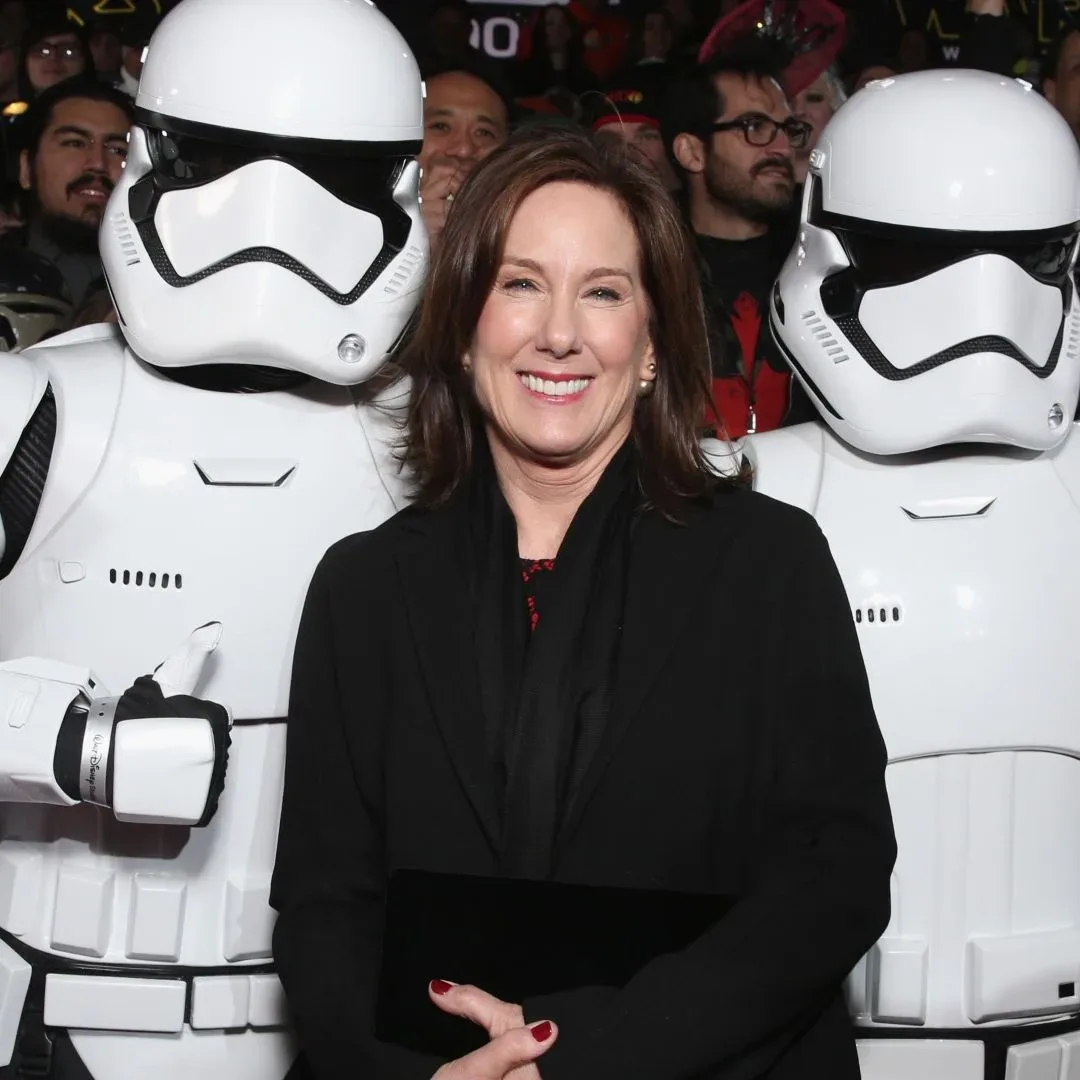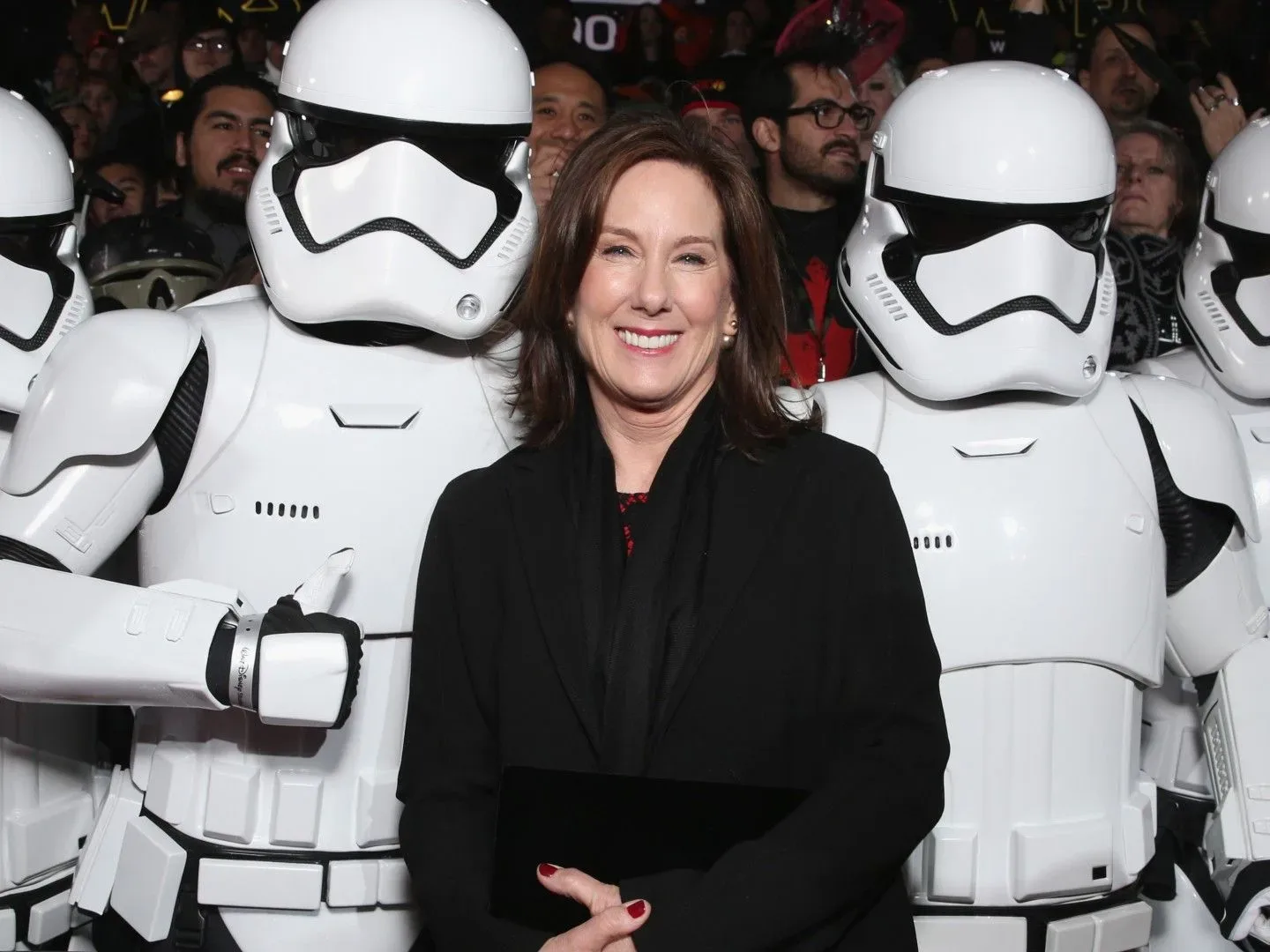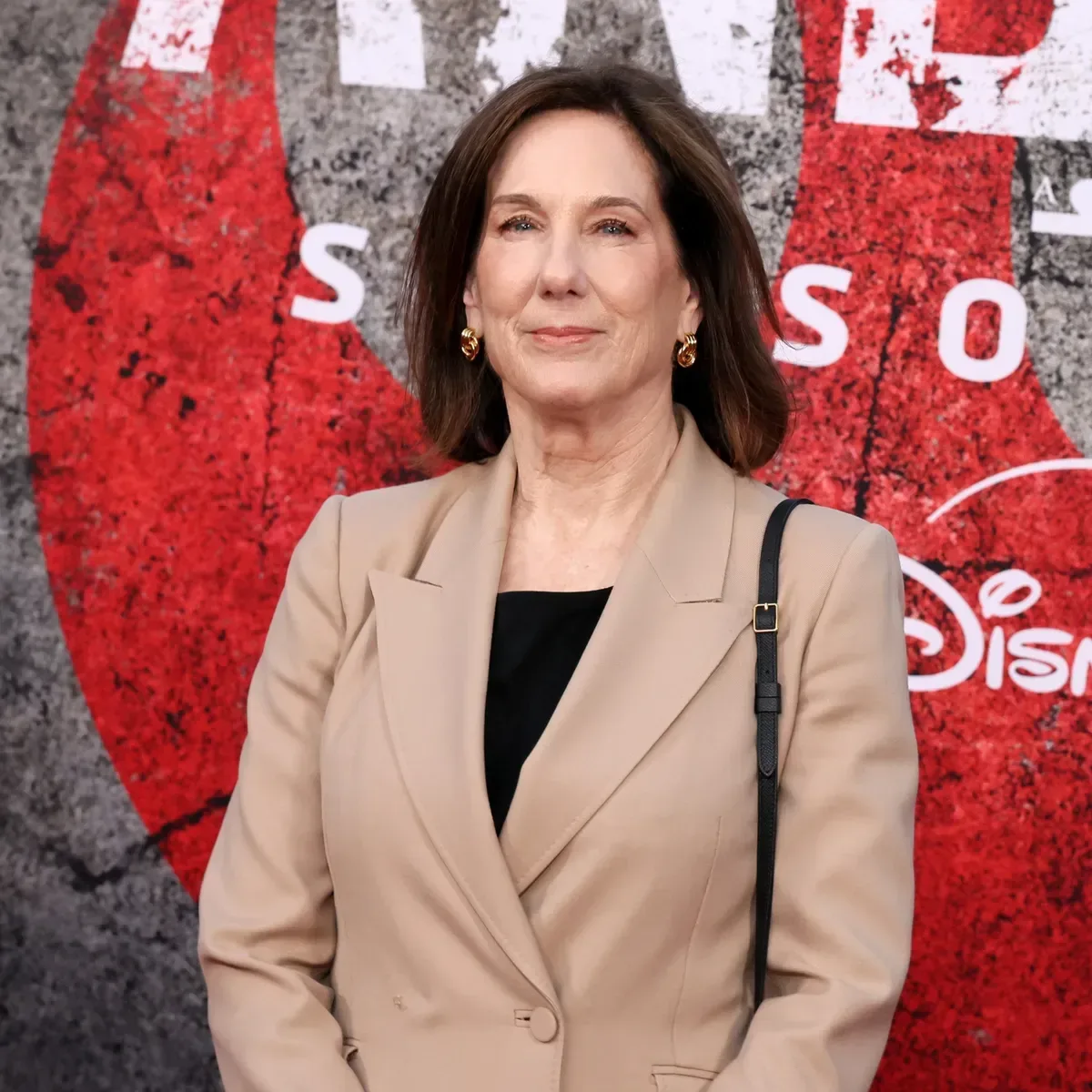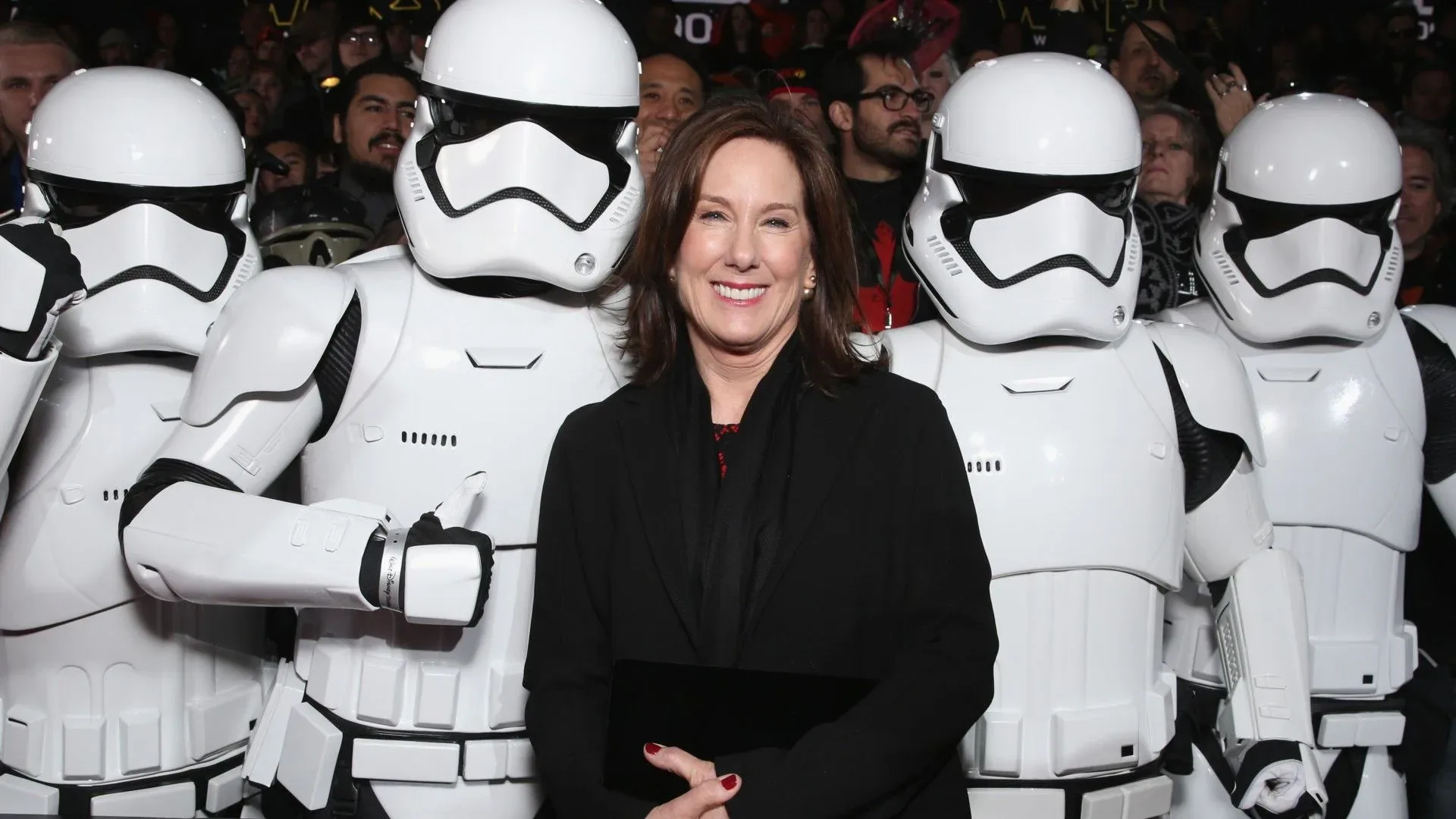
Kathleen Kennedy has described a surprising emotion after ending her 14-year run as president of Lucasfilm: relief.
Speaking about her departure earlier in 2026, Kennedy said she did not see the transition as bittersweet. Instead, she characterized it as an understandable release after taking on one of entertainment’s most scrutinized creative leadership positions. Replacing Star Wars creator George Lucas, she said, was an “incredible challenge,” and the job itself was not an easy one.
That assessment is candid, but it also identifies the central tension of the Kennedy era. Star Wars is not merely a long-running movie series with a recognizable brand. It is a fictional universe with generations of emotionally invested viewers, extensive characters and lore, and a fan community that often brings sharply different expectations to every new film or series. The mandate for Lucasfilm was never simply to preserve what already existed. It was to make the property active again while determining what new stories could belong beside the originals.
Taking over a legacy, not a blank slate
Kennedy became Lucasfilm president in 2012, shortly before Disney acquired the company for $4.05 billion. The scale of that acquisition made the expectations around a Star Wars revival especially visible. A relaunch had to satisfy audiences who had lived with the earlier films for decades, while also giving newer viewers a reason to enter the franchise.
In Kennedy’s telling, the hardest part was finding a workable balance between those two responsibilities: respecting a world that means a great deal to established fans while still attempting to make material that feels new and original. That is a useful way to understand the pressure attached to franchise stewardship. Continuity can create a foundation, but it can also make any departure from familiar characters, tones, or storytelling choices feel consequential to audiences.
Her comments do not present that tension as a problem with a clean solution. Rather, they suggest it was the ongoing work of the role. A studio leader overseeing a universe such as Star Wars has to weigh familiarity against expansion, deciding which ideas should revisit defining elements of the saga and which should chart a different path.
“You’ve got people where this means a lot to them. But at the same time, the challenge is to try to create something new, something original,” Kennedy said. “So finding that balance is really the toughest thing.”
That distinction matters because “franchise” can sometimes become shorthand for repetition. In this context, a franchise is a continuing group of connected works—films, television series, characters, and settings—that shares a recognizable identity. Kennedy’s comments point to the creative complication inside that model: recognition alone cannot settle whether a project should lean into legacy or pursue unfamiliar ground.
The projects Kennedy singled out
Kennedy named the theatrical relaunch beginning with Star Wars: The Force Awakens in 2015 as one of her proudest achievements. The film was the starting point for the sequel trilogy, making it a major marker in Lucasfilm’s return to regular big-screen Star Wars releases.
She also highlighted The Mandalorian and Andor, two series that helped establish Star Wars as an ongoing television presence. The choice to identify both is notable because they illustrate the breadth that a shared universe can contain: a continuing screen franchise does not need to rely on one delivery format, one cast of characters, or one storytelling emphasis in order to remain recognizably part of the same world.
Her tenure included Ahsoka as well as the sequel films, alongside projects that received negative reactions from portions of the fanbase, including The Acolyte and Skeleton Crew. Kennedy did not deny the intensity of that response. Her wider point was that strong reactions are embedded in the assignment when a property has devoted fans who care deeply about its direction.
That is not the same as saying every response is identical, or that an audience can be treated as a single voting bloc. It is a reminder that major franchise decisions are judged from many vantage points: some viewers prioritize continuity, others want experimentation, and still others may respond most strongly to a particular era, character, or format. The practical challenge for Lucasfilm is deciding which creative risks can broaden the universe without losing the connective tissue that makes it Star Wars.
George Lucas’ advice: look inward
Before taking the Lucasfilm job, Kennedy had built a long producing career and was a longtime collaborator of Steven Spielberg. Her credits include work on Jurassic Park and Lincoln, as well as Back to the Future and Gremlins.
Even with that experience, stepping into Lucasfilm came with an unusual question: how does a new leader find the story direction for a universe so closely identified with its creator? Kennedy recalled asking Lucas for advice. His answer was that the material was “all here,” gesturing to his head. Kennedy’s response was that trying to mine that internal store of ideas would be interesting.
The anecdote offers a concise illustration of what succession means in a creator-led world. There is no simple document that can fully transfer a creator’s instincts, priorities, and accumulated understanding of a fictional universe. Those things inform the work, but a successor must still interpret them and make independent choices. For Kennedy, the task was therefore not just managing a library of past films and characters. It was attempting to carry forward a creative legacy whose original source remained uniquely personal to Lucas.
Comparable leadership transitions elsewhere in blockbuster entertainment show why audiences pay close attention to who guides shared universes and what they say about their future. The same broader question of continuity and longevity sits behind Marvel’s discussion of the MCU’s remaining movie runway, even though each franchise faces its own creative circumstances.
Dave Filoni takes the presidency
Longtime Star Wars filmmaker Dave Filoni succeeded Kennedy as Lucasfilm president earlier this year. The transition places the company’s top creative and business leadership in the hands of a figure with a lengthy history in Star Wars filmmaking.
Kennedy, however, has not left the galaxy far, far away altogether. She remains involved as a producer on Shawn Levy’s upcoming Star Wars: Starfighter, which is scheduled for release on May 28, 2027. Her continued producer role makes the leadership handoff less of a total break than a change in responsibility: Filoni now holds the presidency, while Kennedy remains attached to a future Star Wars film.
For audiences, that distinction is worth keeping clear. A company president’s role encompasses the broad direction and management of the studio, whereas a producer’s involvement is tied to helping bring a specific project from development through release. Kennedy’s comments focus on the burden of the former position, while her work on Starfighter signals a continued connection to the latter.
What Kennedy’s relief says about the job
Kennedy’s remarks are not a roadmap for what Filoni will do next, nor do they establish new details about Lucasfilm’s upcoming slate beyond her producing role on Starfighter. What they do provide is an unusually direct reflection on the human pressure behind a role that can be discussed too easily in terms of brands, release schedules, and reaction cycles.
Her description of relief acknowledges that preserving a legacy can be exhausting, particularly when the legacy is both artistically significant and deeply personal to its audience. At the same time, she pointed to tangible achievements from the period: the 2015 film relaunch and the arrival of The Mandalorian and Andor.
The handoff to Filoni now begins a new chapter for Lucasfilm. Kennedy’s experience suggests that the next president inherits more than a popular collection of titles. They inherit the ongoing balancing act at the center of Star Wars: honoring what people already love while making room for stories they have not seen before.