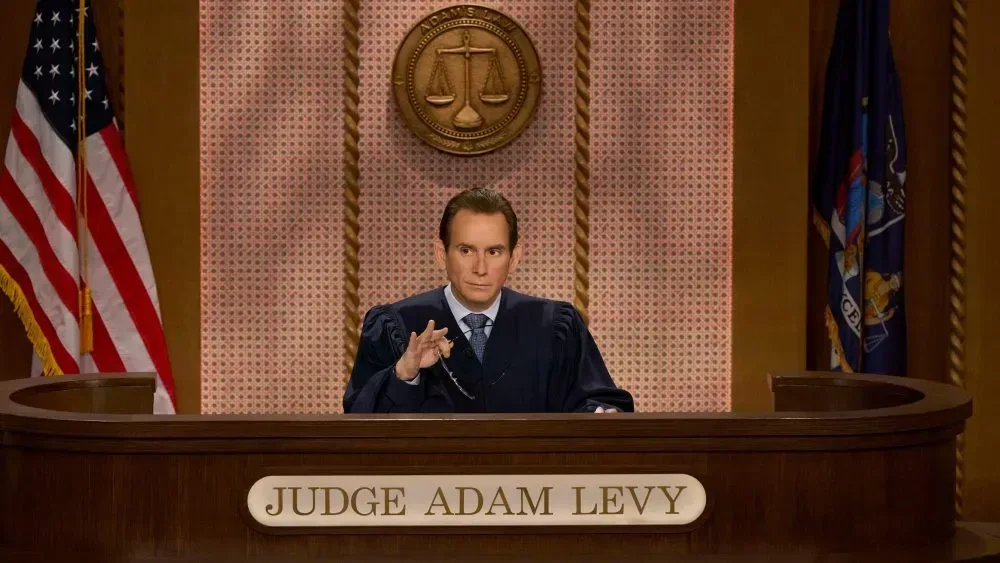
Daytime court television has a new judge with an unmistakably familiar surname, but Adam’s Law is making its own argument for why viewers should tune in. Judge Adam Levy’s weekday syndicated series, which debuted September 14, is built around a brisk and unsentimental promise: bring the evidence, tell the truth, and do not expect emotion to substitute for either.
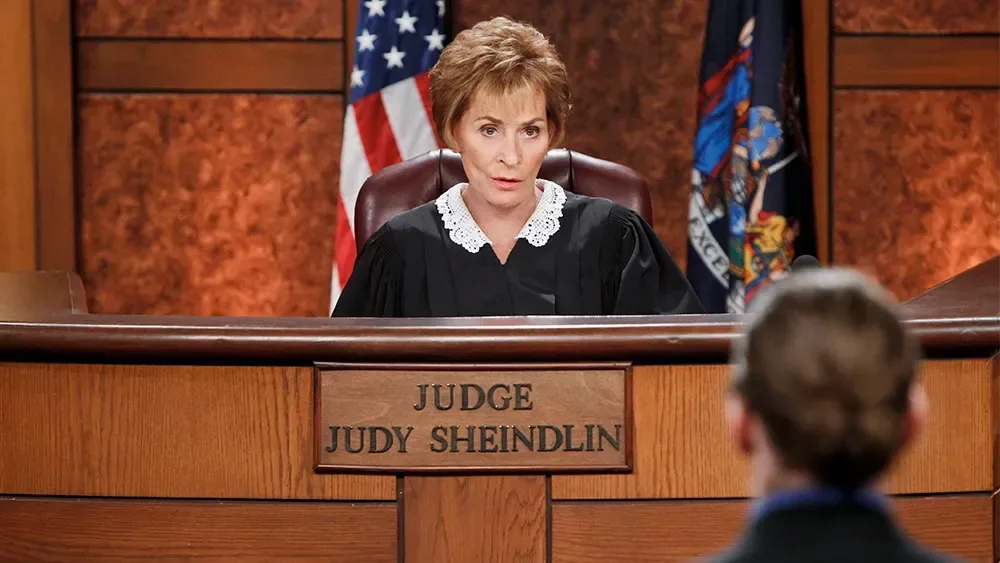
Levy, 58, is the son of Judith Sheindlin, the longtime television judge known as Judge Judy. That family link will inevitably frame first impressions of Adam’s Law, particularly as Sheindlin steps away from on-camera work while continuing as a producer on Levy’s series. But Levy is emphasizing a meaningful difference in process rather than simply a different delivery at the bench. His stated requirement for doing the show was time to investigate the disputes and materials before the cameras roll.
That distinction matters. Courtroom television runs on compressed storytelling: a dispute needs to be understandable almost immediately, the competing accounts must be tested, and a ruling has to feel grounded rather than arbitrary. Levy says he spends days preparing cases, reviewing the circumstances and evidence supplied by both sides. In his view, that preparation is the route to decisions based on verifiable facts rather than a litigant’s performance in the room.
For viewers who enjoy the format’s confrontations but also want to understand the logic behind a decision, that may be the show’s defining hook.
A new bench with an established legal and TV background
Levy comes to Adam’s Law with experience in both law and television. His professional background includes work as a prosecutor, district attorney for Putnam County, New York, and a private-practice attorney. Before receiving his own series, he also appeared for several seasons on Amazon Prime Video’s Tribunal Justice.
His family’s association with televised jurisprudence is broader than Judge Judy alone. His stepfather, Jerry Sheindlin, is a lawyer who spent three seasons on The People’s Court from 1999 through 2001. Levy has acknowledged that a high-profile parent invites easy accusations of nepotism, but he maintains that the work itself—and his record trying cases—is the basis on which his show should be judged.
That is a sensible line for the program to walk. A recognizable name can get a new court show noticed in a crowded daytime environment. Sustaining an audience, though, depends on whether the judge’s perspective feels coherent from case to case. Levy’s perspective is exceptionally clear so far: facts first, preparation mandatory, and theatrics unlikely to move the verdict.
His bluntness has already emerged on air. In one dispute involving Cash App payments that the defendant characterized as payment for sexual favors, Levy sharply criticized the plaintiff’s decision to sue; the plaintiff lost. The moment signals the kind of direct, occasionally cutting tone audiences can expect, while the show’s stated philosophy is that the evidence—not the insult—is supposed to decide the outcome.
What Levy means by a “mini trial”
Levy describes each episode’s cases as mini trials. The term is useful because it explains the show’s structure without suggesting that a televised small-claims dispute replicates every feature of a full conventional trial.
In the format Levy outlines, he begins with a concise opening statement identifying the issue in dispute. From there, he uses direct examination, a question-and-answer process intended to let a party explain their account. The questions he describes are open-ended: what happened, where were you, what did you see, and what did you say?
Next comes cross-examination. In broad terms, cross-examination tests the reliability of what has been said. On Adam’s Law, Levy says this means probing claims against outside, independent evidence that could demonstrate whether either side has been untruthful. He then summarizes the matter and delivers a verdict.
The cases cover disputes familiar to court-show audiences: landlord and tenant conflicts, business or employment disagreements, and relationship disputes that have become financial fights. The litigants waive their right to pursue the matter in small-claims court in order to have Levy adjudicate it for the series. That makes the preparation issue central to his approach. Levy has said he wanted confidence that his rulings rested on the information presented and researched, rather than on surprise or emotional momentum.
Preparation is the show’s clearest point of difference
Levy has contrasted his method with Sheindlin’s own preference to enter cases without advance familiarity with the people or evidence, an approach designed to preserve spontaneity on camera. Neither method removes the basic television need for clarity and pace. They do, however, produce a notably different judicial posture.
A judge who has studied a case can move quickly toward the disputed details and ask why a document, payment record, message, or timeline does or does not support a claim. It can make the questioning feel less like a search for the story and more like a test of the story already offered. That is precisely what Levy says he wants: a proceeding in which a person cannot win simply by arriving with a more dramatic presentation than the other side.
There is also a practical tension built into that mission. The show is filmed in Stamford, Connecticut, and Levy says production records between five and eight cases a day, or almost 20 in a week. Those are demanding numbers for any format that depends on careful listening. The program’s success will rest on whether viewers can see the preparatory work reflected in focused questioning and understandable verdicts, rather than merely being asked to take it on faith.
“Don’t lie and don’t cry” is a philosophy, not just a catchphrase
The unofficial motto around Adam’s Law is simple: don’t lie and don’t cry. It is catchy, but it also captures Levy’s stated view of courtroom conduct.
For a plaintiff—the person bringing a claim—the essential task is to explain what they say happened and support that account. For a defendant—the person responding to the claim—the equivalent obligation is to answer the accusation directly and provide evidence for a competing version of events. Levy’s advice to potential litigants is practical: arrive prepared, organize the evidence that helps the court assess the dispute, avoid exaggeration, and tell the truth.
His rejection of tears is not presented as a claim that people should not feel upset about their disputes. Instead, it is a statement about relevance to a ruling. Levy says he is not persuaded by crying and does not want attempts to manipulate emotions or inflame the room. The verdict, as he describes it, turns on facts rather than feelings.
That stance is particularly compatible with the kind of disputes the series handles. Arguments over payments, leases, jobs, small businesses, and failed relationships often become messy because both parties feel personally wronged. Feelings may explain why the conflict escalated, but they do not automatically establish who owes money, who broke an agreement, or whose account is supported by the available material. Adam’s Law is positioning itself as a reminder of that separation.
It is also an entertainment proposition with a visible educational angle. Levy wants audiences to see how a dispute can be presented: make a coherent account, support it, and expect that unsupported claims will be challenged. That does not turn a weekday court program into legal instruction for every circumstance, but it gives the series a useful framework beyond the familiar pleasure of watching a judge cut through a chaotic story.
The Judge Judy comparison is unavoidable—and not the whole story
Sheindlin’s television career casts a long shadow over any program starring her son. Levy does not appear to be trying to deny that. Instead, he has said he has no expectation of becoming more famous than his mother or surpassing her success. He is aiming for a smaller but distinct version of it.
That candid framing may work in the show’s favor. Trying to recreate a predecessor’s exact rhythm risks making a new program feel like imitation. Levy has a sharper chance of establishing an identity by leaning into what he says separates him: advance study, a prosecutor’s interest in testing claims, and a court persona that treats preparedness as respect for the process.
It is also worth noting that television court shows are not actual tutorials for every real-world legal problem. The cases on Adam’s Law have their own program-specific arrangement, including the parties’ decision to waive small-claims court. A viewer facing a real dispute should not assume that a televised process maps precisely onto every court or claim. Still, Levy’s core advice has everyday value: preserve relevant information, know what you are alleging, and distinguish a compelling story from proof.
For more television news, see our coverage of the latest streaming-chart movement for Monster: The Lizzie Borden Story.
Where and when to watch
Adam’s Law airs weekdays in national syndication. Broadcast times vary by local market, so viewers will need to check local listings. The show’s opening week has made its terms plain: Levy intends to run a compact, preparation-heavy courtroom where evidence gets the spotlight and emotional appeals do not get the last word.