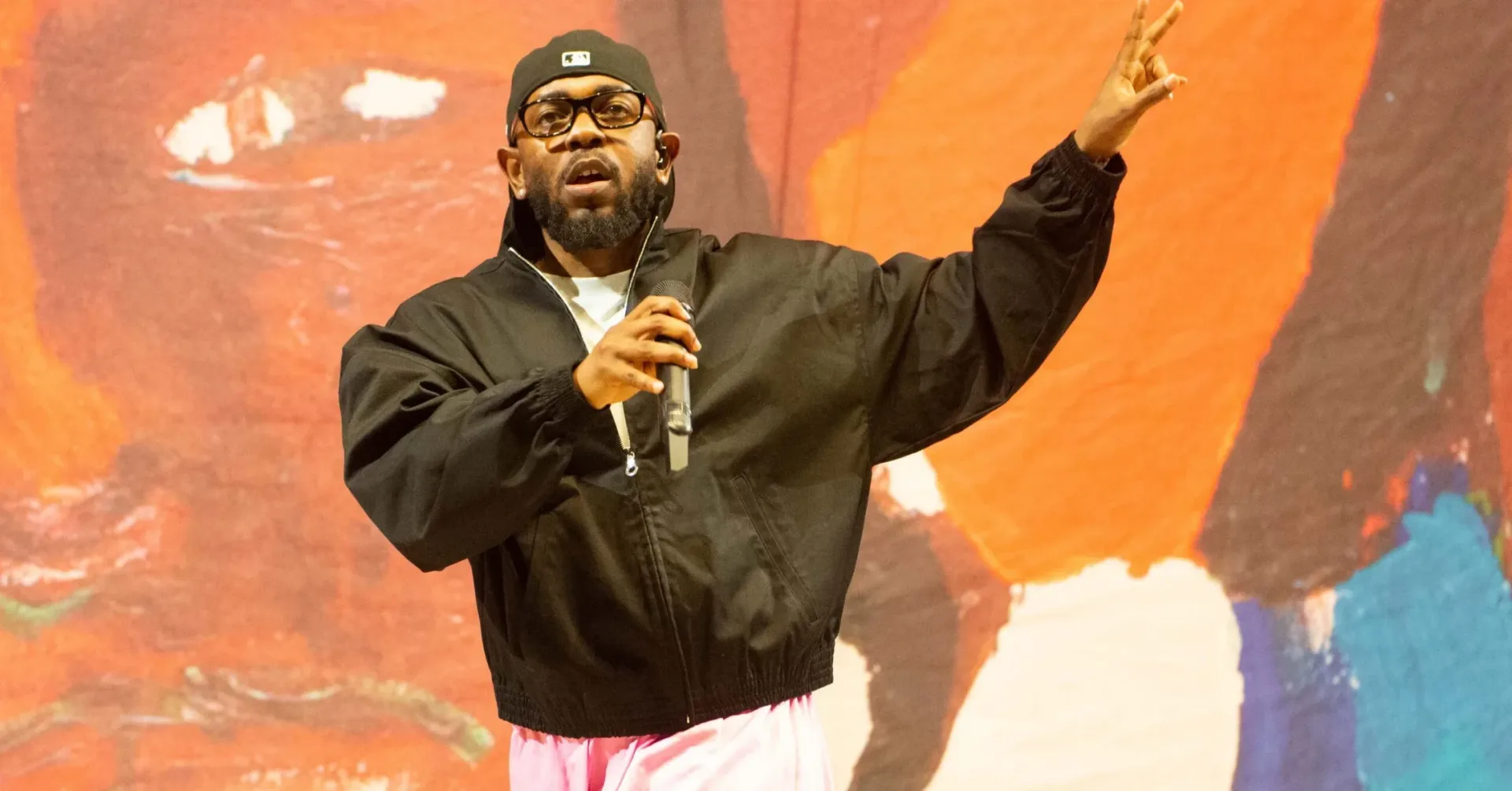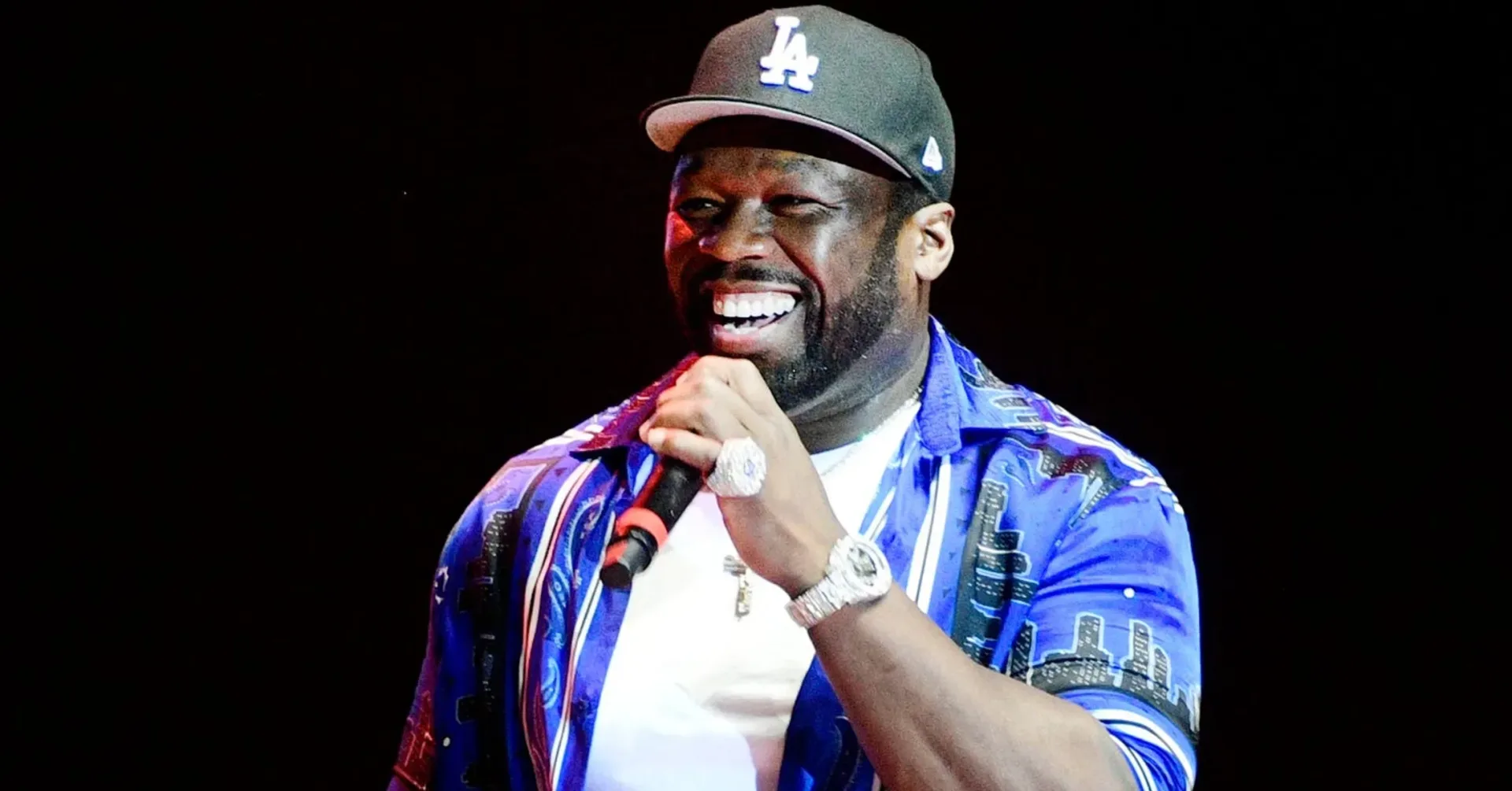
50 Cent is making the case that Drake’s place in mainstream music cannot be measured by a single rivalry, release cycle, or bad night in a lyrical showdown. In a recent appearance on The Crew Has It, the rapper and entrepreneur argued that Drake’s career has been unusually durable because he has never been confined to one lane.
The core of 50 Cent’s argument is Drake’s ability to work as both a rapper and an R&B-focused performer without fully surrendering credibility in either space. That flexibility, he suggests, is what makes Drake difficult to replace. An artist who can reach rap listeners with rap records and also connect through melodic, R&B-oriented material is not simply competing with one peer at a time; they can pull together audiences that might otherwise be served by separate artists.
It is an opinion, not a definitive industry measurement. But it identifies the standard 50 Cent is using: longevity, continuing audience interest, a large body of music that remains active in circulation, and versatility across overlapping genres. By that standard, he believes Drake has had a run without an obvious successor waiting in the wings.
What 50 Cent means by an artist’s “run”
In music discussion, a “run” generally means more than a hit single or one commercially successful album. It describes a sustained period in which an artist remains central to the public conversation and can repeatedly attract attention to new work. The definition can include commercial performance, cultural visibility, consistency, touring, radio presence, streaming activity, or simply the ability to keep listeners returning to a deep catalog.
50 Cent’s comments frame Drake’s run as a broad career calculation rather than a narrow scorecard. He pointed to Drake releasing three albums this year that continued to perform, treating that output as evidence that the audience has not vanished. The observation matters because a frequent release schedule alone does not establish demand; 50 Cent’s point is that continued interest in that volume of music indicates an audience still engaged with Drake’s work.
That distinction is central to his larger claim. A performer can dominate a specific moment and still struggle to carry attention into the next. Conversely, an artist can take a public loss in one arena yet remain commercially and culturally significant over the longer term. 50 Cent clearly places Drake in the latter category.
Versatility is the centerpiece of the argument
50 Cent did not present Drake as merely a rapper with a long catalog. He focused on the crossover ability to make R&B records while continuing to compete in rap. In practical terms, crossover here means an artist can move between adjacent musical styles and reach listeners with different expectations, rather than being permanently categorized by one sound.
That can matter for longevity. A rap record and an R&B record may be received differently, create different moods, and appeal to listeners seeking different kinds of songs. An artist able to participate convincingly in both spaces has more creative routes available when releasing music. The appeal, in 50 Cent’s view, is not that Drake simply changes labels from track to track. It is that he has maintained enough traction in both areas to make the combination commercially powerful.
There is also a simple competitive implication in 50 Cent’s position: replacing an artist with a hybrid audience is more difficult than replacing someone whose audience is concentrated in one lane. A would-be successor would need to capture attention as a rapper while also matching the melodic and R&B-facing reach 50 Cent identifies in Drake’s output. That is a significantly larger task than replicating one style or one moment.
For readers following the broader music-business side of pop culture, an artist’s public identity can be as consequential as any individual release. The surrounding conversation about music platforms continues to evolve too, including changes such as Apple Music’s black-and-white icon shift in an iOS 27.2 beta. But 50 Cent’s point is ultimately about the music and the audience: Drake’s flexibility has allowed him to remain present across listening habits that are often treated as distinct.
Why the Kendrick Lamar battle does not change 50 Cent’s view
50 Cent’s assessment also addresses the obvious counterpoint: Drake’s 2024 rap battle with Kendrick Lamar. He acknowledged the basic public perception that Kendrick Lamar came away with the momentum from that feud. Still, he rejected the idea that the battle result dismantled Drake’s larger career.
His reasoning is straightforward. After visiting Canada, 50 Cent said he urged Drake to separate the noise around the battle from the concrete question of what had actually been lost. In 50 Cent’s account, the answer was essentially nothing. That is not the same as claiming that Drake emerged untouched. Instead, it is a claim about scale: a battle can create a major moment, influence the public mood, and still not erase years of audience-building or the demand for an artist’s music.
That framing draws an important line between a battle’s immediate stakes and a career’s accumulated value. Rap battles are often discussed in winner-and-loser terms because that is part of their appeal. They produce sharp comparisons, quick reactions, and a sense that the moment demands a verdict. A long career is harder to compress. It contains releases, shifting styles, multiple audiences, and evidence gathered over years rather than over a single exchange.
50 Cent’s stance is therefore not a revision of the battle narrative. He is not arguing that the conflict did not have an outcome in the court of public momentum. He is arguing that the outcome should not be mistaken for a total accounting of Drake’s career. To him, the battle was one chapter, while Drake’s reach across rap and R&B is the larger story.
Public momentum and lasting reach are different measures
It is useful to distinguish the terms at the heart of the discussion. Public momentum describes who appears to have attention at a particular time. It can be driven by a feud, a viral record, an especially memorable performance, or a high-volume wave of discussion. It is immediate and visible, but it can also be temporary.
Longevity, by contrast, refers to the capacity to remain relevant over an extended period. It is less about a single peak than an ability to keep listeners engaged through changes in the market and changes in public taste. 50 Cent’s comments explicitly favor longevity as the more meaningful measure of Drake’s standing.
Neither category necessarily cancels out the other. An artist can enjoy enormous public momentum and have a long career. An artist can also suffer a moment where the public sentiment is against them and still retain a substantial audience. That is the nuance in 50 Cent’s reading of Drake’s position following the 2024 battle.
His perspective also explains why he emphasizes music that remains in circulation. The phrase points to work continuing to be heard rather than disappearing after its initial release window. For 50 Cent, this ongoing presence is part of the evidence that Drake’s influence is not tied solely to the news cycle surrounding a rivalry.
50 Cent is arguing against a simple succession story
The most pointed part of 50 Cent’s argument may be the assertion that nobody can simply step into Drake’s role. Popular music regularly invites succession narratives: one star falls, another takes the vacant spot, and the hierarchy resets. 50 Cent does not see Drake’s situation that way.
His view is that the role is not a single position that another rapper can inherit. It is built from a specific mix of rap competitiveness, R&B capability, output, and audience endurance. Remove any one of those components and the replacement is no longer a direct equivalent. Someone may succeed as a rapper, or succeed with melodic records, or sustain a highly visible period. But 50 Cent’s claim is that putting all of those qualities together at Drake’s scale is rare.
That argument naturally remains debatable because “greatest run” depends on what a listener values. Some will prioritize critical acclaim, others genre influence, sales, cultural impact, live performance, or the outcome of high-profile lyrical clashes. 50 Cent is open about his own criteria. He values Drake’s sustained reach and the ability to work between rap and R&B without losing the audience in either direction.
For him, the headline is not that Drake avoided every setback. It is that a setback did not remove the traits that made the career formidable in the first place. The songs remain in circulation, the audience remains active, and the range between rap and R&B still differentiates him from artists who occupy a narrower space.
A long-term view of a short-term conflict
50 Cent’s comments land as a defense of perspective. The 2024 Kendrick Lamar battle was a consequential cultural event, and he does not deny that Kendrick held the public momentum. Yet he sees no reason to convert that result into a declaration that Drake’s wider standing has collapsed.
Instead, he points to ongoing releases, a continuing audience, and a crossover skill set that he considers exceptionally hard to duplicate. It is a case for judging a career on the full body of evidence rather than treating one highly visible contest as the final verdict.
Whether listeners agree with the superlative is another matter. What is clear is the standard 50 Cent is setting: an artist’s legacy is not only about winning the loudest week. It is also about how long the music lasts, how many audiences it reaches, and whether anyone else can realistically occupy the same space once the spotlight shifts.