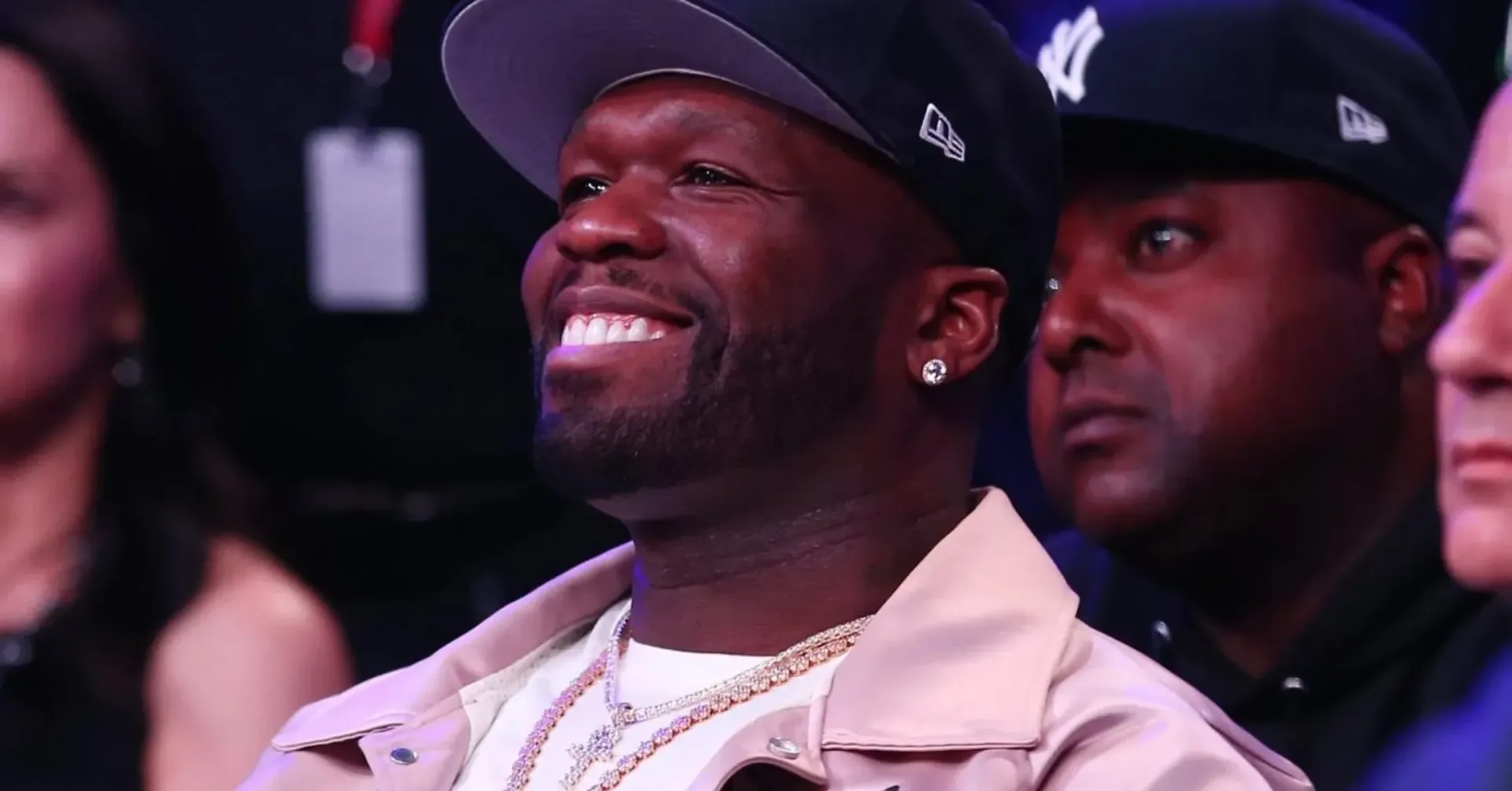
50 Cent has offered a blunt reading of the relationship between reality television and rap careers, arguing that visibility is not the same thing as momentum. In a recent appearance on The Crew Has It, he singled out Cardi B as an exception to what he sees as a damaging pattern around Love & Hip Hop: performers can gain a large audience on television, yet fail to turn that attention into enduring musical success.
His phrasing was deliberately harsh. “Cardi’s from the graveyard,” he said, referring to the reality franchise before adding that it was the “dead hip-hop section.” But the substance of his point was less about whether the show made people famous and more about what that fame did—or did not do. In his view, the format could keep artists in public view after their records had stopped being the reason people were paying attention.
Cardi B, he argued, took a different route. She was memorable on camera before a major hit changed the scale of her career, but she also left the franchise after two seasons and centered her next move on rap. That distinction is at the heart of 50 Cent’s praise: reality TV may have widened Cardi’s audience, but it did not become the identity that outlasted her music.
Visibility is useful, but it is not a career on its own
Reality television is built around repeat exposure. A cast member can appear week after week, with conflicts, jokes, reactions and relationships giving viewers reasons to keep returning. That exposure has genuine value. It can make a performer recognizable to people who may never have heard a song, watched a video, or attended a show.
However, 50 Cent’s argument is that recognition and musical traction are separate things. A hit record is not simply a song that existing fans enjoy. In practical terms, it is the kind of release that substantially changes an artist’s public standing: it travels beyond a pre-existing audience and establishes that the artist’s work can carry attention independently.
That is why the difference matters. A personality-based television presence can create an audience, but it can also trap a musician inside a particular role. Viewers may know the cast member for arguments, punchlines or storylines rather than for the catalog. When that happens, the show remains the main reference point, while the music becomes supplementary.
50 Cent did not suggest the franchise lacked an audience. In fact, his criticism depends on the opposite being true. His view is that its audience was strong enough to sustain public profiles even when the songs no longer drove the conversation. Being seen, then, is not automatically evidence that an artist’s recording career is advancing.
Why Cardi B stood out to him
When Sexyy Red entered the conversation, 50 Cent connected the two artists through a quality that exists before any particular single takes off: a strong, immediate presence. He described Cardi’s responses on television as comedic and called that quality “bulletproof.” The word is revealing. He was not arguing that charisma guarantees success, but that it gives an artist a durable way to command attention.
Related coverage includes 50 Cent Says Cardi B Broke Free From the ‘Love & Hip Hop’ Formula.
That kind of appeal is different from a calculated attempt to seem polished. Cardi’s humor and unfiltered reactions gave people a recognizable sense of her character. In an entertainment environment crowded with performers competing for attention, a distinct voice can make an artist easier to remember. It can also make the transition between platforms feel natural: viewers are not being introduced to a completely different person when they encounter the music.
Still, personality is only part of the story. A compelling television figure can stay compelling television without becoming a major recording artist. Cardi’s career, as 50 Cent frames it, worked because personality opened a door and the music subsequently gave people another reason to remain invested.
That balance matters for artists using any attention-driven platform. The platform can amplify a persona; it cannot, by itself, establish that songs will have reach or staying power. The practical challenge is to make sure the attention points somewhere meaningful rather than endlessly circling the content that first created the attention.
Leaving before the show became the whole story
Cardi’s departure is the central event in 50 Cent’s interpretation. During the sixth season of Love & Hip Hop, the program documented her frustration with DJ Self, whom she felt was not taking her ambitions seriously. Her response was unequivocal: she maintained that she did not need him—or anyone else—to succeed.
After two seasons, she left the show to focus on rap. Within months, she released Gangsta Bitch Music Vol. 2, signed with Atlantic Records, and saw “Bodak Yellow” become the record that transformed how the industry regarded her.
The timeline makes clear why 50 Cent sees her as an outlier. The reality series was a part of the path, not the destination. It provided exposure, but the exit created room for the next phase to be judged on music rather than on a television storyline. “Bodak Yellow” was the pivotal proof point: the public discussion could no longer be reduced to whether she was entertaining on a reality program.
There is an important nuance here. Leaving television does not erase it from an artist’s history, nor does it mean the exposure had no role in the breakthrough. Rather, it changes the hierarchy. The show becomes early context. The releases, performances and ongoing work become the main text.
That is why 50 Cent’s “graveyard” description should be read as an opinion about career outcomes, not a literal claim that reality TV cannot lead anywhere. His praise for Cardi depends on the premise that the show did give her a larger audience. What separated her, in his view, was the ability to convert that audience into an independent music career and avoid being permanently defined by the format.
50 Cent has made this case before
This is not the first time 50 Cent has praised Cardi B’s rise. In 2023, he called her “the American dream,” framing her move from working at Club Lust to becoming a hitmaking artist as a success story worth celebrating.
The earlier praise and his new comments fit together. The latest remarks focus on escaping a particular entertainment lane; the prior praise emphasized the scale of the rise itself. In both cases, he is recognizing a career that did not stop at its initial point of public visibility.
It also explains why his comments carry more weight as a career observation than as a casual insult toward reality TV. He is highlighting a narrow achievement: someone whose public persona was already big enough for television, who then made the music powerful enough to eclipse the television origin.
What the argument means for pop culture careers
Cardi B’s path illustrates a broader tension in modern entertainment. Audiences often first meet performers through clips, social feeds, reality series, interviews or personality-driven content. These channels can introduce an artist quickly. Yet they can also make it difficult to shift the public’s focus toward work that requires a different kind of attention, whether that work is music, acting, comedy, or something else.
50 Cent’s point is essentially about ownership of the narrative. If the most memorable thing about a performer remains the platform that introduced them, that platform can define the career. If a song becomes the dominant cultural reference point, the artist has a stronger chance to define the terms themselves.
That does not make personality a distraction. On the contrary, he specifically presents Cardi’s comedic instincts as an asset. The lesson suggested by his comments is that personality works best when it supports the creative work rather than replacing it. A sharp reaction or a viral scene may create curiosity; a major record gives that curiosity somewhere to go.
The same contrast shows up across entertainment when the line between performance and persona becomes blurry. In a different pop-culture context, the idea of a public-facing “work”—a deliberately shaped piece of performance—has been explored in a discussion of a wrestling-style work. Cardi’s case is not being presented as that sort of constructed stunt. Rather, 50 Cent’s observation is that an authentic-feeling, instantly recognizable persona still needs the right creative result behind it to become lasting career leverage.
Television remains a footnote, not the main event
Nearly a decade after leaving the VH1 franchise, Cardi’s career has continued to keep the reality-show period in the background. Am I the Drama? arrived in 2025, she completed her first headlining arena tour, and she has said she plans to return with another album in 2027.
Those details do not prove 50 Cent’s broader assessment of every reality-TV artist. They do show why he sees Cardi B as a clear counterexample to the pattern he describes. Her television stint is still part of the biography, but it is no longer the headline. The headline is the music career built after she walked away.
For 50 Cent, that is the real escape: not avoiding the exposure, but refusing to let exposure be the final achievement.