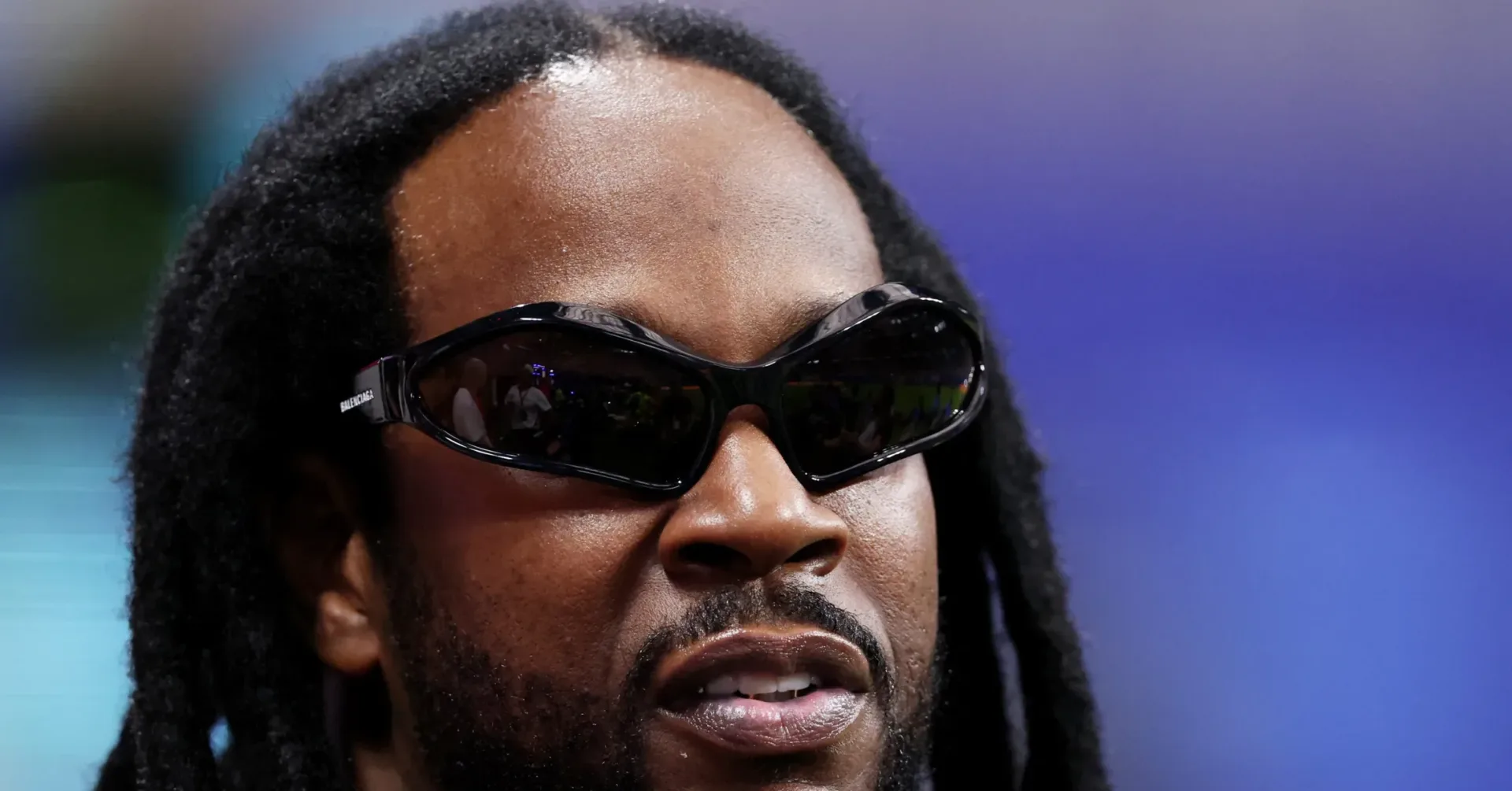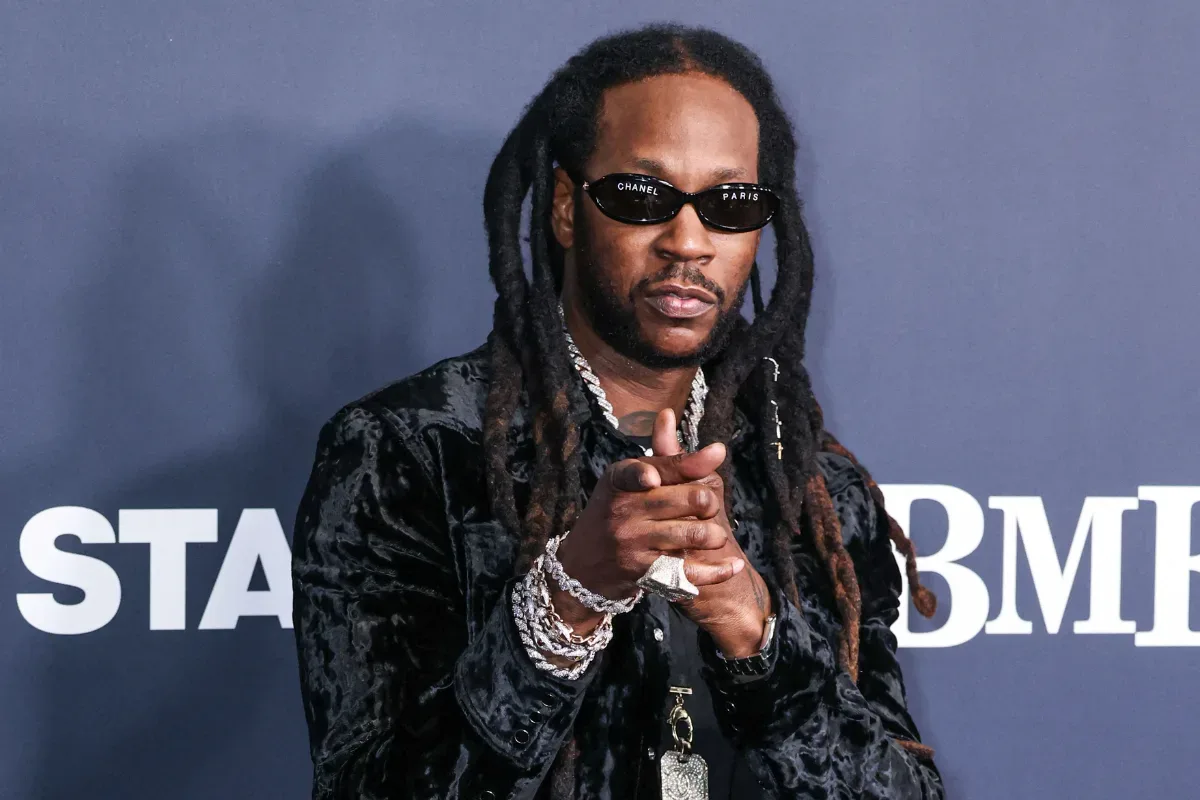
2 Chainz has apologized after a discussion with food critic Keith Lee about restaurant service, celebrity recognition and the expectations placed on businesses became a point of disagreement. In a social-media post shared November 3, the rapper said he had spoken with Lee after the program and regretted that his remarks offended people.
“I know my words offended some people and I apologize for that,” 2 Chainz said. “What I said and what I meant were two different things.”
He described the follow-up conversation with Lee as friendly. That matters because the exchange was less a personal feud than a disagreement over a fundamental hospitality question: should a restaurant’s best service be reserved for a famous guest, or should every paying customer receive the same standard regardless of whether staff know who has walked through the door?
The debate played out on Kirk Franklin’s Den of Kings, recorded live at Clark Atlanta University. Franklin was joined by 2 Chainz, Lee, comedians Desi Banks and Mojo Brookzz for a conversation that included reviews, restaurant service and the responsibilities attached to public influence.
Two different ideas of what service means
2 Chainz’s initial position was direct: entertainers receive advantages that other people do not. During the exchange, he compared restaurant treatment with priority experienced by famous people in airport lines, arguing that celebrity perks are an established part of the public-facing world.
That view recognizes a practical reality. A recognizable artist arriving at a restaurant can bring attention, customer interest and potential publicity. Restaurants may also make extra accommodations around security, privacy or crowd management. In that framing, special handling is not necessarily a judgment on ordinary diners; it is a response to the unusual conditions that can follow a celebrity visit.
Lee’s approach focuses on a separate, customer-centered measurement. He explained that he sends relatives into restaurants before he enters so that he can see what service looks like when employees do not know a widely followed critic is connected to the table. The technique is designed to test the experience available to a typical paying customer rather than an experience altered by recognition.
In simple terms, the disagreement is about the value of an unannounced evaluation. A restaurant can be gracious to a celebrity and still be judged on whether it is equally prepared to welcome everyone else. Lee’s method seeks to remove the variable of fame from the visit. If an establishment changes the outcome only after realizing who is involved, that change itself becomes relevant to the assessment.
Neither point requires pretending that fame has no effects. Instead, the tension lies in whether those effects should influence an evaluation intended to tell regular diners what they can expect. For a reviewer whose audience may spend its own money based on a recommendation, the ordinary customer’s experience is the meaningful benchmark.
Why the Atlanta example remains central
Lee’s concern over differential treatment had already been illustrated during his 2023 Atlanta visits. His family was told there would be a 90-minute wait at Old Lady Gang. Once Lee was recognized, the restaurant offered him a seat. He chose to leave rather than accept it because his relatives had been asked to wait.
The incident captures why the subject provokes such strong reactions. The offer of a table can be read as a business trying to accommodate a prominent guest. But from Lee’s stated perspective, accepting it would have undermined the purpose of sending family members ahead. The important information was not whether a table could be found after recognition; it was that the group’s initial experience was a long wait.
That distinction is especially significant in criticism built around trust. A review is useful when readers can reasonably connect the reviewer’s experience to their own likely experience. If a restaurant knows a person with major visibility is present, the meal may receive extra attention that cannot be guaranteed for other customers. Lee’s relatives-first practice attempts to preserve that connection.
It is also worth separating the criticism of a service outcome from a claim about intent. The facts described in the discussion show that a seat was offered after Lee was recognized and that he declined it. They do not, by themselves, establish why staff initially gave the 90-minute estimate or what every other guest experienced that day. Yet the sequence still gives Lee a reason to consider recognition part of the story, because the proposed solution arrived only after staff knew who he was.
Hospitality is more than access
The exchange has a particular resonance because 2 Chainz is involved in the restaurant business himself. In an October 29 interview, he identified Esco as the venture that most reflects his tastes. He described it as a place where food and music belong to the same social experience, with an emphasis on making guests comfortable.
His broader view of hospitality was equally clear: making people feel at ease and building genuine relationships can create opportunities. That philosophy is not inherently incompatible with Lee’s position. In fact, both perspectives assign value to hospitality. The difference is where they place the emphasis.
For 2 Chainz, hospitality can include recognizing the realities of status and treating high-profile guests accordingly. For Lee, hospitality earns its strongest proof when it extends to people who arrive with no fame, no advance notice and no leverage beyond being customers. One view acknowledges that public figures occupy a distinct social position. The other asks businesses to ensure that distinction does not obscure what the public is actually buying.
For restaurant operators, those ideas can coexist if they are handled carefully. It is possible to accommodate a guest whose appearance creates special logistical needs while still maintaining transparent, reliable service for every other party. The harder task is avoiding a system where attention, speed or warmth appear only when a guest has influence.
What diners can take from the conversation
The debate is not merely about who gets seated first. It concerns what a restaurant review is meant to communicate. A celebrity-focused visit can reveal one kind of experience: how an establishment handles visibility, demand and influential guests. A concealed or unrecognized visit reveals another: the consistency of the everyday operation.
Lee’s method is aimed squarely at the latter. By having relatives arrive before him, he attempts to create a separation between the restaurant’s normal procedures and the treatment that might accompany his own presence. That makes the review less about a tailored VIP moment and more about whether a family paying for a meal is treated fairly.
For diners, the useful question is not whether special treatment exists. It plainly can. The more useful question is whether the standard of care feels dependable when nobody important is watching. Wait times, communication, seating policies and the willingness to treat guests with respect all shape that answer.
For public figures with business interests, the conversation also illustrates the risks of speaking in broad terms about perks. Saying that celebrity advantages are simply part of life may describe an existing reality, but it can sound dismissive to people whose concern is equitable treatment. 2 Chainz’s apology addressed that gap between his intended meaning and the effect of his comments.
The public response also demonstrates how quickly a discussion about restaurants can become a conversation about influence. Both men bring visibility to the topic, though they use it differently. Lee’s work places substantial weight on experiences that happen before a business recognizes the critic. 2 Chainz’s comments reflected the ways celebrity itself changes how institutions respond. Their subsequent friendly conversation and 2 Chainz’s apology lowered the temperature, but the underlying question remains useful for anyone running or visiting a restaurant.
More broadly, the episode shows why hospitality is often judged in the small moments before a table is served: how a wait is explained, whether policies are applied consistently and whether comfort is treated as a universal expectation rather than a benefit unlocked by recognition. Restaurants may always have reasons to make exceptions. The challenge is making sure those exceptions do not become the only evidence of care.
For more entertainment coverage involving major music figures, see Run-DMC’s reunion with Aerosmith for “Walk This Way”.