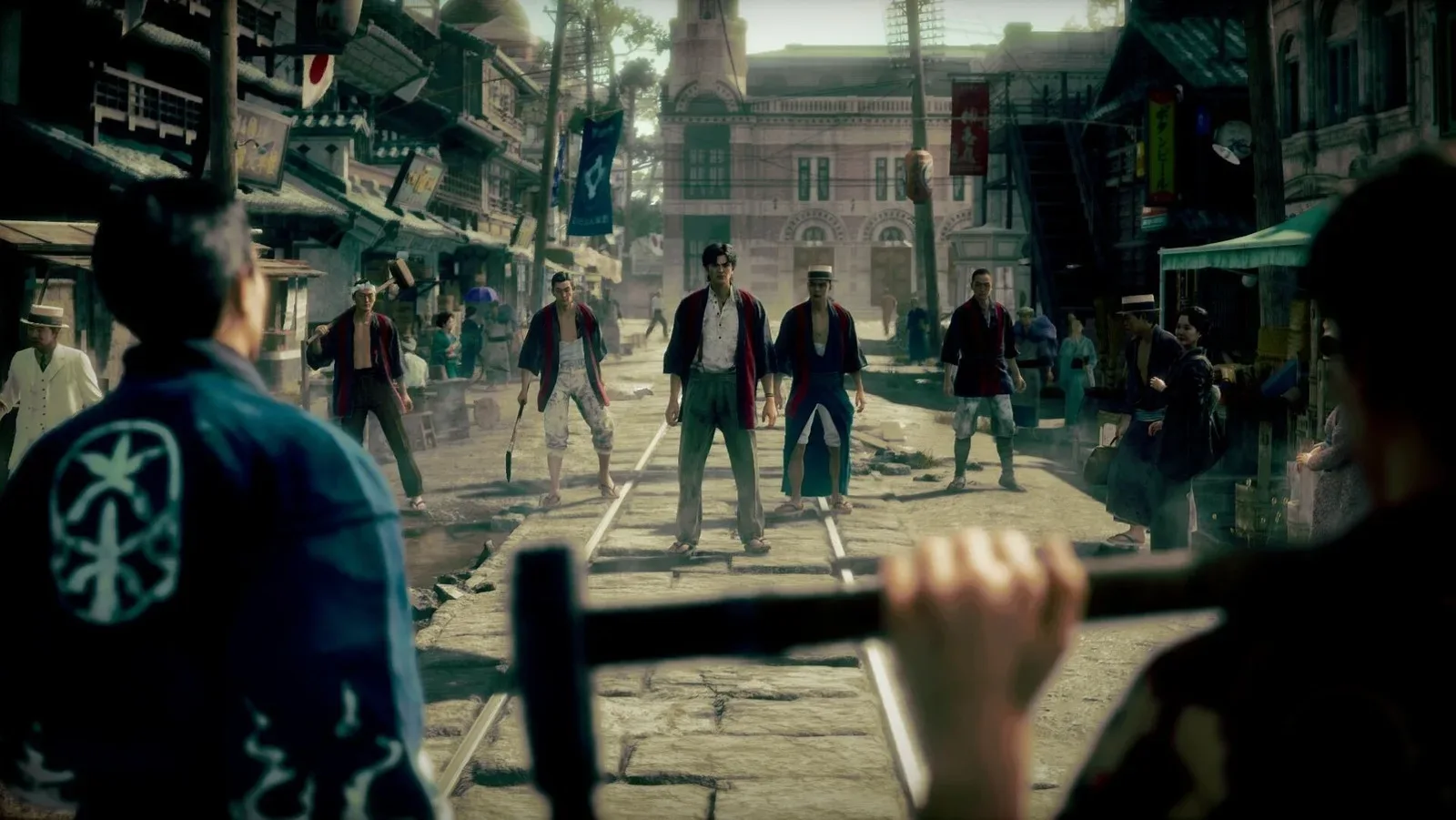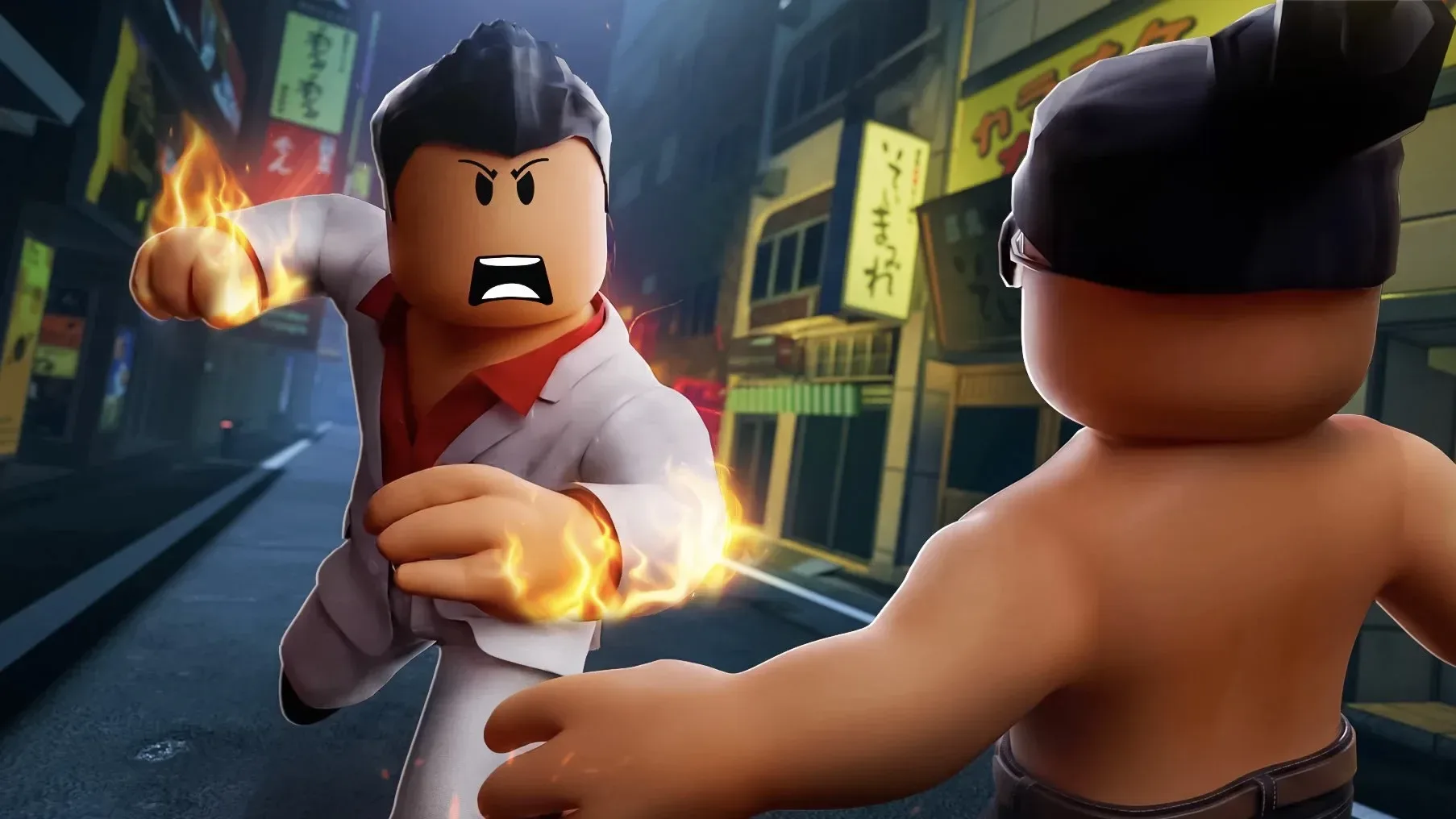
Kamurocho has been rebuilt, revisited and recontextualized across the Yakuza/Like a Dragon series for years. Now one of its most recognizable stretches is taking a dramatically different form: Yakuza Blocks: Like a Dragon, an officially licensed multiplayer experience within Roblox.
The project recreates Tenkaichi Street in Roblox’s engine and turns the familiar urban setting into a social, combat-focused space for Roblox players. It is being developed by GeekOut, a Roblox developer that intends to expand the experience in response to player activity and feedback.
That basic premise may sound surreal to longtime followers of the series, especially when iconic characters are translated into Roblox’s deliberately blocky visual language. But the game is not simply a themed virtual photo spot. Its listed systems include exploration, street fights, multiple fighting styles, character growth through experience points, minigames, and versions of the franchise’s Heat Actions.
What Yakuza Blocks includes
Tenkaichi Street is the part of Kamurocho being recreated for this initial Roblox experience. Kamurocho is the series’ fictional entertainment district, inspired by Tokyo’s Kabukicho, and it has appeared in some form in nearly every Yakuza game. Returning to a known place is part of the appeal of the wider series: familiar streets can gain new stories, activities and details from one entry to the next.
Yakuza Blocks approaches that setting through a multiplayer Roblox framework. Players can move through the recreated street, get drawn into fights and use different fighting styles. Winning fights earns experience, which can be assigned to three character attributes: Mind, Technique and Body.
The names indicate a three-part progression system, though the available information does not define the precise gameplay effect of each attribute. In practical terms, this means players should not assume that every experience point automatically produces the same type of upgrade. They are instead asked to make an allocation choice among separate stats. Whether those choices chiefly affect combat, activities outside combat, or both has not been specified.
The experience also has minigames inspired by the secondary activities associated with Yakuza/Like a Dragon. Side activities have long been a notable part of the franchise’s identity, often sitting beside its dramatic crime stories and brawling. Their inclusion matters because it signals an attempt to adapt more than Kamurocho’s scenery and fighting into Roblox; the project is also reaching for the series’ mix of street-level action and diversions.
Heat Actions, explained
Fights in Yakuza Blocks use the series’ signature Heat Action concept. In the core games, Heat Actions are context-sensitive special attacks: cinematic moves triggered when a character has the appropriate opportunity, positioning or environmental setup. They help make a simple confrontation feel tied to the surrounding space rather than taking place in an empty combat arena.
Related coverage includes Yakuza Blocks: Like a Dragon Brings Kamurocho to Roblox.
There is no detailed breakdown yet of how those actions work in the Roblox version. Still, their presence is important on a design level. A licensed game can borrow character names and landmarks while missing the personality of the original. Heat Actions are one of the more distinctively Yakuza-like elements named for Yakuza Blocks, alongside the focus on shifting styles and developing a fighter over time.
It remains unclear how closely the Roblox implementation mirrors the console games’ timing, presentation or environmental interactions. Players should treat “Heat Actions” here as confirmation that the idea is included, not as confirmation that every familiar move or combat behavior has been reproduced.
A licensed Roblox game, not a mature Roblox experience
Yakuza Blocks is officially licensed, meaning it is a sanctioned use of the Yakuza/Like a Dragon property rather than an unaffiliated Roblox creation borrowing its imagery. That distinction gives the project room to feature named characters and sell themed cosmetics, including costumes for Kiryu and other characters.
Those cosmetics are microtransactions: optional in-experience purchases. The project includes them, but no specific pricing or a full inventory of purchasable items has been detailed. Their existence is relevant because cosmetics are a common way for multiplayer games to let players customize an avatar without necessarily changing its performance. Nothing currently establishes whether any purchase affects progression or fighting strength, so it would be premature to characterize the game’s monetization beyond the confirmed character-costume microtransactions.
GeekOut has said that it plans to build out Yakuza Blocks based on feedback and activity. That is a meaningful but broad commitment. It does not confirm a content roadmap, a set of planned locations, more characters, particular modes, or a schedule for updates. For interested players, the clearest takeaway is that the initial version is intended as something that may change over time, with player participation expected to inform its direction.
One unusual aspect of the crossover is its age positioning. The main console Yakuza/Like a Dragon games fall into a more mature age bracket, while Roblox is widely associated with a younger audience, even as many people who grew up with the platform continue to play it as adults. Roblox has introduced more mature experiences in recent years, but Yakuza Blocks is not designated as a mature experience.
That does not tell us exactly how every theme or joke from the broader franchise has been adapted. It does establish an important boundary: players should not expect the Roblox version’s tone and presentation to be a one-to-one transfer of the console games’ mature framing. The game appears designed to make the setting and recognizable play patterns accessible within Roblox rather than to duplicate the full tone of the series.
Why Kamurocho is a logical place to start
Tenkaichi Street is a sensible focal point for a compact adaptation because the larger series has repeatedly returned to Kamurocho. A single well-known street can communicate the premise immediately to established fans while giving new players a clear place to explore, meet others and find activities.
It also fits the limitations and strengths of a platform-based experience. Rather than promising an entire city on the scale of a mainline entry, Yakuza Blocks is specifically described as recreating Tenkaichi Street. That is a useful expectation-setting detail. It indicates a targeted representation of Kamurocho, not confirmation of a complete district or a replacement for a standalone Yakuza/Like a Dragon game.
For longtime fans, the appeal will likely be in recognition: seeing a repeatedly visited place reinterpreted with Roblox avatars, multiplayer encounters and stat-based progression. For people arriving through Roblox, Tenkaichi Street can work as an introduction to the series’ setting without requiring knowledge of its characters or storylines.
That introduction may be the central business logic behind the crossover. Roblox has hosted experiences based on other major properties, including Attack on Titan and One Piece. Turning a recognizable franchise into a Roblox destination gives it access to a different discovery space, where players often move between social games, role-playing worlds and themed experiences rather than purchasing a conventional single game first.
The audience question is still open
The largest unknown is whether Yakuza/Like a Dragon’s established audience and Roblox’s audience overlap enough to sustain the experience. The franchises are not a perfect demographic match on paper, and Yakuza Blocks’ non-mature designation further separates it from the context of the console releases.
But direct overlap is not the only measure of the experiment. A licensed Roblox experience can function as discovery for people who know Roblox but have never played a Yakuza/Like a Dragon game. Its multiplayer structure, fighting, progression and minigames give newcomers systems to engage with even if Kiryu, Kamurocho and Heat Actions are entirely unfamiliar names at first.
Conversely, regular series fans may be curious simply because the translation is so unexpected. Seeing a realistic, often densely detailed city recast in a block-built engine has an unavoidable novelty to it. Whether that novelty turns into sustained participation will depend on how the combat, activities, updates and social side develop—not merely on the recognizable license.
For now, Yakuza Blocks: Like a Dragon is best understood as a deliberately different doorway into Kamurocho: a licensed Roblox multiplayer game centered on one iconic street, with fights, stat allocation, minigames, Heat Actions and optional character costumes. It is not presented as a mature experience, and its future expansion remains tied to feedback and activity rather than a detailed public roadmap.
For more reporting on the changing game landscape, see our coverage of The Elder Scrolls 6 and reports of a possible Sentinel reveal.