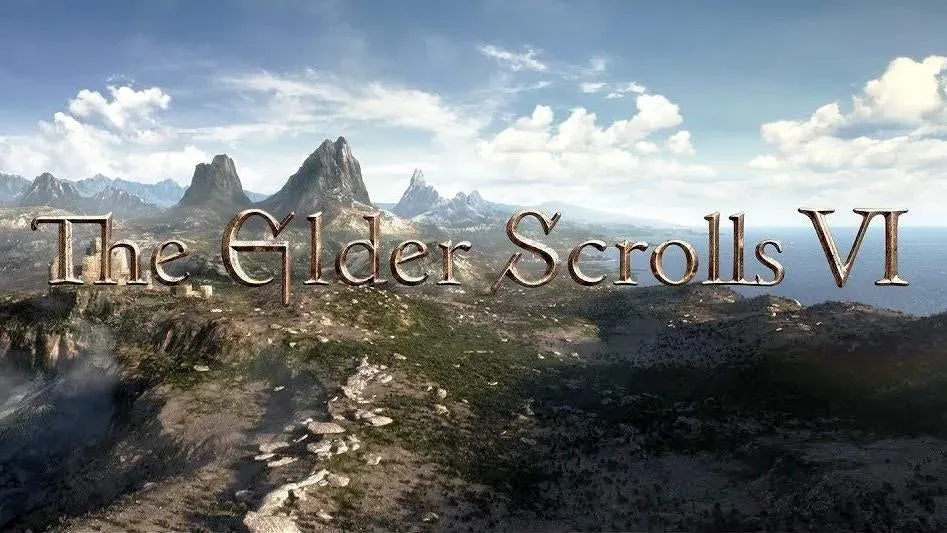
The Elder Scrolls 6 may finally be approaching the point where it has a proper subtitle. A new report indicates that Bethesda’s long-awaited role-playing game could be called The Elder Scrolls 6: Sentinel, with a formal reveal said to be possible as soon as next month. Nothing has been officially confirmed, so the reported name, setting and timing should all be treated as unverified until Bethesda speaks directly.
Even at this early stage, “Sentinel” is a particularly meaningful rumor rather than a random word pulled from Tamriel’s enormous fantasy dictionary. It lines up with fan speculation from earlier this year, and with an August tease from Xbox head Asha Sharma suggesting the game’s title contained eight letters. “Sentinel” has eight letters. That does not make the report confirmation, but it helps explain why the theory has gained traction.
The report also points to Hammerfell as the game’s likely focal region. Hammerfell has appeared in Elder Scrolls spin-offs, but it has not previously been the dedicated setting of a mainline entry. If accurate, that would make the purported subtitle do two jobs: it would give the sixth mainline game a marketable identity and point toward a location with established meaning inside the series’ world.
What is actually being reported
The key claim is straightforward: the next mainline Elder Scrolls game is reportedly titled The Elder Scrolls 6: Sentinel, and that name could be announced next month. The same reporting supports the possibility that the game will center on Hammerfell and engage with the history of the Elder Scrolls themselves, including the secrets of the ancient artifacts that give the franchise its name.
Those are substantial claims, but they are still claims rather than a Bethesda announcement. Players should separate the reported information into three different levels of certainty:
- Officially established: The Elder Scrolls 6 was announced at E3 2018.
- Previously teased: Sharma suggested in August that the title had eight letters.
- Reported but unconfirmed: “Sentinel,” Hammerfell as the primary setting, a next-month naming announcement, and the proposed story emphasis on Elder Scrolls history and artifacts.
That distinction matters because a title reveal is not automatically a gameplay reveal, a launch-window reveal, or a platform announcement. The available information does not establish any of those things. It also does not establish whether a prospective announcement would include a trailer, screenshots, a release year, or further details about the game’s systems.
Why the Sentinel name has fans looking toward Hammerfell
In Elder Scrolls terminology, a subtitle is more than a decorative label. Mainline games have used their names to identify a prominent place or political-geographic focus within Tamriel, the fictional continent in which the series takes place. Skyrim, the preceding mainline entry, made that relationship unusually direct.
“Sentinel” reportedly connects the next game to Hammerfell. The report says Hammerfell has featured in spin-off games without receiving its own mainline installment. A dedicated return would therefore offer a new central region while remaining within a world longtime players recognize.
Related coverage includes The Elder Scrolls 6 May Finally Get Its Full Name, With Sentinel Rumored.
It is worth being precise about what “spotlight” means here. The report describes Hammerfell as the region the game would focus on; it does not define the game’s complete map, explain whether additional regions could appear, or describe the structure of exploration. It would be premature to turn a reported setting into a map-size claim or a prediction about specific cities, factions, quests or playable areas.
Still, the possibility has obvious importance. After 15 years since Skyrim, a confirmed location would give the community a concrete foundation for discussing the sequel’s tone and lore rather than relying on the brief 2018 announcement. For a series built around regional identity, knowing where an adventure takes place can be one of the most informative early details Bethesda can provide.
The Elder Scrolls may be part of the story, not just the series logo
The report’s other major suggestion is that Sentinel will explore the history of the Elder Scrolls and help players uncover the secrets of those ancient artifacts. This is an important wording detail. The “Elder Scrolls” are not merely the franchise’s branding within the fiction; they are mysterious, ancient objects. A game that foregrounds their history could bring a foundational piece of the setting into clearer narrative focus.
There is a wide range of possibilities inside that premise, which is exactly why readers should not fill in blanks too aggressively. The report does not explain who seeks the artifacts, what their secrets are, how the player would interact with them, or whether the concept would form the central quest line. It also does not identify any characters, antagonists, factions, combat systems, progression changes or dialogue mechanics.
What can reasonably be said is narrower: if the reporting proves accurate, Bethesda may be positioning the sixth game around one of the setting’s oldest mysteries while using Hammerfell as its geographic anchor. That would give the game a thematic hook beyond simply visiting a different part of Tamriel.
A title reveal would break a very long silence
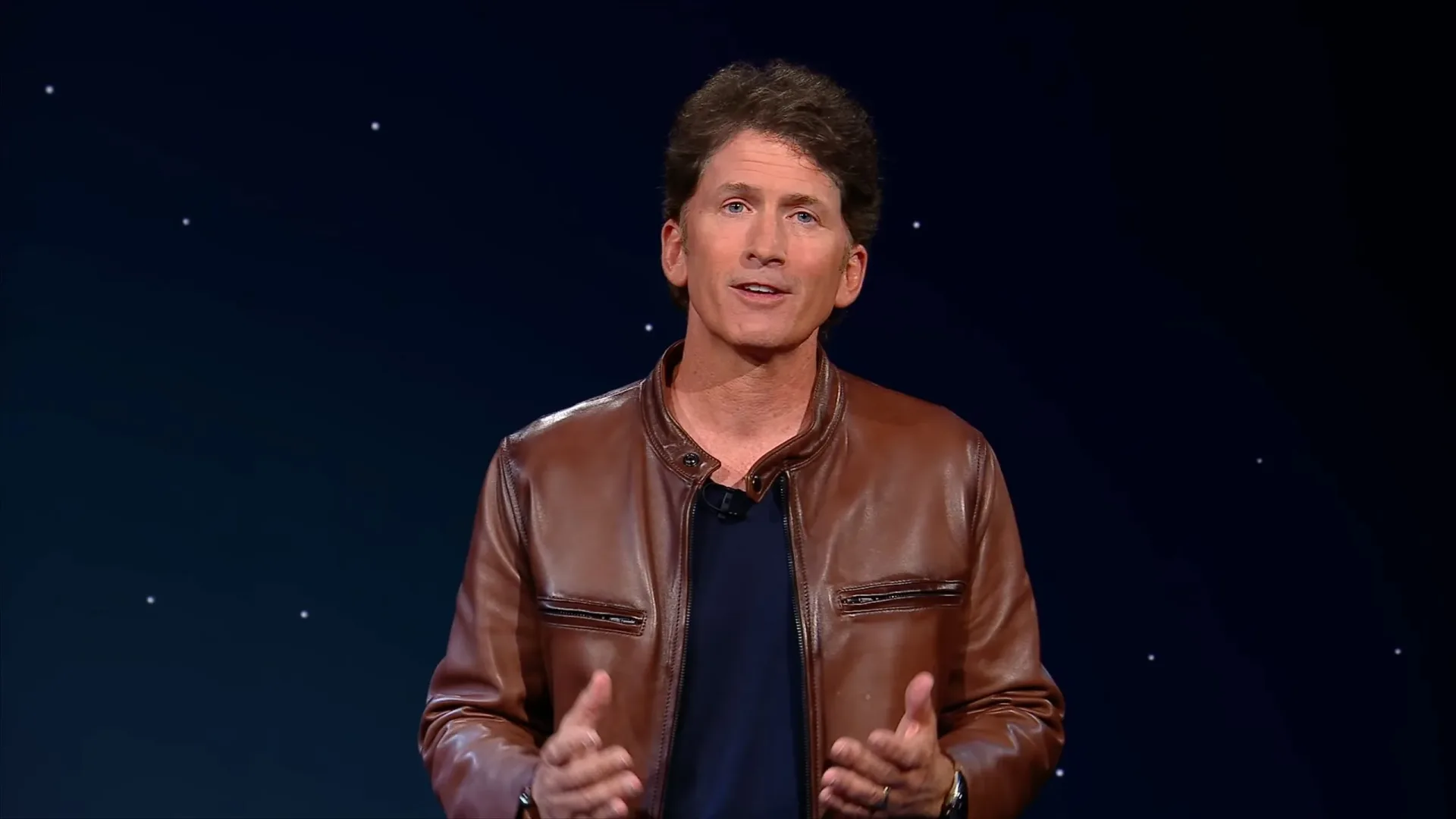
Bethesda announced The Elder Scrolls 6 at E3 2018, nearly eight years before this report. Since then, concrete public details have been scarce. Bethesda’s Todd Howard has addressed the project on multiple occasions, but those comments have stopped short of offering the kind of detailed public rundown players have been waiting for.
That context is the reason a subtitle announcement could matter so much despite appearing modest on paper. A name can establish that a project has a defined identity, supply a setting clue and create a clear reference point for all future official material. After a lengthy period in which the game has mostly existed as a highly anticipated future release, even a limited reintroduction would materially change the public conversation.
It would not, however, answer every major question. The biggest unresolved practical issue remains platforms. In July, Howard said it was too early to discuss platforms when asked whether the series could become console-exclusive following Xbox’s acquisition of Bethesda and changes in its console strategy. That remains the clearest available position: platform plans have not been publicly settled in the supplied information.
For players, the sensible takeaway is to resist treating a rumored subtitle as evidence of an Xbox-only release, a release on multiple consoles, or a PC-specific strategy. Those are separate decisions and none is confirmed here. The broader platform debate around Xbox is still relevant to the game, as reflected in recent discussion of exclusivity and Xbox hardware, but it cannot substitute for an announced Elder Scrolls platform list.
Development concerns remain part of the picture
The potential re-reveal arrives alongside a less celebratory piece of context. In July, Bethesda developers voiced concern that recent Xbox layoffs affecting Bethesda could have a substantial, cascading effect on both development and team morale. That concern should not be converted into claims about delays, cuts, or the final game’s quality; the information provided does not establish any of those outcomes.
But it does underline why public-facing news and the internal reality of making a huge game are not the same thing. A title, setting or teaser can be prepared for a marketing moment while teams continue dealing with staffing and production pressures. Conversely, concern about layoffs does not prove that an imminent name reveal will not happen. Both facts can coexist: a reported step toward renewed public communication, and acknowledged unease over the conditions affecting development.
This is also why a potential next-month announcement should be judged for exactly what it says. If Bethesda reveals only the title, that is confirmation of a title—not proof that development is complete, that launch is imminent, or that every question around the game has been resolved. If it confirms Hammerfell, that is confirmation of a focus region—not a complete map breakdown. Keeping each claim at its actual scale will make any eventual reveal more useful.
What players should watch for if the report is confirmed
An official announcement could clarify several items without needing to become a full showcase. The most valuable details would be:
- The exact title treatment: whether the game is formally named The Elder Scrolls 6: Sentinel and how Bethesda presents that subtitle.
- The setting: whether Hammerfell is confirmed, and whether Bethesda characterizes it as the sole focus or one part of a broader adventure.
- The Elder Scrolls premise: whether the ancient artifacts are a central narrative concern or simply part of the game’s wider lore.
- Platform information: whether Bethesda is ready to address the question Howard left open in July.
- Release expectations: any stated window, or an explicit indication that the team is not ready to give one.
Until then, “Sentinel” should be read as a compelling report with supporting circumstantial signals, not as finalized branding. The eight-letter tease and the Hammerfell connection make the possibility easy to understand, but Bethesda holds the only confirmation that counts.
For now, the prospect is simple and significant: the game announced in 2018 may soon have a name, a clearer home in Tamriel, and a renewed place in Bethesda’s public plans. After years of sparse detail, that would be a meaningful first step—even if it leaves the questions of platforms, release timing and the game’s actual shape for another day.