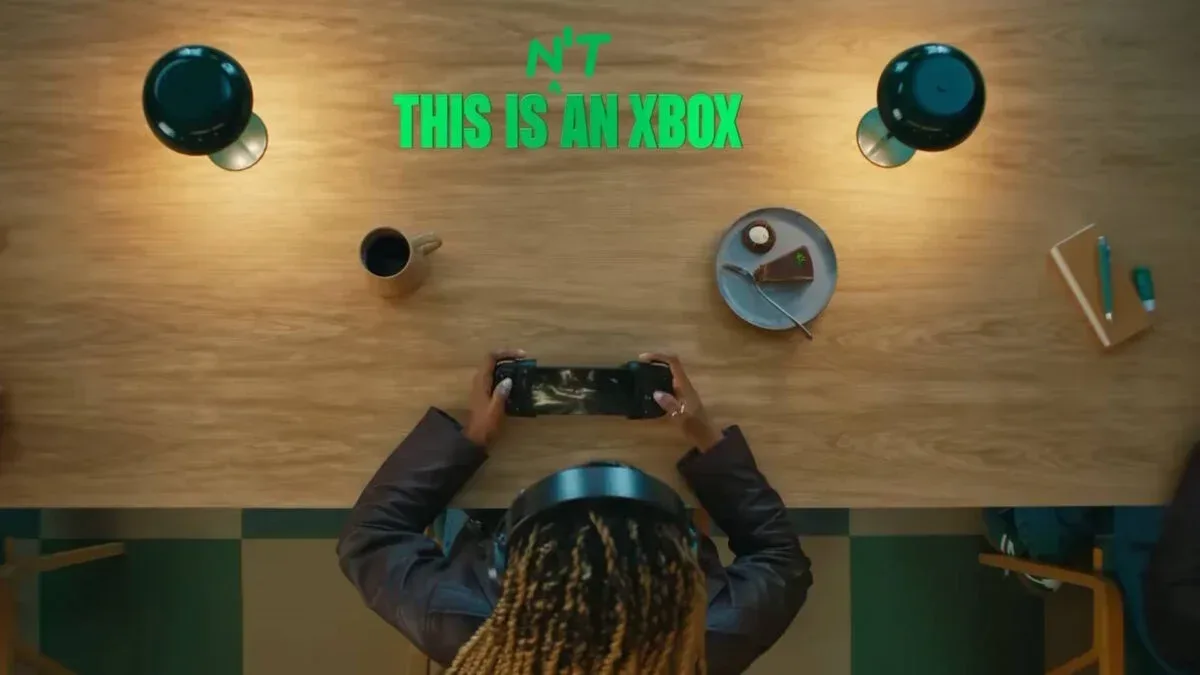
Xbox is testing a new way to access cloud gaming that does not require a Game Pass subscription: prepaid cloud playtime. Xbox Insiders can now purchase blocks of streaming time, use them on supported devices, and provide feedback before the option is expected to reach a wider audience next month.
The experiment matters because it separates access to cloud streaming from an ongoing Game Pass membership. Rather than paying a recurring subscription solely to use the service, eligible testers can buy a defined amount of time and spend it when they choose. Xbox says unused purchased time remains available until it has been used, meaning these packs are not framed as a monthly allowance that expires at the end of a billing cycle.
For players who only occasionally use cloud gaming—or who want to stream without maintaining a subscription—the offer could be a more straightforward route in. It also lands alongside a notable shift for existing Game Pass subscribers: beginning next month, Game Pass cloud streaming will have monthly hour caps, with extra time available to buy once those included hours are exhausted.
Cloud playtime pricing for Xbox Insiders
The introductory prices in the Insider preview are:
- 10 hours for $3.99
- 25 hours for $7.99
- 50 hours for $11.99
All three paid packs are ad-free. Xbox says they also come with shorter waits and high-quality streaming. In cloud gaming terms, a wait is the period before a player is assigned the remote hardware needed to run a game; the game itself runs in a data center and its video is sent to the player’s supported device. Inputs travel back in the other direction. Shorter waits therefore concern access to the streaming session, while streaming quality concerns the presentation delivered to the device.
The 50-hour bundle is the least expensive on a per-hour basis at roughly 24 cents per hour, compared with about 32 cents for the 25-hour option and about 40 cents for the 10-hour option. Those calculations are useful for comparing the packs, but they should not be mistaken for a prediction of permanent pricing: Xbox describes these as introductory launch prices for the preview.
There is also a second no-subscription path: ad-supported cloud gaming. Insiders can try cloud gaming for free with ads. The available details establish that it is an alternative to Game Pass and the paid ad-free packs, but do not spell out the ad format, how often advertising appears, what games can be streamed through it, or whether it has other limits. Those are important practical questions that the broader rollout will need to answer.
What “without Game Pass” does—and does not—mean
The significant change is the payment model for streaming access, not a promise that every Xbox game can be played for a few dollars. The preview says Insiders can stream games on supported devices, but it does not define the participating catalog or give a complete device list. Players should avoid assuming that a purchased time pack automatically unlocks any particular title.
Related coverage includes Xbox Insiders Can Buy Cloud Playtime Without Game Pass in New Preview.
That distinction is worth making because cloud gaming is often discussed as if it were simply a digital storefront. It is better understood as a way to run a game remotely: processing happens elsewhere, the player receives a live video stream, and the service has to continuously provide hardware capacity and network delivery for the duration of play. Selling time directly gives Xbox a way to charge for that ongoing infrastructure use even when someone does not hold a Game Pass membership.
For an occasional player, a non-expiring block of time may be easier to justify than a recurring payment. A person could reserve it for travel, for trying cloud play on a compatible device, or for periods when their usual console is unavailable. Conversely, anyone who streams frequently will need to watch their hours. A metered system makes the clock part of the decision each time a streaming session starts.
There are still unknowns. The announced information does not detail whether playtime is measured to the minute or rounded in some other way, what happens if a session is disrupted, or whether quality and queue priority differ between every paid pack. As a preview, the program is explicitly an opportunity for Insiders to test the system and report back, so those operational details may be among the issues that evolve before the larger launch.
Game Pass cloud limits begin next month
The prepaid preview is not replacing the planned Game Pass cloud changes. Starting next month, the three named Game Pass plans will include these monthly cloud gaming allowances:
- Game Pass Ultimate: 15 hours per month
- Game Pass Premium: 10 hours per month
- Game Pass Essential: 5 hours per month
After using those included hours, subscribers will be able to purchase more cloud playtime through the Xbox Store. At present, Game Pass subscribers can stream without those monthly limits, so this is a real change for people who rely heavily on the feature. Xbox has said the change affects 4% of Game Pass subscribers, a figure that suggests the company sees unlimited cloud use as concentrated among a relatively small part of its subscriber base.
That percentage should be read carefully. It says nothing about how much those affected players stream, how they use the service, or whether they will find the new allowances adequate. A player who uses cloud gaming for a handful of hours in a month may remain within a plan’s included amount. Someone who treats it as a primary way to play could reach the ceiling much sooner and then face the extra cost of add-on time.
The result is a clearer distinction between game membership and cloud-computing usage. Game Pass remains a subscription product with cloud hours bundled into its plans; the new packs establish a distinct, purchasable reserve of streaming time. It is a consumer-friendly choice in one sense—people can try the cloud component without joining Game Pass—but it also turns a formerly unlimited subscriber benefit into a limited monthly allocation.
A streaming strategy shaped by hardware costs
Xbox’s test arrives while the industry is increasingly focused on the cost of hardware. Rising chip and memory costs have put pressure on console pricing, and the current PlayStation 5 and Xbox Series generation has seen price increases rather than the price reductions many players associate with a maturing console cycle. Sony raised PS5 pricing in March, citing continuing global economic pressure. Nintendo has also acknowledged a Switch 2 price increase a little more than a year after that system’s arrival, while Valve has described difficulties reaching the price it originally hoped for with Steam Machine, which is set at $1,049.
Against that backdrop, streaming offers a different proposition: instead of requiring each player to own increasingly costly local hardware, a company can run games on centralized machines and send the result over the internet. It does not remove the need to pay for hardware; it moves much of that expense into the service provider’s infrastructure and, potentially, into recurring fees for the player.
That model has its own trade-offs. Its appeal depends on quality, responsiveness, availability, and what it costs over time. A cloud session must feel good enough that players are comfortable with the game being run elsewhere. For particularly demanding releases, that bar becomes higher still. Take-Two chief executive Strauss Zelnick recently argued that commercial game streaming could become prominent within three years, while emphasizing the basic test such services face: they need to run games such as Grand Theft Auto VI as well as a console does.
Microsoft’s prepaid experiment does not settle that larger question. It is, however, a practical signal of how cloud access may be sold in a market where buying a console is becoming harder to present as the only entry point. It gives Xbox a free, ad-supported option; a pay-as-you-go, ad-free option; and a subscription route with monthly included hours. Each reaches a different tolerance for ads, recurring charges, and usage limits.
The wider industry context is also one of mounting pressure to find sustainable business models, not merely new technical tricks. That pressure has surfaced across game companies and projects, including the disruption covered in recent reporting on BioWare’s closure and the cancellation of its next Mass Effect. Cloud gaming cannot by itself solve those structural problems, but it gives platform holders another method for packaging access to games and hardware.
What players should watch during the test
For now, the main audience is Xbox Insiders. Anyone considering the preview should focus on the details that will determine whether the model is genuinely useful: which supported devices fit their needs, which games are available through the offered paths, how reliably the service connects, and how quickly the paid hours are counted down in ordinary use.
Pricing is only one piece of the calculation. The 50-hour pack offers the strongest per-hour rate among the three announced bundles, but a larger pack only makes sense if a player expects to use it. Because Xbox says paid time remains usable until spent, there is less obvious pressure from an expiry date, yet the preview’s introductory pricing means it is still sensible to treat the current rates as provisional rather than a long-term guarantee.
The more consequential milestone will come next month, when the no-Game-Pass option is due to expand and the Game Pass monthly cloud-hour limits are scheduled to begin. Until Xbox provides further detail on catalog access, ad-supported rules, and the final implementation, the Insider rollout is best viewed as an early look at a more metered future for Xbox cloud gaming—not a complete picture of it.