Xbox’s cloud-gaming pitch has long been built around flexibility: play a large library without necessarily owning a console, use the screen already in the room, and treat the Xbox ecosystem as something broader than a single box under the television. A cluster of reported changes now points in a more constrained direction.
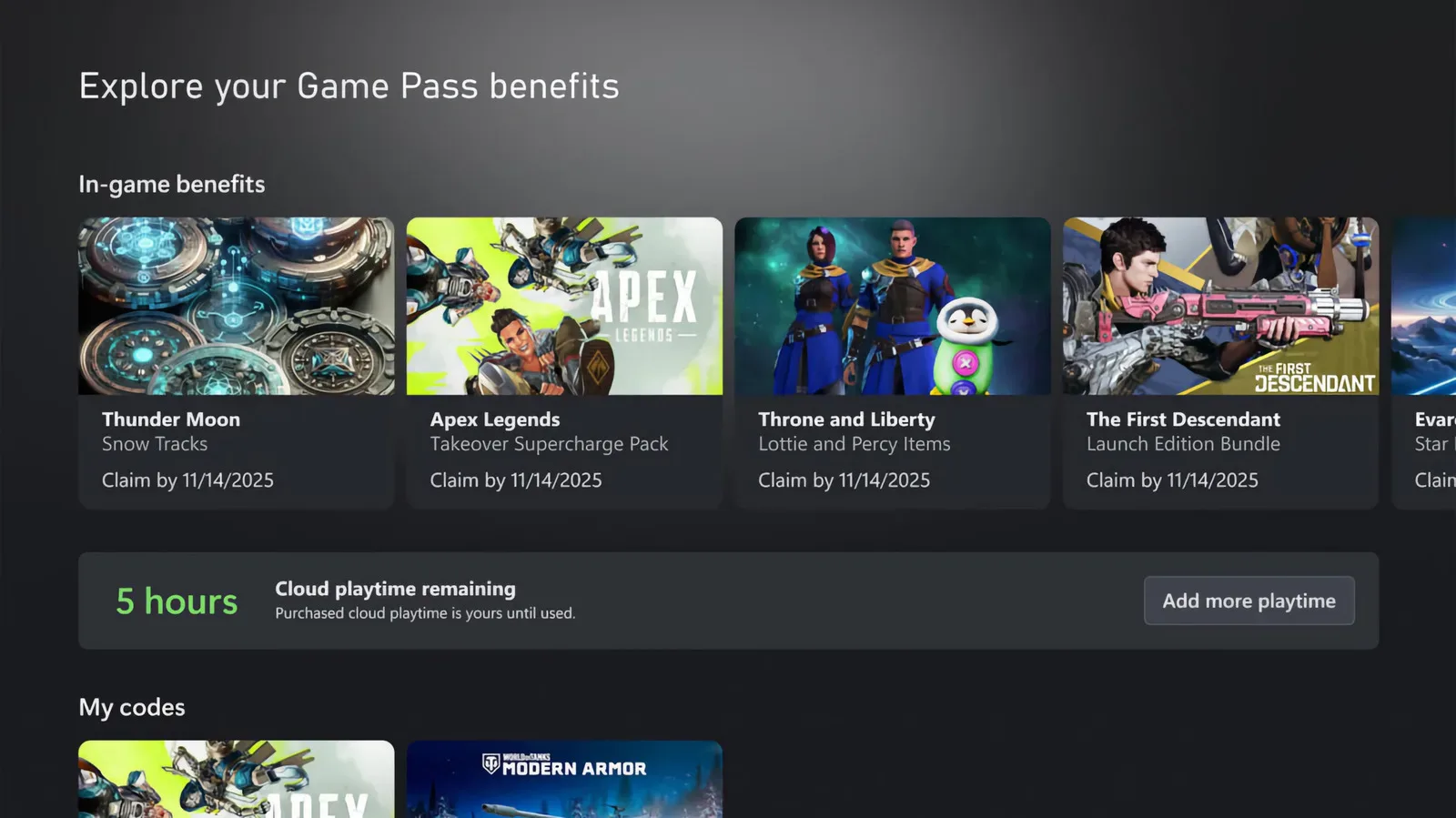
Owners of 2020 Samsung Smart TVs who activated the Xbox app are being told that support will end on November 3. At the same time, cloud streaming on the most expensive Game Pass tier is moving from unlimited use to a 15-hour weekly allowance, with extra hours carrying surcharges. Separately, a cloud-focused Xbox controller that has appeared in leaks is said to remain in some form of development, but its history and purpose are unclear.
None of those developments alone proves that Xbox is abandoning cloud gaming. Taken together, though, they create a much less expansive picture than the “play anywhere” ambition associated with Xbox’s recent messaging. The practical message for subscribers is straightforward: supported hardware, time spent streaming, and the economics of running a cloud service appear to matter more than they did when cloud access was presented as a broadly available extension of Game Pass.
What is changing for Samsung TV owners
The notice sent to affected users says the Xbox app will no longer be supported on 2020 Samsung Smart TVs starting November 3. It attributes the decision to technology updates behind Xbox Cloud Gaming that are no longer compatible with the operating-system version on those models. Samsung sets released from 2021 onward are expected to remain supported.
That matters because a compatible smart TV is one of the clearest examples of the cloud proposition. Rather than connecting an Xbox console, a player can open an app on the television and stream a game from remote servers. The TV handles the app and video output, while the game itself runs elsewhere.
The stated explanation is compatibility, not a declaration that the affected televisions lack internet access or are incapable of displaying streamed video. Still, ending support for a previously functioning route into the service is significant. Cloud platforms depend on a chain of maintained software: the app, the device operating system, account services, controller support, streaming infrastructure and the game servers themselves. If any part is no longer maintained, access can end even if the physical display remains usable.
This is a familiar limitation of app-based platforms generally. Older hardware may remain perfectly capable of performing its original job while losing access to a particular online service as software requirements move on. For a related example of how platform changes can narrow access to older interfaces, recent changes affecting legacy web access and RSS support show that maintaining older entry points is ultimately a product decision as much as a technical one.
A weekly cap changes what “cloud access” means
The reported 15-hour weekly cloud-streaming limit is arguably the bigger change. An unlimited feature gives subscribers the freedom to make cloud play their usual way to play, whether that means a few long sessions, frequent short sessions, or using it as a stand-in for a local console. A capped feature asks players to budget their time.
Related coverage includes Xbox Cloud Gaming Faces New Limits as TV Support and Streaming Plans Change.
Fifteen hours can still be useful. It could cover trying a game before downloading it elsewhere, fitting in occasional sessions on a phone or laptop, or playing while away from a primary setup. But it is a different proposition for anyone who expected cloud streaming to serve as their main access method. A player who spends several evenings a week in a large role-playing game, multiplayer title, or live-service game could reach that threshold quickly. Surcharges after the included allowance make that calculation more explicit.
Cloud gaming is not the same as downloading a game through a subscription. With a download, game data is installed locally and the player’s device does the rendering work. With cloud streaming, a remote data center runs the game, compresses each video frame, sends that video over the internet, receives the player’s button inputs and repeats the process continuously. That ongoing computation and data transfer are why every additional hour has a real operating cost for the service provider.
The cap therefore reads as a change in service design rather than merely a new billing detail. It may make sense for occasional convenience use while discouraging the heaviest usage pattern: relying on cloud delivery for every session. That interpretation is analysis, not a confirmed explanation from Microsoft, but it follows from the basic cost structure of a streamed interactive service.
The controller remains an unresolved piece of the puzzle
The rumored Xbox cloud controller adds uncertainty rather than clarity. The device has surfaced in leaks, and an Xbox spokesperson has said it is still in some stage of development. Reporting also indicates that work on it halted after Microsoft’s 2023 acquisition of Activision Blizzard, although Microsoft disputes the idea that it was shelved to address regulatory concerns.
Why would a dedicated cloud controller matter? Such hardware could make a phone, tablet, television or other screen feel more like a conventional gaming setup. A controller designed with cloud use in mind might prioritize easy pairing, device switching or a direct route into a streaming service. But no final product, feature list, release date or commercial plan is established by the available information. The existence of development work should not be mistaken for a promised launch.
Its reported pause also sits against the backdrop of regulatory scrutiny of the Activision Blizzard deal. The UK Competition and Markets Authority had raised concerns that the acquisition could give Microsoft excessive power in cloud gaming; that issue was later resolved. Claims that a controller delay was meant to satisfy regulators remain speculation, and Microsoft denies the assertion. The sensible reading is simply that the project’s status is unsettled.
Why streaming quality is still central
Cloud gaming has a particular technical burden: it must respond fast enough to feel like a game, not just play back like video. Latency is the delay between a player pressing a button and seeing the result on screen. In local gaming, that signal travels a relatively short path through the controller, console or PC, and display. In cloud gaming, it must also travel over a network to a remote server, where the game processes the command; the newly rendered image must then be encoded, transmitted back and decoded by the player’s device.
Even when latency improves, image quality and frame rate remain important compromises. Video compression can reduce the detail of a streamed image, particularly in fast movement or visually dense scenes. Frame rate describes how many individual images are shown every second; a lower or unstable rate can make motion feel less smooth. Network conditions, distance from server infrastructure and the device’s own decoding capabilities can all influence the final result.
For some uses, those trade-offs are acceptable. A smaller phone display can make image imperfections less conspicuous, and the convenience of continuing a game away from a console can outweigh absolute visual fidelity. For others—especially players using a large TV or playing games that demand rapid, precise inputs—local hardware still offers a clearer baseline.
This is why the current changes matter beyond a single discontinued TV model. Xbox’s cloud strategy has to persuade users that streaming is not merely possible, but dependable and appealing enough to become a routine way to play. Reducing supported television hardware and placing a fixed weekly ceiling on high-tier use makes that case harder to read as a universal invitation.
What players should take from the changes
Players using a 2020 Samsung Smart TV should verify their model year and plan for the November 3 support cutoff if they currently rely on the Xbox app. Owners of 2021-or-later compatible Samsung TVs are not included in the reported change. Subscribers who use cloud streaming often should also consider how a 15-hour weekly allocation fits their own habits before treating the service as a full substitute for local play.
For everyone else, the larger lesson is to distinguish between cloud gaming as a bonus and cloud gaming as essential access. As a supplement, it can remain useful for sampling games or playing away from a main system. As a primary platform, it now comes with clearer questions about device longevity, usage limits, streaming quality and potential additional charges.
The broader cloud vision has not vanished: Xbox is continuing support on newer Samsung televisions, and the cloud-controller project has not been definitively ruled out. Yet the available evidence points to a strategy under tighter constraints. The old promise was that almost any screen could become an Xbox. The emerging reality is more conditional: the screen needs to remain supported, the connection needs to hold up, and the hours need to fit within the plan.