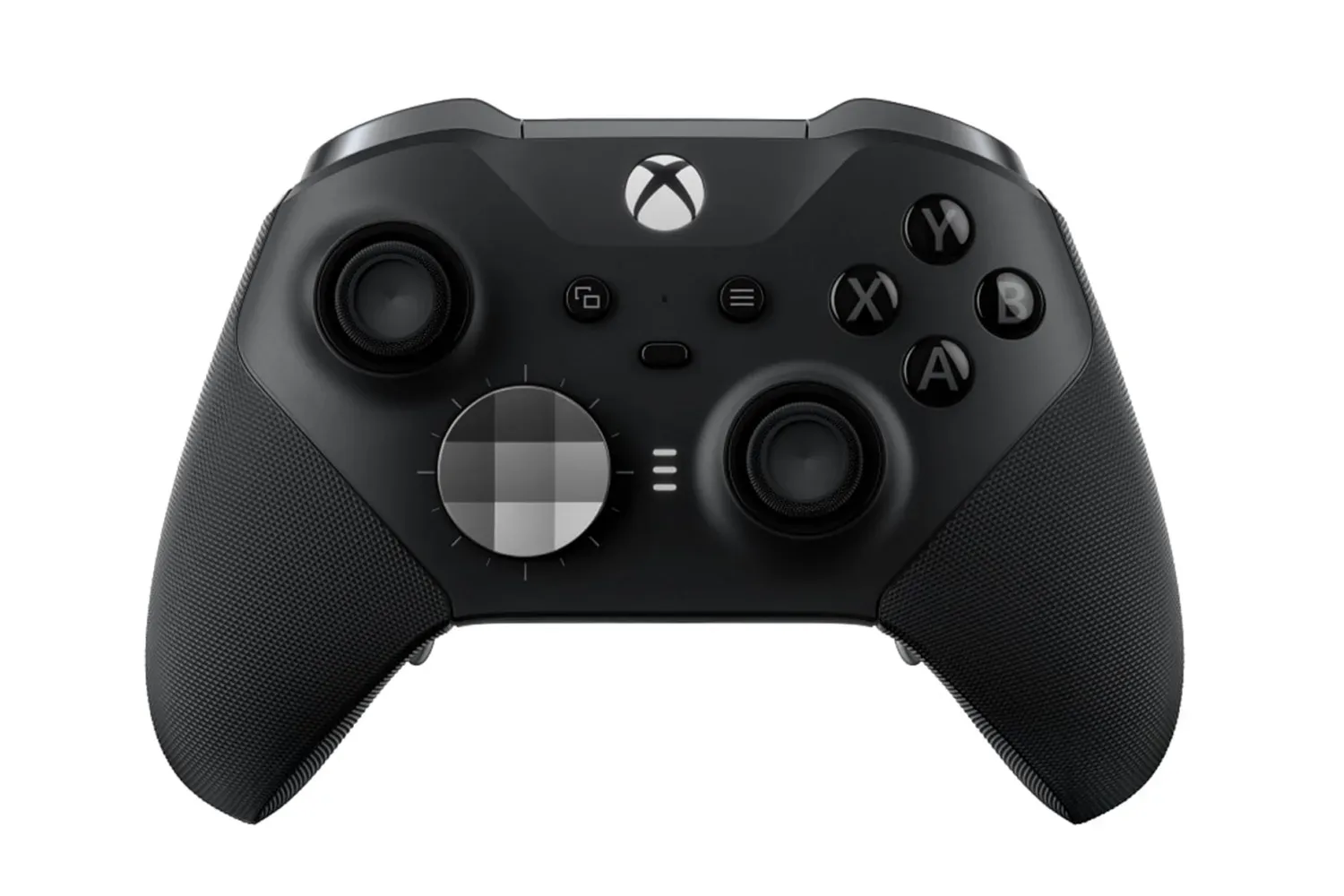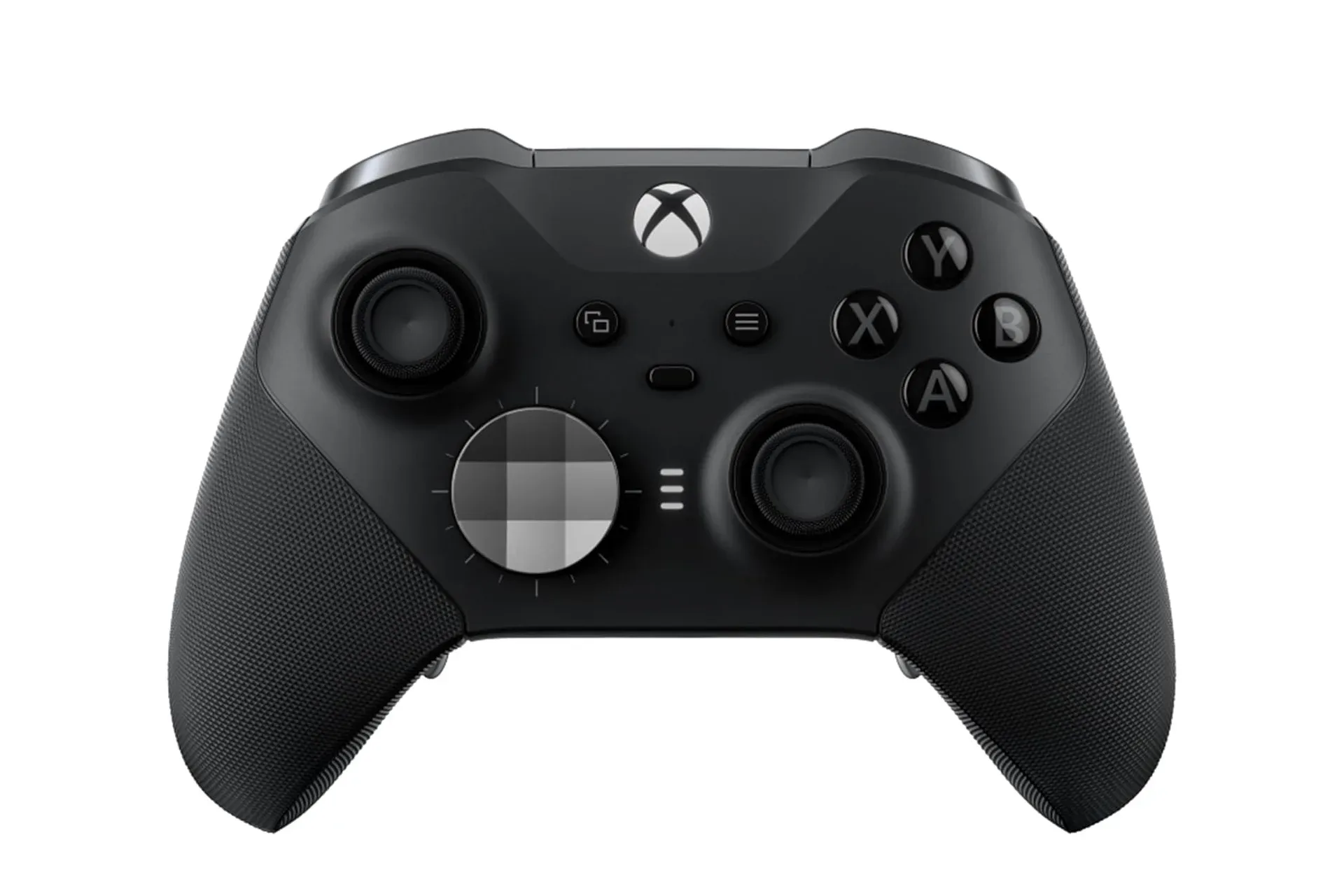
The Xbox Elite Wireless Controller Series 2 has been listed for $168, a $32 reduction from its stated $200 regular price. That is a 16% cut, but the more interesting number is not the percentage: it is the gap between the full package and the Xbox Elite Series 2 Core.
The Core model is listed at $150. At those prices, choosing the complete Elite Series 2 bundle costs just $18 more than buying the controller-focused version. For players who would actually use the included hardware, that makes this less of a simple controller discount and more of a question about whether a kit of physical extras belongs in their setup.
The fuller package includes interchangeable thumbsticks, two D-pad choices, up to four removable rear paddles, a thumbstick-tension adjustment tool, a magnetic charging station and a hard carrying case. The Core retains the same basic controller build, along with the tension tool and a braided USB-C charging cable, but omits the case, dock, paddles, alternate D-pad and extra thumbsticks.
As with any retailer promotion, the listed price and stock can change. The useful comparison here is therefore the reported $18 spread, rather than an assumption that either price will remain available.
What the Elite Series 2’s extras are meant to change
A standard controller is designed around a fixed layout: sticks guide movement and camera control, face buttons handle actions, and the D-pad provides directional input. The Elite Series 2 keeps that foundation but lets the player alter several points of contact. That distinction matters because the value is largely practical, not cosmetic.
Adjustable and interchangeable thumbsticks
The thumbsticks attach magnetically and can be pulled away from the controller to expose the adjustment point beneath them. The supplied tool is used like a small screwdriver to increase or decrease stick tension.
Stick tension describes the resistance felt when moving an analog stick away from its neutral center position. More resistance can make the stick feel firmer; less can make movement feel lighter. It is a preference setting rather than a universal performance upgrade. A player should expect to spend time finding a setting that feels comfortable, especially because the right choice can vary by game and by the player’s grip.
The bundle also includes alternate thumbsticks with different lengths and grip styles. A longer or differently shaped stick changes the physical leverage and feel under the thumb. It does not automatically make aiming or movement better, but it gives players more room to match the hardware to their preferences.
Two D-pad forms, two kinds of reach
The standard plus-shaped D-pad is included alongside a faceted alternative with a broader surface. A D-pad, or directional pad, is the cross-shaped or directional control commonly used for menu navigation and other digital directional inputs. The faceted version gives the thumb a wider area over which to roll, while the conventional cross keeps the familiar separated directional shape.
This is a relatively small swap, yet it is an example of why the full bundle is more than a heavier controller with a different finish. Players who have no interest in changing their controls may see limited benefit. Players who care about the exact feel of directional inputs have an option that the Core package does not include.
Rear paddles can move actions off the face buttons
The most immediately understandable addition is the set of up to four back paddles. These can be assigned to function as face buttons. In plain terms, an action normally performed by moving a thumb from the stick to a button can instead be performed with a finger on the rear of the controller.
That arrangement can be useful when an action needs to happen while both thumbs remain on the sticks. The reported examples include jumping, sliding, reloading and switching weapons. Its advantage is about keeping an existing hand position intact, not about adding new in-game actions. The paddles are alternate ways to trigger assigned face-button inputs.
That is also why the paddles are the most consequential omission from the Core box. Someone who only wants the Elite Series 2’s sturdier, heavier-feeling body and wraparound grip may be satisfied without them. Someone who specifically wants rear-button access would need to factor the accessory difference into the purchase from the start.
The bundle-versus-Core calculation at the reported prices
At $168 for the complete Elite Series 2 and $150 for the Core, the decision is unusually direct. The full bundle adds the following for the reported $18 difference:
- Four rear paddles
- Alternate thumbsticks
- An alternate faceted D-pad
- A magnetic charging station
- A hard carrying case
The Core still includes the thumbstick adjustment tool, so it does not remove every aspect of controller tuning. It also includes a braided USB-C cable for charging. Its omission list is mainly about modular controls, storage and dock-based charging.
That means a buyer can separate the question into two parts. First: is the Elite Series 2’s heavier build and wraparound grip appealing on their own? Second: would they otherwise want a case, dock, extra controls or rear paddles? If the answer to the second question is yes for even a few of those items, the smaller price difference favors the full package on the reported figures.
If the answer is no, the Core is not a stripped-down controller in the sense of losing the basic Elite Series 2 form factor. It is the same basic build with fewer bundled accessories. The choice is therefore less about basic compatibility and more about how much physical customization a player expects to use.
Who each version best suits
The full Elite Series 2 bundle makes the clearest case for players who:
- Want to assign frequently used face-button actions to rear paddles.
- Expect to experiment with stick lengths, grip surfaces, D-pad shape or stick tension.
- Would use a dedicated magnetic charging station rather than plug in a cable.
- Need a hard case to carry the controller and its accessories together.
The Elite Series 2 Core is a more focused fit for players who:
- Want the same basic Elite Series 2 construction without a large accessory kit.
- Do not anticipate using rear paddles or alternate controls.
- Are content charging through the included braided USB-C cable.
- Prefer selecting from the Core color options, which include the Soft Melon colorway.
There is also a PC angle. The Series 2 is positioned for Xbox and PC gaming, so the controller comparison is not confined to a console-only desk or living-room setup. PC players weighing peripherals may also be thinking about the wider environment around their games, from input hardware to software libraries; for a separate look at that latter side, see what AI-assisted “vibe coding” means for a PC game launcher.
What not to assume from a pro controller
“Pro” hardware can suggest that a product guarantees better results, but the supplied details point to a more grounded benefit: customization. The Elite Series 2 provides different physical options, and those options are only valuable when they solve a preference or comfort issue for the person holding it.
A player who never changes stick tension, never swaps a D-pad and finds paddles distracting may not extract much value from the expanded bundle. Conversely, a player who regularly wants to preserve thumb contact with the sticks while triggering face-button actions may regard the paddles as the central feature. The case and charging dock add convenience, but they do not replace the practical decision about control layout.
The strongest takeaway from the reported sale is thus the narrow difference between the two packages. The Series 2 Core remains the lower-cost way into the same basic Elite controller design. But at $18 less than the full bundle, it asks buyers to decide whether they truly want a simpler box—or whether the dock, case and modular inputs are worth paying a modest premium for while the listed prices hold.
Shop the products
Check current price, model and availability at the retailer.