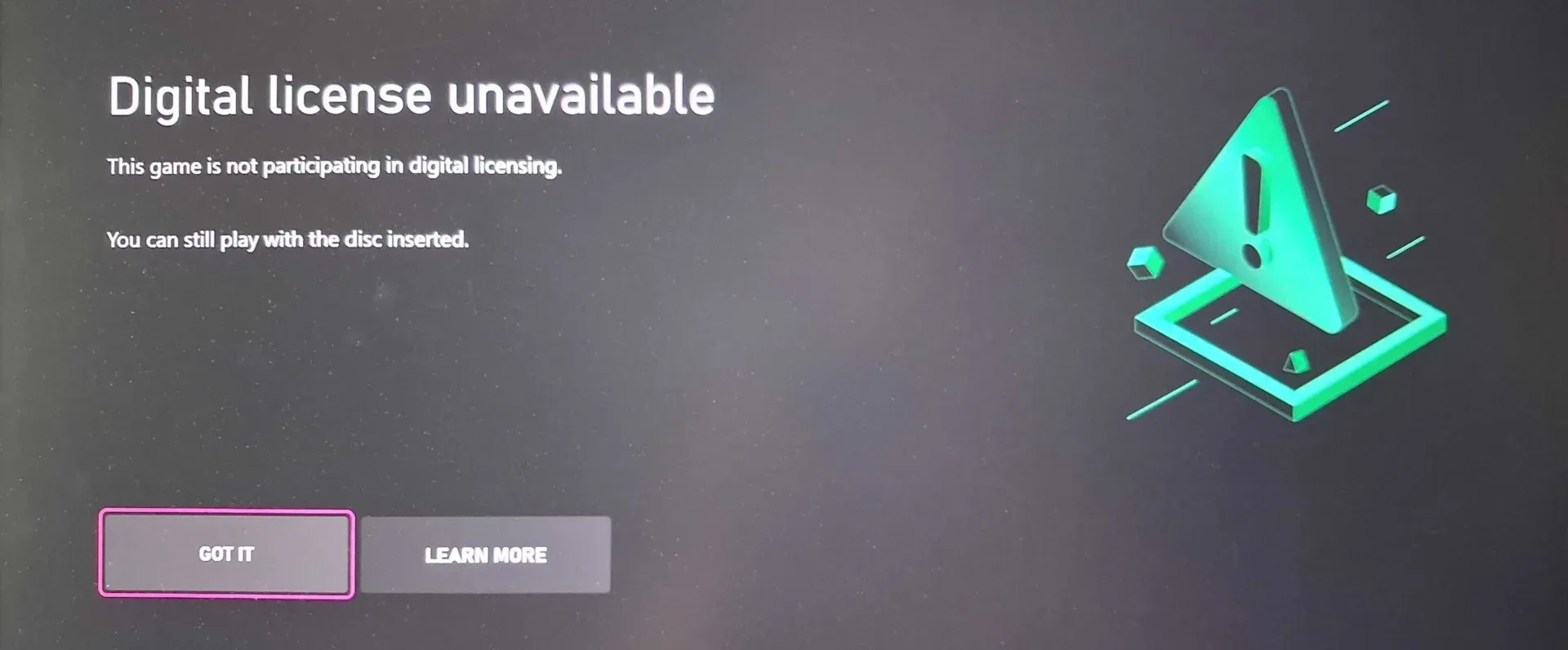
Xbox’s new disc-to-digital licensing initiative is intended to offer a potentially useful bridge between a player’s existing physical game collection and a more digital-focused console future. But early reports from Xbox Insider users suggest that bridge may not reach every shelf in the game room.
Players attempting to add certain disc-based games to their digital libraries have encountered a message stating that those titles are “not participating in digital licensing.” The issue has been reported with games associated with Sega, Ubisoft, Square Enix, and Bandai Namco. While many physical titles reportedly convert without a problem, multiple games from those four publishers appear to be generating the same warning.
That is enough to create a major open question around the program: is this simply a staged rollout in which some catalogues have not yet been enabled, or have particular publishers chosen not to take part? At this stage, there is no confirmed answer.
What Xbox’s disc-to-digital feature is meant to do
Xbox announced the feature last month as a way for eligible users to obtain a digital license tied to a physical game they already own. In practical terms, the idea is straightforward: insert a supported game disc, add the corresponding license to the account’s digital library, and retain access in circumstances where relying on the disc may no longer be convenient or possible.
That proposition matters more as hardware trends increasingly favor digital storefronts, download-first libraries, and console designs that do not necessarily include a disc drive. Players with rows of Xbox discs do not generally see them as interchangeable plastic circles. They represent purchases, gifts, old favorites, bargain-bin discoveries, and games that may have been kept precisely because buying them again digitally was never especially appealing.
A disc-to-digital system could therefore be a meaningful preservation-minded convenience, provided a given title is supported. It does not erase every complication surrounding ownership, online services, licensing, or compatibility, but it can reduce one immediate worry: whether a legitimately owned physical game can travel with the player into a more digital setup.
The warning currently being reported
The phrase users are seeing is important because it sounds more definitive than a generic technical error. A message saying a game is not participating in digital licensing naturally leads players to wonder whether the rightsholder has declined inclusion rather than whether the title is merely awaiting activation.
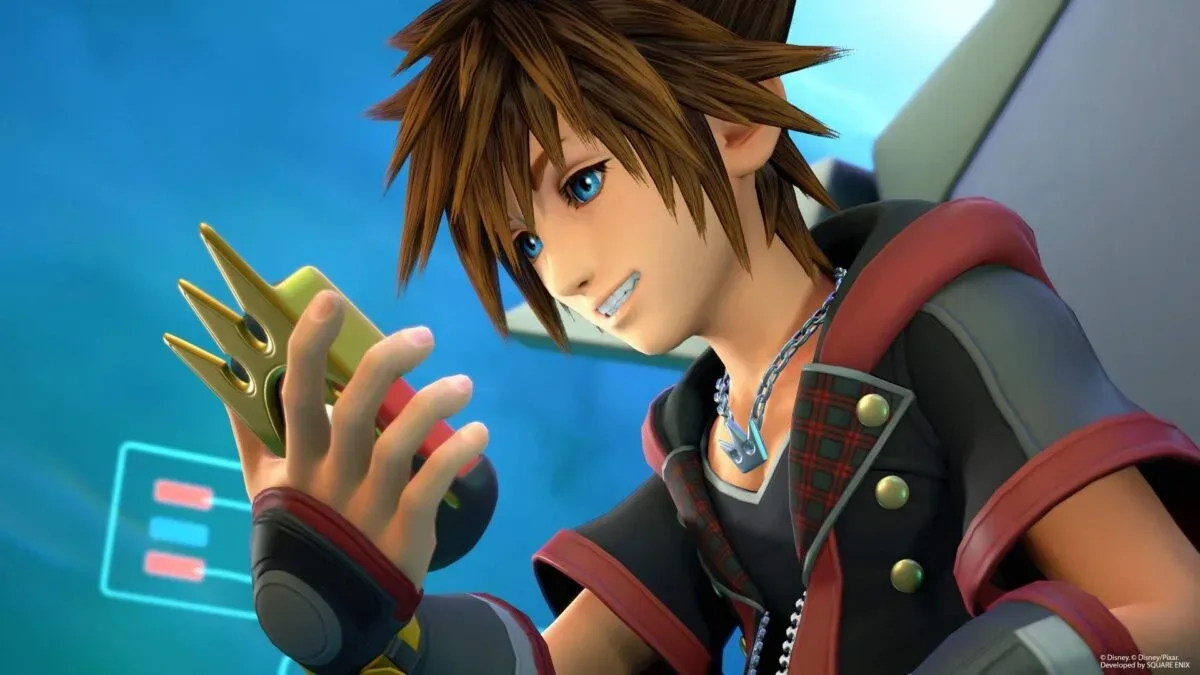
Reports identify Sega, Ubisoft, Square Enix, and Bandai Namco as the publishers most visibly affected in early testing. Fans have been inserting discs and comparing results, with most tested games said to be working while several titles connected to those companies do not. One example that has fueled concern is Kingdom Hearts III, a Square Enix-published release: if it is not eligible, a person who owns it on disc could be unable to use that ownership to gain access on a discless device without making a separate digital purchase.
Related coverage includes Xbox Disc-to-Digital Rollout Raises Questions as Major Publishers Appear Missing.
That scenario is exactly why the details of participation matter. A program designed to preserve value for physical libraries becomes much less predictable when a collector cannot know whether a game will qualify until it is placed in the console.
A gradual rollout leaves room for another explanation
Xbox characterized the initiative as a gradual rollout when it was announced. That is a crucial piece of context. Gradual rollouts can involve technical validation, account-side eligibility checks, region-specific considerations, catalogue sequencing, and other behind-the-scenes work that is invisible to the person holding the disc.
As a result, the missing games should not yet be treated as proof that Sega, Ubisoft, Square Enix, or Bandai Namco have permanently opted out. The fact that several games from each publisher display similar messaging has understandably raised that possibility, but the available information does not establish the reason. Those titles may be delayed, excluded for reasons specific to individual releases, or absent for a broader publisher-level reason. The distinction is substantial, and it remains unresolved.
The current situation is best understood as a participation question, not a confirmed permanent policy from the affected publishers.
Xbox, Sega, Ubisoft, Square Enix, and Bandai Namco have been contacted for clarification. Until responses or further program updates arrive, players should be careful about turning scattered early results into a final compatibility list.
Why individual games can be complicated
Even without assuming a specific cause in these cases, physical-to-digital licensing is inherently more complicated than a simple disc scan. A game can involve multiple rights holders, editions, regional releases, bonus content, licensed music, publishing arrangements, and older distribution agreements. The disc itself may also represent a version of a game that differs from the digital product presently sold on a storefront.
That does not explain any one failed conversion, and it should not be read as an excuse for unclear availability. It does, however, illustrate why a system that appears simple from the couch can require publisher participation and title-by-title decisions behind the scenes. Players may reasonably expect a physical purchase to count for something in a transition to digital access; whether every business agreement enables that expectation is another matter.
It also makes transparent communication unusually valuable. A plainly maintained list of eligible games, pending titles, and known exclusions would give collectors and everyday players a better sense of what they can rely on. A vague rejection message provides an answer for the moment, but not the context needed to understand whether waiting is sensible.
What owners of physical Xbox games should do now
For the moment, the practical advice is restrained. Owners should keep their discs, avoid assuming a title has permanently failed based on one early report, and watch for official updates as the rollout expands. Anyone considering a move to hardware without a disc drive should verify support for the specific games they care about most before treating disc-to-digital access as guaranteed.
- Check the status of the exact game rather than relying only on a publisher name.
- Remember that the program is still rolling out, so an unsuccessful attempt may not be a final outcome.
- Keep physical media in good condition even if a digital license becomes available.
- Do not repurchase a game digitally solely on the assumption that no future eligibility change is possible, unless immediate access is worth that extra cost to you.
- Pay close attention to games that would be difficult or expensive to replace later.
That last point matters to collectors in particular. Physical media remains useful not only as a display piece or backup, but as proof of possession and a way to access versions that can disappear from digital storefronts. The broader conversation about console ownership is not limited to one feature: it also touches on account access, storefront availability, downloadable updates, and the ability to play games across changing devices.
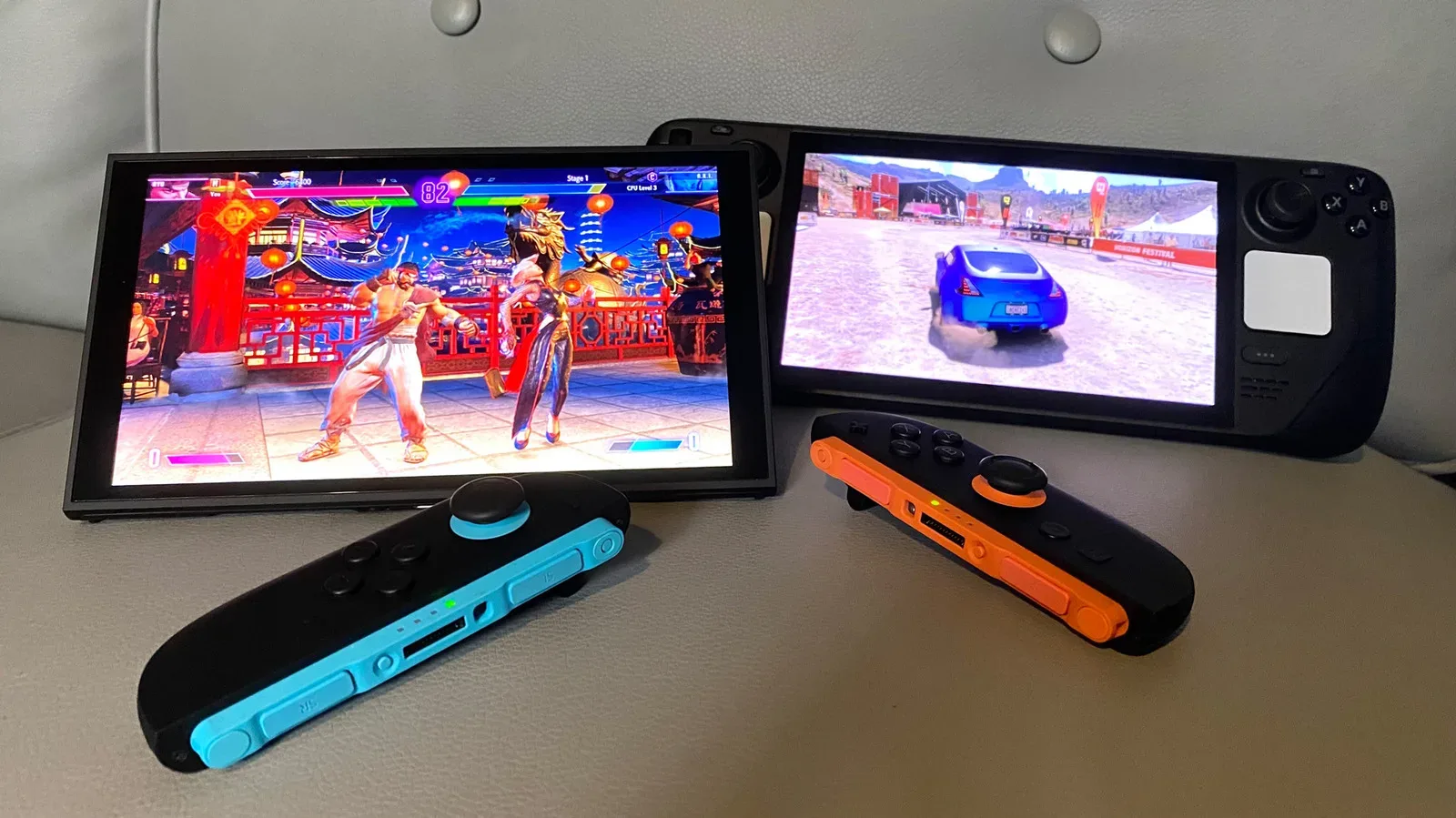
Those weighing different portable and console ecosystems may also find it useful to consider how library access varies across hardware generations; our Steam Deck vs. Switch 2 comparison examines the wider mix of hardware, game access, and value considerations.
The real test is catalogue coverage
Disc-to-digital licensing will ultimately be judged less by its broad promise than by the everyday reliability of its supported catalogue. A player with ten common discs may have an excellent experience if all ten work. Another with a favorite Ubisoft, Sega, Square Enix, or Bandai Namco title may find the program far less reassuring if that single game is unavailable.
Early reports show that the feature is functioning for many games, which is encouraging. At the same time, the apparent gaps involving several major publishers reveal the limits of treating physical ownership and digital access as automatically equivalent. They are related, but under this system they are not necessarily the same thing.
For now, the meaningful facts are narrow: the rollout is gradual, a number of games from four prominent publishers have reportedly returned a non-participation message, and no confirmed explanation has yet been provided. Whether these are temporary omissions or enduring exclusions will determine how confidently Xbox owners can plan around their disc libraries in the years ahead.