Xbox’s cloud-gaming pitch is about to acquire a monthly stopwatch. Beginning in November, the company plans to replace unlimited cloud streaming for Game Pass Ultimate members with a fixed allowance of streaming hours. The new limits extend across every Game Pass tier: 15 hours each month for Ultimate, 10 for Premium and five for Essential.
It is a substantial change to what Ultimate previously offered. At $23 per month, the highest Game Pass plan had included unlimited game streaming. Under the new setup, an Ultimate member who uses cloud gaming regularly will have a clearly defined monthly ceiling instead. Fifteen hours can cover a handful of longer sessions, a short campaign game, or a concentrated burst of multiplayer—but it is not remotely the same thing as an open-ended streaming library.
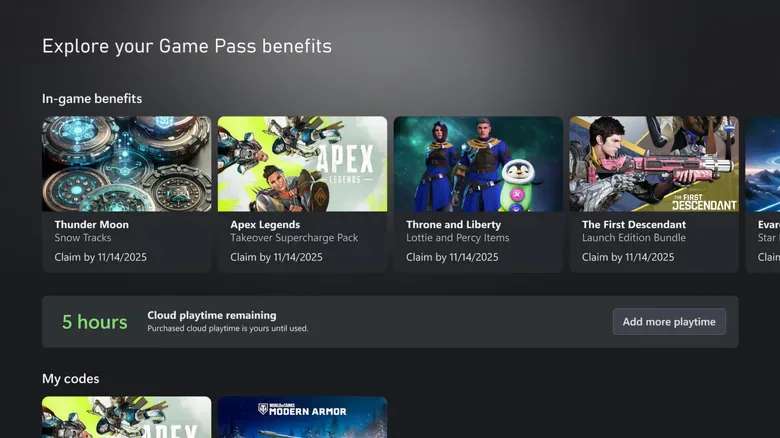
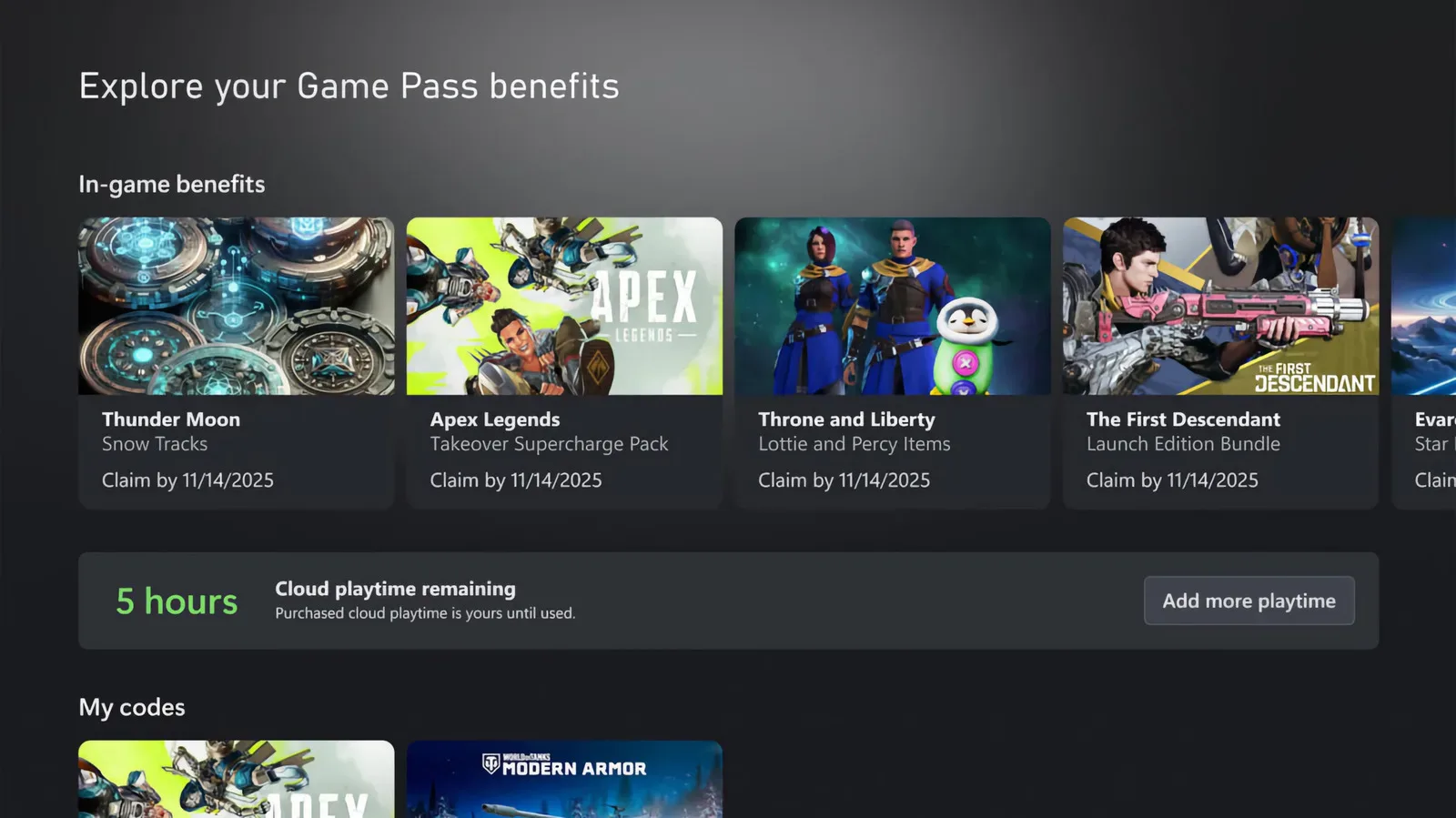
At the same time, Xbox is widening the door in another direction. Cloud gaming will no longer be solely a Game Pass subscriber benefit: people will be able to purchase cloud playtime hours through the Xbox Store and use them to stream eligible games from their Xbox libraries. That makes the change less of a simple restriction and more of a restructuring. Unlimited access is going away, but paid cloud access is becoming available to more people.
The new Game Pass cloud-hour allowances
The planned monthly allotments are straightforward, even if the value they represent will differ wildly from player to player:
- Game Pass Ultimate: 15 hours of cloud streaming per month.
- Game Pass Premium: 10 hours of cloud streaming per month.
- Game Pass Essential: five hours of cloud streaming per month.
Xbox has said the adjustment should affect only about 4 percent of Game Pass subscribers. That figure suggests cloud streaming may remain a niche way to play for much of the wider subscriber base, compared with downloading titles to a console or PC. But the number also masks an obvious reality: the smaller group that does rely on streaming is precisely the group for which a cap matters most.
A player who uses the cloud occasionally to sample something before downloading it may barely notice. Someone who treats a phone, smart TV, browser, handheld device, older console or low-spec computer as their primary Xbox endpoint will notice immediately. For them, game time is not an incidental feature; it is the product.
The new tiers also create a rather severe contrast in practical terms. Five hours on Essential could disappear over a weekend. Ten hours on Premium provides a little more breathing room, but still asks players to decide which sessions are worth spending their stream time on. Ultimate’s 15 hours is the most flexible allocation, yet it remains a limit attached to a plan that once did not have one.
Paid cloud playtime broadens the audience—if the price works
The more intriguing part of the plan is the ability for non-subscribers to buy cloud playtime hours. Xbox has not provided a universal price, saying costs will vary by market. Until those prices are known, it is difficult to determine whether the option will feel like a useful low-cost bridge to modern games or a meter running beside every session.
Related coverage includes Xbox Cloud Gaming Will Add Monthly Streaming Caps Starting in November.
That missing detail is the center of the story. A modestly priced bundle of hours could appeal to players who own games but do not want, or cannot justify, a monthly subscription. It could also make Xbox’s ecosystem more accessible to people with aging hardware. An overly expensive bundle, however, would turn the service into a costly workaround rather than a credible alternative to downloading, buying newer hardware or simply playing elsewhere.
There is a potentially meaningful use case for Xbox One owners. With eligible Xbox Series X/S games available through the cloud, an Xbox One could theoretically act as a pathway to games built for the newer console generation, without requiring an immediate hardware upgrade. That does not erase the realities of internet quality, latency, data use or game eligibility, but it could prolong the usefulness of a console that might otherwise be left behind by newer releases.
For some households, that proposition is easy to understand. A newer game arrives, the living-room hardware is older, and purchasing a whole new console is not in the budget. A bundle of streaming time could offer a temporary answer. The question is whether the cost per hour makes that answer sensible beyond an occasional novelty.
From “any screen” ambition to measured access
Cloud gaming has long been central to Xbox’s broader idea that an Xbox experience does not have to be tied to an Xbox console. The company’s “This Is An Xbox” marketing leaned into that outlook, presenting a range of devices as places where people could play within the Xbox ecosystem. The message was not universally popular, but the underlying strategy was clear: make the service, library and account more important than the box under the television.
Monthly caps introduce an awkward qualification to that promise. Plenty of devices may be capable of functioning as an Xbox, but only for five, 10 or 15 Game Pass cloud hours per month under the new structure. The slogan does not disappear; it just comes with a small print-shaped hourglass.
That does not mean the cloud proposition is meaningless. Streaming still has obvious appeal where storage is limited, a computer lacks gaming-grade components, or a player wants to avoid a large download. It can also be a useful way to play across devices already in a home. But putting a hard ceiling on usage changes the psychology. Rather than a permanent alternative to local hardware, streaming becomes a rationed convenience for subscribers—unless bought separately.
The change arrives amid a broader shift in Xbox’s direction under CEO Asha Sharma. The business has moved away from some of its earlier platform-expansion framing, while also slightly reducing subscription prices, emphasizing exclusive games and hardware again, and cutting a large number of jobs. None of those developments makes a 15-hour cap inevitable on its own, but together they depict a company reconsidering which parts of its ecosystem should be broad entitlements and which should be more closely measured services.
Why the timing makes cloud gaming feel complicated
There is an irony in placing limits on streaming just as buying hardware may feel more daunting. Rising RAM costs and the anticipated expense of the upcoming Project Helix console lineup could make a cloud route look attractive to people reluctant to buy another expensive device. For those players, the appeal is not necessarily the dream of never owning a console again. It may be much simpler: play a compatible modern game without paying for a major hardware upgrade right now.
That is why the eventual prices for cloud playtime matter more than the headline idea of paid hours. A player considering a console purchase will calculate the cost over months and years. They may compare a subscription allowance, additional purchased hours and the uncertainty of streaming quality with the upfront cost of a machine that can run games locally. The right answer will depend on how often they play and what games they want, but Xbox’s rates will define whether cloud access is a useful pressure valve or merely an expensive stopgap.
It also leaves Game Pass subscribers with a different kind of calculation. A person who once regarded Ultimate as a simple all-you-can-stream proposition will need to monitor their remaining monthly time. That may not matter to the overwhelming majority represented by Xbox’s 4 percent estimate, but feature value is often judged by the people who use a feature hardest. The casual customer may see little difference; the committed cloud player is likely to see a fundamental reduction.
There is also a cultural wrinkle. Gaming has a long history of living-room compromise: who gets the main screen, whether the console is free, and how long one person’s session can run before somebody else wants their turn. Cloud play was a convenient escape hatch from those negotiations, letting a compatible secondary device become a game machine. For a useful reminder that shared-screen etiquette has always been its own multiplayer mode, see The Unwritten Rules of Couch Multiplayer, Now Written Down.
What players should watch for before November
The announced monthly caps give the broad outline, but several practical details will decide how disruptive the transition feels. Players should keep an eye on the following:
- Local pricing for cloud playtime hours. Xbox has said prices will differ by market, so there is no single global value judgment yet.
- The size of purchasable hour bundles. A small, flexible option and a large, costly block create very different incentives.
- What happens when an allowance is exhausted. The availability and terms of extra hours will be important for anyone near their cap.
- Which owned games and newer-generation titles are eligible for streaming. The promise for Xbox One owners depends on compatible games actually being available through the service.
- How individual play habits fit the allowance. A few short sessions per month and a nightly streaming routine are entirely different propositions.
For now, the November change is best understood as a trade. Xbox is taking unlimited cloud access away from Ultimate and assigning limits to all Game Pass levels, while making cloud playtime purchasable for people outside the subscription system. It may bring streaming to some players who could not previously use it, especially those with older hardware. It may also make Xbox’s most dedicated cloud users feel that a once-open lane has been converted into a toll road.
Whether that trade proves reasonable will come down to a number Xbox has not yet supplied: the price of the hours. Until then, the new model is a promise of wider access paired with much tighter limits—and a reminder that, in the cloud, even the most console-free future can still be counted in minutes.