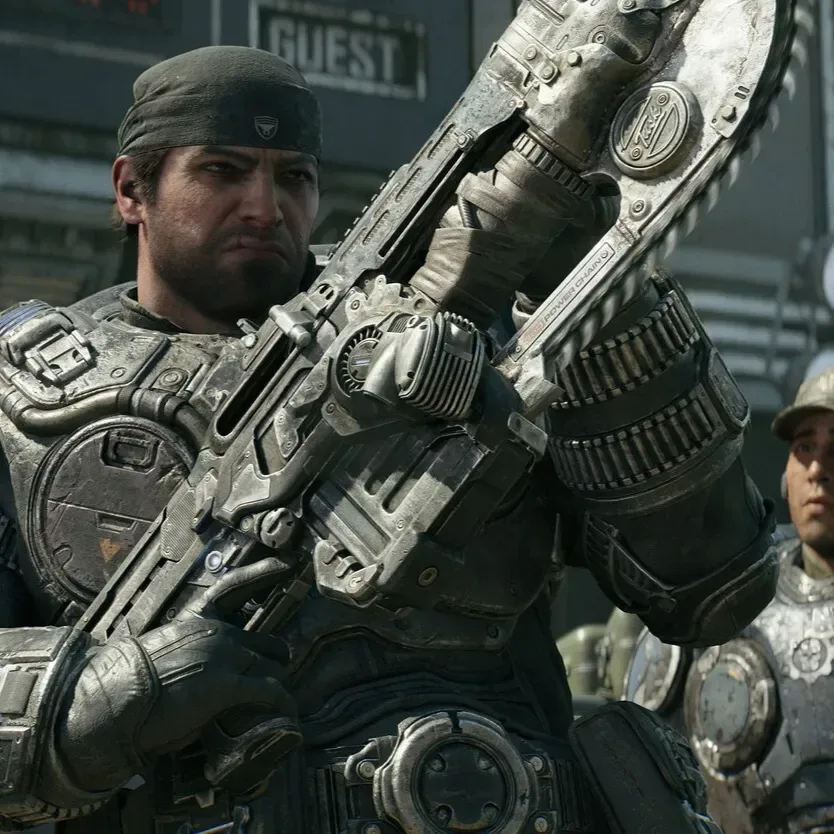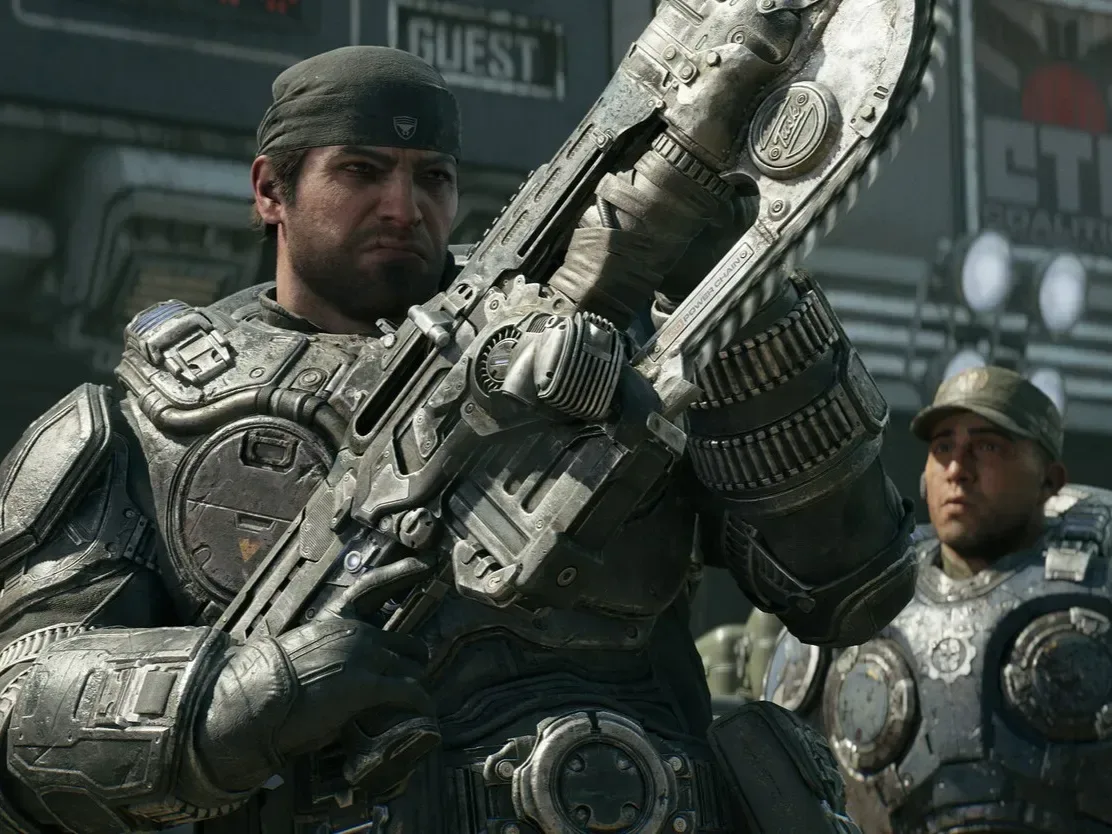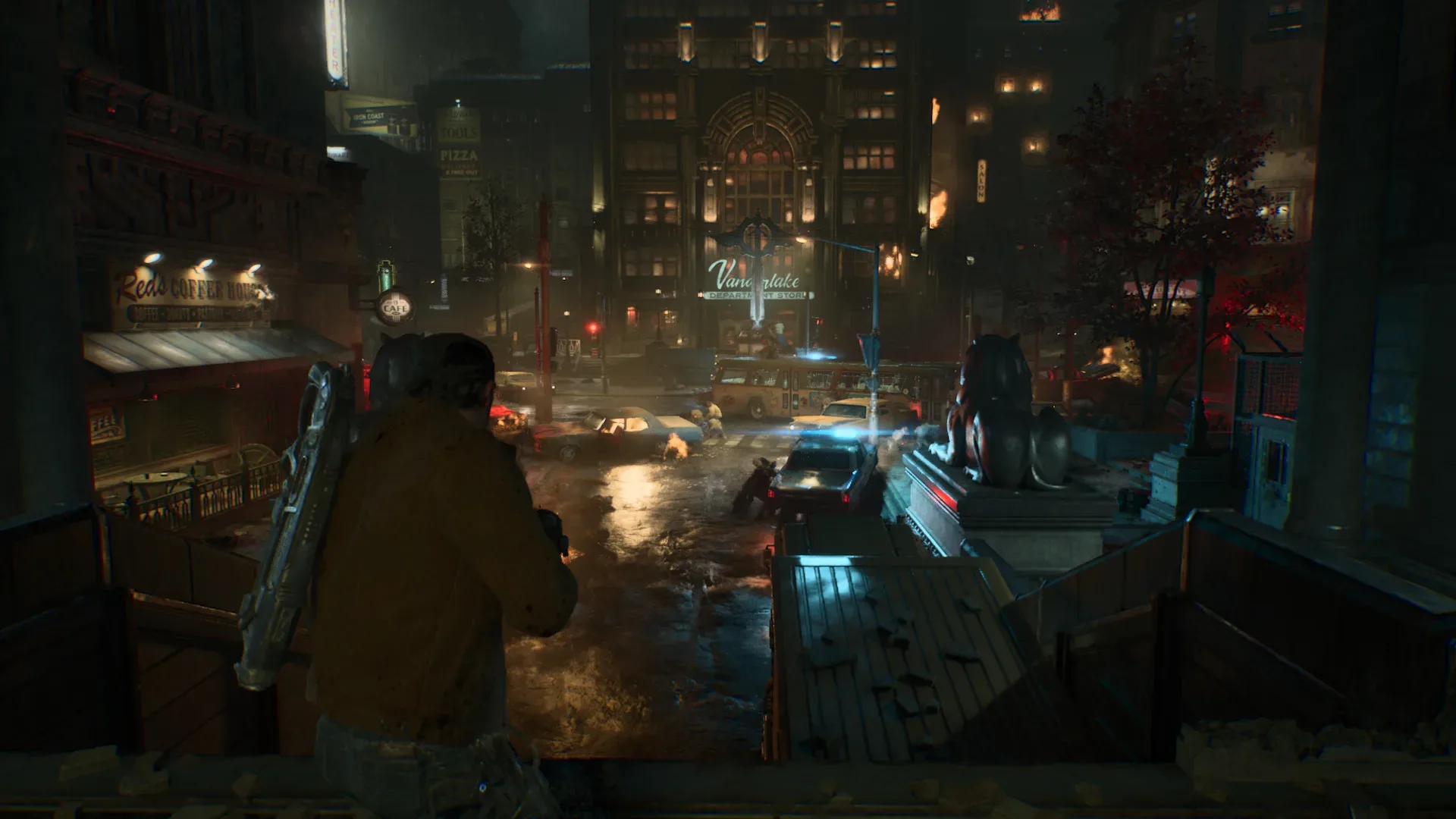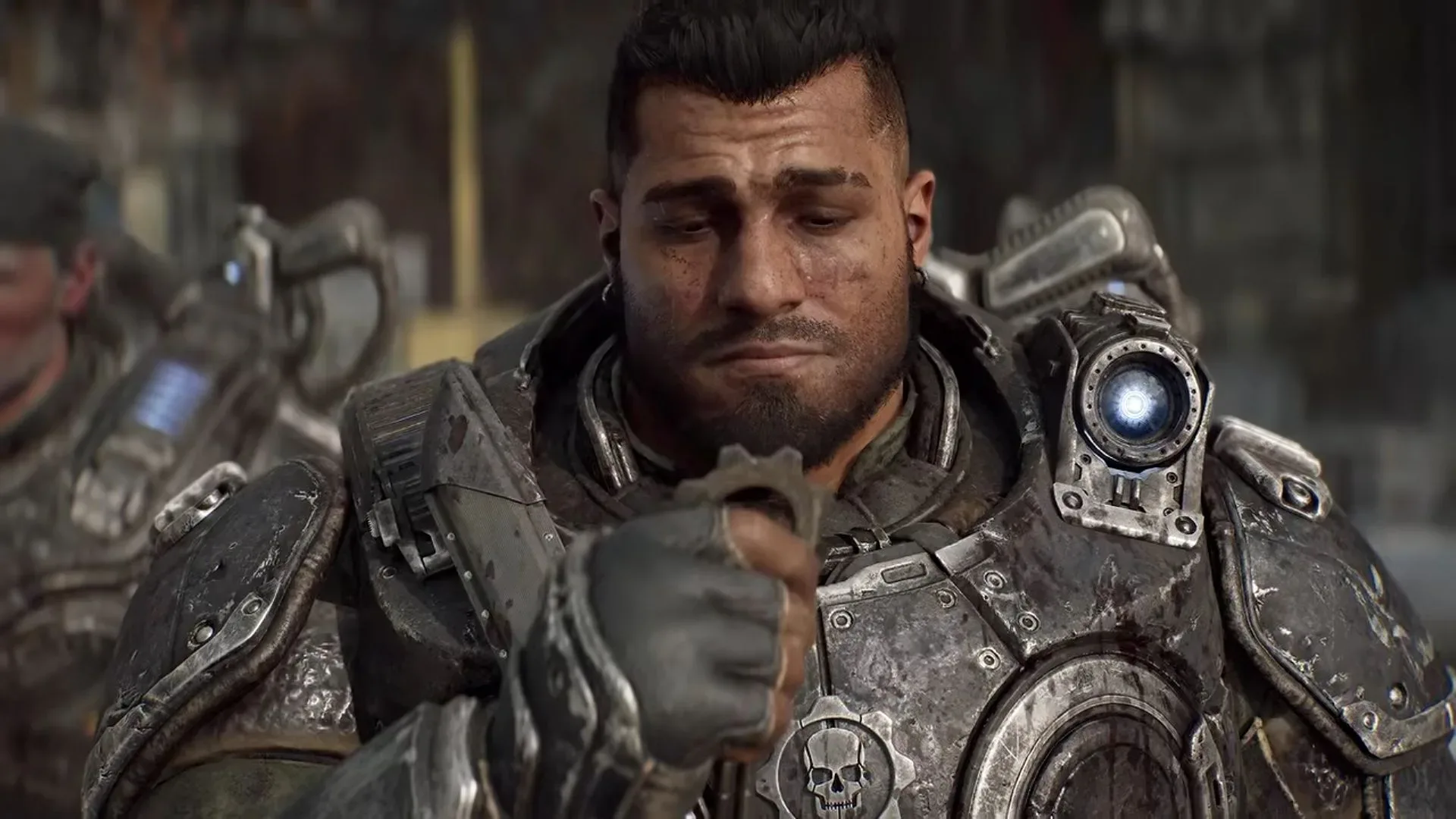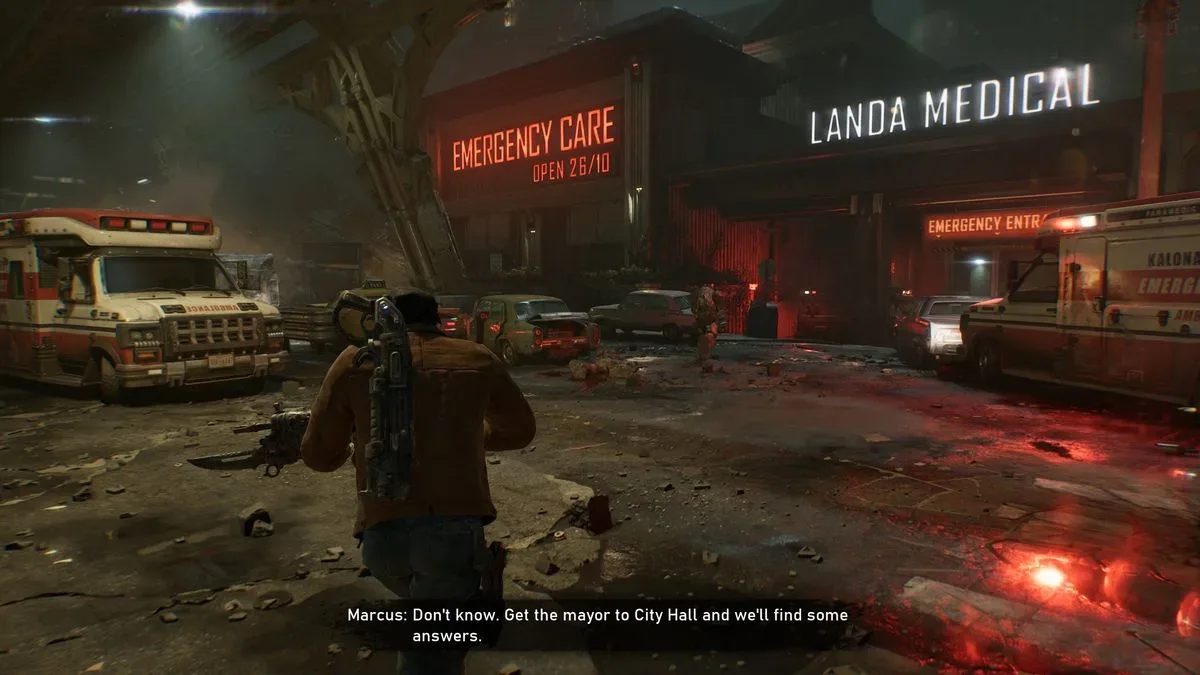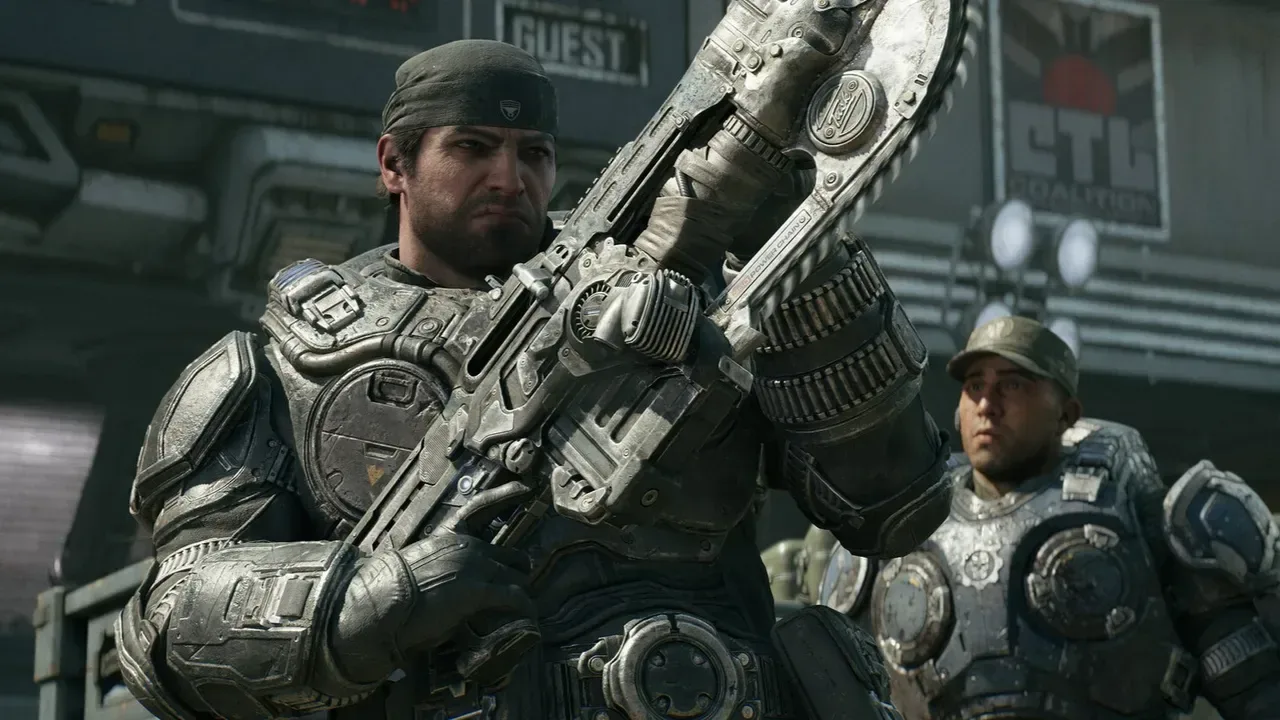
Gears of War: E-Day will arrive without two especially recognizable pieces of the series’ combat kit: hostage-taking “meat shields” and Lancer chainsaw duels. The Coalition has said the omissions stem from building the prequel’s gameplay sandbox anew instead of extending an earlier Gears of War game’s underlying systems. The studio says it is pursuing those legacy mechanics, as well as Private Lobbies and leaderboards, for after launch or potentially a subsequent game.
That is a significant clarification for players who see Gears not merely as a cover shooter, but as a particular collection of close-range rules, violent animations, risk-reward decisions and multiplayer rituals. E-Day may retain the series’ identity in broad strokes, but it will not reproduce every familiar interaction on day one. Its launch version is framed around a new foundation intended to work consistently across campaign, PvE and PvP.
The missing features should not be mistaken for minor cosmetic callbacks. Meat shields and chainsaw clashes each affect the rhythm of an encounter. Their absence has practical consequences for how players manage danger at point-blank range, respond to a downed enemy and read an opponent carrying a Lancer.
A rebuilt sandbox comes with a trade-off
The Coalition describes E-Day as having begun from an “empty hard drive,” with its entire gameplay sandbox constructed from scratch. In game-development terms, a gameplay sandbox is the connected set of player actions, weapons, movement, enemy behavior, maps, rules and feedback systems that determine what can happen in a match or combat encounter. For a Gears game, that includes cover movement, weapon handling, close-quarters combat and the behaviors that need to remain reliable whether a player is progressing through the campaign, fighting cooperative PvE encounters or competing in PvP.
A new sandbox can create room to revise core behavior rather than inheriting old assumptions. The Coalition specifically points to opportunities for innovation in cover, combat and enemies. But it also means old mechanics cannot simply be presumed to carry forward. Systems that look straightforward from the player side can rely on a large web of animation, targeting, collision, camera, networking and balance work beneath the surface.
The studio’s explanation is therefore less that the features have been dismissed as unimportant and more that they did not fit into the launch scope of a ground-up build. Still, the wording matters: post-launch work is an aim, not a published delivery date or guarantee. Players should judge E-Day’s launch package on what is confirmed to be there, rather than treating the eventual return of every legacy system as settled.
Why meat shields and chainsaw duels matter
A meat shield is the series’ term for using a captured enemy as moving protection. Beyond the deliberately grim Gears vocabulary, it creates a tactical state that differs from simply scoring a kill. The player has temporarily converted an enemy into cover while becoming committed to a conspicuous action. It is an aggressive way to reposition or exert pressure, but one that naturally needs clear controls, readable animations and fair counterplay.
That last part is especially relevant in multiplayer. A mechanic involving a grabbed enemy has to make sense to the person using it, the player being grabbed and every nearby opponent trying to react. Its absence at launch removes a familiar close-range option, but it also avoids introducing a complex interaction before the new sandbox is ready to support it across all of E-Day’s modes.
Related coverage includes Gears of War: E-Day Will Launch Without Meat Shields and Chainsaw Duels.
Chainsaw duels serve a related role at an even more immediate distance. The Lancer’s chainsaw attachment is one of Gears of War’s signature ideas: a weapon feature that turns proximity into a sudden, dramatic threat. When two such attacks meet in a duel, the game creates a direct contest rather than allowing the first attack to resolve without interruption. It is a system built around recognition and response—spot the danger, meet it with the appropriate action, and survive the exchange.
Removing chainsaw duels does not mean the Lancer itself has disappeared; the confirmed change concerns the duel interaction. But it does mean a specific, long-running moment of player-versus-player tension will not be available at launch. For veterans, that may be felt more strongly than the loss of a menu feature because it alters the vocabulary of an actual firefight.
Neither mechanic alone defines Gears of War. Yet both are memorable because they emerge from its broader design personality: cover is important, but the game repeatedly pushes combat toward dangerous, highly visible confrontations instead of treating safety as the only objective. The challenge for E-Day is to make its new cover, combat and enemy systems produce that same kind of decisive energy without relying on every prior tool.
The Gnasher’s hip-fire behavior is changing
The more immediate mechanical news may be a revision to the Gnasher, Gears of War’s iconic shotgun. In past entries, firing from the hip sent the blast in the direction the character was facing. E-Day instead blends camera aim with the muzzle’s physical position, a change intended to give players more control when firing without aiming down sights.
Hip firing means shooting without entering a more deliberate aiming view. It is generally associated with speed and urgency: the player can keep moving and respond immediately, though the handling model determines how predictable the shot will be. In the previous behavior described here, character orientation was the central guide for the Gnasher’s blast. In E-Day, camera direction joins muzzle placement in deciding where that blast goes.
For players, the key implication is that visual aiming and weapon position should be more closely involved in last-second shotgun shots. That could make panicked, near-range engagements feel more controllable, especially when the camera is pointed where the player expects the weapon to fire. It also means returning players may need to recalibrate muscle memory. A shotgun is often used during fast turns, cover maneuvers and close strafes, so a small change to its aiming logic can influence many encounters.
Whether that proves an improvement will depend on the final feel, balance and consistency of the implementation—none of which can be fully inferred from a design description. The important confirmed point is that E-Day is not simply carrying over the old hip-fire model. The Gnasher is being used as an example of the new sandbox changing an established series behavior, not merely rebuilding it at higher fidelity.
Season One and the ranked schedule
E-Day’s first Season begins with Early Access at 8 a.m. PT / 11 a.m. ET and is set to run for eight weeks, ending on December 1. The planned season content includes the launch maps, modes and cosmetics, along with three seasonal events: Halloween, 20 Years of Gears and Thanksgibbing.
Ranked modes are scheduled to arrive later, on October 13. Ranked modes are competitive playlists that typically organize players around measured performance rather than purely casual matchmaking. The available information confirms the later date, but does not detail the ranking structure, rewards or exact mode lineup. Likewise, leaderboards are among the features The Coalition says it is working to bring in a post-launch update or a future title, so ranked play and publicly tracked standings should not be treated as the same confirmed feature.
Private Lobbies are also not part of the confirmed launch feature set. Such lobbies generally let players set up controlled matches with a chosen group rather than relying on standard public matchmaking. Their absence will matter most to organized friend groups and communities that value custom sessions, but the studio has not attached a date to their possible addition.
For a closer look at the campaign discussion surrounding the game, read our earlier take on Gears of War: E-Day’s early campaign.
What the launch omissions say about E-Day’s priorities
The Coalition’s stated goal is a unified experience across three very different contexts. Campaign needs encounters that support narrative progression and solo or cooperative play. PvE needs repeatable enemy-facing systems. PvP needs readable, balanced interactions between humans, often under the harsher requirements of competitive networking. Designing a single action system that behaves coherently in all three is a substantial constraint.
That does not automatically make the launch trade-off painless. Gears is a series with a strong mechanical memory, and some players will reasonably measure E-Day against the accumulated feature set of earlier releases. A prequel can also sharpen that expectation: it may be set earlier in the fiction, but players do not necessarily expect it to play like a reduced historical artifact.
The more charitable reading is that E-Day is being positioned as a new platform for familiar Gears combat rather than a direct package of inherited systems. The less charitable reading is equally easy to understand: players are being asked to accept missing favorites while being offered a possible rather than dated path to their return. Both reactions can coexist until the game demonstrates how well its new systems stand on their own.
There is also a wider uncertainty around the franchise’s future. Xbox cut 268 staff members last month, including E-Day’s story director. Microsoft had said in June 2024 that it intended to continue Gears of War’s story and resolve the cliffhanger from Gears 5, despite choosing a prequel first. That remains an intention rather than a newly detailed roadmap, and the source material indicates internal concern at The Coalition about further cuts after E-Day launches.
For now, E-Day’s clearest message is one of focused compromise. It is bringing a rebuilt combat foundation, a modified Gnasher hip-fire model, launch maps and modes, seasonal events, and a later-ranked-mode date. It is not bringing meat shields, chainsaw duels, Private Lobbies or leaderboards at launch. The eventual success of that decision will rest on a simple question: does the new sandbox make players feel that something worthwhile has been built in place of what is temporarily—or perhaps permanently—missing?