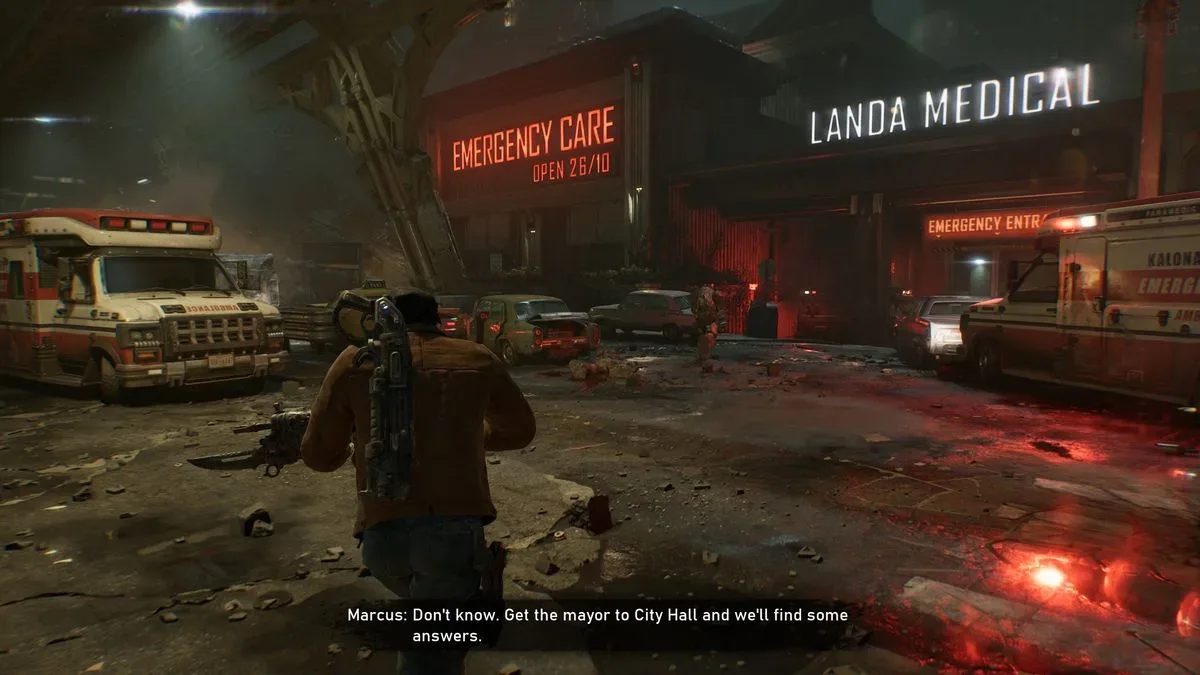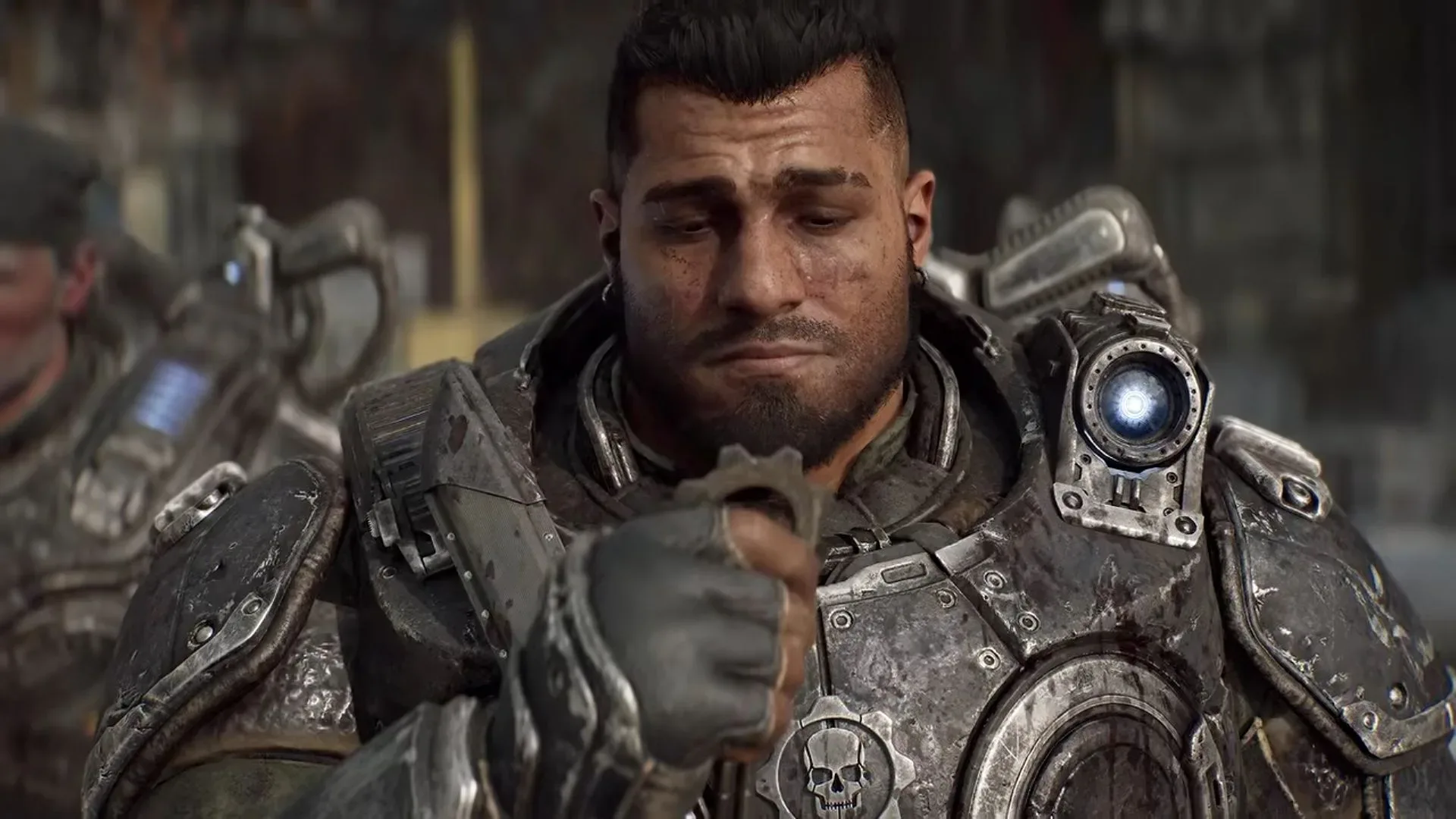
Gears of War: E-Day is scheduled to arrive on October 6, and The Coalition has outlined how its opening stretch will be structured. The plan covers a Season 1 that began during the beta period and runs through December 1, three limited-time events, ranked Versus play beginning October 13, and a later anniversary-focused season called Legacy. It also confirms that a number of familiar series mechanics and online features will not be present at launch, though the team says they are being worked on for a future return.
The immediate headline is the calendar. Season 1 will include Halloween, 20 Years of Gears, and Thanksgibbing events. Each is set to run for two weeks and bring a dedicated Versus mode, a Horde mission, and special rewards. That gives the early post-launch period a clear sequence of multiplayer activity rather than leaving the launch offering as the entire plan.
There is one especially deliberate piece of timing in the roadmap. A “special birthday gift” is planned for all players on November 7, the anniversary of the original Gears of War launch. The gift sits within Season 2, titled Legacy, which is framed around the franchise’s 20th anniversary and content inspired by memorable moments from across the series. What that gift is, and precisely what content Legacy will add, have not been specified.
What the first season includes
Season 1 contains the foundational launch offering, including modes and maps, and continues until December 1. The three events are the most concrete additions currently described. Their names make the broad themes easy to read, but the roadmap does not yet identify the individual Versus modes, Horde mission objectives, reward items, or exact start and end dates for each two-week window.
- Halloween: a two-week event with a special Versus mode, Horde mission, and rewards.
- 20 Years of Gears: another two-week event in the same format, tied to the series milestone.
- Thanksgibbing: a third two-week event, again comprising a special Versus mode, Horde mission, and rewards.
- Ranked Versus: scheduled to open October 13, one week after launch.
Versus is the series’ player-versus-player multiplayer space, while Horde is its co-operative survival format. The distinction matters because the roadmap promises an activity for both sides of the game: competitive players get a special mode during each event, and co-op groups get an event mission. The details remain limited, however, so it would be premature to assume the events will introduce permanent playlists, new maps, or a particular kind of reward progression.
The October 13 ranked launch is also worth separating from the rest of the Season 1 schedule. Ranked play is a competitive format, typically intended to place performance and match results at the center of play rather than simply offering a casual rotation. Here, the important confirmed point is timing: players will have roughly a week with the game after October 6 before ranked Versus becomes available.
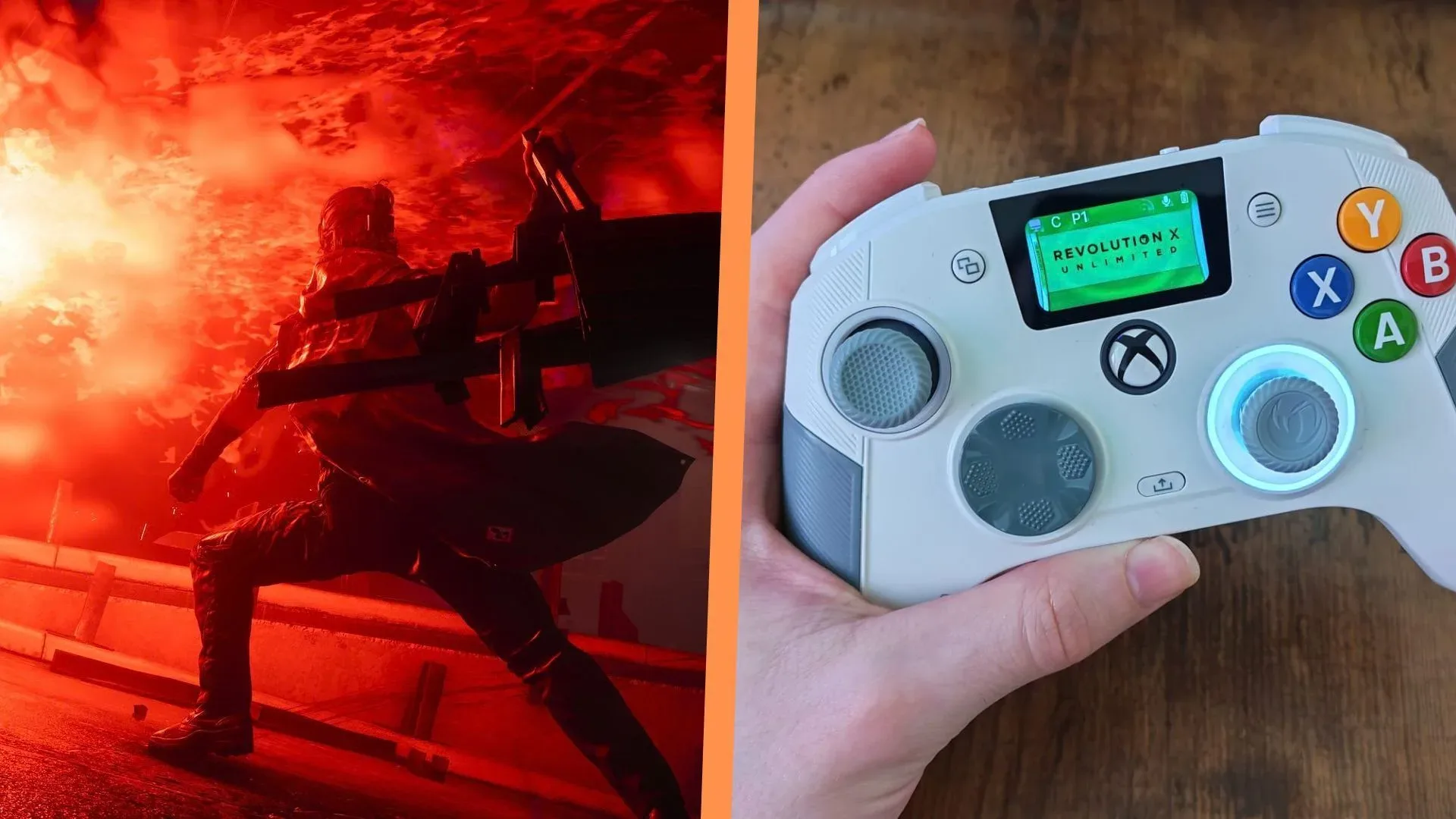
For players who regularly adjust controller settings in shooters, the broader conversation around feel and input will be familiar. The practical value of a control setup often emerges in fast, close-range fights rather than on a menu screen; Joking Joystick has explored that same principle in its look at controller remapping in Control. E-Day’s Gnasher changes are aimed squarely at that kind of immediate, high-pressure interaction.
The Gnasher is receiving a series-first aiming change
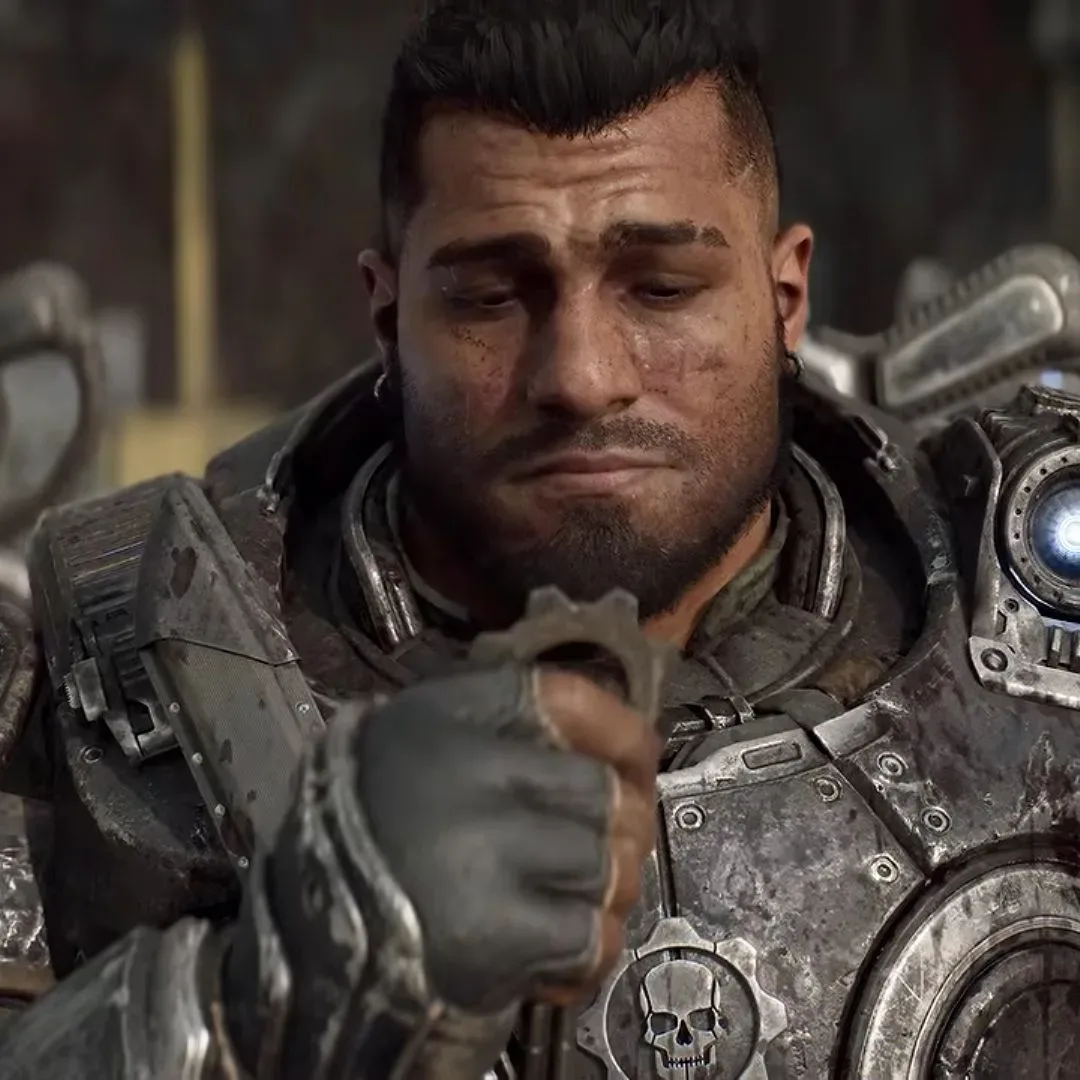
The Coalition’s post-beta update focuses closely on the Gnasher, the shotgun synonymous with close-quarters Gears encounters. E-Day will use a hybrid of muzzle-oriented and camera-oriented shooting for hipfire, described as a first for the series.
Related coverage includes Gears of War: E-Day Details Season Roadmap, Anniversary Event and Gnasher Changes.
Those terms are technical, but the intended result is straightforward. Hipfire means firing without aiming down sights. In a third-person shooter, the player is looking through a camera placed behind or near their character, while the weapon itself is physically positioned somewhere else in the game world. That creates two potentially different reference points for a shot:
- Camera-oriented shooting treats the player’s view and reticle as the core reference for where a shot should go.
- Muzzle-oriented shooting prioritizes the weapon barrel’s real in-world position and the line it can physically fire along.
Each approach can create awkward moments by itself. A camera-led shot may appear to travel from a point that does not quite match the weapon’s visible barrel. A muzzle-led shot can be blocked or diverted by nearby geometry even when the center of the screen makes the target look exposed. In cover-heavy, close-range combat, that difference can become especially noticeable around corners, obstacles, or opponents at slightly different elevations.
E-Day’s system checks both the camera and muzzle shots when a player fires at a target, then applies the result that better reflects what the player would reasonably expect to happen. The stated aim is that a shot which looks like it connects should connect. It is not a blanket promise that every shot near a target will register, nor does the outline provide numerical values, range rules, pellet behavior, or other implementation specifics. It is a targeted effort to reduce the mismatch between the player’s visual read and the game’s shot evaluation.
That distinction is important. This is not simply an assertion that the Gnasher will be stronger or weaker. It is a change to hit evaluation: the process a game uses to decide whether a fired shot intersects a valid target. In a shotgun duel where an instant hipfire decision can settle the encounter, consistency between what the player sees and what the game recognizes can be as consequential as the weapon’s raw damage values.
Why the post-beta explanation matters
The update ties the change to feedback gathered during the multiplayer beta. Beta feedback does not automatically tell players how the finished balance will feel, but it does establish that the team has identified hipfire behavior as an issue worth changing before launch. A transparent explanation of the intended behavior is useful because it gives players a way to understand what is changing beyond a vague “improved feel” label.
There is still a limit to what can be concluded. The roadmap does not say how the system will behave in every edge case, whether it affects aimed shots, or how it will interact with latency and online match conditions. The sensible expectation is narrower: E-Day’s hipfire will use two checks rather than a single camera-only or muzzle-only basis, with the chosen result intended to better match the visible shot.
Several legacy features are absent at launch
The Coalition has also made clear that building E-Day from the ground up meant not every legacy feature could make the initial release. The examples named are Meat Shields, Chainsaw Duels, selected weapons from the series’ past, Private Lobbies, and leaderboards. The studio says these are not considered gone from the franchise and that work is underway to bring them back, but it has not attached dates or a release order to those returns.
That is a meaningful distinction between a launch feature list and a long-term intention. Players should not treat an eventual return as a confirmed Season 1 or Season 2 addition. At present, the roadmap provides no timetable for any one mechanic, weapon, lobby option, or leaderboard function.
- Meat Shields: a legacy mechanic identified as absent at launch.
- Chainsaw Duels: another named legacy feature not included in the starting build.
- Selected older weapons: some, rather than necessarily all, weapons from past entries are also outside the launch set.
- Private Lobbies and leaderboards: online functionality named as missing initially and planned for future work.
The multiplayer implications vary. Private Lobbies are generally important for groups that want control over who joins and how sessions are organized. Leaderboards provide a visible performance comparison layer. Their absence may matter most to established groups and competitively minded players, even as ranked Versus arrives on October 13. The two things serve different purposes: ranked play is a competitive mode, while private lobbies and leaderboards are tools for organizing and tracking play.
The inclusion of a bug-fix and tuning list alongside these feature notes suggests the early months are intended to combine scheduled events with continuing technical and balance work. That is not a promise that every concern will be resolved by a particular date, but it does clarify that the roadmap is not solely cosmetic or celebratory. Weapon behavior, online functions, and launch stability are all part of the post-beta discussion.
Legacy is the next named milestone, with more seasons teased
Season 2’s Legacy branding gives the 20th anniversary a larger role than a single November event. The November 7 gift is the clearest date attached to it, while the description points to a substantial amount of franchise-inspired content. Until fuller details arrive, though, “Legacy” is a theme rather than a feature checklist.
Three later season titles have also been revealed: Infiltration, Pendulum, and Devotion. No content, dates, mechanics, or event formats have been specified for them. The names indicate that support is planned beyond the first two seasons, but they do not establish what players will receive in those updates.
For now, the most concrete E-Day roadmap points are simple: launch on October 6; ranked Versus on October 13; Season 1 continuing through December 1; three two-week events containing a Versus mode, Horde mission, and rewards; and a November 7 anniversary gift for all players. Alongside that schedule, the Gnasher’s hybrid hipfire system is the most substantial gameplay-specific change described, while several requested pieces of Gears history remain future work rather than launch-day fixtures.