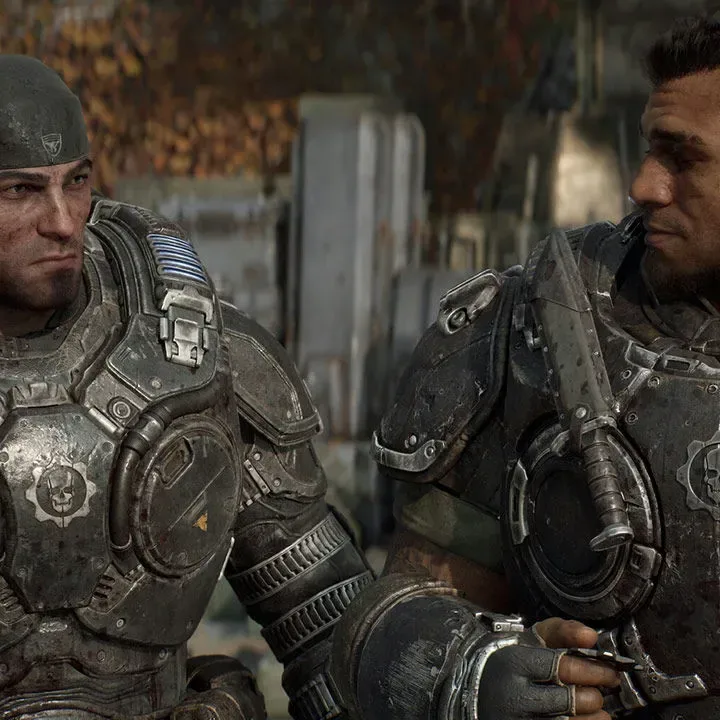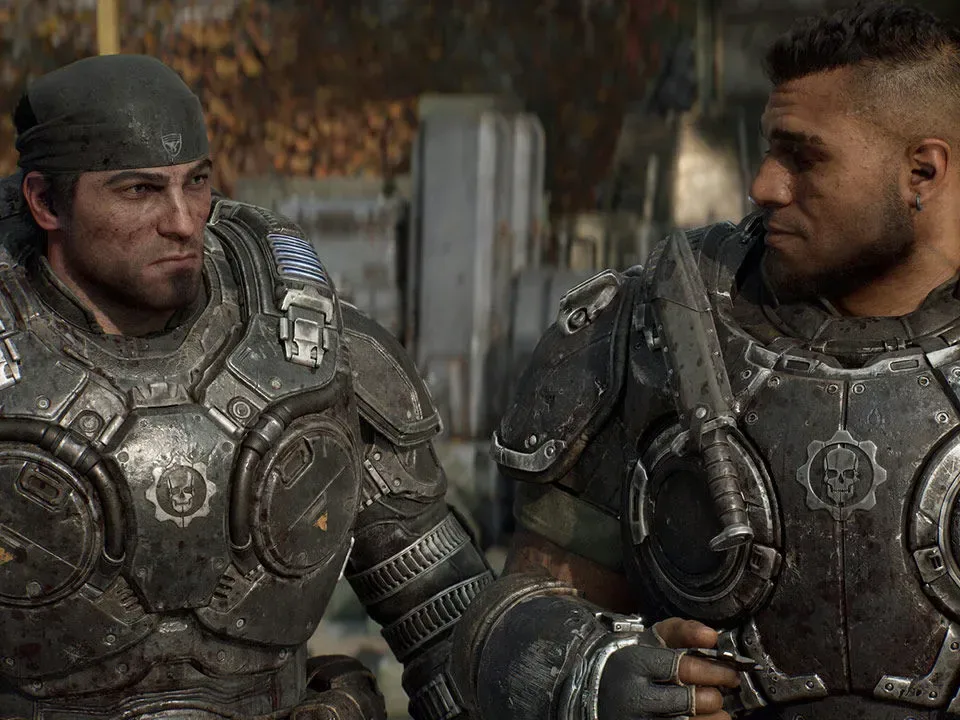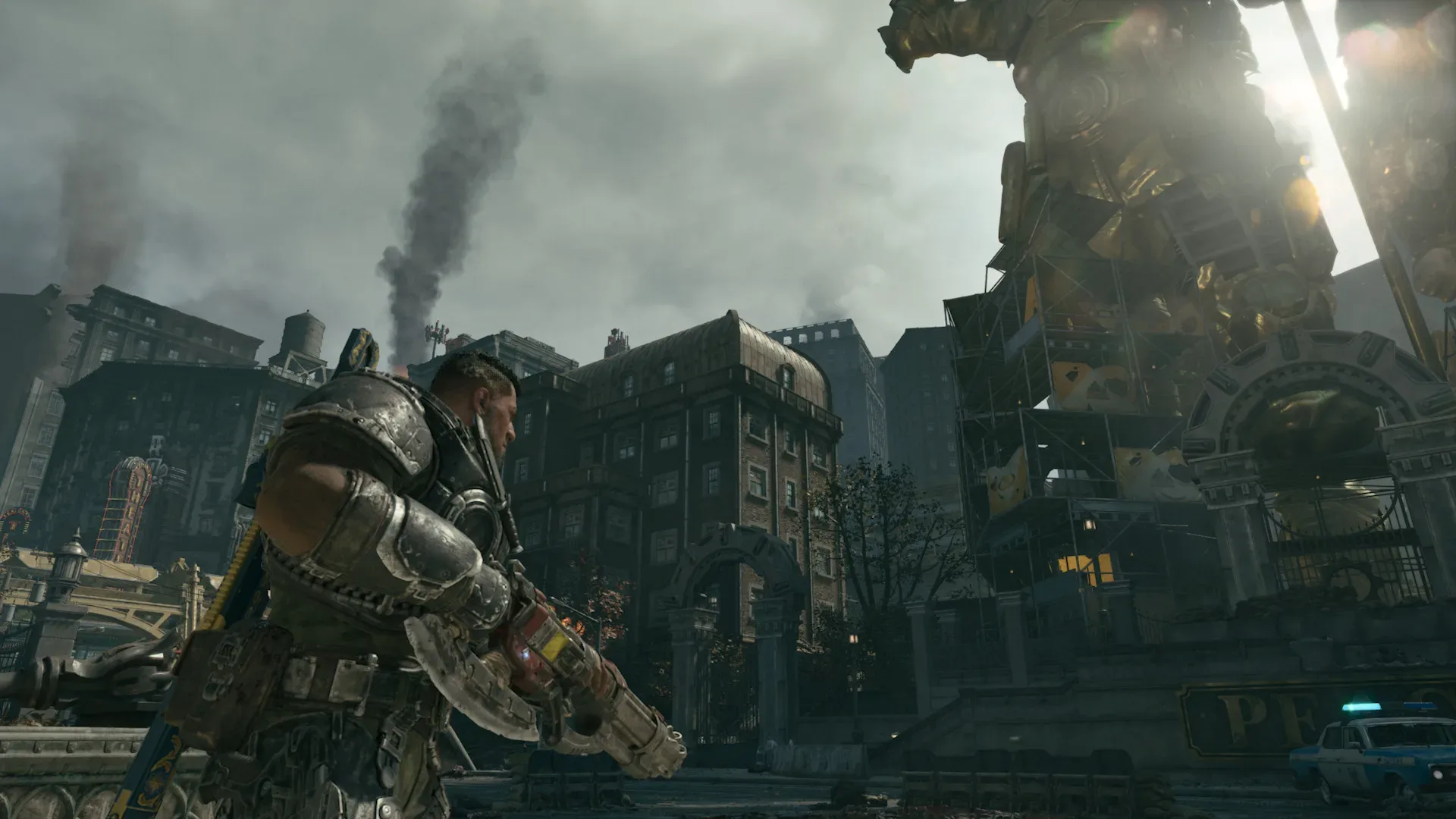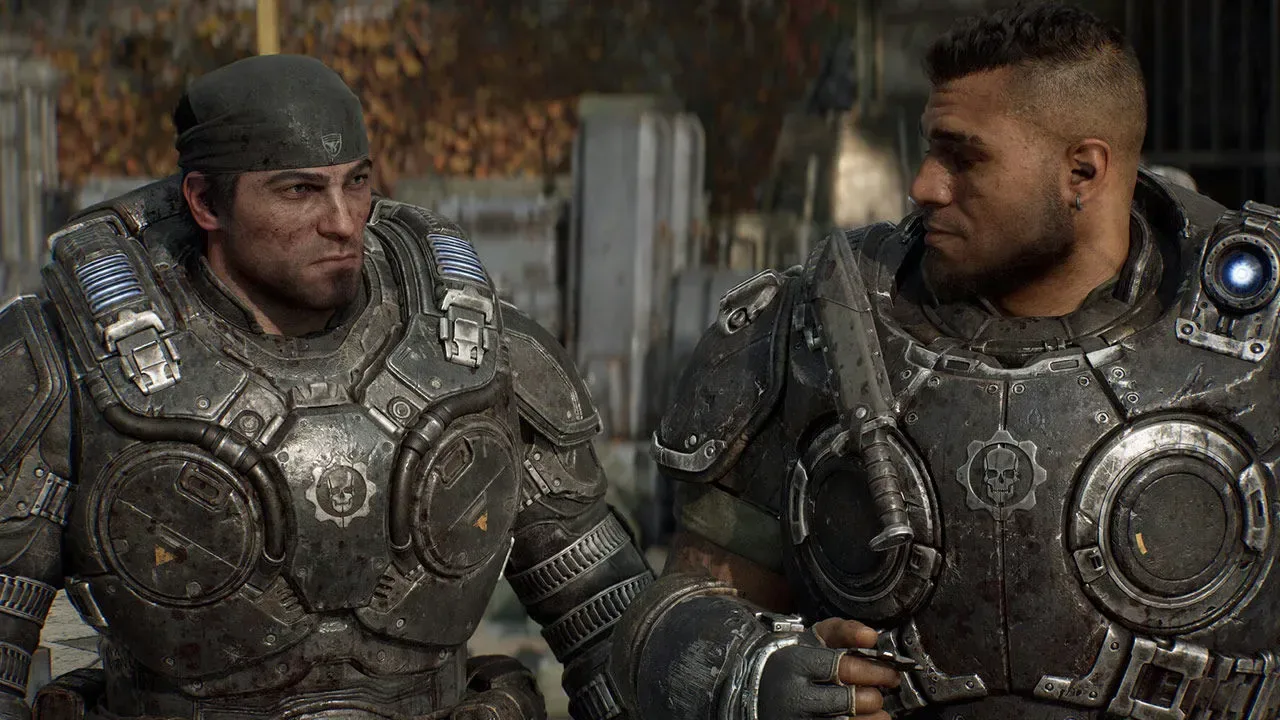
Gears of War: E-Day is taking an unusually pragmatic route to fitting a demanding modern game onto Xbox Series S hardware: when memory becomes scarce, The Coalition can move selected data out of the console’s RAM and onto its SSD. The important qualifier is selected. This is not a case of treating storage as a painless replacement for memory. It is a targeted balancing act designed to preserve the information the game needs immediately while finding a temporary home for data that can wait.
The Coalition studio technical director Kate Raynor has described the technique in the context of the sharp memory divide between the two current Xbox consoles. Xbox Series S has 10GB of RAM, while Xbox Series X has 16GB. For a visually demanding game, that difference places an enormous premium on deciding what stays close at hand for each rendered frame and what can safely be moved aside.
The result is a useful look at a reality often hidden behind platform labels and resolution comparisons: game performance is not governed by one component in isolation. A machine can have a capable SSD and still suffer if the game asks storage to behave like RAM too often. It can also have limited memory and still deliver a good experience when the engine is disciplined about what is loaded, when it is needed, and how long it remains useful.
Why SSD storage cannot simply become more RAM
RAM, short for random-access memory, is the extremely fast working area used by a game and its operating system for data they need now. In a game, that can include information relevant to the current scene, geometry, textures, effects, animation, and other assets that must be available quickly enough to help produce successive frames.
An SSD is storage. It is fast compared with older hard drives, and modern game hardware can use it effectively for loading and streaming assets. But it is still much slower than RAM for the kind of constantly repeated, low-latency access required by data used every frame. That speed gap is why a computer that exhausts its memory can become sluggish even if it has solid-state storage installed.
Computers commonly address memory shortfalls with a page file: a dedicated portion of storage used to hold overflow data when RAM is full. The broad idea behind the approach in E-Day is familiar, but the game-specific challenge is much more exacting than merely enabling overflow. If the wrong data is placed on storage, the system may need to retrieve it during a moment when the game cannot afford to wait. If that happens repeatedly, the benefit disappears and performance can deteriorate.
Think of RAM as the equipment immediately beside a technician during a live repair and SSD storage as a nearby supply room. The supply room is useful, especially when the bench is crowded. But the equipment needed for the next movement cannot stay in the other room.
The key is prioritisation, not a hardware miracle
The Coalition’s reported strategy is to preserve data that is in use for a frame, or needed across a run of frames, in system memory. Data that is not being used over that period can be considered for offloading to SSD storage. In plain terms, the game attempts to reserve the fastest resource for the most urgent work.
Related coverage includes Gears of War: E-Day Uses SSD Memory Strategy to Keep Xbox Series S Running Smoothly.
That is a significant distinction. Describing an SSD as “extra RAM” is convenient shorthand, but it can conceal the trade-off. The SSD is being used as an overflow area, not elevated to the speed of memory. The approach works only as long as the game avoids repeatedly bringing the same information back into RAM at costly moments.
What “frame-critical” means
A frame is a single image in the sequence displayed while a game is running. A steady experience depends on the system preparing each new frame within a consistent amount of time. Data needed in one frame, or continuously through several frames, is therefore particularly sensitive to delays. Keeping that material in RAM lowers the risk that the game must pause its work to retrieve it from slower storage.
By contrast, data that is not required during that immediate stretch has more flexibility. Moving it to storage frees room in RAM for work that cannot be deferred. The trick is predicting that distinction accurately enough that the data does not boomerang back and forth between the two.
Why excessive refreshing remains a problem
The technique has limits. Repeatedly refreshing page-file data back into memory carries its own performance cost. That means it is not a universal fix for every memory-constrained situation, nor does it erase the underlying 10GB versus 16GB hardware difference.
Instead, it gives developers another lever. With careful asset and memory management, an engine can use storage as a pressure valve during periods when RAM would otherwise be overcommitted. The usefulness of that lever depends on the game’s workload and on whether its developers can identify information whose absence from RAM will not disrupt the next frames.
Reflections were another part of the Series S equation
Memory management was not the only compromise involved in getting E-Day running well on Xbox Series S. The Coalition also dropped Lumen reflections on that system. Lumen is a lighting and reflections technology; in this case, disabling its reflections is a separate visual trade-off alongside the engine’s storage-and-memory strategy.
That pairing matters because it avoids a misleading narrative in which one clever technical decision carries an entire game. Performance on constrained hardware is usually the result of multiple choices: deciding which visual features are viable, reducing demand where possible, and then managing the remaining memory budget carefully. E-Day’s Series S solution appears to combine both a rendering concession and an effort to make more effective use of the hardware around it.
For players, the practical point is straightforward. A version of a game can look different from a more powerful-console or PC counterpart without that difference automatically meaning it was handled carelessly. In this case, the reduced reflection feature and disciplined overflow strategy are connected to the task of keeping the game operating within Series S limits.
What this says about current Xbox development
Xbox Series S is the lower-memory member of the current Xbox pair, so multi-console optimization has to account for it from the start rather than arriving as a simple final settings pass. E-Day’s approach illustrates why raw specifications do not tell the whole story. A game engine’s scheduling and data-management decisions can determine whether a fixed memory pool becomes an immediate wall or a problem with room for intelligent mitigation.
It does not follow that every game can apply precisely the same solution. Different games will have different asset needs, scene complexity, rendering workloads, and patterns of data reuse. A method that succeeds when some information can remain dormant for several frames may have less room to operate in a workload where nearly everything needs rapid, continual access.
Still, the broader lesson is valuable: SSDs can be part of a sophisticated memory plan, provided developers respect their limitations. Storage is useful for carefully chosen overflow; RAM remains where data must live when the game is actively relying on it.
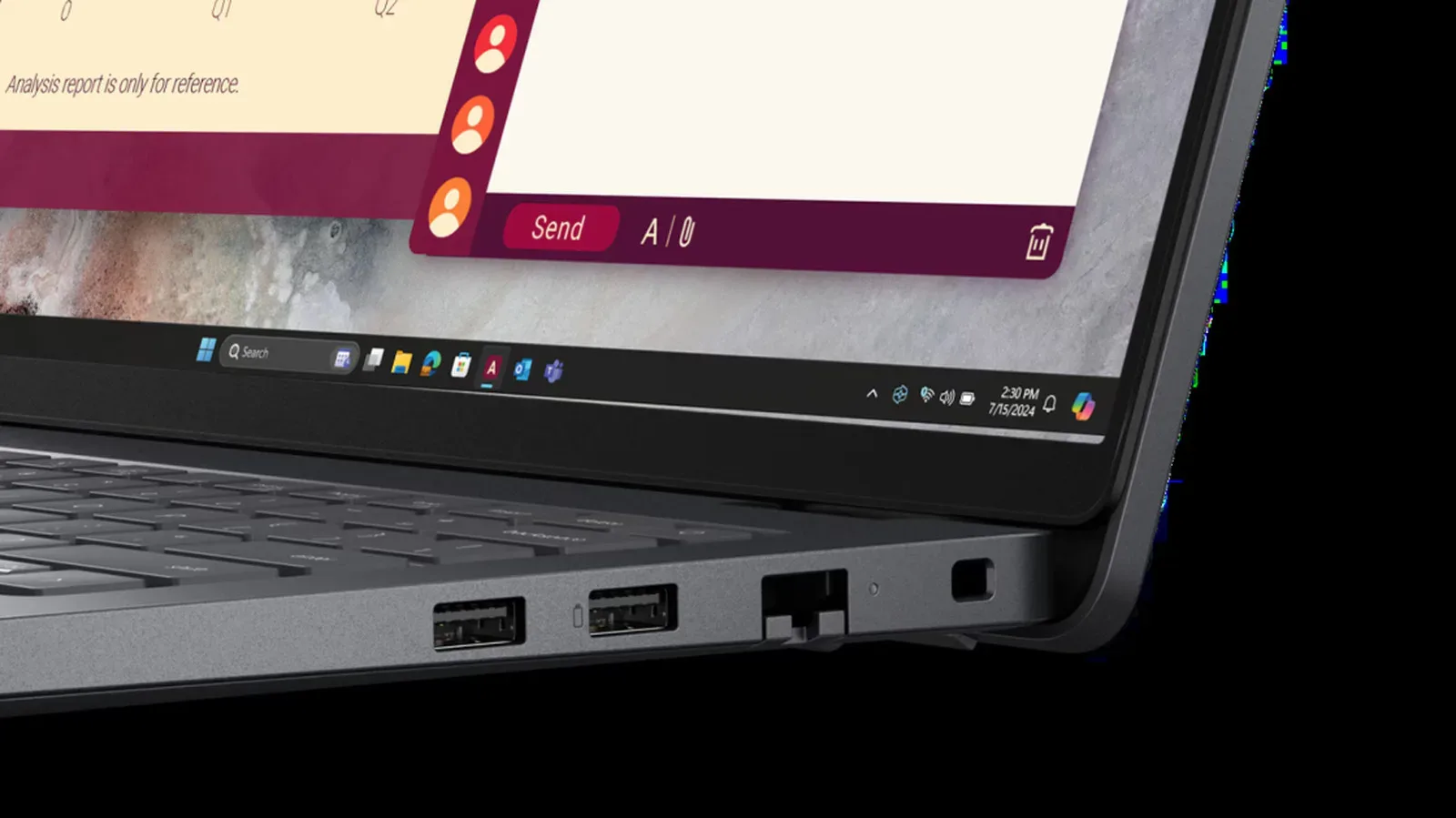
Players interested in the practical distinctions among PC and console hardware may also find our explainer on what a battery icon beside a USB port actually indicates useful. Hardware labels often signal a capability, but the real-world result depends on how software and the surrounding system use it.
E-Day’s technical balancing act
Gears of War: E-Day entered early access last week, and The Coalition has positioned it as one of Xbox’s key exclusives. The game also makes substantial changes relative to earlier entries. Its Series S memory strategy adds another layer to that conversation: the studio is not only pursuing an ambitious presentation, but also adapting that presentation to a console with a considerably smaller memory pool than Series X.
There is no claim here that paging to an SSD is free performance, or that it eliminates the possibility of slowdown. The stated caveat is central to understanding the technique: if data must be restored from the page file too frequently, performance will worsen. The accomplishment lies in preventing that from becoming routine by retaining active, frame-relevant data in RAM and using storage for information that can remain out of the immediate working set.
That is less flashy than calling an SSD a magic memory upgrade, but it is much more useful. E-Day’s Series S version demonstrates the continuing importance of technical prioritisation: preserve the data that the next frames cannot live without, make considered visual trade-offs, and use slower storage only where its delay will not become visible in play.