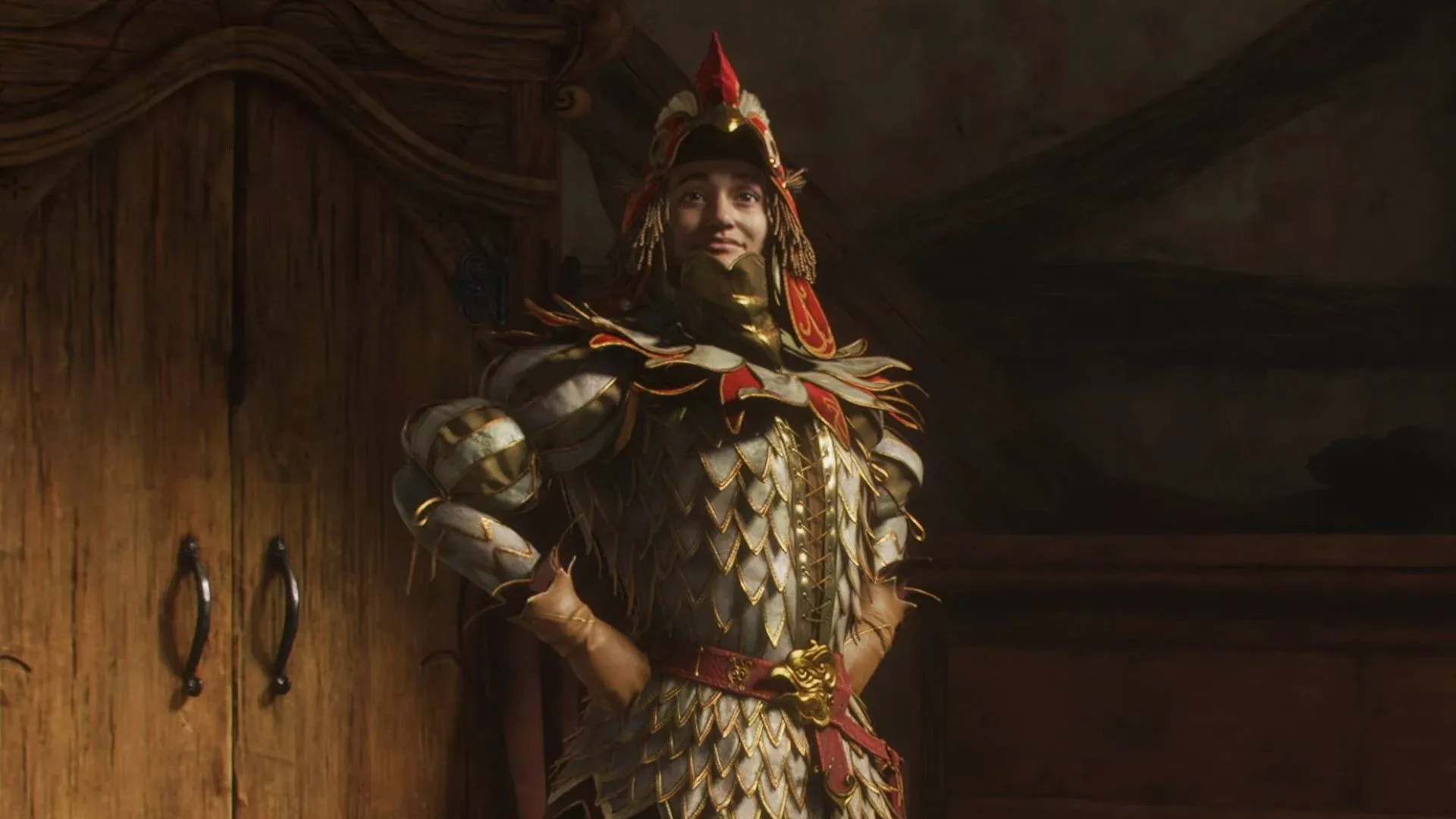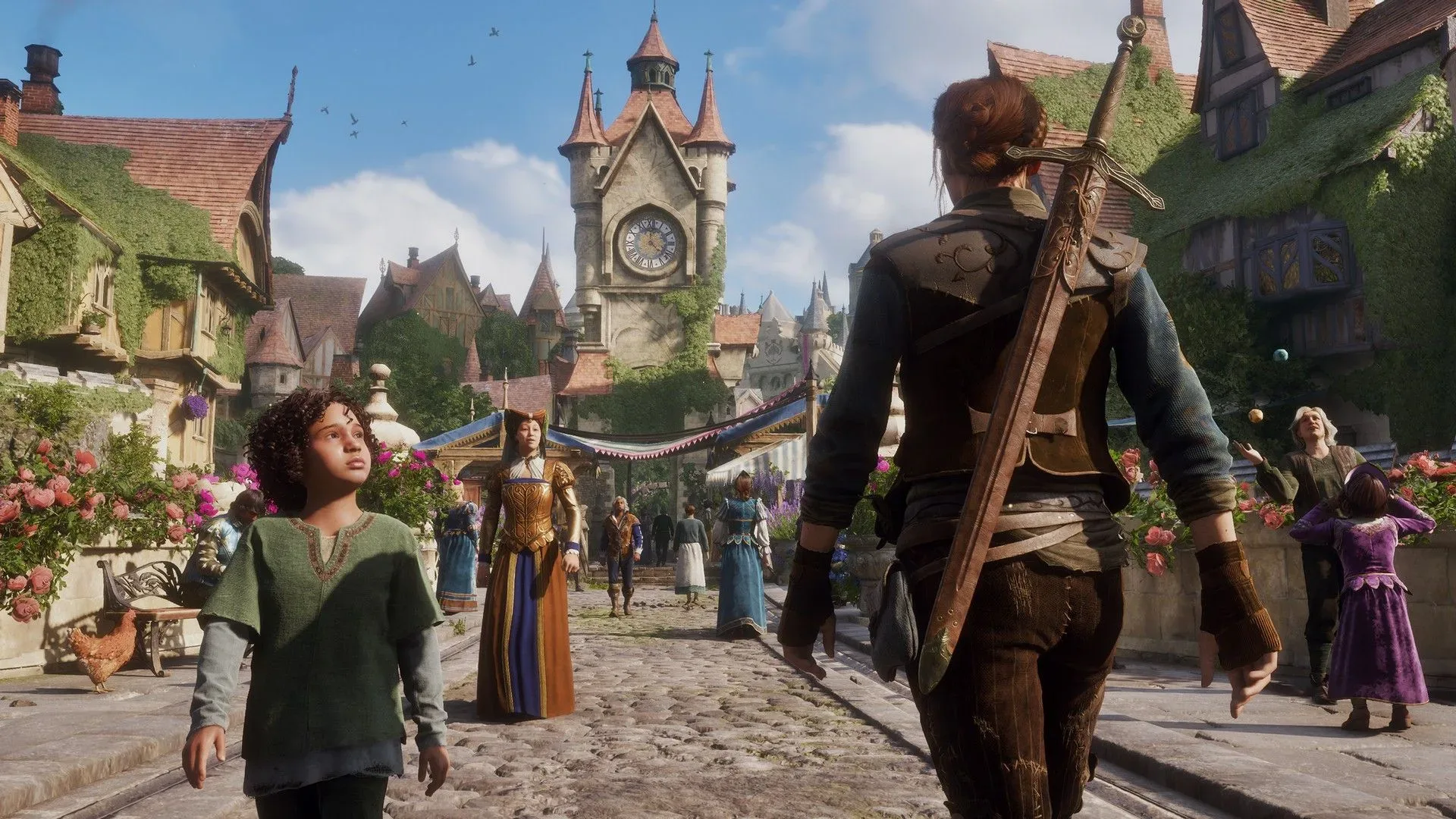
Bringing Fable back is not a simple matter of dusting off a chicken suit, pointing at a demon door, and hoping everyone remembers where the expression buttons are. The new entry arrives after a long absence: 16 years have passed since Fable 3, the most recent mainline game. That makes Playground Games’ task unusually delicate. It has to offer something recognizable to returning Albion regulars while making sense to people whose RPG reference points were formed long after the last game’s release.
The studio’s stated answer is a combat approach built around two goals that can pull in different directions: retain the original series’ accessibility, but make the action feel appropriate for a contemporary game. Will Kennedy, associate game director at Playground Games, has described the team’s thinking as an effort to capture the classic games’ welcoming nature without treating an older control philosophy as sacred simply because it is old.
That distinction matters. “Faithful” can mean many things when a series returns after more than a decade. It might mean recreating specific mechanics exactly, preserving every rough edge, or using familiar ideas as a foundation while changing the systems around them. In this case, the emphasis appears to be on the latter. Playground is positioning Fable’s combat as a continuation of the franchise’s accessible spirit rather than a museum reconstruction of how action RPGs operated in 2009.
Approachability is the part of classic Fable being carried forward
Kennedy’s comments point to approachability as a defining trait the new game wants to keep. That is a sensible place to begin for Fable. The series has long occupied an interesting space in RPG history: its identity is tied to personality, choices, fantasy adventure, expression, and a willingness to let players be ridiculous, not just to dense menus or overly technical combat inputs.
For a modern successor, accessibility does not necessarily mean making every encounter effortless. Rather, it suggests players should be able to understand the basic language of combat without first needing to study a lengthy systems guide. A newcomer should be able to pick up the rhythm of fighting, while players looking for more control should find meaningful room to tailor their approach.
That is the balance Playground says it is trying to strike. The studio wants Fable to be welcoming, but it also wants combat that has breadth and depth. Those are not automatically opposing ideas, though the industry has often made them feel that way. A system becomes approachable when its initial actions are understandable; it becomes deep when the interactions, choices, and possibilities continue opening up after that introduction.
The important question, naturally, is how that ambition plays once players have an actual controller in hand. For now, the available details describe the intended structure rather than demonstrate its moment-to-moment result. Still, the outline gives Fable fans a clearer sense of what the developers value: flexibility and responsiveness rather than a rigid attempt to reproduce an earlier era.
Style-weaving is meant to keep fights moving
The centerpiece of the combat pitch is what Kennedy calls “style-weaving” combat. The stated aim is to let players transition smoothly and easily between moves, pairing that mobility with expression through combat choices. The phrase suggests a system where fighting is not supposed to feel like selecting a single lane and staying there. Instead, the game is being designed around shifting between available actions and building a personal rhythm.
Related coverage includes Fable's Combat Aims to Honor the Series While Meeting Modern RPG Expectations.
There is a meaningful difference between giving a player many tools and giving them a reason to connect those tools. A large arsenal can look impressive on a feature list but still become awkward if swapping options interrupts the flow, demands too much menu management, or leaves individual moves feeling isolated. Playground’s focus on seamless movement from one move to the next indicates that flow is a key priority.
That could be especially important for a game carrying the Fable name. The series has traditionally been more interested in making the player feel like the author of a storybook hero or villain than in forcing every player toward one highly prescribed combat identity. If the new game’s action system supports easy shifts among its available styles, that design could reinforce the broader fantasy of becoming a distinctive version of Albion’s latest hero.
Of course, “style-weaving” remains a broad description rather than a full mechanical breakdown. It does not yet establish precisely how actions are triggered, how different styles interact, whether enemies demand particular responses, or how much mastery will be expected at higher levels. Those details are still unknown. What is clear is that the developers are presenting fluid transitions as more than a cosmetic flourish; they are describing them as part of how players express themselves.
Loadouts and four spell slots promise flexibility
The more concrete part of the reveal is the customization structure. Players will be able to adjust their loadout from a top-down view, and the game includes four spell slots to experiment with. Kennedy has said that players will gain a broad and rich selection of options relatively early in the experience.
Four spell slots is not a tiny detail. It signals that magic is intended to be an active part of the player’s decision-making rather than a single occasional trick attached to an otherwise fixed build. It also creates a straightforward invitation to experiment. Players can try combinations that fit their own preferences, whether that means favoring direct damage, support-oriented effects, battlefield control, or another arrangement once the full spell selection is known.
It is worth being precise about what has and has not been confirmed. Playground has identified the number of spell slots and the ability to edit loadouts, but it has not publicly detailed the complete spell catalog, every loadout restriction, the progression model, or which combinations will be possible. There is no need to manufacture a spreadsheet before the game supplies one. The confirmed message is simpler: Fable intends to put a sizeable toolset in players’ hands and let them find combinations that suit them.
That approach fits the promise of combat depth without making a first encounter feel forbidding. A player can begin with a manageable set of actions, then gradually explore more choices as the suite expands. For veterans, the appeal is the possibility that familiar Fable-style freedom will be expressed through a combat kit with more deliberate customization. For newcomers, the benefit is that the game aims to make those options available without making them feel like homework.
A modern RPG cannot live on nostalgia alone
Fable’s absence gives every design choice extra weight. A sequel released only a few years after its predecessor can lean on fresh memories and familiar conventions. A return after 16 years faces a more complicated audience. Some players will want references to what they loved. Others will arrive with no attachment to the old formula whatsoever. Both groups need a reason to care about what happens when the next balverine decides the hero looks snack-shaped.
Playground’s framing recognizes that reality. The team is not describing a desire to abandon the past, but neither is it promising to preserve it unchanged. Kennedy says the developers are proud of where the combat has landed and of its satisfying feel, while continuing to characterize it as both accessible and layered. That is an aspirational claim, not a substitute for release-day impressions, but it identifies the design target in unusually direct terms.
The broader gaming landscape makes that target understandable. RPG combat expectations have changed considerably since Fable 3, particularly around animation flow, customization, responsiveness, and how quickly a game offers meaningful player choice. A returning series can honor its legacy by understanding why people connected with it in the first place, then translating those strengths instead of merely repeating the old buttons in the old order.
Combat design remains a lively topic across games, especially where a title is trying to establish a clear identity while juggling transformations, abilities, and action fundamentals. That tension is also at the center of another upcoming action game’s major combat question, even if its punk-rock zombie premise could hardly be further from Albion’s fairy-tale countryside.
February 2027 is when the theory meets Albion
Fable is currently set to arrive in February 2027. Until then, the key takeaway is not that every open question has been answered. It has not. Players still need to see the range of combat styles, the practical impact of loadout editing, the spells themselves, and how the system feels across a complete RPG.
But the development team has laid out a reasonably clear philosophy. The new Fable is intended to preserve a classic strength—combat that does not shut people out—while offering greater versatility through style-weaving, configurable loadouts, and four spell slots. It is a promise to make the series recognizable without demanding that it remain frozen in time.
For a franchise coming back after such a long break, that may be the only sensible spell to cast: respect the old magic, then give it enough new ingredients that it does not taste like it has been sitting in a cellar since 2009.