
The new Fable is rebuilding Bowerstone as a capital defined by class divisions, commerce and old Albion landmarks rather than simply reproducing a prior version of the city. A newly shown map divides the city into three districts—Butterfield Market, Copperbottom and Bowerminster—and places Fairfax Castle, the Old Clock Tower and the Heroes’ Guild among its notable locations.
The design signals a deliberate blend of ideas associated with the original trilogy. But the new map is not intended as a geographical reconciliation of every previous game. Game director Ralph Fulton says the development team rebuilt Bowerstone for the needs of this specific Fable, with Albion’s shifting landmass and the nature of folklore providing room to reinterpret what players remember.
Alongside the city reveal, the game is set to bring back a recognizably Fable-like form of collectible hunt. Players will search for “fairy flowers,” with nearby fairies—made tipsy by the flowers’ nectar—providing audible insults that should help signal their presence. The approach echoes the taunting gargoyles and gnomes found in Fable 2 and Fable 3, while giving the activity a new in-world wrapper.
Fable is currently scheduled to launch on February 23, 2027, following a delay from its previous October window. For a separate look at how games can preserve atmosphere while changing the behavior of a familiar city, see this breakdown of Night City weather options.
A capital arranged around commerce, labor and nobility
The most immediately useful element of the Bowerstone map is that it gives each district a stated role. That does not confirm the exact structure of missions, travel or progression, but it establishes a readable civic hierarchy and hints at the sort of stories each part of the city may support.
Butterfield Market: Bowerstone’s commercial center
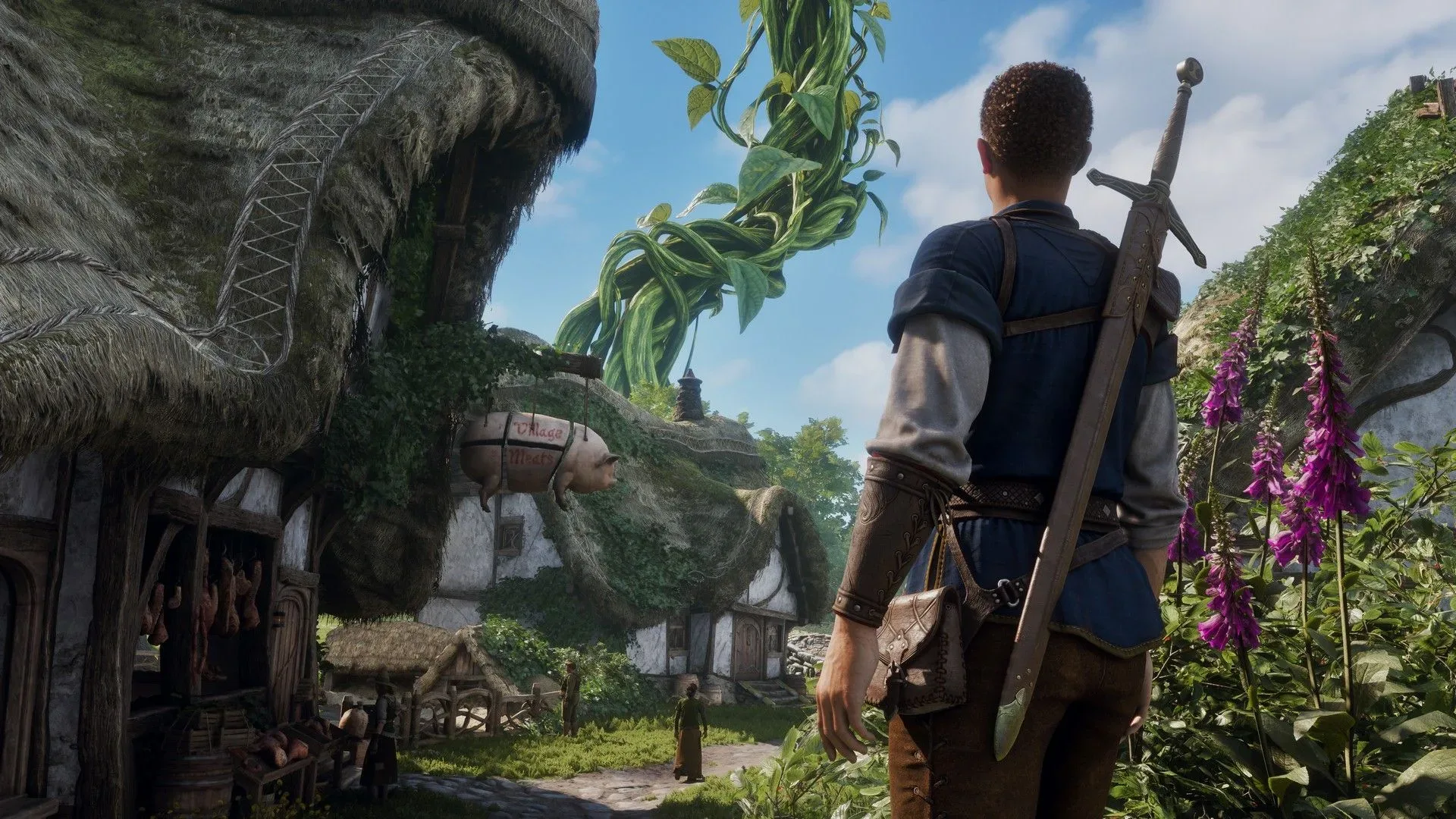
Butterfield Market is described as the city’s hub of commerce, populated by shops and stalls. Crucially, all of those businesses can be bought by the player. That is a meaningful returning idea for Fable: property ownership has previously connected money-making with the visible fabric of towns, rather than treating shops as only places to sell loot or buy equipment.
The wording establishes the scope of this system within the district, but there are still important unknowns. It does not yet explain what ownership changes beyond possession, whether shops generate income, how prices or stock may react, or whether other parts of Bowerstone will have a similar arrangement. For now, the safe takeaway is that Butterfield Market is positioned as the city’s focal point for purchasable businesses.
There is also a thematic reason the detail matters. A market full of player-owned storefronts could make Bowerstone feel less like a backdrop and more like a place the Hero can materially shape. That is analysis, not a confirmed feature list—but it follows naturally from placing purchasable shops and stalls at the center of the capital’s commerce.
Related coverage includes Fable's Bowerstone Map Reveals a Vast New Capital Built From Albion's History.
Copperbottom: the city’s lower, darker quarter
Copperbottom is home to Bowerstone’s working class. Its physical placement lower on the map is paired with reduced sunlight, and the district is identified as an area of criminal activity. The vertical geography is therefore doing narrative work: social separation is represented not only by labels but by where residents live and how much light reaches them.
That setup recalls the underclass-focused side of Bowerstone Industrial in Fable 3, although Copperbottom is its own district with its own name. The connection is best understood as a tonal and structural echo, rather than evidence that the new location is a one-for-one recreation.
For players, Copperbottom’s description makes it a likely setting for stories involving workers, poverty, lawbreaking or the consequences of decisions made elsewhere in the city. None of those quest types have been confirmed, so they should be treated as possibilities suggested by the area’s premise rather than promises. What is explicit is the contrast: this is a lower, less sunlit neighborhood marked by class and crime.
Bowerminster and the view from Fairfax Castle
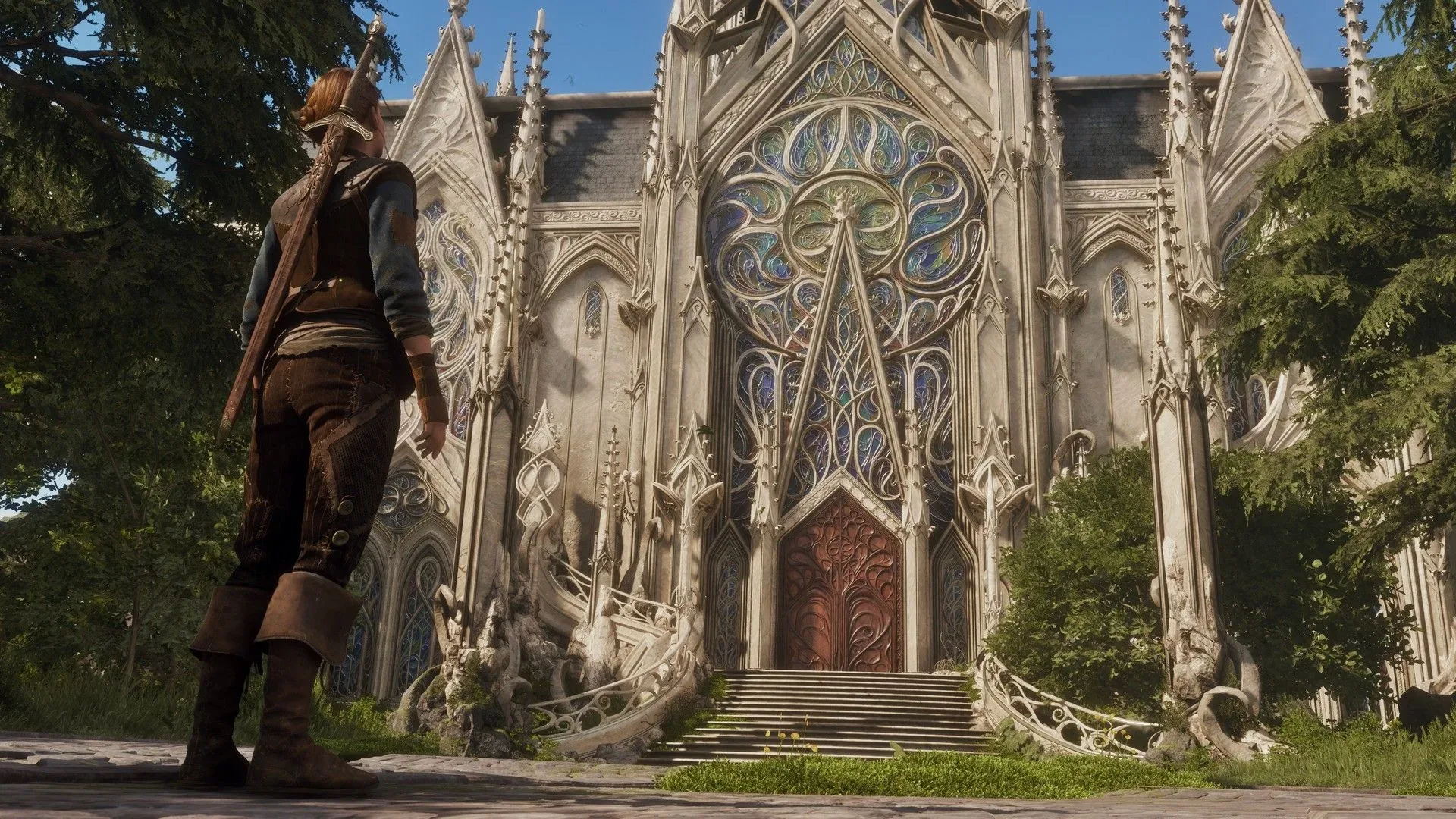
At the opposite end of Bowerstone’s social structure is Bowerminster, the noble district and home of Fairfax Castle’s residents. The castle is set to remain a major visual presence over the city. The team says it has never been this grand, and its looming position is meant to be felt as players explore Bowerstone.
Fairfax Castle has deep roots in the series. In Fable 2, it is a major location tied to the game’s opening and the introduction of Lucien, and it can be bought at the end of that game. It became Bowerstone Castle in Fable 3, where the player character is raised. Its return under the Fairfax name connects the revival to that earlier history without requiring the city around it to retain an identical layout.
Putting nobility and the castle in Bowerminster, visibly above the working district below, gives the map an easily understood political shape. The castle is not merely nostalgia on a skyline; it is part of the city’s hierarchy. Whether players will be able to enter it freely, own it, influence its residents or use it in a particular quest remains unconfirmed.
Old landmarks, newly assembled
Beyond Fairfax Castle, the map includes the Old Clock Tower and the Heroes’ Guild. The Clock Tower previously appeared in Fable 2 and Fable 3. The Heroes’ Guild reaches further back, returning from the original Fable and restoring an association between the city and the series’ earliest heroic traditions.
Together, these sites suggest that the new Bowerstone is drawing from several eras at once. The Heroes’ Guild brings an older, more storybook sense of adventure; Bowerminster and Fairfax Castle evoke the aristocratic side of later games; Copperbottom provides the social stratification associated with the trilogy’s industrial-era city. The new capital appears designed as a synthesis of recognizable ingredients rather than an attempt to choose one past version of Bowerstone as definitive.
That is a particularly sensible approach for a fantasy setting whose geography has already changed across games. Continuity can mean preserving the emotional identity of places—the castle on the horizon, the clock tower, heroic institutions and the uneven life of a capital—without making every road, building position and district boundary immutable.
Why the map does not follow the old games exactly
Fulton’s explanation frames that flexibility through folklore. Details that endure in folklore are also subject to memory, embellishment and retelling, while Albion’s literal landmass has changed from installment to installment. The development team therefore gave itself permission to revisit elements from the trilogy and says it did not use the old maps or even their broad location layouts as a template.
“We rebuilt Bowerstone completely for our game,” Fulton said. “We didn’t follow maps or even general locations from the previous games. We built Bowerstone to serve the needs of our Fable.”
That distinction clarifies how returning locations should be read. Fairfax Castle, the Old Clock Tower and the Heroes’ Guild are familiar anchors, but their presence does not mean the city functions as a preserved museum of previous maps. In practical terms, returning players should expect recognition rather than strict cartographic continuity.
It also reduces an unnecessary continuity trap. A long gap between releases can make fans understandably attentive to whether a landmark is “where it belongs.” Here, the stated creative principle is that Bowerstone has been reconstructed to fit the new game. The relevant question is less whether the city duplicates an old plan and more whether its districts and landmarks deliver the tone, navigation and stories this version requires.
Fairy flowers revive Fable’s rude collectible energy
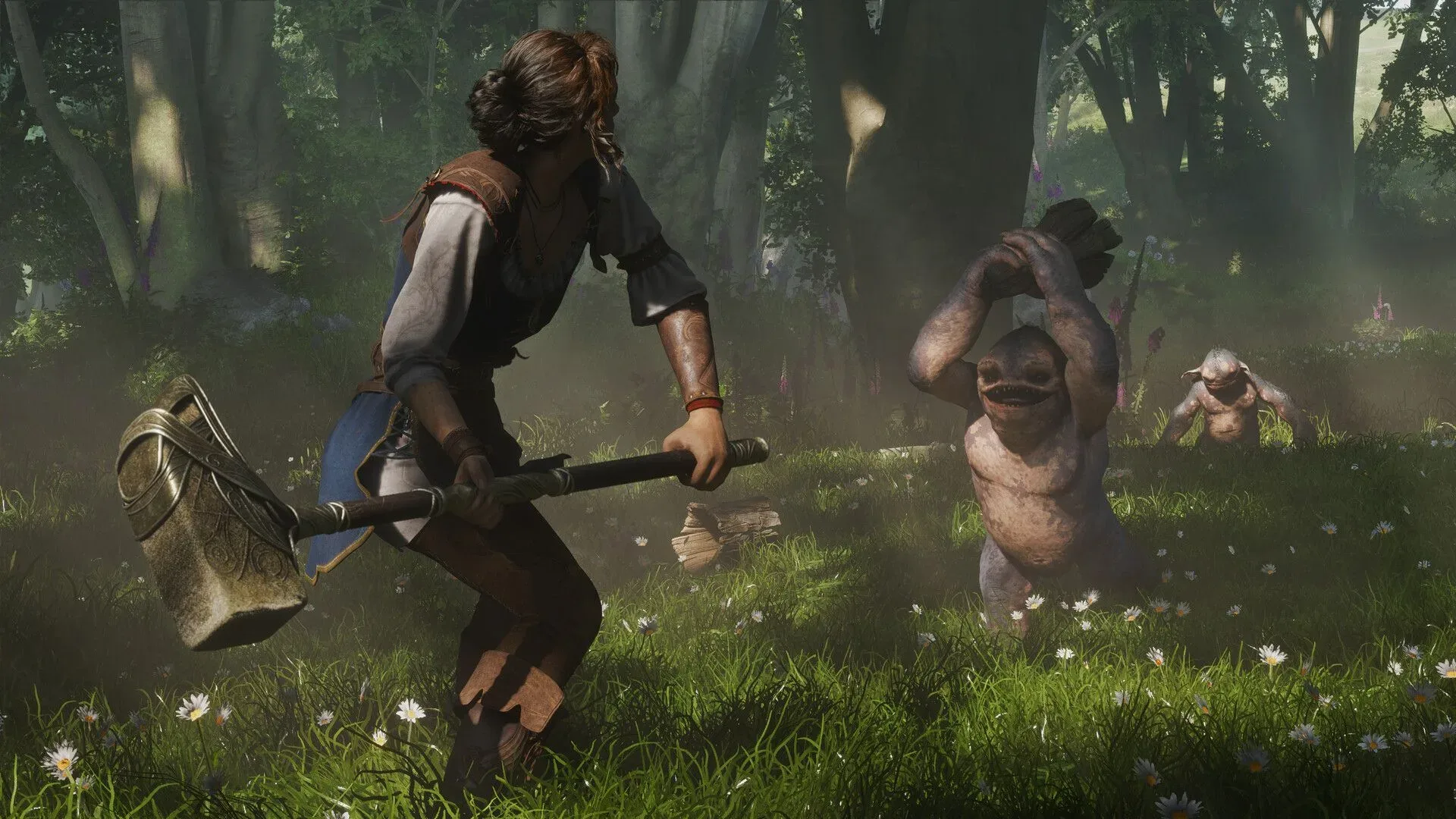
The fairy-flower hunt is one of the clearest examples of the revival retaining the series’ personality while changing the details. In Fable 2 and Fable 3, players could pursue gargoyles and gnomes that insulted them when they passed nearby. The new game’s equivalent asks players to locate fairy flowers instead.
The detection cue is audio: when close to a flower, players can overhear fairies that have become drunk on its nectar. The fairies are expected to throw insults in the spirit of their predecessors. This makes the collectible activity more than a silent checklist. It uses sound and comedy to draw attention to nearby discoveries, while turning the search itself into part of the game’s characteristic mischievous fantasy tone.
In technical game-design terms, an audio proximity cue is a signal that becomes available when a player nears a point of interest. Here, the cue is diegetic, meaning it comes from something that exists within the fiction of the world—the fairy voices—rather than an abstract interface prompt. That can make exploration feel more natural, since players are listening to the city rather than simply following a marker.
The available information does not specify how many fairy flowers exist, what rewards they provide, whether the insults are randomized, or whether collecting every flower unlocks anything. It also does not establish whether every district contains them. Those details will need to wait. Still, the announced concept makes clear that the series’ collectible humor has not been abandoned in favor of a completely straight-faced reboot.
What the Bowerstone reveal establishes—and what it does not
The map establishes several concrete points about the new capital:
- Bowerstone has three named districts: Butterfield Market, Copperbottom and Bowerminster.
- Businesses in Butterfield Market, including shops and stalls, can be purchased by the player.
- Copperbottom is a lower, less sunlit working-class district associated with criminal activity.
- Bowerminster is the noble quarter and includes the residents of Fairfax Castle.
- Fairfax Castle, the Old Clock Tower and the Heroes’ Guild return as landmarks.
- Fairy flowers will provide a new, insulting-audio-guided collectible activity.
Just as important are the boundaries of what has been revealed. There is no confirmed full list of purchasable properties, no detailed explanation of property mechanics, no complete quest list, and no full breakdown of the fairy-flower rewards. The map is a strong statement of Bowerstone’s scale and identity, but it is not yet a complete guide to the game’s economy or exploration systems.
What it does provide is a promising outline of a capital that can hold multiple versions of Fable at once: whimsical heroic heritage, grand nobility, a commercial center, and a shadowed working district. The city is being remade rather than merely restored—and the team is being direct about that choice.