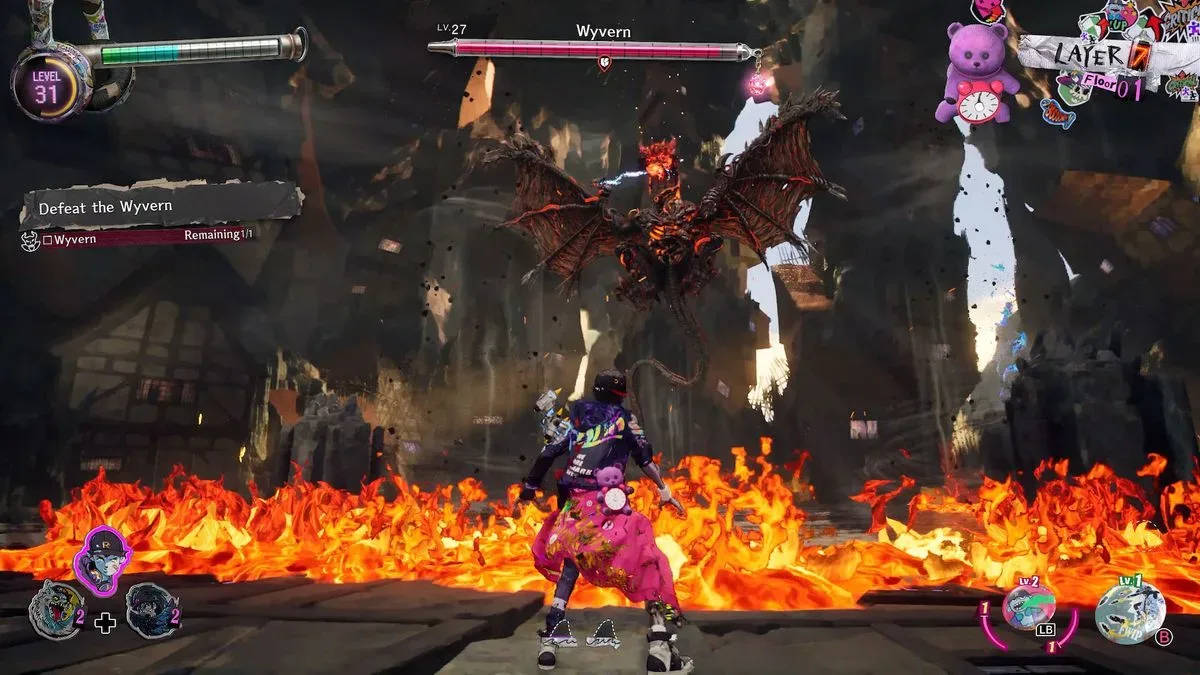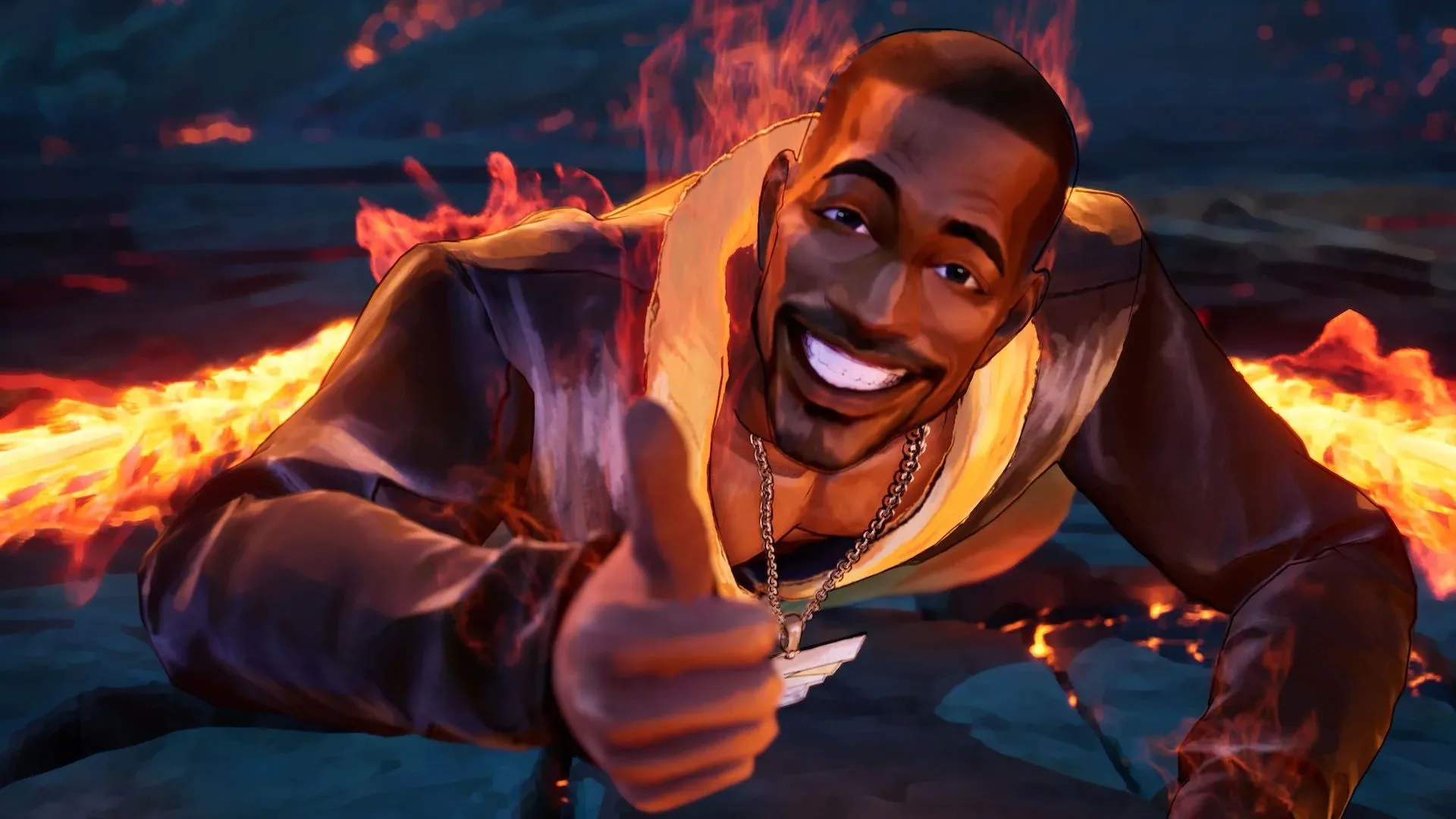
Stupid Never Dies has an immediately memorable premise: its hero is a zombie considered the weakest of his kind, yet he is heading into a hazardous dungeon to rescue the dead girl he loves and, eventually, challenge the King of Monsters. It is an action RPG built around death, aggressive close-range combat, and the useful idea that becoming the thing everyone underestimates may be an advantage after all.
GPTRACK50’s game is scheduled for PS5 and PC on October 21, 2026. Its visual presentation is as central to its identity as its undead premise. The world, character work, and interface all lean into a loud punk-rock sensibility, using vivid color and deliberately flashy styling rather than the familiar gray-and-brown decay often associated with zombie games. That approach makes the game stand apart at a glance, with a look that invites comparisons to the confidence of modern Atlus role-playing games such as Persona 3 Reload.
There is more here than a stylish coat of paint. GPTRACK50 is led by developers whose past credits include work on Devil May Cry, Dragon’s Dogma, and Resident Evil. Those pedigrees do not automatically determine how a new game will play, but they provide useful context for a project so focused on enemy pressure, expressive action tools, and making survival itself an offensive resource.
Davy’s weakness is also his safety net
The central character, Davy, is a zombie, and that condition changes how the action can be approached. He can die repeatedly, a trait that helps frame failure differently from a conventional heroic adventure. Rather than presenting death solely as a hard stop, the game’s premise gives the protagonist a built-in reason to keep returning to the fight. It is a fitting mechanic for a journey driven by romance after death and a final showdown with a monster king.
Davy has several combat systems meant to encourage forward momentum when rooms become crowded. He can bite enemies to recover health, allowing opponents to become a potential source of survival instead of merely threats to eliminate from a safe distance. He also has a parry, and its response window has been described as notably forgiving. A successful defensive read opens the door to a counterattack, giving players another reason to stay close when a larger strike is incoming.
That combination points toward a game that wants Davy in the center of a melee, not orbiting its edges. Grounded enemies can surround him while airborne threats dive from above, creating a multi-directional problem. Biting can restore the resources needed to keep fighting; parries can turn an opponent’s big commitment against them; and the hero’s unusual relationship with dying removes some of the intimidation attached to taking a risky route through combat.
It is an appealing foundation for a zombie action RPG because it does not treat undeath as just a visual theme. Davy’s condition informs the story hook, his resilience, and how he manages his health. If those systems continue to reinforce one another in the full game, the character could feel less like a standard action protagonist wearing zombie makeup and more like a hero designed around his specific state of being.
Cores turn enemies into temporary combat options
The most distinctive mechanic shown so far involves cores, items that enemies can drop. Davy can consume these cores to access temporary transformations and take on combat abilities associated with other creatures. The result is a moveset that can expand beyond his baseline melee attacks according to the enemies encountered and the cores available.
Related coverage includes Stupid Never Dies Brings Punk-Rock Style and Risky Zombie Combat to PS5 and PC.
Several examples underline the range that system can offer. One transformation takes on wolf-like characteristics and provides a broad, punishing slash suited to clearing nearby enemies. Another lets Davy take to the air as a flying creature, while a giant ogre form is capable of crashing into groups. These are not simply cosmetic variations if their different movement and attack properties meaningfully change how a packed encounter is handled.
The core concept has an understandable point of comparison in Monoco’s ability-learning structure from Clair Obscur: Expedition 33, though Stupid Never Dies is presenting its version through temporary transformations in the middle of an action game. The key question will be how much choice and depth the full system provides. Players may be deciding whether a wide attack, aerial mobility, or heavy crowd disruption is most valuable in a particular room, rather than relying on a single optimal combo throughout the adventure.
That potential variety matters because the game is clearly interested in pressure from numerous enemies. A wolf-form sweep may solve the immediate problem of being boxed in. Flight could make vertical threats less awkward to engage. An ogre’s charge may offer a blunt answer to a clustered crowd. Done well, the system could make defeated monsters feel like a rotating library of tactical answers.
- Bite attacks: Restore Davy’s health by feeding on enemies.
- Parries: Counter heavy incoming blows with a relatively lenient timing window.
- Cores: Grant limited-time transformations and borrowed monster moves.
- Repeated death: Fits Davy’s undead nature and supports a riskier approach to dangerous encounters.
No lock-on is the game’s major open question
For all the promise in Stupid Never Dies’ combat ideas, one design choice remains a significant uncertainty: there is no enemy lock-on option. That is especially notable in a game where players may be trying to hit flying enemies while also contending with attackers on the ground from several directions.
The absence is intentional. Director Eiichiro Sasaki has explained that the team chose not to include lock-on in pursuit of more flexible gameplay, with the pressure created by threats from multiple sides serving as an important part of the design. In theory, that philosophy makes sense. A lock-on system can narrow a player’s focus and make the camera or targeting behavior feel restrictive when a brawl demands rapid shifts in attention. Removing it asks the player to judge the entire space rather than become attached to one target.
But it also creates a real risk for an action RPG built on punchy melee contact. Early impressions have noted occasions where attacks narrowly missed, particularly against airborne opponents. When that happens, hits can feel less forceful and more imprecise, even if the intention is to preserve freedom of movement. The issue is not necessarily a final verdict on the design; it is a tension that will need more time and a broader view of the game’s encounters to assess.
The eventual answer may depend on factors not fully clear from a short demonstration: enemy behavior, camera tuning, the reach and tracking of transformed attacks, movement speed, and whether players gain tools that make aerial targets more manageable. A game can ask players to manually manage threats without lock-on and still feel excellent, but its attacks need to communicate direction, range, and impact with exceptional clarity.
Stupid Never Dies therefore has an intriguing balance to strike. Its most exciting features reward going all-in: healing through bites, parrying imminent danger, and consuming monster cores to answer a changing fight. Yet the same commitment to open, multi-directional combat could frustrate players if attacks do not reliably connect where they expect. The game’s full release will reveal whether flexibility becomes liberation or whether targeting remains an obstacle in the heat of battle.
A bright spot in a crowded fall
The game arrives in a busy season. As noted in our look at the packed fall 2026 gaming calendar, competition for attention will be intense. A strongly recognizable identity is valuable in that environment, and Stupid Never Dies has one: a candy-colored punk-rock dungeon crawl starring a love-struck zombie who eats monster cores and temporarily becomes the monsters he fights.
That premise alone will not carry the game. The final experience will need its combat to make those transformations, parries, and close-quarters risks feel coherent and satisfying. Still, the available details suggest a project with clear personality and mechanics that support its central fantasy rather than merely decorate it.
For now, the essentials are set. GPTRACK50’s Stupid Never Dies is coming to PS5 and PC on October 21, 2026. Davy’s mission is to save the girl he loves and defeat the King of Monsters, and his path involves biting enemies, countering dangerous hits, dying without finality, and borrowing the power of monsters through their cores. The only major caveat is also the most interesting one: how the game’s lock-on-free combat ultimately feels when every direction is demanding attention at once.