Xbox’s latest studio restructuring has prompted a stark reading of Microsoft’s post-acquisition strategy: rather than simply absorbing Activision Blizzard King, Xbox may be increasingly relying on the acquired publisher’s structure to manage the studios and franchises it already owned.
Joost van Dreunen, an NYU Stern School of Business professor and games-industry analyst, has described the shift as a “reverse acquisition of Xbox.” The phrase is analytical rather than literal. Microsoft still owns the business. The point is that the operational center of gravity may be moving toward Activision Blizzard, Bethesda and King as Xbox reorganizes its remaining internal portfolio.
The immediate trigger is a round of changes that combines job reductions with significant reporting-line changes. Microsoft said 268 jobs would be lost in the latest wave of redundancies, part of 3,200 planned Xbox job cuts across FY27. Halo Studios and The Coalition are among the teams affected. At the same time, Playground Games and Turn 10 have been merged; Obsidian Entertainment now sits under Bethesda Game Studios; and Rare, World’s Edge, and the Halo franchise have moved under Activision Blizzard.
That last decision is naturally the attention-grabber. Halo is not merely another name in a large catalog. It has long been one of Xbox’s defining franchises, so placing it inside the Activision Blizzard organization is a highly visible change in how Microsoft is choosing to oversee a cornerstone property.
What “reverse acquisition” means in this context
An acquisition normally evokes a parent company buying assets, intellectual property and staff, then integrating them into its existing leadership structure. Van Dreunen’s framing flips that expectation. Microsoft acquired Activision Blizzard King in late 2023, but the newest reshuffle suggests that acquired leadership and publishing infrastructure could now be considered better suited to supervise parts of the legacy Xbox organization.
It is important not to overstate the label. Nothing in these changes means Activision Blizzard has acquired Microsoft or Xbox in a corporate sense. This is about management remit: who sets priorities, oversees teams and is accountable for the execution of major franchises.
In van Dreunen’s assessment, putting Halo under Activision is surprising at minimum and could be read, more severely, as evidence that Xbox had not been managing its own studios effectively. His broader argument is that the $69 billion acquisition may have been valuable not only for its games and brands, but also for the experience of the organization running them.
That distinction matters. Intellectual property, commonly shortened to IP, is the underlying creative property: a franchise’s name, characters, world and associated rights. Management capacity is different. It concerns the systems and people that guide development, organize production, allocate resources and sustain a release strategy. A company can own an enormously valuable IP and still struggle to turn it into a consistent series of games. Conversely, a strong publishing organization cannot guarantee that any particular franchise will thrive.
Related coverage includes Analyst Calls Xbox Studio Reshuffle a 'Reverse Acquisition' as Activision Takes on Halo.
Halo’s new home is logical—but not a guarantee
Van Dreunen sees a practical logic in putting Halo beneath Activision Blizzard, even if the symbolism is striking. Activision operates Call of Duty, one of the industry’s biggest ongoing game businesses. For Microsoft, that makes Activision Blizzard an obvious candidate to take responsibility for the processes around a large-scale, long-running shooter franchise.
But “obvious” should not be mistaken for certain. Van Dreunen specifically notes that Call of Duty: Black Ops 6, despite delivering the series’ biggest launch, experienced a sharp player drop-off by spring. The example is a useful reminder that even a publisher with extensive experience in this area cannot make a live audience permanently stable.
Player retention is the ability of a game to keep players returning after its launch window. It is particularly important for games built around online communities, recurring content and long-term engagement. A huge debut can demonstrate demand, marketing reach or the strength of a franchise name. It does not, by itself, prove that players will remain active over time.
For Halo, the implication is straightforward: a new reporting structure might change oversight and resources, but it cannot on its own solve every creative, technical or community-facing challenge. The reorganization is a management decision, not evidence of an announced game, a promised release plan or a guaranteed turnaround.
That restraint is especially useful when reading major corporate moves through the lens of individual franchises. Fans may reasonably focus on what the change could mean for Halo’s future, but the available information establishes the organizational transfer—not a specific product roadmap. The concrete fact is that Halo now falls under Activision Blizzard’s remit.
A smaller, more centralized Xbox Game Studios
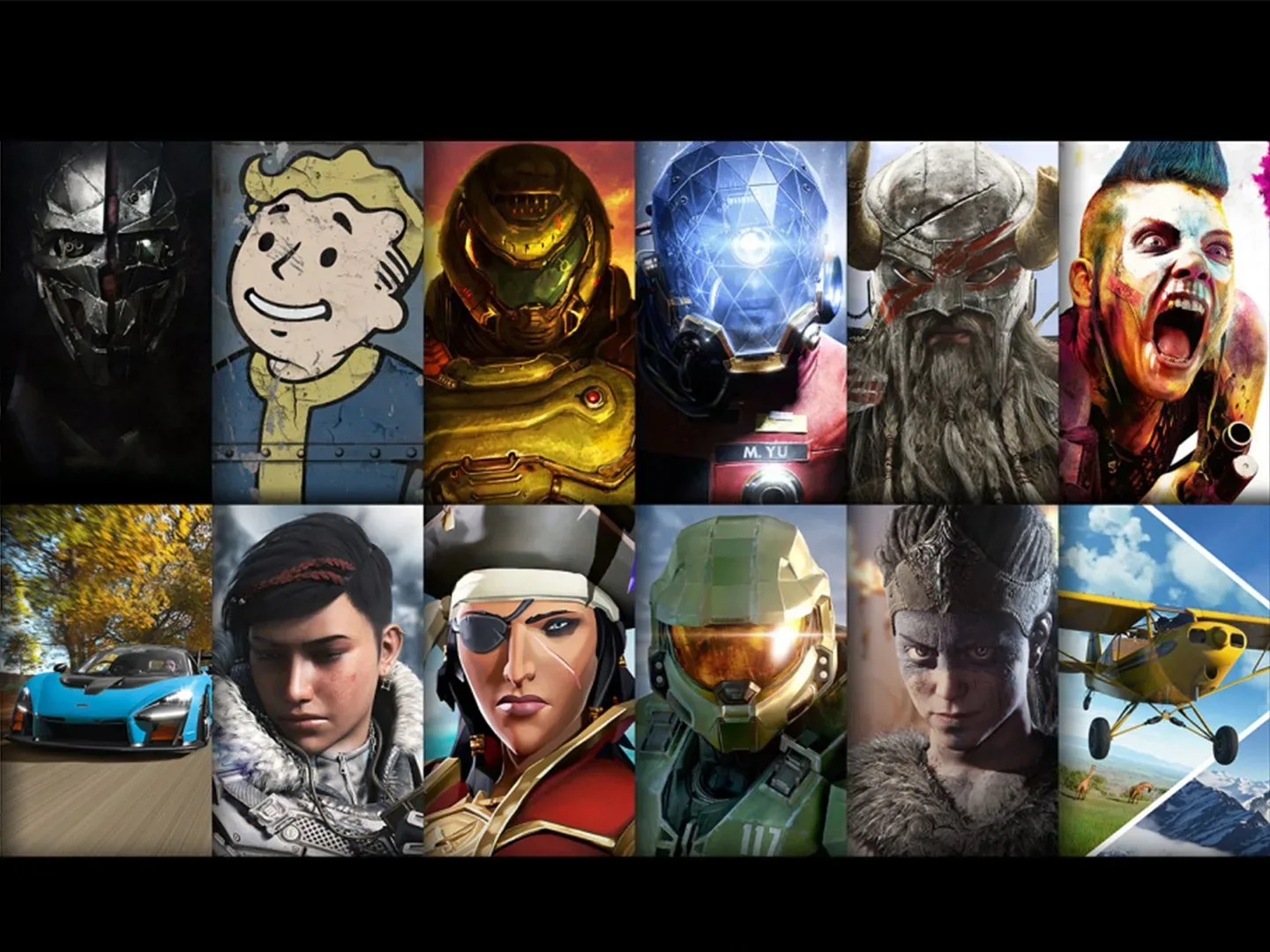
The change is also part of a larger consolidation. Playground Games and Turn 10 have been merged, while Bethesda Game Studios takes over management of Obsidian Entertainment. Rare and World’s Edge join Halo under Activision Blizzard. Taken together, those moves create fewer separate centers within the Xbox Game Studios structure.
Consolidation means bringing teams, responsibilities or decision-making into a smaller number of organizational units. Companies may pursue it to streamline leadership, reduce duplicated functions or align multiple studios around shared priorities. Yet it can also make an organization less decentralized, meaning fewer studios operate with independent management chains.
The latest restructuring follows annual layoffs since Microsoft completed the Activision Blizzard King acquisition in late 2023. The source material describes Xbox Game Studios as now being reduced to only a handful of studios after closures, layoffs and the movement of teams under Bethesda, Activision Blizzard and King.
For employees, a reporting-line chart is never just an abstract corporate diagram when it arrives alongside job cuts. The 268 positions affected in this round, including roles connected to Halo Studios and The Coalition, put a human cost next to the strategic language. A merged studio or a newly assigned parent organization may signal a new operating model, but it also comes amid a period in which the overall number of jobs and distinct studio units is shrinking.
For players, the result may eventually be visible in how clearly each publisher group’s priorities emerge. Bethesda Game Studios managing Obsidian, for example, creates a direct management relationship between two developers associated with different parts of the broader Xbox portfolio. Activision Blizzard taking responsibility for Halo, Rare and World’s Edge similarly bundles franchises and teams under a publisher with deep experience operating major game businesses. Still, the reshuffle alone does not establish what individual games those teams will make next, when they will arrive, or how their creative work will change.
The Pixar comparison focuses on people, not just franchises
Van Dreunen compares Microsoft’s situation with Disney’s 2006 Pixar purchase. In that case, senior Pixar personnel were put in charge of Disney’s then-struggling in-house animation studio while Pixar was enjoying an exceptional run. The parallel is not a claim that games and animation operate identically. Rather, it illustrates a familiar corporate outcome: an acquisition can become a route to importing managerial leadership into a weaker or less effective internal operation.
His conclusion is that Microsoft’s acquisitions appear to have been less about IP alone and increasingly about managerial talent. That is a pointed interpretation, but it fits the visible direction of the restructuring: studios and famous Xbox franchises are being placed under organizations Microsoft bought later, rather than simply being folded into a pre-existing Xbox Games Studios hierarchy.
It also reframes how outsiders may assess large acquisitions. The price paid for a deal is often discussed in terms of recognizable brands, back catalogs and potential revenue. Those elements remain important. But the ability to run multiple development teams, coordinate releases and support games after launch can be equally consequential, particularly when a platform holder controls a vast collection of studios and series.
The situation also adds context to continued questions around Xbox’s wider spending and partnership strategy. Recent reporting around Xbox’s Physint deal illustrates how individual agreements can attract attention, while the studio structure behind a company’s first-party output may have longer-lasting effects on how projects are directed and supported.
What can—and cannot—be inferred now
There are several defensible takeaways from the announced changes. First, Microsoft is centralizing meaningful parts of its games business after the Activision Blizzard King acquisition. Second, Activision Blizzard’s role has expanded beyond the properties traditionally associated with it, now encompassing Halo, Rare and World’s Edge. Third, the restructuring is occurring alongside significant job cuts and follows annual layoffs since the acquisition closed.
There are also limits to what the reorganization proves. It does not demonstrate that Halo will be successful under Activision Blizzard, nor does it prove that the previous structure alone caused any problems. It does not mean that Activision Blizzard has literally acquired Xbox. And it does not reveal detailed plans for future games from Halo Studios, Rare, World’s Edge, Obsidian, Playground Games or Turn 10.
Those caveats do not make the move insignificant. Quite the opposite: moving Halo under the publisher Microsoft acquired in 2023 is an unusually clear statement about where the company sees operational expertise. Whether that produces more stable development, better-performing releases or a stronger long-term portfolio remains unresolved.
For now, “reverse acquisition” is best understood as a concise description of a changing hierarchy. Microsoft bought Activision Blizzard King, but Xbox’s new structure gives the acquired organization a larger role in overseeing parts of the business Microsoft built before the deal. The consequences will be measured not by the phrase itself, but by what this leaner, more centralized organization delivers—and how it treats the people asked to deliver it.