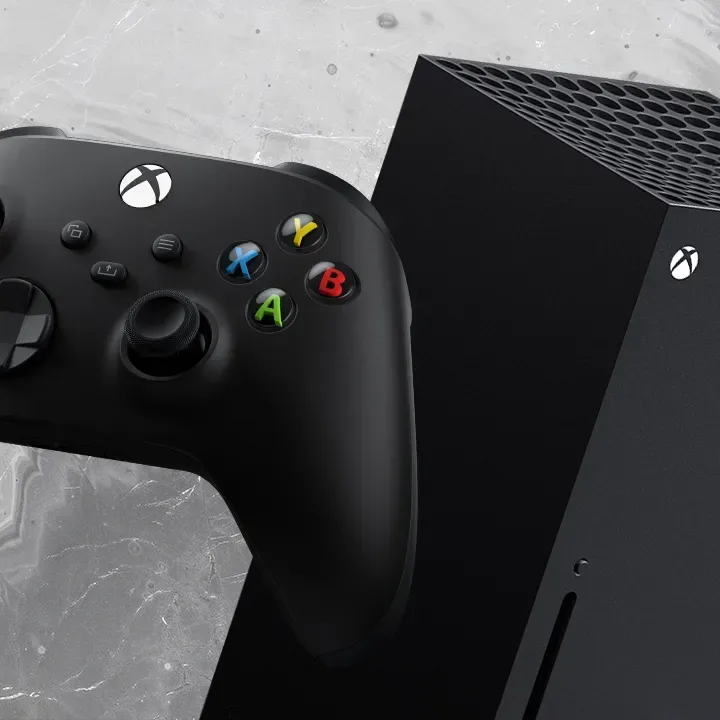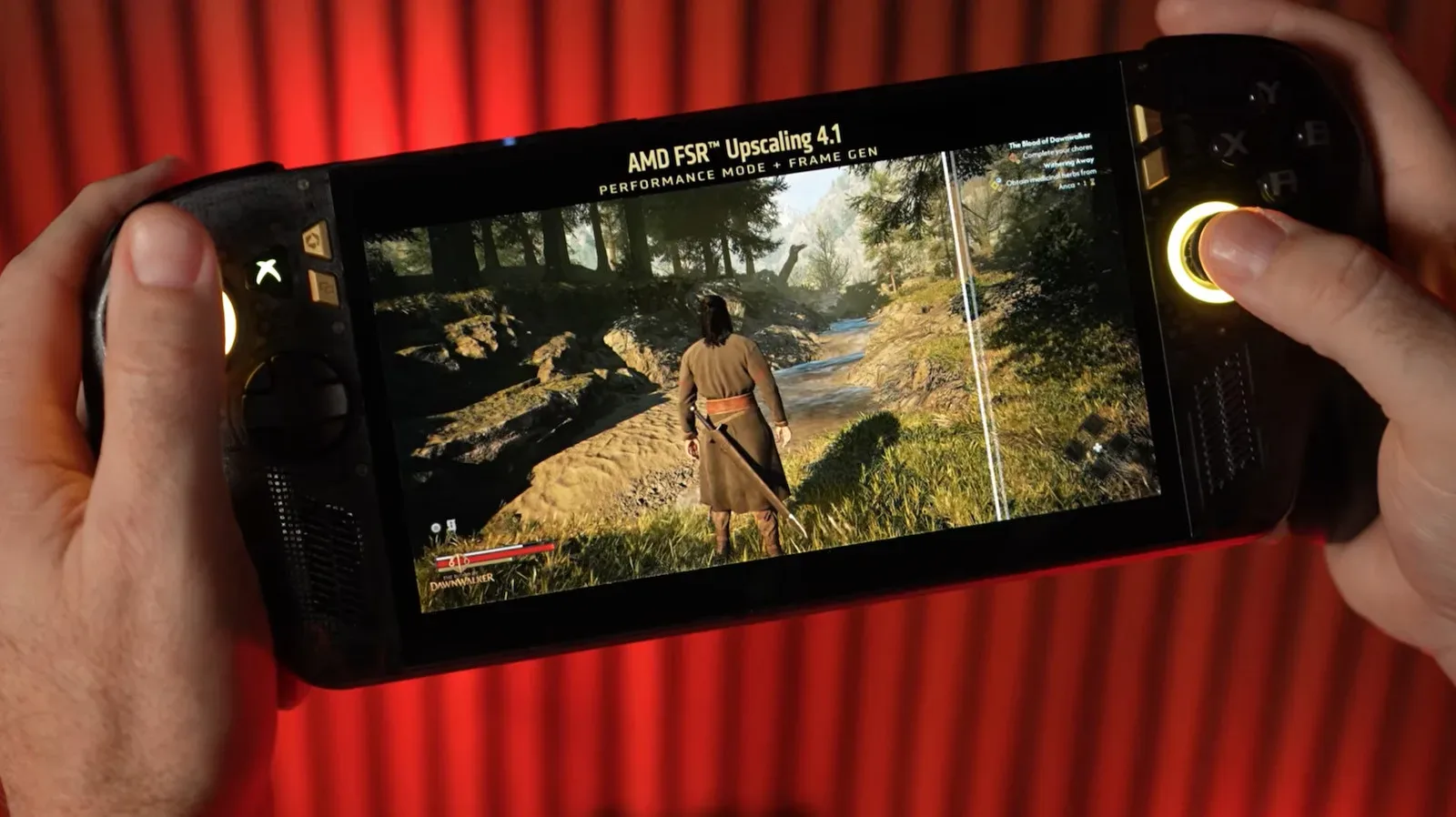
AMD’s FSR 4.1 upscaling technology is set to reach the Xbox Series X, marking the first time the company’s newer AI-driven image reconstruction system has been confirmed for Microsoft’s current console. The company says the model is “coming soon,” but has not supplied a release date, a game list, or details on how the feature will arrive in individual Xbox titles.
The important part of the announcement is not simply another version number in the graphics-settings alphabet soup. AMD says it has reduced the computational demands of the FSR 4.1 model enough to run it on a wider set of hardware, including RDNA 2 graphics cards such as the Radeon RX 6800 XT and Z2-based handhelds including the Xbox Ally X20. Xbox Series X is part of that expanded support picture.
That could matter for games that push a console’s graphics processor hard. Upscaling is one of the tools developers use to balance image quality against performance, especially when a game’s most demanding scenes make rendering at a high internal resolution costly. A more capable reconstruction method can potentially make a lower-resolution starting image look cleaner on the display, or free processing room that a game can use elsewhere. The word potentially matters: the actual result will depend on a game’s implementation, its chosen rendering modes, and the performance targets set by its developer.
What FSR 4.1 does, in plain terms
FSR, short for FidelityFX Super Resolution, is AMD’s family of upscaling technologies. In the description provided by AMD, FSR 4.1 uses AI to take a lower-resolution input image and scale it up toward the target native resolution. Put simply, the game does not need to render every pixel at the output resolution before the upscaler reconstructs the final image.
That approach is broadly comparable to the role played by Nvidia’s DLSS: both are designed to make a lower-resolution render look closer to a higher-resolution result. It is not a magic switch that makes a game run faster with no trade-offs. The upscaling process itself requires computing resources, and image quality can vary depending on the input resolution, scene movement, effects and the quality of the model. But a better model can improve the trade-off developers are making.
For players, the areas most likely to be relevant are image stability and clarity during play. Fine detail, fast-moving objects and dense scenes are the kinds of situations where an upscaler’s reconstruction quality becomes noticeable. A better upscaler could also help a developer pursue a preferred frame-rate or visual setting without asking the underlying hardware to render as many pixels natively.
FSR 4.1 has until now been limited to Radeon 7000- and 9000-series graphics cards. Its expansion is notable because the newer AI-based approach has been more expensive to run than FSR 3. That cost can cancel out the very reason a game uses upscaling in the first place if the hardware spends too much time running the reconstruction model.
A smaller model is the key to the expansion
AMD’s explanation for the broader compatibility is a trimmed-down FSR 4.1 model. Jack Huynh, AMD’s senior vice president of Gaming and Graphics, said the company had made the model efficient enough for less powerful hardware, including hardware that does not have the same complement of AI accelerators as RDNA 4 graphics cards.
Related coverage includes AMD FSR 4.1 Is Heading to Xbox Series X as Support Expands Beyond Newest Radeon GPUs.
An AI accelerator is specialized hardware intended to handle machine-learning calculations efficiently. In this context, those calculations help the upscaler infer and reconstruct an image from the lower-resolution input. Newer graphics hardware can be better suited to that workload, but console and handheld hardware has to operate within much tighter practical limits. Power, heat, chip capability and the game’s own rendering workload all compete for attention.
The reduced model is therefore a meaningful technical compromise rather than a simple port. AMD is attempting to preserve enough of FSR 4.1’s image-quality gains while reducing the performance burden that had prevented use on older or lower-power chips. The announcement does not establish that every supported device will receive identical image quality or performance behavior. It establishes that the model has been adapted to work across a broader hardware range.
For Xbox Series X owners, that distinction is useful. The news does not mean every existing game will suddenly gain FSR 4.1, nor does it promise an automatic resolution or frame-rate increase across the console’s library. No title-specific rollout has been named. In practice, games will need to support the technology through their own updates or development plans. Until developers identify the games and modes involved, it is too early to turn the announcement into a performance claim for any particular release.
How this sits beside Sony’s QSSR effort
The development follows a similar recent move involving AMD and Sony. Their Project Amethyst partnership produced a reduced version of PSSR 2 for the base PlayStation 5, called QSSR. That model is described as an improvement over the FSR 2-based solution previously used on the console.
PSSR stands for PlayStation Spectral Super Resolution, while QSSR is the name used for the slimmer model referenced here. The common theme is that modern image reconstruction is increasingly being treated as a feature that must be tailored to the available hardware, rather than a one-size-fits-all graphics option. A model that works well on high-end GPU hardware may need to be simplified before it makes practical sense on a console or handheld.
AMD’s work with Sony does not make the PlayStation and Xbox technologies the same, and the Xbox announcement does not include a direct image-quality comparison with QSSR. What it does illustrate is a broader push to bring newer AI-upscaling techniques down to devices that do not have the newest dedicated AI resources.
Why the Xbox Series X timing will draw attention
The lack of a date leaves the practical timeline unresolved. AMD has only said that FSR 4.1 is coming soon to Xbox Series X. There is no confirmed launch patch, no named first game and no promise that it will be available before any particular release.
That uncertainty will be especially visible around Grand Theft Auto 6, which is due next month and has prompted concerns about the demands it may place on base-console hardware. An improved upscaler can be valuable in a technically ambitious game, since it gives developers another option when navigating the familiar compromise between visual fidelity and smooth performance. Still, there is no confirmation that FSR 4.1 will be included in Grand Theft Auto 6, and AMD has not tied the Xbox rollout to that game’s release.
It is also worth separating two ideas often bundled together in upscaling conversations. Higher performance and improved image quality can both be goals, but a game team may prioritize one differently from another. One title could use a stronger reconstruction technique to preserve a chosen performance mode; another could use it to improve the appearance of a pre-existing mode. The announcement alone does not reveal those game-by-game choices.
FSR Diamond and Project Helix are the longer-term story
AMD also used its video to discuss its next-generation FSR technology, codenamed “Diamond.” Xbox chief technology officer Scott Van Vliet confirmed that Diamond is coming to Project Helix. Xbox chief executive Asha Sharma has described Helix as a family of devices, suggesting that upscaling could be an important shared graphics capability across more than one future product.
There are few technical specifics here beyond the confirmation, so the name should be read as a statement of direction rather than a specification sheet. AMD has not detailed the model’s performance characteristics, hardware requirements or a deployment timetable in the information available. Likewise, no device-by-device breakdown for Project Helix has been provided.
Even so, the sequence is revealing. AMD is making FSR 4.1 viable on RDNA 2-class graphics hardware and Z2 handhelds while Xbox is already pointing toward a later FSR generation for a broader device family. That puts image reconstruction closer to the center of the platform strategy, not merely as an optional PC graphics setting.
For now, Xbox Series X players should view FSR 4.1 as promising platform-level news with important unanswered implementation questions. The leaner model’s arrival could give supported games a better image-quality/performance tool than older FSR approaches. The evidence does not yet tell us which games will use it first, how quickly patches will appear, or exactly what visual gains each title will deliver. Those details—not the announcement alone—will determine how substantial the upgrade feels on the console.