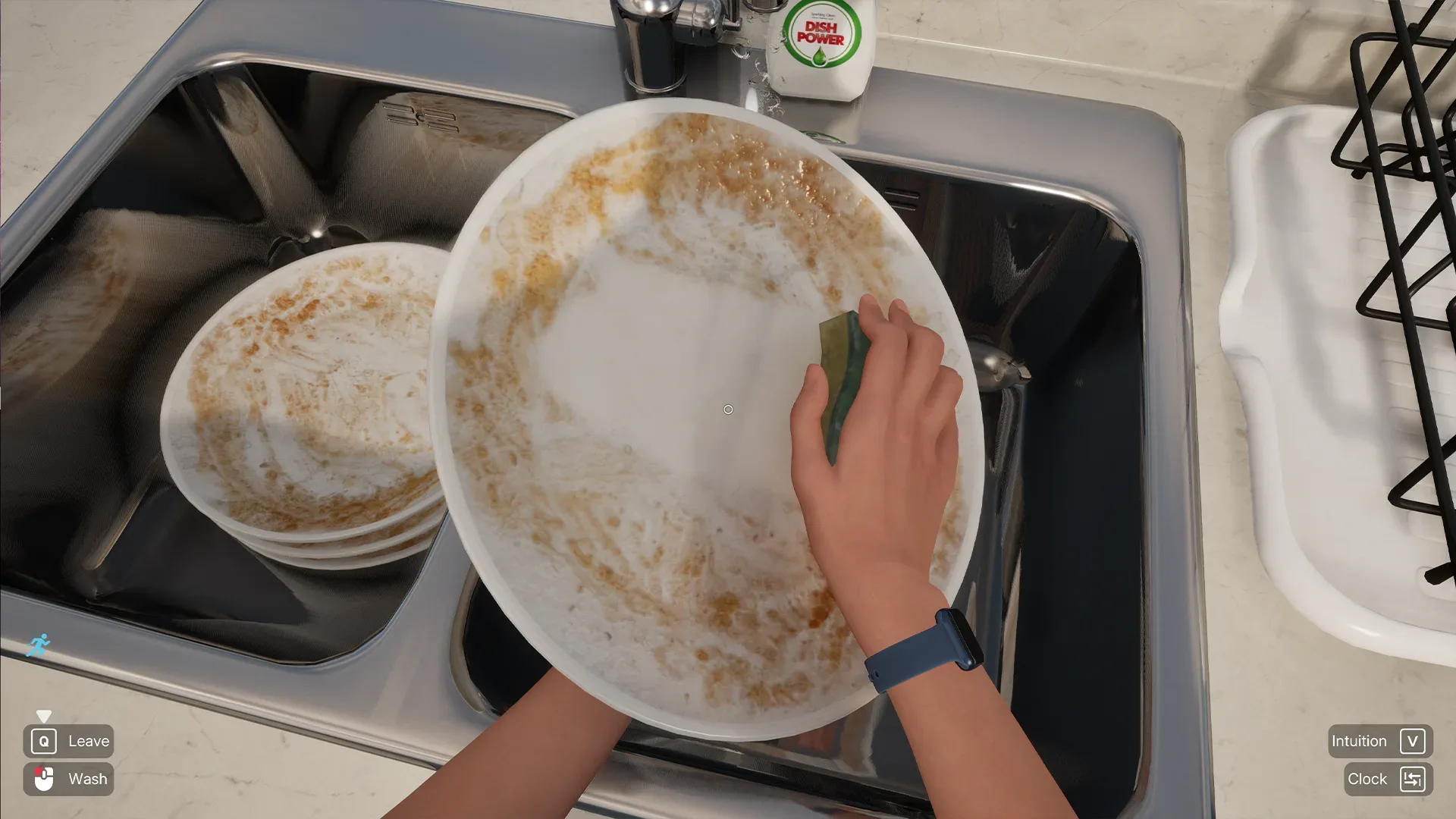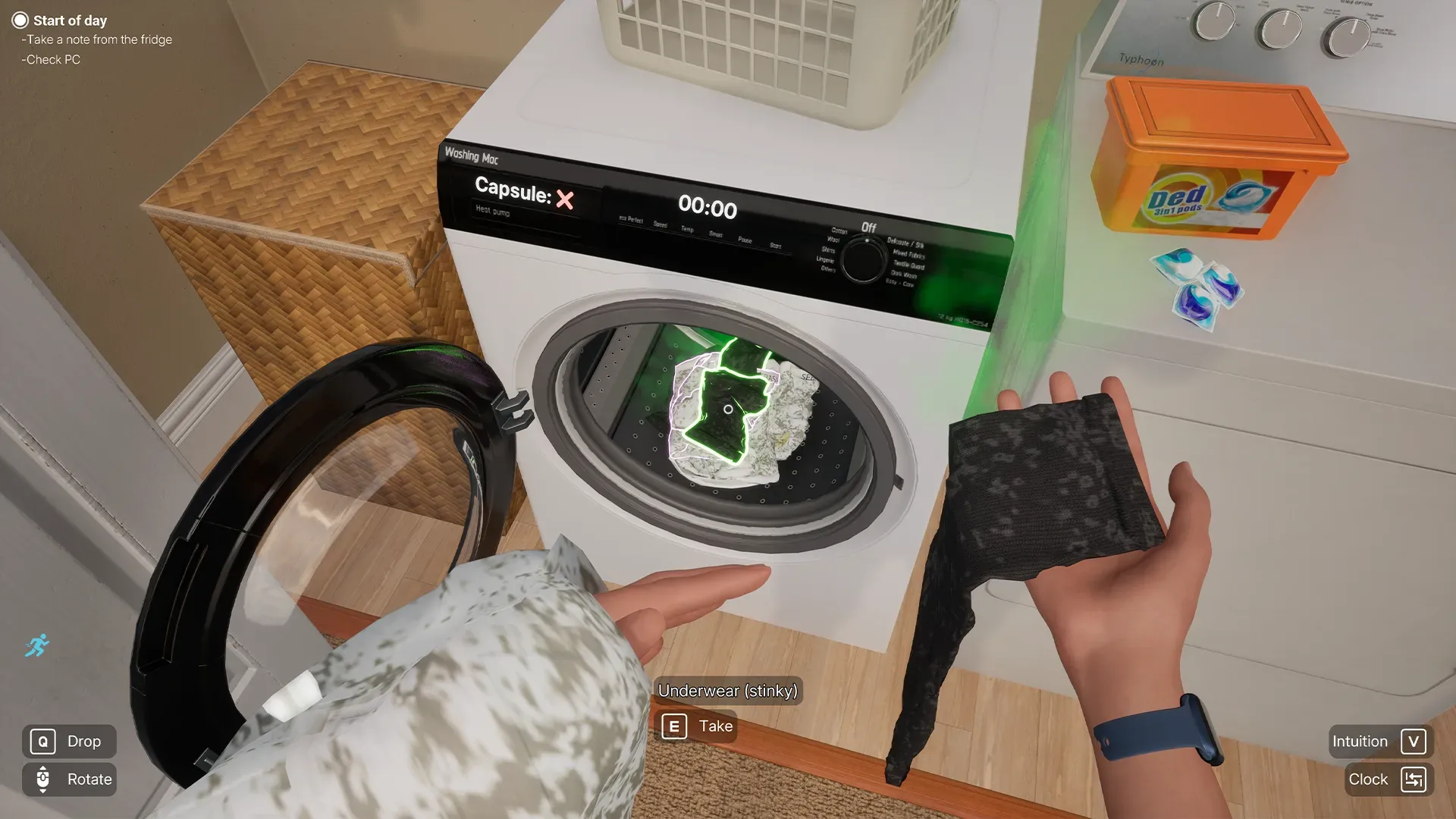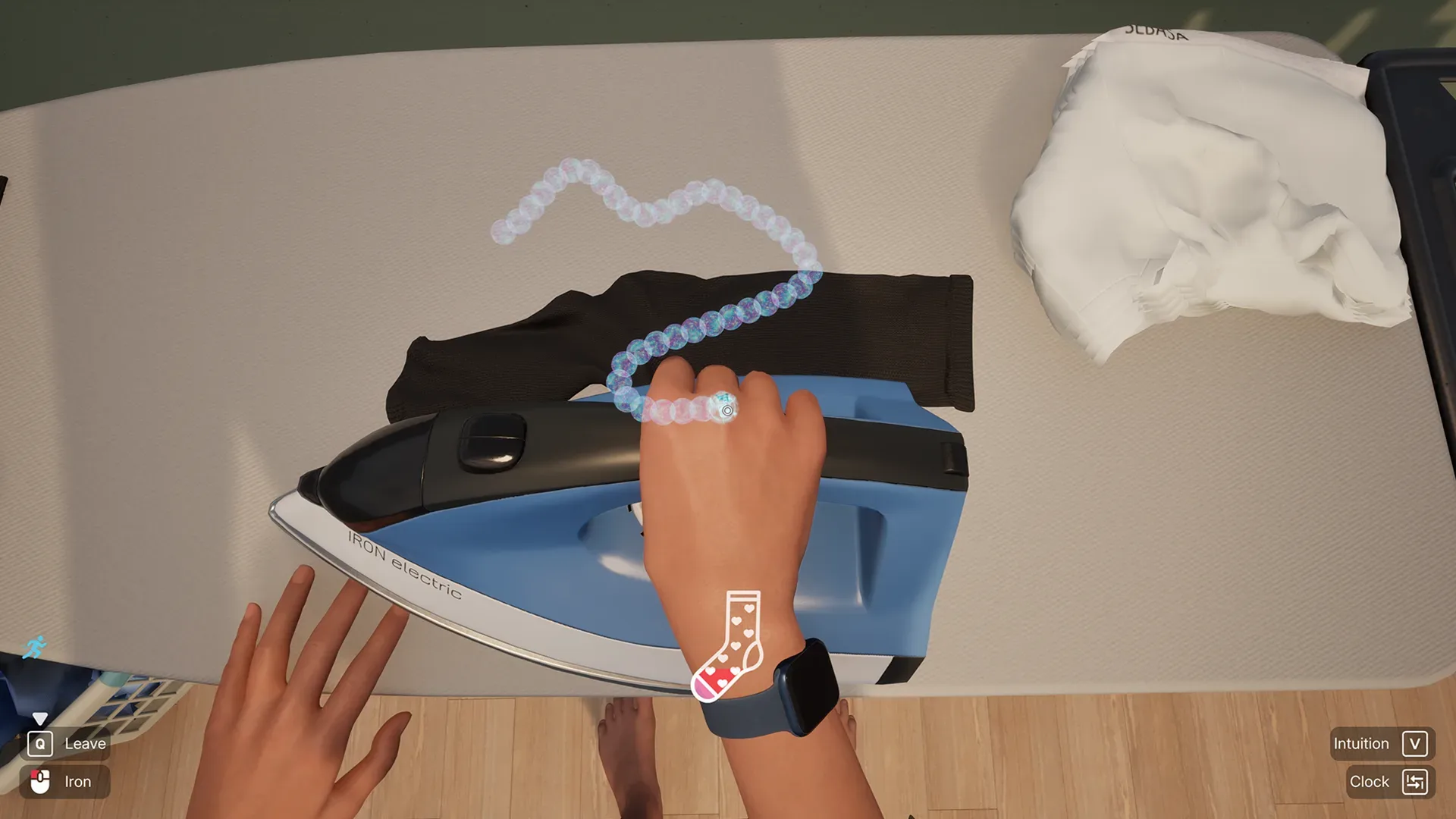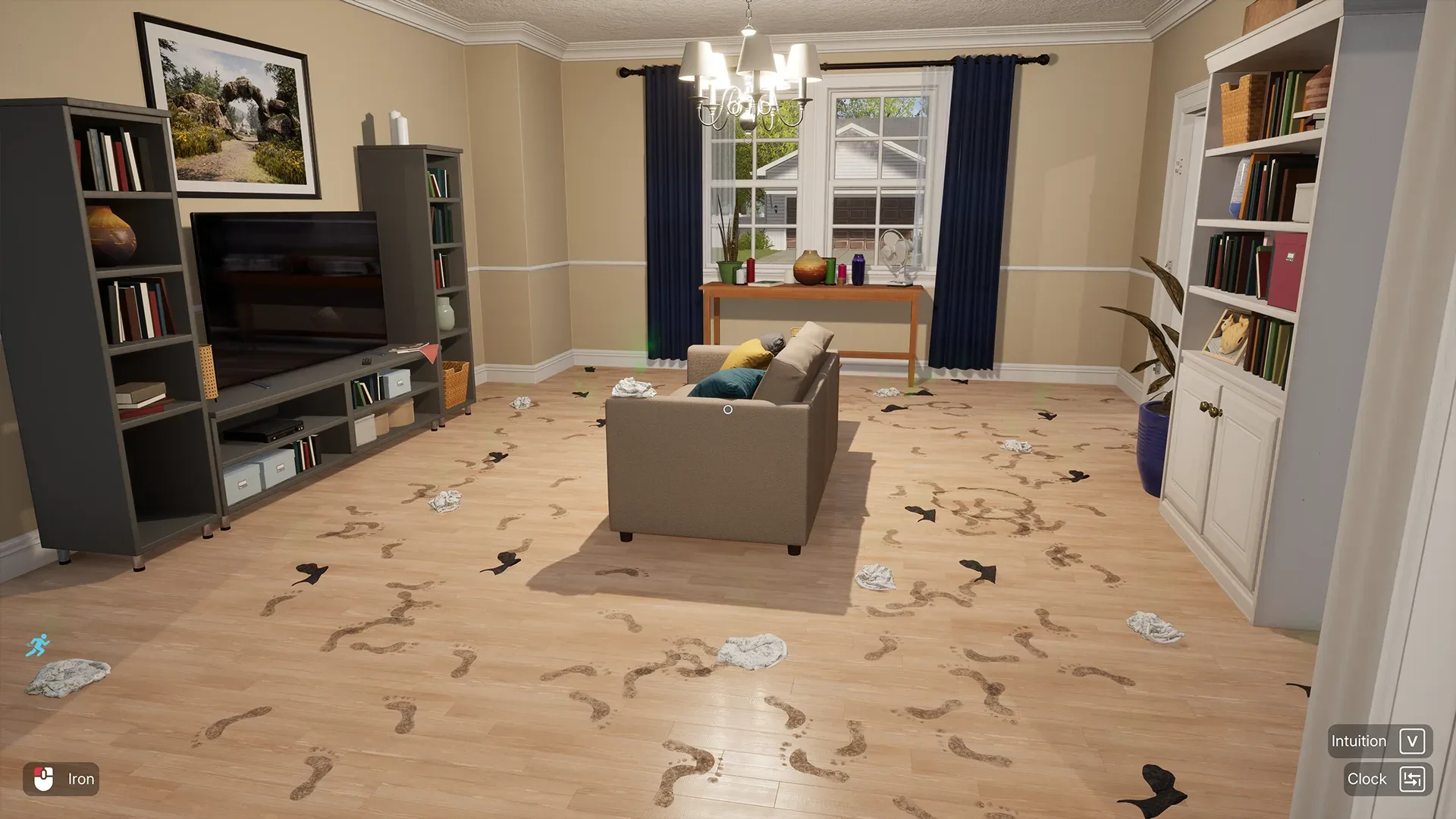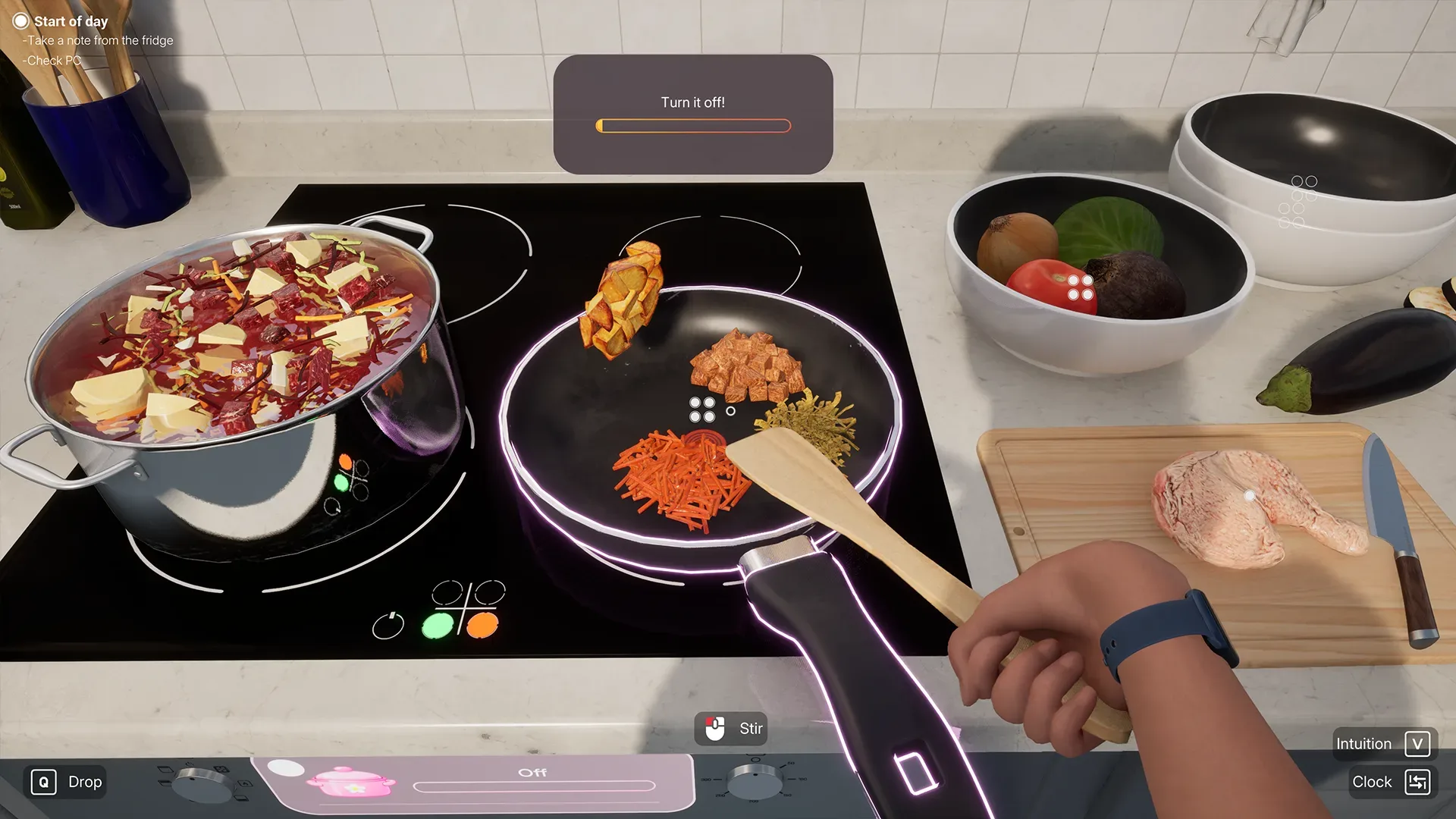
Sebasa Games’ Woman Simulator is built around a premise games rarely state this plainly: the player takes the role of a housewife and performs the ongoing labor of running a household. Its listed activities include cooking, washing dishes, cleaning floors, and handling laundry—including washing, drying and ironing underwear and socks.
Those jobs are not presented as detached menu selections alone. The game also attaches social and emotional pressures to the routine. The player is expected to watch her own morale while also monitoring her husband’s mood, with the husband periodically checking on how the housework is being done. A bath serves as a way to relax after cleaning, while flattering the husband is described as a method of improving his mood.
That combination makes Woman Simulator less about one chore in isolation and more about the demands surrounding repeated domestic work. Sebasa Games is the developer attached to the project. No platform, release date, pricing, or further gameplay details have been provided, so those points remain unknown.
A domestic routine framed as a game system
At the mechanical level, the described setup has three clear layers. First is task completion: food, dishes, laundry and floors all need attention. Second is personal upkeep: the player character has morale that must be monitored, and the bath is one identified means of recovery. Third is relationship management: the husband’s mood matters, he evaluates the player’s work at intervals, and flattery can shift that mood upward.
In game-design terms, a management system asks the player to allocate time and attention among competing needs. The important detail here is that cleaning is not the only concern. A player may need to decide when to continue chores, when to restore morale, and when to take an action intended to prevent the husband’s mood from worsening. Even without information on meters, timers, failure states, or rewards, the available description establishes that these needs are interconnected.
That framing is significant because it converts routine labor into a set of measurable pressures. Cooking or folding laundry can be a simple activity in a simulation, but connecting it to morale and another character’s approval changes what success means. Completing a task may not be enough if the character is exhausted or if household mood is deteriorating.
The specific chores matter
The detailed laundry list gives the game’s premise its unusually granular edge. Washing, drying and ironing underwear and socks are mundane actions, but they communicate that Woman Simulator is interested in the repetitive, often invisible work behind an orderly home. Alongside dishwashing and floor cleaning, the task list is not about a single dramatic objective. It is about maintenance.
Maintenance is a useful term in games because it describes work that prevents a situation from declining rather than advancing toward an obvious finish line. A floor gets dirty again; dishes accumulate; clothes need another wash. When games use these actions as systems, their effectiveness depends heavily on pacing and feedback: how frequently jobs return, how quickly they can be completed, and what the player receives for keeping up. None of those implementation details are confirmed for Woman Simulator, but the outlined chores strongly suggest repetition is part of the intended experience.
Related coverage includes Woman Simulator Centers Domestic Chores and Household Mood Management.
There is also a notable contrast between conventional game power fantasies and this premise. The described role is not built around conquest, combat, exploration, or collecting bigger numbers. Instead, the player’s responsibilities are ordinary tasks and emotional maintenance. Whether that becomes engaging, uncomfortable, satirical, sympathetic, or some mixture of those things will depend on context the currently available information does not provide.
Morale and mood are not the same thing
The game separates the player character’s morale from the husband’s mood, and that distinction is worth keeping clear. Morale generally refers to a character’s internal state: motivation, energy, confidence, or emotional resilience. Mood, as used for the husband here, is an external relationship variable—an assessment of how another person is feeling.
Separating those values can create meaningful tension. The player may be pushed toward actions that help her feel better, such as taking a bath, while also feeling pressure to placate someone else. Flattery is especially revealing as a mechanic because it is not a household chore; it is emotional labor. It asks the player to perform an interpersonal action to regulate another character’s disposition.
That does not tell us how the game judges those actions or what the outcomes are. There is no supplied information about dialogue choices, consequences, whether moods can become negative, or whether the player has alternative ways to respond. Still, the system as described puts emotional work beside physical work rather than treating it as background flavor.
The husband’s periodic checks shape the premise
The husband’s periodic checks are perhaps the most consequential detail in the concept. A check-in mechanism creates evaluation: the player is not merely deciding which chores to perform, but is being monitored in how that work is carried out. This may function as a recurring pressure point, although the available information does not specify its frequency or exact effects.
It also gives the game an obvious interpretive question. A household simulation could portray domestic work as a neutral logistics puzzle. Here, the combination of inspection, morale, mood, and flattery makes the household relationship part of the game loop. That may prompt players to examine whose needs are centered and which actions the game asks the player to prioritize.
Woman Simulator places cleaning, laundry and cooking alongside a second workload: preserving the player character’s morale and managing her husband’s satisfaction.
The premise can therefore be read in more than one way. It could be intended as a literal domestic simulator, a heightened depiction of unequal expectations, a joke, or something else entirely. The game description alone does not establish its tone or message, and it would be premature to assign one. What is clear is the mechanical emphasis: housework is linked directly to scrutiny and emotional management.
What remains to be clarified
There are major questions still unanswered. There is no information on the game’s target platform, control scheme, visual style, structure, progression, length, accessibility settings, or release plans. It is also unknown whether the player can customize the character, whether the husband is the only other household member, or whether chores are represented through minigames, direct interactions, timed inputs, or another format.
Those omissions matter. A title centered on daily actions can feel very different depending on how it handles repetition and agency. It also makes a practical difference whether a game is released on PC, console, mobile, or more than one platform; each can shape how short-form tasks and interface-heavy management play. For a broader look at the considerations around running mobile games on computers, see Android games on Windows, emulators and Google Play Games. That broader platform discussion should not be taken as confirmation of where Woman Simulator will appear.
For now, Sebasa Games’ pitch is defined by its specificity. Players cook, wash dishes, clean, and complete detailed laundry tasks. They also manage their own morale, take baths to unwind, and try to improve a husband’s mood through flattery while he periodically assesses their work. It is a domestic-life premise designed not just around finishing chores, but around the pressures attached to them.