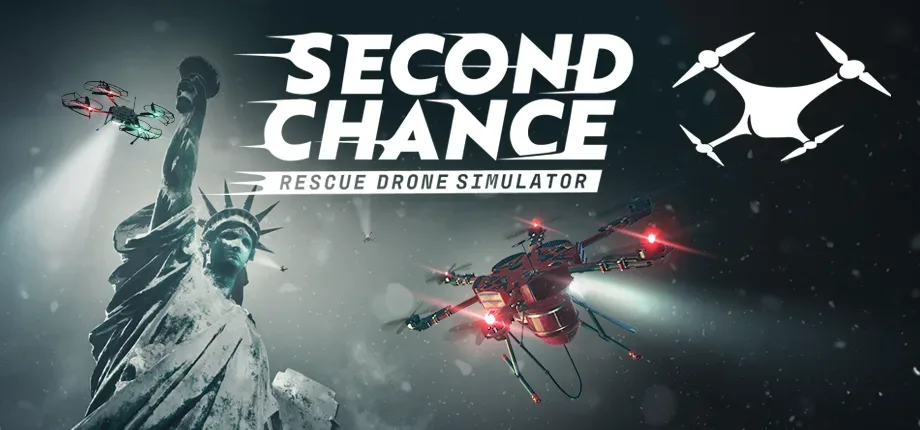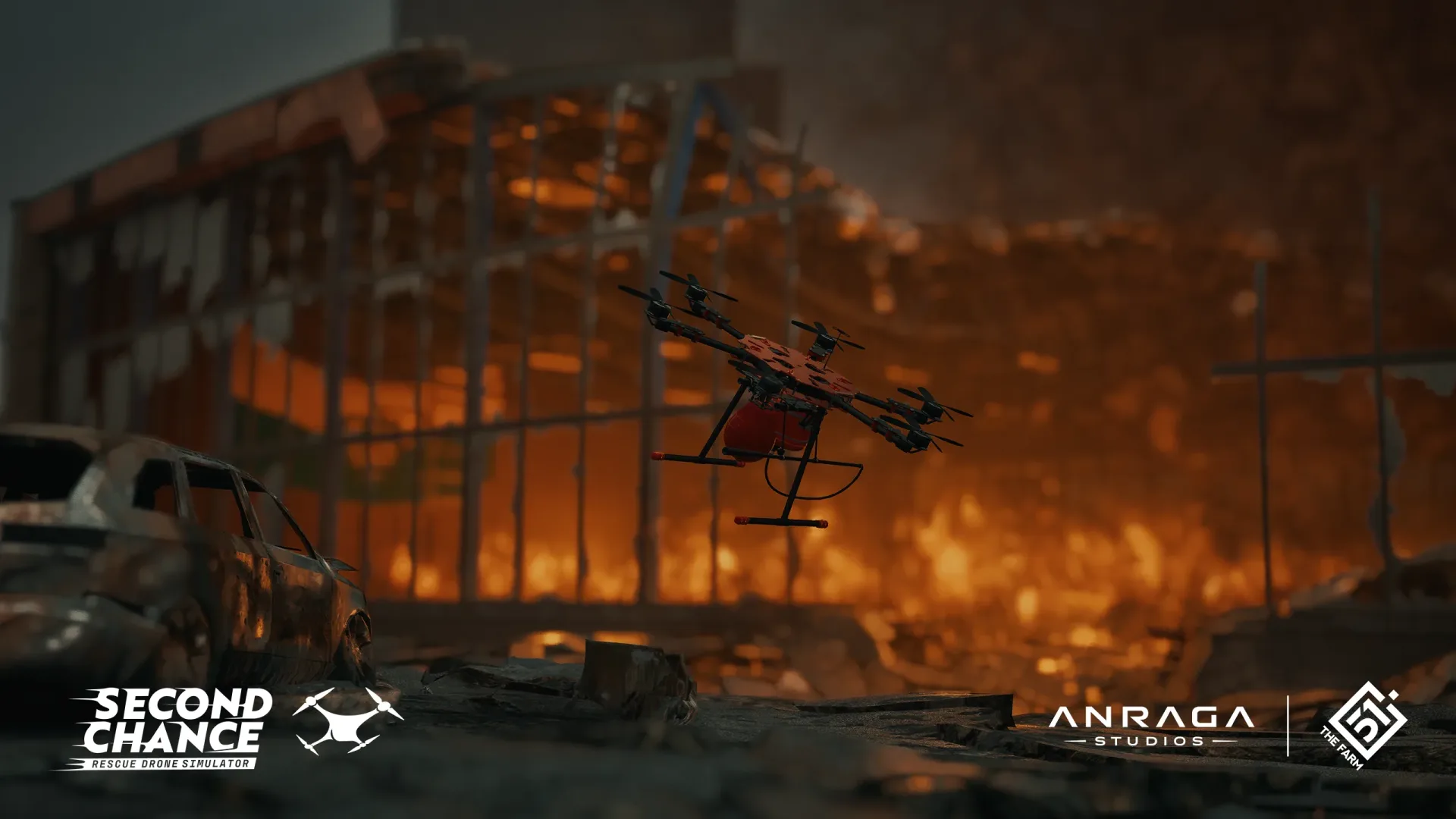
Anraga Studios and The Farm 51 have unveiled Rescue Drone Simulator: Second Chance, a story-driven rescue action simulator due in the first quarter of 2027 for PC via Steam, PlayStation 5 and Xbox Series X|S. The premise puts an unmanned aircraft—not a conventional on-foot responder—at the center of emergencies involving fires, explosions, missing people, extreme weather, natural disasters and failing infrastructure.
The important qualifier in that setup is that the drone is not framed simply as a camera with rotors. The game aims to make its aircraft feel like machines with limits that need to be understood before they can be used effectively. That approach extends from flight controls and weather effects to a workshop where players alter components between operations. A campaign expected to last 10 to 15 hours will tie those operations to a broader near-future crisis and the stories of a rescue team given another route back to meaningful work.
A rescue game built around assessment as well as flight
Each operation begins with a problem that has gone beyond normal control. Players will need to evaluate threats, determine a response, select an appropriate drone and complete the task under time pressure. That makes the stated mission loop broader than simply reaching a waypoint quickly: choosing the right equipment and preparing it beforehand are intended to be part of the job.
The announced locations range from forest paths and coastal settings to urban centers and industrial districts. Conditions will not be static. Weather, including winter conditions, can change an operation’s demands, while the campaign’s hazards encompass both immediate incidents and larger systems breaking down.
There is a useful practical distinction here between a rescue theme and a rescue-focused gameplay structure. The latter depends on whether the game gives its tools different reasons to exist. Second Chance has outlined four separate drone roles, each with dedicated functions:
- Rescue Drone: Tracks cell signals, delivers medical kits and marks targets.
- Firefighting Drone: Uses a powder extinguisher and can drop water balloons to tackle fires.
- Police Drone: Delivers voice commands and carries smoke grenades and a taser.
- Interceptor Drone: Uses a net launcher to intercept and neutralize hostile drones.
Those functions suggest missions can ask different questions of the player. Locating a missing person through a phone signal is a search-and-identification task; dropping a medical kit concerns precision and access; firefighting introduces payload use; and an interceptor operation shifts the focus to another aircraft. The announcement does not specify how frequently each drone appears, whether missions permit multiple choices, or how failure and mission scoring work. Those are meaningful unanswered questions, but the current outline clearly presents the fleet as more than cosmetic vehicle variety.
Why mass, thrust and wind matter
The game’s Simulator control mode is described as closer to real drone piloting, using realistic stick mapping and flight physics. Its Arcade mode adds assistance for players who want a faster route into operations. Both controller and keyboard-and-mouse input are supported, as are first-person and third-person camera views. Speed and wind indicators are also available.
That accessibility split matters because the technical vocabulary around drone flight can sound abstract until it affects a mission. Mass is the amount of matter the aircraft and its cargo have; in gameplay terms, extra weight can change how readily the machine responds. Inertia is an object’s tendency to resist a change in motion, meaning a drone already moving in one direction may not stop or turn as immediately as a player expects. Thrust is the force generated to move and lift the craft, while aerodynamics covers how air moves around it.
The stated design applies these factors directly. Wind can push an aircraft off course, damage can influence its behavior, battery capacity limits flight time, and a loaded drone responds differently from a lighter one. In other words, a route that is simple in calm air could become less forgiving when a mission adds bad weather or a heavier payload. The speed and wind readouts should give players information for interpreting those pressures rather than leaving them entirely to guesswork.
Simulator and Arcade are therefore not merely labels for difficulty. They indicate two ways of approaching the same rescue fantasy. Simulator mode is intended for people who want realistic stick mapping and more grounded flight behavior. Arcade assistance is designed to make the game more approachable for newcomers. The announcement does not define every assist or explain whether settings can be customized individually, so players should not assume details beyond those two promised models. Still, offering both is a sensible recognition that a physically modeled flight game has to serve audiences with very different familiarity levels.
The workshop is meant to affect outcomes, not just appearance
Between assignments, players will upgrade and modify their drone fleet in a workshop. Listed parts include motors, propellers, batteries, arms, wiring and cooling systems. These changes can affect speed, thrust, flight duration, durability and what the developers call the machine’s flight character.
“Flight character” is an especially useful idea for understanding the intended customization. It implies that modifications are not only a matter of making one number larger. A build that prioritizes one quality may alter how the aircraft feels under control, particularly when weight, weather and cargo are already variables. A battery influences how long the drone stays operational; motors and propellers relate to the force it can generate; durability matters when damage is in play. The full tuning system, its upgrade economy and the extent of trade-offs have not yet been detailed, but the announced component list establishes a material link between workshop decisions and mission performance.
That link is potentially central to the game’s identity. Rescue operations are usually defined by limited time and changing conditions. If configuration genuinely changes the handling and capability of an aircraft, preparation becomes part of solving the incident rather than an isolated progression screen. The developers specifically say that an earlier workshop setup can meaningfully alter what happens during an operation.
A second chance for the people behind the controls
The title has a double meaning. On one level, it describes people saved during emergencies. On another, it refers to the response team’s specialists, who can no longer do their former jobs in the traditional way because of accidents, illness, age or traumatic experiences. Remote technology lets them direct operations from a safe distance, access dangerous or unreachable areas and continue helping others.
This gives the game’s machinery a human role beyond a generic futuristic gadget. The drones are presented as a way for capable people to return to work that matters to them, rather than as a replacement for personality or expertise. It also fits the campaign’s division of labor: a machine can be sent into a dangerous location, but a person still has to judge risks, select the tool and make decisions as the situation develops.
Artur Fojcik, game director at The Farm 51, is writing the story. The campaign begins with rescue calls, then broadens as disasters, climate anomalies and infrastructure failures point toward a larger crisis. The narrative is divided into four acts, with the rescue team’s personal stories and the second-chance theme unfolding alongside that escalation.
The premise leaves room for varied stakes without promising specifics that have not been announced. Fires and missing-person searches naturally fit the rescue framework, while hostile drones introduce a security problem and worsening infrastructure provides a wider setting for the campaign. What has been confirmed is the arc: initially discrete operations gradually reveal a connected crisis.
A near future with an “analog soul”
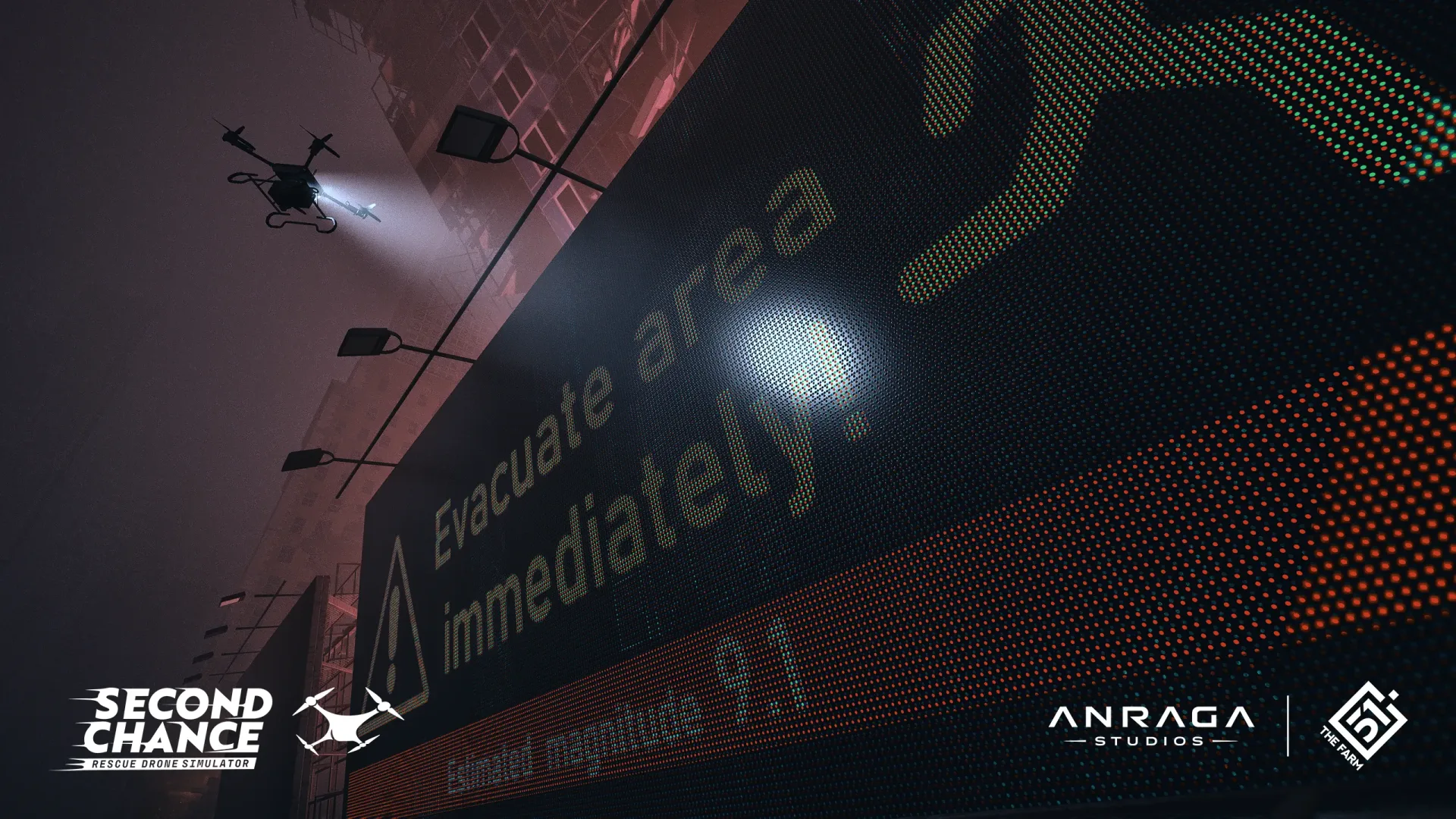
Wojciech Pazdur is leading art direction and composing the music. The project’s visual language is described as a believable near future with an “analog soul,” expressed through industrial spaces, analog electronics, physical control panels and equipment that looks designed to function rather than merely decorate a science-fiction set. Its music draws inspiration from sounds associated with the 1980s and 1990s.
That combination is notable because the game’s technology is not being positioned as sleek, invisible automation. The announced drones have motors, arms, wiring, cooling and batteries that can be modified; the environments are expected to include industrial districts and vulnerable infrastructure; and the control-room imagery emphasizes tangible equipment. The aesthetic direction appears aligned with the mechanical focus of the gameplay: technology is useful, but it has components, limitations and maintenance needs.
For players keeping an eye on upcoming PC-and-console releases, the title joins a slate that includes games such as Worship’s planned PC and PS5 1.0 release, though the two projects pursue very different ideas. Rescue Drone Simulator: Second Chance is planned as a simultaneous launch across PC, PS5 and Xbox Series X|S rather than a staged platform rollout.
What is confirmed—and what remains to be seen
The first reveal establishes a distinct set of pillars: four specialized drones, workshop-based modification, weather-sensitive flight, two control models, a four-act campaign and a Q1 2027 target. It also confirms a first reveal trailer and a store page where prospective players can add the game to their wishlist.
Several details remain unannounced. There is no stated price, no confirmed exact release date within Q1 2027, and no outlined co-op or multiplayer mode. The developers have not detailed mission counts, progression rules, difficulty options beyond Simulator and Arcade, or the precise consequences of failures and drone damage. It is also not yet clear how much freedom players will have in selecting among the four drone types for individual jobs.
For now, the most compelling part of the announcement is its attempt to connect the physical challenge of flying with the moral urgency of emergency response. The outcome will depend on how consistently missions turn preparation, weather reading and tool selection into meaningful choices. The framework is in place: a fleet with defined roles, machines that can be configured and affected by conditions, and a team whose second chance is made possible by operating from a distance.