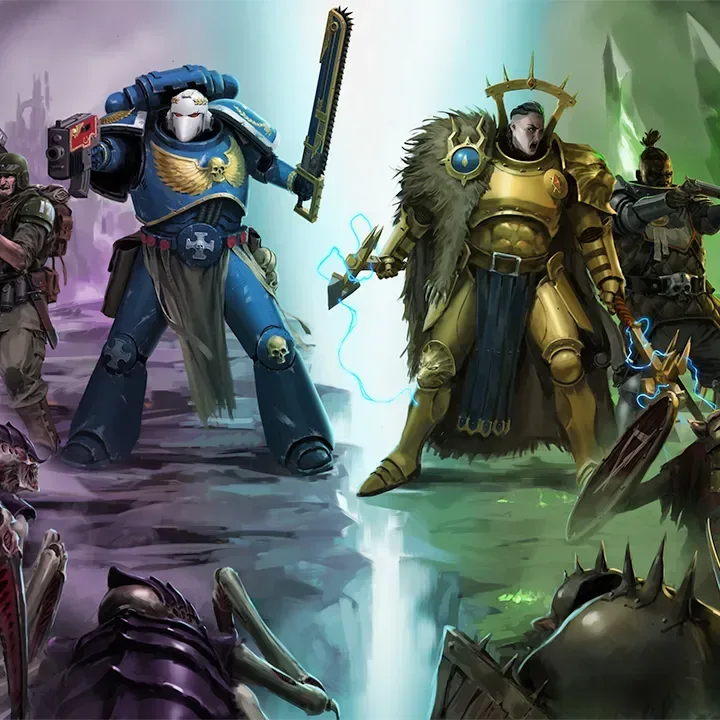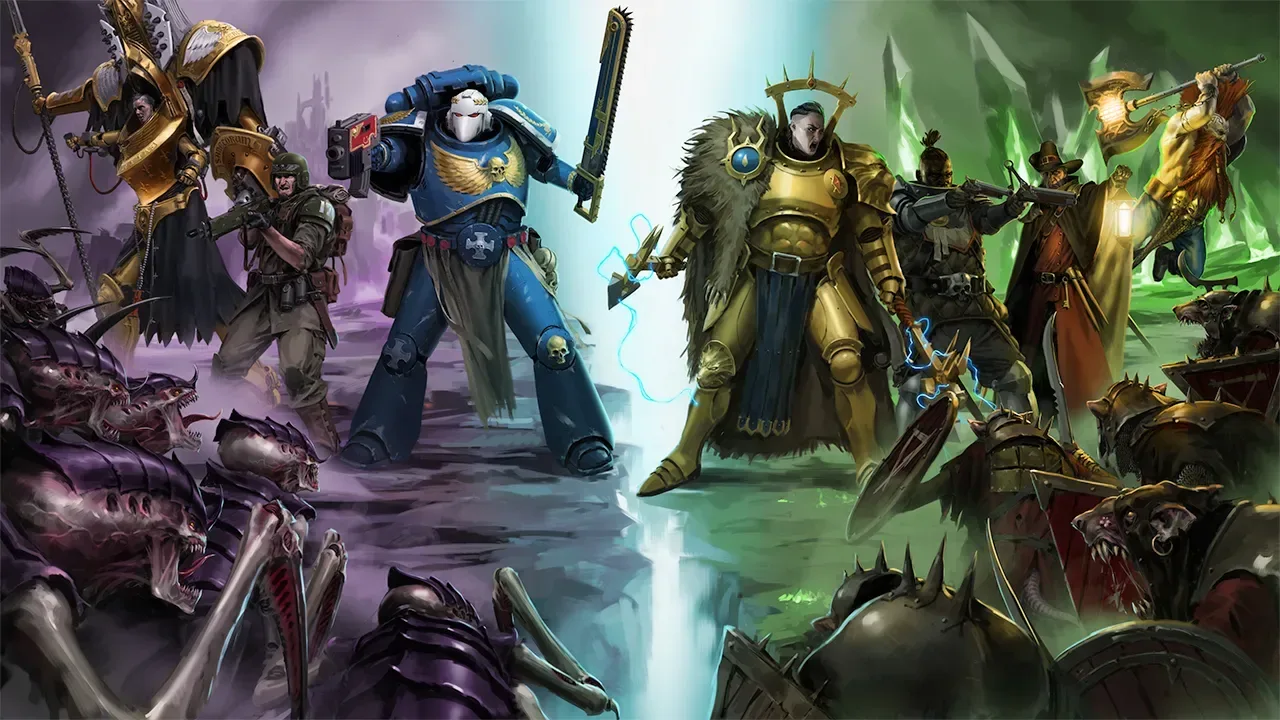
Warhammer Survivors will launch on November 10, 2026, bringing its dense, enemy-swarmed roguelite action to PlayStation 5, Xbox Series X|S, Nintendo Switch, Nintendo Switch 2, PC and mobile. The game is a collaboration between Auroch Digital and poncle, placing characters, weapons and visual touchstones from both Warhammer 40,000 and Warhammer Age of Sigmar inside a format built around surviving escalating waves.
There is also an updated demo available now through PC and Xbox. It adds The Legend of Catachan and Lyssa Ravenya, while incorporating changes made in response to feedback on the prior demo. For players deciding whether the game’s Warhammer crossover is more than a coat of paint, that demo is the immediate way to see how its characters, equipment and tabletop references fit the action.
The full game is set to cost $7.99 / £6.39 / €7.49. A 10% preorder and launch discount will be offered on select platforms. Xbox Game Pass subscribers will be able to play it at no additional charge on launch day.
Two Warhammer settings, one survival format
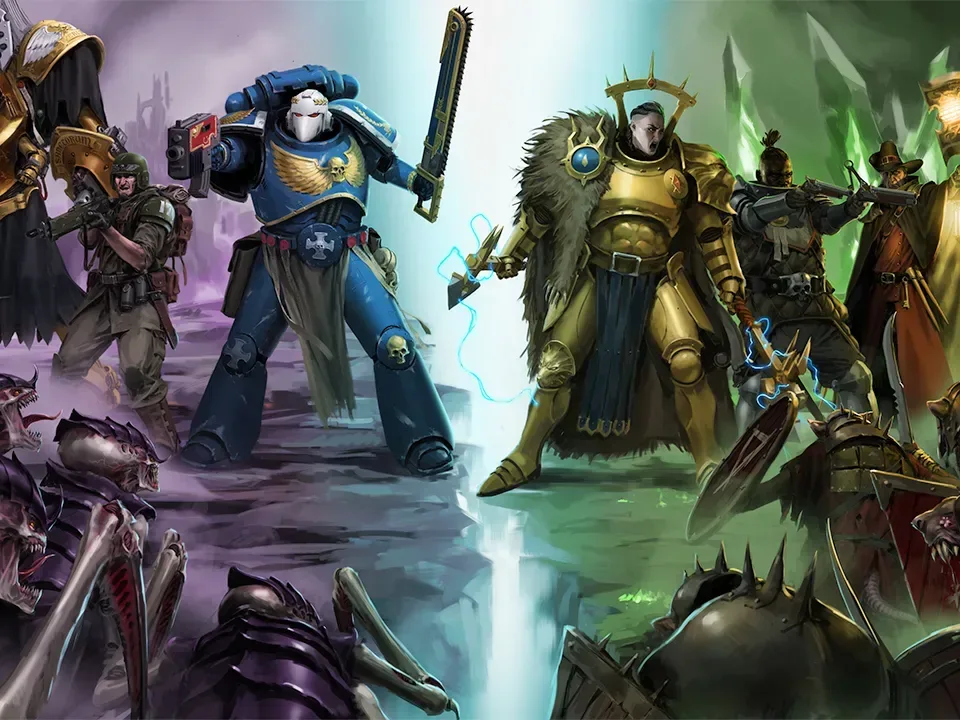
The announced scope includes two campaigns, more than 40 playable characters, more than 75 weapons and over 15 stages. The key attraction is the meeting of two very different Warhammer settings: the far-future warfare of Warhammer 40,000 and the fantasy setting of Warhammer Age of Sigmar.
That matters because the game is not simply choosing one faction or era as its backdrop. Its character and gear list is positioned as a cross-setting roster, letting the game draw from distinct kinds of heroes and iconography. Neave Blacktalon’s Tempest Axes and Malum Caedo’s Chainsword are named examples. The former reflects the fantasy-side material, while the latter is a recognisable 40K-flavoured melee weapon.
In a roguelite, individual attempts generally involve building power during a run rather than starting with a fully formed final loadout. The supplied details do not specify every progression system or upgrade rule in Warhammer Survivors, but the stated weapon count and character total indicate that loadout variety will be central to its repeatable structure.
The term bullet heaven describes the other half of the pitch. Rather than a slow, methodical duel, it points to a screen crowded by enemies, attacks and effects, with survival depending on movement, positioning and offensive combinations. It is a useful distinction for newcomers: the expected challenge is not merely landing individual strikes; it is staying alive while the battlefield becomes increasingly busy.
Weapons lean into Warhammer’s hobby culture
Warhammer Survivors is using more than conventional combat tools to make its identity clear. Alongside weaponry such as axes and chainswords, it includes items inspired by the physical tabletop hobby. Nuln Oil can be thrown at enemies, leaving them more vulnerable to fire damage. D6 Dice can be launched across a stage and explode if they land on the appropriate number.
Related coverage includes Warhammer Survivors Launches November 10 With New PC and Xbox Demo Available Now.
These are notable examples because they suggest different combat roles rather than just visual jokes. Nuln Oil is described as increasing susceptibility to fire damage, making it a setup tool: its value depends on following it with a fire-based attack. The dice, meanwhile, introduce a condition based on their rolled result. The exact odds, damage and upgrade interactions have not been detailed, so players should not assume how powerful either item will be. But the concepts show a willingness to translate the language of miniatures and tabletop dice into action-game effects.
For readers outside the hobby, a D6 is a six-sided die—the standard cube associated with many tabletop games. Nuln Oil is a paint product reference, and its inclusion connects directly with another announced system: paint pots. Specific mechanics for the paint pot system have not been outlined, so it is best regarded as a confirmed feature rather than a fully explained customization or progression mechanic.
One stage makes the tabletop connection especially literal. The game will include a Hobby Table environment, putting the action in a setting associated with assembling and painting miniatures. It is an appropriately playful premise for a game that can treat a paint pot or a handful of dice as battlefield equipment, while still pairing those flourishes with characters and weapons from the wider Warhammer catalogue.
Extremis Bosses are being positioned as a higher challenge tier
The game will include Extremis Bosses, with the Norn Emissary named as one example. They are framed as content intended to test even players familiar with Survivors-style games. That positioning is meaningful in a genre where a successful run can eventually turn the player character into a devastating force: a dedicated high-difficulty boss gives experienced players a defined pressure point beyond simply surviving another wave.
It remains unclear how Extremis Bosses will be accessed, what conditions trigger them, or whether they are tied to particular campaigns or stages. Those unanswered details matter because “boss” can mean anything from a late-run obstacle to an optional endgame target. What is confirmed is the developer’s intent for them to represent particularly demanding encounters, not just larger versions of standard enemies.
The Norn Emissary’s presence also reinforces the game’s approach to the 40K side of the crossover: recognisable Warhammer entities are being used as active threats and playable or usable game elements, rather than as background decoration alone.
What the demo can and cannot answer
The newly updated demo offers a practical route to judge the core loop before release, particularly for PC and Xbox players. The addition of The Legend of Catachan and Lyssa Ravenya increases the sample of content available compared with the prior demo, and the stated feedback-driven improvements mean returning players may encounter a meaningfully revised build.
However, a demo should not be treated as confirmation of every final-game detail. The announced totals—two campaigns, 40-plus characters, 75-plus weapons and more than 15 stages—describe the planned full release. The available trial is useful for evaluating the feel of its surviving, attacking and movement systems, but it does not automatically demonstrate the complete roster, full stage list or every system planned for November.
For players weighing where to play, the launch platform list is unusually broad: PS5, Xbox Series X|S, both Nintendo Switch generations, PC and mobile are all included. Xbox players with Game Pass have a clearly stated option to access it on day one without an additional purchase. The Xbox demo also makes that ecosystem the only console route named for trying the game ahead of launch, while the PC demo is available now as well.
PS5 is likewise among the confirmed launch platforms, in a market where platform choice can increasingly intersect with console costs and availability; see our look at a used PS5 Pro listing that put scarcity at the center of console shopping. In this case, though, the headline is accessibility: Warhammer Survivors is planned for consoles, PC and mobile rather than a narrow single-platform release.
A low entry price, with important platform caveats
At $7.99 / £6.39 / €7.49, Warhammer Survivors is being priced as a comparatively low-cost game. The 10% launch and preorder offer can reduce that price further, but the qualification is important: it is available only on select platforms. Players should check their preferred storefront before assuming the discount applies to their version.
Similarly, “no extra charge” for Game Pass subscribers refers to access through the existing subscription on day one; it does not change the listed standalone price for other platforms. The announcement does not provide further details on subscription tiers, mobile storefront arrangements, cross-progression, cross-play or the duration of Game Pass availability. Those are separate questions from the confirmed day-one Game Pass access.
Warhammer Survivors therefore has a straightforward proposition on paper: a low-priced, broad-platform bullet heaven that blends 40K and Age of Sigmar material, then filters that material through weapon-heavy runs, escalating hordes and knowingly tabletop-specific ideas. The demo’s revised content and feedback changes provide the clearest current snapshot, while the full measure of the game’s two campaigns, boss challenges, paint pot system and large character-and-weapon catalogue will arrive with the November 10 release.