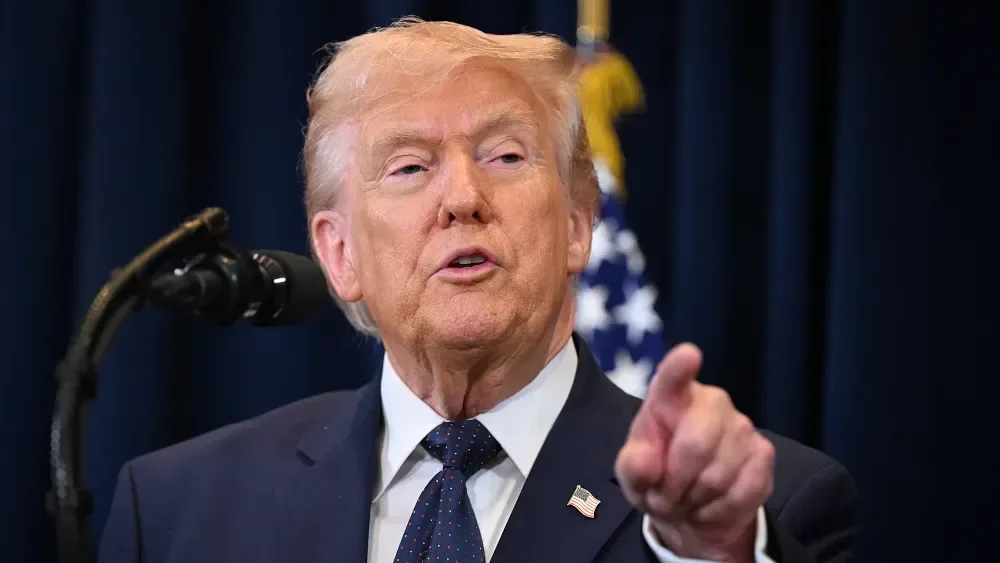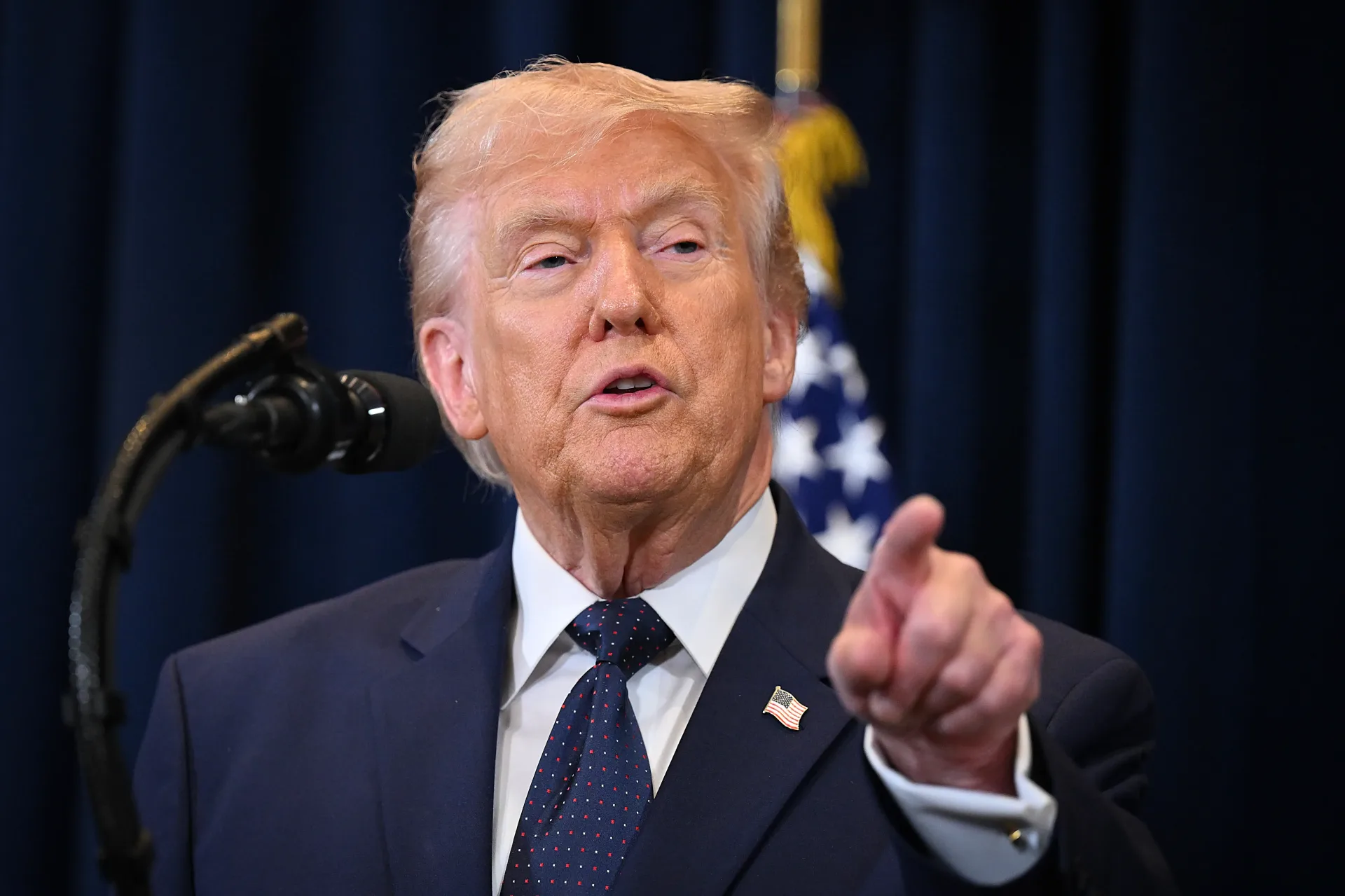
President Donald Trump said Friday that he is barring CNN, MS NOW and Politico from the White House, describing their coverage as “fake news” and saying further outlets could follow. The declaration raises immediate questions about how broadly any restriction would be applied, which White House spaces it would cover, and whether the administration has put a formal access policy in place.
Trump characterized the move as effective immediately in a social-media post. He accused all three organizations of publishing false reporting about him, his administration and the United States. He also singled out Politico over federal agencies’ spending on its subscriptions and products, calling that spending improper.
There is an important distinction between a president announcing an intended ban and the practical mechanics of enforcing one. The available information does not specify whether the three organizations would lose access to press briefings, the Oval Office, Air Force One, White House grounds, pooled events, individual credentials, or every one of those settings. It also does not identify a particular article or broadcast that triggered the decision.
Trump says coverage’s overall tone prompted the move
During comments in the Oval Office, Trump said the action was not a response to one specific story. Instead, he described the impetus as cumulative and indicated that he wants more favorable coverage of his administration. Asked which organizations could be next, he mentioned the New York Times and the Washington Post in disparaging terms.
That framing matters because it places the dispute around the general character of coverage rather than a defined factual allegation, a discrete security concern, or a stated violation of a press-access rule. The White House’s rationale, as described by Trump, is therefore tied to its assessment of the outlets’ reporting.
For readers, the immediate practical point is uncertainty: Trump has announced the ban, but the supplied details do not establish the precise access restrictions that have been implemented or how they will work day to day. Those details determine whether reporters can attend scheduled events, ask questions in person, join press pools, or enter particular White House locations.
CNN calls threatened ban an attack on protected reporting
CNN responded by defending its White House journalists and their reporting. The network said it has a constitutional right to report without government interference and argued that a ban, if carried out, would amount to an unlawful assault on that right.
MS NOW and Politico had not provided a response in the material available here. The White House also had not supplied clarification on the reach of Trump’s announcement or the administrative process that would govern it.
Related coverage includes Trump Says CNN, MS NOW and Politico Are Barred From White House.
The constitutional language in CNN’s response refers to the First Amendment, the part of the U.S. Constitution that protects freedoms including speech and the press. In this context, the core dispute is not whether a news organization must be praised by government officials. It is whether government control over physical access to official settings can be used in retaliation for critical coverage.
That question can be legally complicated. The First Amendment does not mean every journalist is automatically entitled to enter every government room or travel with every official. White House access involves credentials, space constraints, security procedures and event-specific rules. At the same time, rules governing access can face close scrutiny if they appear to punish an outlet because of its viewpoint or reporting.
The Politico subscription claim, explained
Trump’s post also focused on government spending associated with Politico. Data on USAspending.gov, a federal database that tracks government expenditures, showed agencies collectively paid more than $8 million for Politico subscriptions and products in 2024.
That figure is a record of purchases by government agencies, not by itself proof of a White House-directed effort to sustain a publication. Subscriptions and information products can be bought by many different offices for distinct professional uses. The material provided does not establish which agencies made each purchase, what products were included, or whether those transactions were connected to the access decision announced Friday.
Separating the spending claim from the access question is useful. One issue concerns federal procurement: what public bodies paid for and whether those purchases complied with applicable rules. The other concerns press access: whether an outlet may report from White House spaces. They may be politically linked in Trump’s explanation, but they are different factual and legal questions requiring different evidence.
Why the wording and scope of a ban are consequential
“White House access” is a broad phrase. It may refer to routine press briefings, credentialed entry to the complex, presidential travel, events in the Oval Office, or access to a press pool. A pool is a small group of journalists selected to cover an event when the full press corps cannot fit or travel. Their reports, photos and video can then inform other outlets that were not present.
If a restriction affects pool opportunities or major presidential events, its impact can extend beyond the blocked organization. It can affect the range of questions asked directly to officials and the material available for other newsrooms to review. Conversely, an outlet can still report through public statements, records, interviews, broadcasts, wire material and other forms of newsgathering even if in-person White House access is limited.
The latest declaration also follows an earlier dispute involving the Associated Press. Last year, the White House blocked AP staff from the Oval Office, Air Force One and other locations after the news service continued using “Gulf of Mexico” rather than “Gulf of America,” the name Trump ordered used upon returning to office in 2025.
The AP challenged that restriction in court. An appeals court found that the White House’s ban of the organization was not a First Amendment violation. That outcome is relevant background, but it does not automatically settle the status of a new restriction involving different organizations, stated reasons and terms. The facts and legal arguments of each access dispute matter.
Press-freedom advocates condemn the announcement
The Freedom of the Press Foundation criticized Trump’s declaration. Seth Stern, the organization’s chief of advocacy, said barring outlets for criticizing the government would be a clear First Amendment violation and argued that attacks on the press undermine public access to information.
Its response reflects a broader press-freedom concern: retaliation can take forms other than direct censorship. A government does not need to stop publication outright to impose pressure. Excluding reporters from official spaces, limiting their ability to question decision-makers, or threatening additional outlets can alter how news is gathered and can create uncertainty for journalists deciding how to cover those in power.
Supporters of stricter access controls may argue that the White House must be able to manage space, logistics and accreditation. But the stated reason is critical. A neutral restriction applied through transparent rules is different from a restriction openly attributed to dissatisfaction with critical reporting. Trump’s comments describing the coverage as cumulatively negative will likely be central to how critics assess the decision.
What to watch next
- Written rules: Any formal guidance could clarify whether the action concerns credentials, individual events, travel, briefings, pool rotations or specific rooms.
- Implementation: The practical test will be whether CNN, MS NOW and Politico reporters are denied entry or participation at subsequent White House events.
- Responses from the affected outlets: Statements from MS NOW and Politico could explain how they understand the announcement and whether they plan to challenge it.
- Possible legal action: CNN has said it considers a ban unconstitutional. Whether a lawsuit is filed, and the facts presented in any case, remain unknown.
- Additional targets: Trump said other outlets could follow and named the New York Times and Washington Post when asked about possible next steps.
The episode lands in a wider environment in which access, platforms and distribution increasingly shape what audiences can see. In a different corner of the media business, debates about what a product actually contains have also become more prominent; the changing meaning of a “physical game” is another example of how access and ownership can be defined by more than a label.
For this White House dispute, the most significant unresolved issue is straightforward: whether an announced ban will become a clearly defined, consistently enforced policy—and, if it does, how it will withstand constitutional and legal scrutiny.