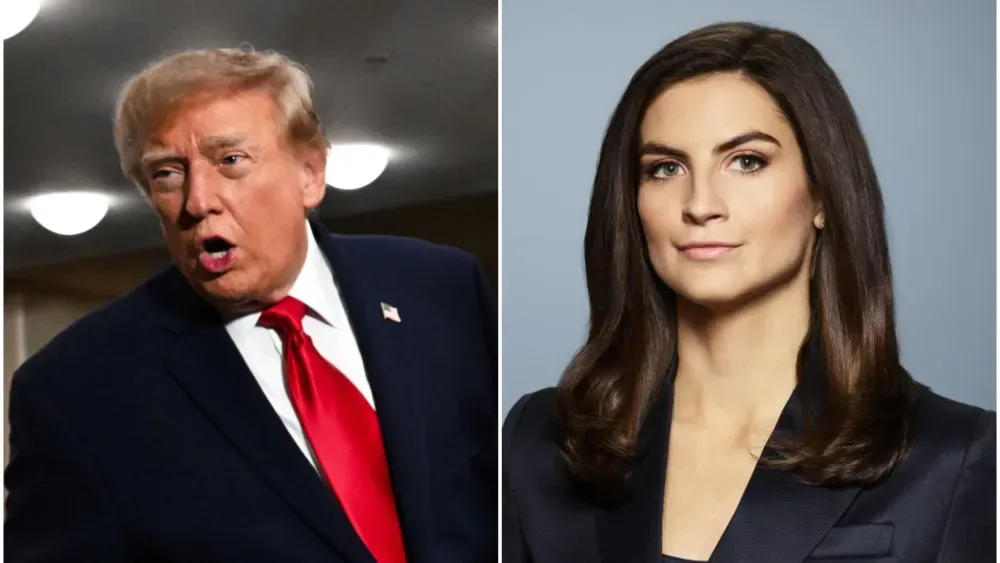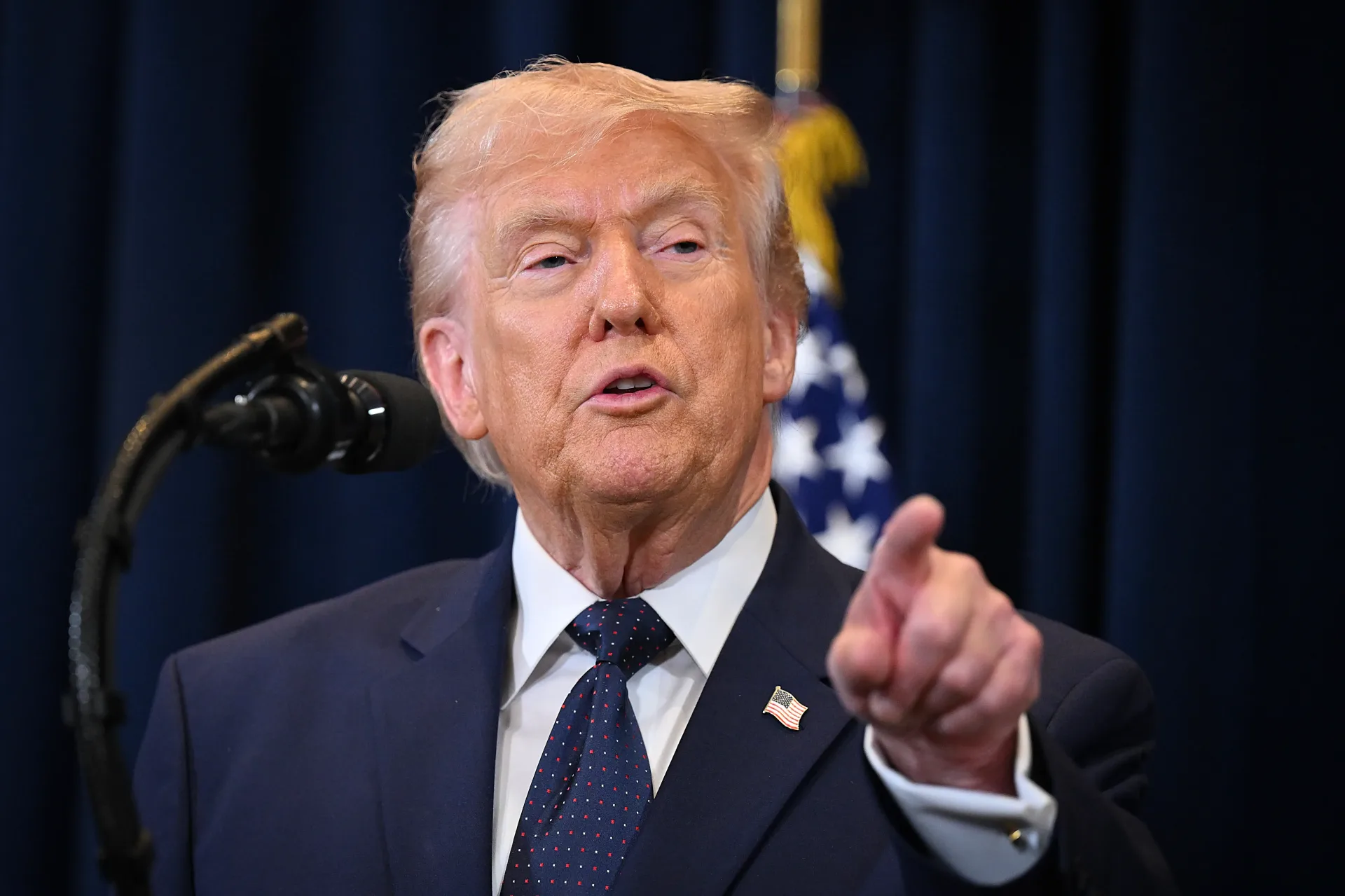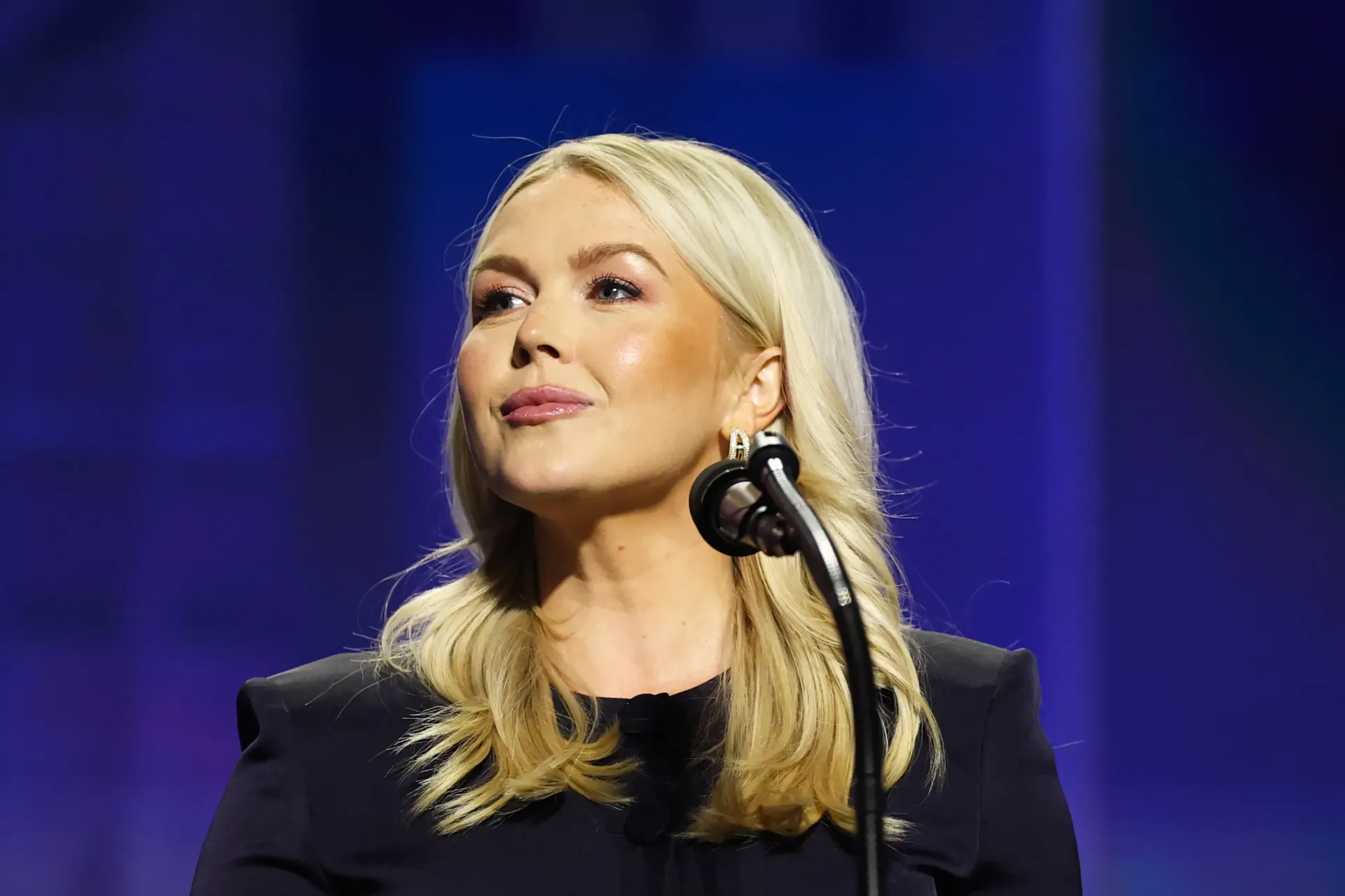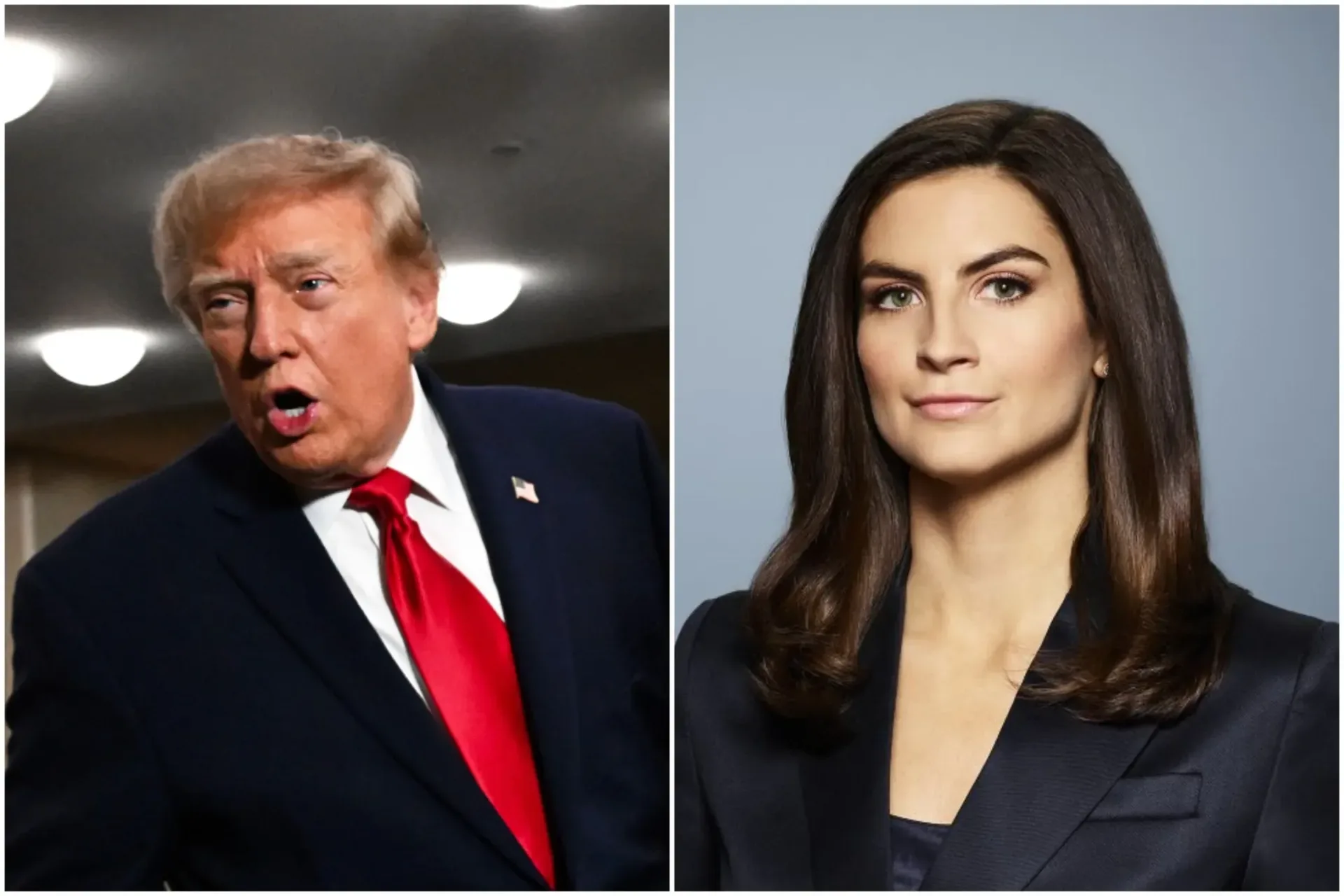
President Donald Trump confronted CNN anchor Kaitlan Collins outside the United Nations on Tuesday, questioning why her network was present as she attempted to ask him about the war with Iran. The exchange arrived days after the White House revoked press access for CNN, MS NOW and Politico, and one day after the three organizations filed suit challenging that action.
Trump was in New York City to address the 81st session of the United Nations General Assembly. As he entered the UN, Collins asked when the conflict with Iran would end, citing a measure that she said found two-thirds of Americans did not believe the United States was winning the war.
Rather than answer the question, Trump focused on CNN’s presence. “I’m surprised that CNN is here covering me. You shouldn’t be here!” he said. Collins replied that the United Nations had permitted the network’s access. Trump again said CNN should not be covering him, then walked away.
A UN encounter separate from White House access
The detail in Collins’ reply matters: the confrontation took place at the United Nations, not inside the White House. The White House press-pass dispute concerns access granted by the administration to its own premises and events. Credentials for a UN gathering are a separate matter, as the exchange itself demonstrated.
That distinction does not make the encounter insignificant. It illustrates the immediate practical limit of a White House-specific restriction. A news organization shut out of White House spaces may still report on a president in other venues where it is independently credentialed or otherwise allowed to attend. Presidential travel, international summits and public arrivals can therefore remain major settings for on-the-record questions.
It also turned a procedural dispute into a highly visible moment. Collins’ question concerned a major foreign-policy issue, while Trump’s response centered on the network asking it. For viewers, the episode placed two separate arguments side by side: the substantive question of the Iran war and the escalating fight over who is allowed to question the president in person.
What the White House ban covers
Trump announced on Friday, Sept. 18, that CNN, MS NOW and Politico would be barred from the White House “effective immediately.” He characterized the organizations as “fake news.” On Saturday, the White House denied entry to staff members from all three and revoked their press passes.
A press pass, often called a credential, is documentation that enables a reporter or news organization’s staff to enter a controlled location for news coverage. It does not guarantee that every journalist will receive every opportunity to ask a question, but it is central to routine access: entering the building, attending briefings and covering events held behind White House security.
The immediate effect of losing those credentials is logistical as well as symbolic. Reporters may be unable to enter the White House press workspace or cover events from within the building. Affected organizations can still pursue reporting through interviews, documents, broadcasts, pool material, public events and reporters stationed elsewhere. But access to the administration’s physical headquarters is a consequential part of the daily reporting process.
The dispute is also about the stated basis for the restriction. Trump’s public comments have tied the decision to his view that the outlets’ coverage is unfair, inaccurate and damaging. The organizations’ legal challenge, by contrast, says the government has discriminated against them for their editorial viewpoint.
The lawsuit and the First Amendment claim
On Monday, CNN, MS NOW and Politico sued Trump and three White House officials. Their complaint alleges that the ban violates the First Amendment and “brazenly discriminates based on editorial viewpoint.”
Editorial viewpoint means the perspective, analysis or position expressed through reporting and commentary. In this context, the plaintiffs’ allegation is not simply that access was lost. It is that access was removed because the outlets published coverage the administration disliked. That is the core constitutional dispute presented by the lawsuit.
The First Amendment protects freedom of speech and of the press. The complaint frames the revoked passes as a press-freedom issue because it argues that the government cannot use access decisions to punish unfavorable coverage. The administration has publicly rejected the characterization that its policy is an assault on a free press, instead maintaining that its actions are aimed at what Trump calls “fake news.”
Those competing descriptions are important, and neither resolves the case on its own. The lawsuit will turn on legal arguments and any rulings by the court, rather than on political labels used by either side. At this stage, the available facts establish that the organizations have sued, that they allege viewpoint discrimination, and that Trump has defended the policy in public statements.
Trump also indicated on Monday that he expected a lower-court loss and would appeal. That comment signals that the administration anticipates extended litigation rather than a quick end to the controversy. It does not predict how a court will rule.
Why the distinction between criticism and access matters
Presidents regularly criticize coverage, reporters and outlets. News organizations likewise scrutinize government decisions, statements and policy. Those tensions are a routine feature of political reporting. The current conflict is more specific because it concerns whether criticism of coverage can be paired with an official exclusion from White House access.
For reporters, the stakes are practical: access affects where they can work, what events they can directly witness and whether they can put questions to officials in real time. For the public, the stakes involve the breadth of questioning at events involving national policy. This is especially apparent in the UN exchange, where a question about the Iran war was displaced by an argument over the questioner’s right to be present.
That does not mean access equals control over an event. Journalists can be present and still not be called upon; officials can decline to answer; and a president can object sharply to the premise or framing of a question. The more focused legal question is whether the White House may revoke the credentials of particular outlets on the basis alleged in the complaint.
The dispute comes amid broader arguments over how institutions set rules for public-facing information and accountability. For a different regulatory example involving a platform operating at the intersection of public information and legal oversight, see this look at prediction markets and competing regulatory frameworks. The subjects are different, but each highlights how rules governing access, communication and oversight can have effects beyond the organizations immediately involved.
Trump’s stated rationale
In a Truth Social post Monday, Trump argued that the White House was not attacking a free press but confronting “FAKE NEWS.” He accused the targeted coverage of being corrupt, coordinated and a threat to national security. In another statement, he said the Oval Office should be treated with decorum and respect and accused news organizations of distorting his record.
These statements clearly set out Trump’s public rationale: he views the affected outlets’ coverage as systematically wrong and harmful, rather than as legitimate reporting deserving continued White House access. The plaintiffs’ position is the opposite: they say the administration is penalizing protected editorial activity.
That disagreement is likely to remain central as the case proceeds. The word “ban” captures the practical outcome described by the outlets — revoked passes and blocked White House entry — but the legal analysis will require a more precise examination of the government’s authority, its stated reasons and the constitutional limits alleged by the plaintiffs.
The UN moment puts the conflict in public view
The clash with Collins did not itself change the White House policy or decide the litigation. It did, however, make the consequences of the dispute unusually easy to see. A reporter from an organization excluded from the White House was still able to stand among journalists at an international event and ask the president about a live conflict. Trump’s response made clear that he objected not only to the question but also to CNN’s presence.
Collins’ answer — that the UN had allowed the network in — was a concise reminder that press access is not controlled by one institution everywhere a president appears. The White House can govern its own credentialing, while other venues have their own access systems. The pending lawsuit concerns whether the White House exercised its own authority lawfully.
For now, the relevant facts remain straightforward: CNN, MS NOW and Politico say their White House passes were revoked; they have taken the dispute to court; Trump has forcefully defended the move; and the president’s UN encounter with Collins brought the underlying disagreement into the open during a question about the Iran war.