A federal judge in Washington, D.C., has barred the Kennedy Center’s board from adding Donald Trump’s name to the performing-arts institution’s building or grounds, finding that the proposed changes conflict with federal law and an existing court order.
Judge Christopher Cooper granted an emergency request from Rep. Joyce Beatty (D-Ohio) to stop the planned additions. The decision addresses a board resolution passed on August 13, 2026, after an earlier ruling had already required Trump’s name to be removed from the building and related materials.
The dispute is not simply about whether a board may approve a new line of façade text or a ceremonial title for the surrounding grounds. Cooper’s ruling turns on the special legal status of the John F. Kennedy Memorial Center for the Performing Arts: Congress chose whom the center memorializes, the judge wrote, and a board cannot add another honoree without Congress authorizing it.
“Simply put, Defendants cannot install memorials for President Trump or anyone or anything else at the Kennedy Center without Congress’s blessing,” Cooper wrote.
What the board voted to add
The blocked resolution contemplated three forms of recognition for Trump. Two are identified in the court record: a proposed second line of text beneath the institution’s formal façade name, and a new designation for the site and grounds.
The proposed façade text would have placed the phrase “Restored and Renovated by President Donald J. Trump” beneath “The John F. Kennedy Memorial Center for the Performing Arts.” The board also voted to designate the physical location and grounds as “President Donald J. Trump Plaza.”
Those measures may sound different in form—one is building text, another is a place name—but Cooper treated them as memorials. That classification is central. The order does not turn on whether the additions would be permanent plaques, large letters, wayfinding language, or a grounds designation. Its reasoning is that an official honor attached to the memorial center or its site must comply with the governing federal framework.
Why the earlier injunction matters
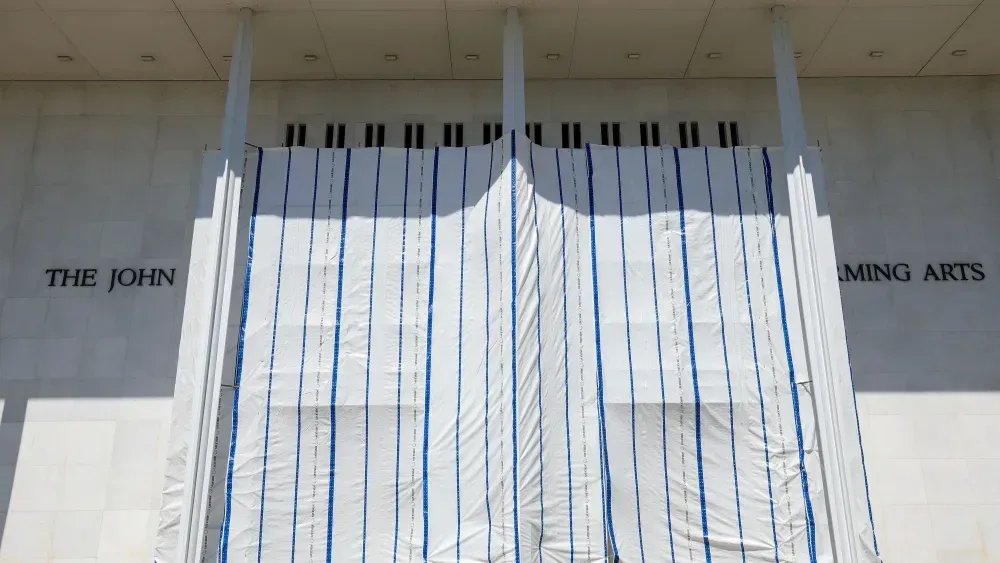
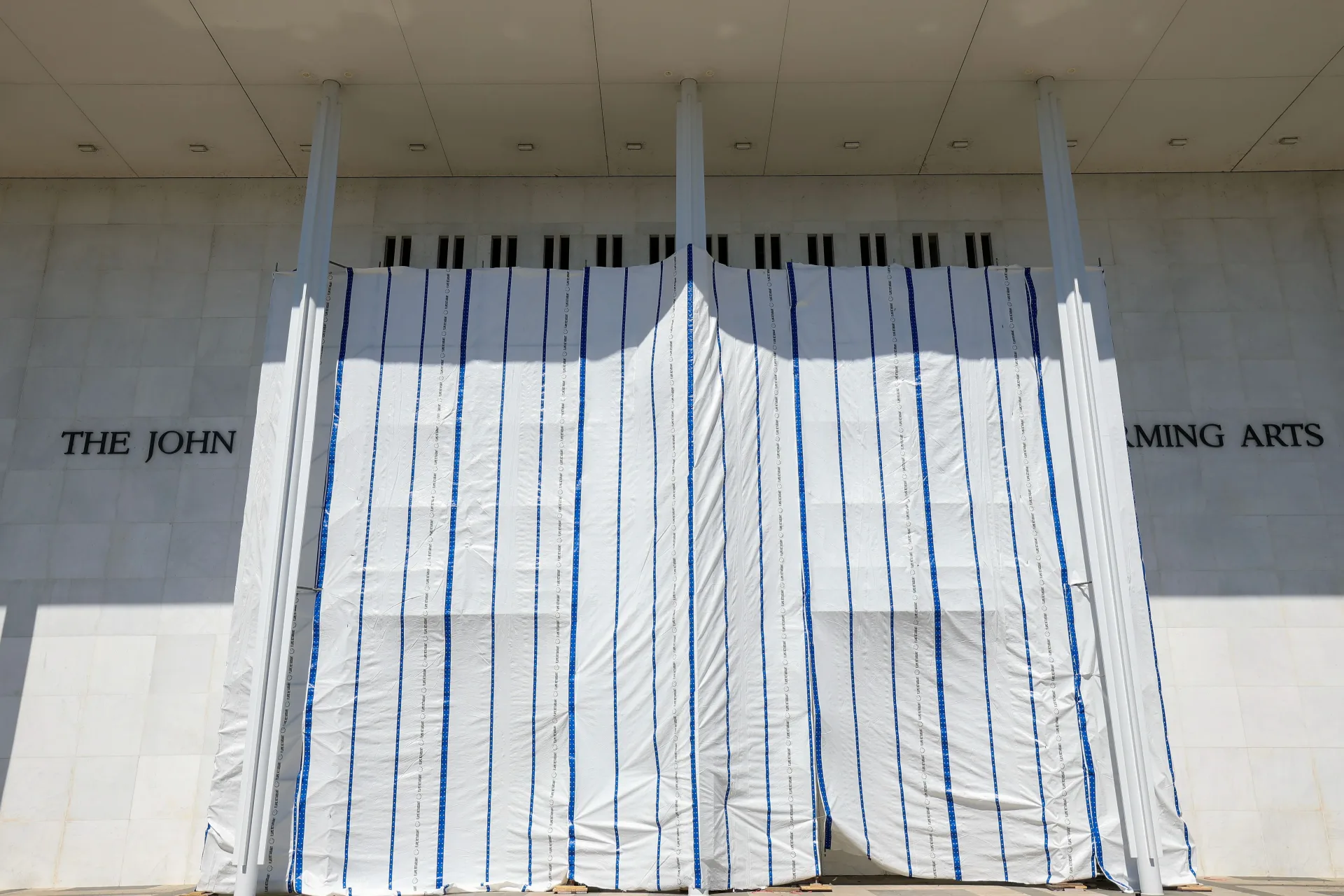
Cooper had already ordered the center in May to remove Trump’s name from the building and other materials. The institution complied, and a tarp has covered the front façade since then.
That history matters because Beatty’s latest filing was an emergency motion seeking enforcement of an injunction already in place. An injunction is a court order directing a party to do, or refrain from doing, something. Here, the earlier injunction had prohibited the naming change. The new order prevents the board from pursuing alternative ways to attach Trump’s name to the center after its previous name placement was removed.
Cooper wrote that the new board resolution “bucks” both the court’s existing order and the statute enacted by Congress. In practical terms, the decision rejects the idea that changing the type of recognition—from revising the center’s name to adding an attribution line or renaming its grounds—solves the underlying legal problem.
The ruling therefore maintains the status quo created by the May order: the building and property cannot be used for official Trump memorialization unless Congress acts. It does not establish that no work can ever be done at the center, or that every reference to a president would necessarily be unlawful in every context. Its stated focus is on memorials at the Kennedy Center and the legal authority required to install them.
The distinction between renovation claims and a memorial designation
The board’s proposed text connected Trump to restoration and renovation. Trump, meanwhile, said the center was in a dangerous state of disrepair when he returned to the White House in 2025 and argued that he had the fundraising and construction abilities needed to restore it.
But Cooper’s order draws a line between a claimed role in a building project and the authority to create an official honor on a congressionally designated memorial. The question before the court was not whether the center needs repairs, whether a renovation proposal is wise, or whether Trump could raise money for it. It was whether the board could make these naming and attribution changes under the relevant law and the existing injunction. The judge’s answer was no.
This distinction is important for arts institutions and other public-facing cultural landmarks. Credit language can be more than ordinary project information when it is affixed to a memorial building’s identity or used to rechristen its grounds. Context, location, and the body that has legal authority over a memorial all matter. A phrase that might be routine on a construction sign can take on a different legal character when placed as a lasting part of the presentation of a national memorial.
Beatty’s challenge and the scope of the present order
Beatty originally sued the Kennedy Center and Trump over the renaming effort. Cooper’s new ruling says she is entitled to enforcement of the injunction because Congress elected to memorialize President Kennedy, “and no one else,” at the center that bears his name.
That wording explains why this case reaches beyond branding. The Kennedy Center’s name is not presented in the ruling as a flexible marketing label controlled solely by its board. It is tied to Congress’s decision to establish a memorial for Kennedy. The court’s conclusion is that the board cannot unilaterally supplement that memorial purpose by formally honoring another president.
The decision also follows a separate but related restriction issued earlier in the spring. Cooper granted Beatty a preliminary injunction preventing Trump from taking further steps to close the institution. Trump had previously said the center would close for two years beginning July 4, 2026, for what he described as a “complete rebuilding.”
A preliminary injunction is temporary relief issued while a case is still being litigated. It is designed to preserve legal rights or avoid a disputed action before the court reaches a final resolution. It is not the same thing as a final merits judgment after every claim has been fully resolved. Still, it carries real force while it remains in effect, and parties covered by it must follow it.
For visitors, artists, staff, presenters, and organizations planning events, that difference is practical rather than academic. The court has blocked further steps toward a two-year closure as described by Trump, and it has now blocked the proposed Trump memorial additions. Neither ruling, based on the facts available here, supplies a detailed operational timetable for the center or a future renovation plan. The legal orders address the challenged actions, not a broader public blueprint for construction or programming.
Trump’s response and the board’s next meeting
Trump criticized Cooper in a Truth Social post, calling him hostile and conflicted. He said delay in court had consumed more than six months and argued that the building would be “destined to doom” if the planned work could not proceed. He also said the board was meeting Tuesday and that it would be interesting to see what followed.
Those statements describe Trump’s position, not a change in the order. As of Cooper’s ruling, the proposed façade language and “President Donald J. Trump Plaza” designation remain blocked. A board meeting does not itself override a federal injunction, and Cooper’s decision expressly says Congress’s approval would be needed for a memorial addition.
It is also worth separating the facts confirmed by the ruling from questions it does not answer. The decision records Trump’s concerns about disrepair and his stated intent to rebuild the venue. It does not provide an independent engineering assessment of the center, a renovation budget, a fundraising plan, or an approved construction schedule. Likewise, the record establishes that the board passed the August resolution, but it does not show that the blocked designations were installed.
Why a naming case matters to a performing-arts venue
Names and façade language are part of how cultural institutions communicate their mission. At a national memorial and major performing-arts center, they shape the public’s understanding of what the place commemorates before anyone buys a ticket or enters a theater. That symbolic role can become a legal issue where Congress has set the memorial’s identity.
The court’s action also underscores that governance power has limits. A board may have substantial responsibilities for an institution, but those responsibilities operate within statutes and court orders. Cooper’s ruling frames the Kennedy Center board’s authority as subordinate to Congress’s memorial designation and to the injunction enforcing it.
The stakes are especially visible at a venue whose public identity sits alongside its arts programming. Recognition in the cultural world can take many forms, from awards for a creative team to institutional tributes—such as the recognition planned for The Odyssey’s design and editing team. The Kennedy Center dispute concerns a distinctly different kind of recognition: a government-established memorial site, where the question is not only whom to honor but who has the legal power to make that decision.
What remains clear after the ruling
- The Kennedy Center board’s proposed Trump-related façade attribution is blocked.
- The proposed “President Donald J. Trump Plaza” designation for the grounds is blocked.
- Cooper found that installing such memorials requires congressional authorization.
- The ruling enforces an earlier injunction that led to Trump’s name being removed from the building and other materials in May.
- A separate preliminary injunction had blocked further steps toward the previously proposed two-year closure for a complete rebuilding.
The immediate result is narrow but consequential: the Kennedy Center cannot use the board’s August resolution to put Trump’s name back onto the building or its grounds in the forms described by the court. Any effort to memorialize him there would require a different legal path—Congressional approval—rather than another board vote.