For many Magic: The Gathering players, a set’s Commander decks are no longer a side dish to the main release. They are a major part of the event: ready-to-play products with new legendary creatures, a defined theme and an immediate route into the game’s most prominent multiplayer format. That makes one detail of the current Reality Fracture release especially notable: it has only one Commander preconstructed deck.
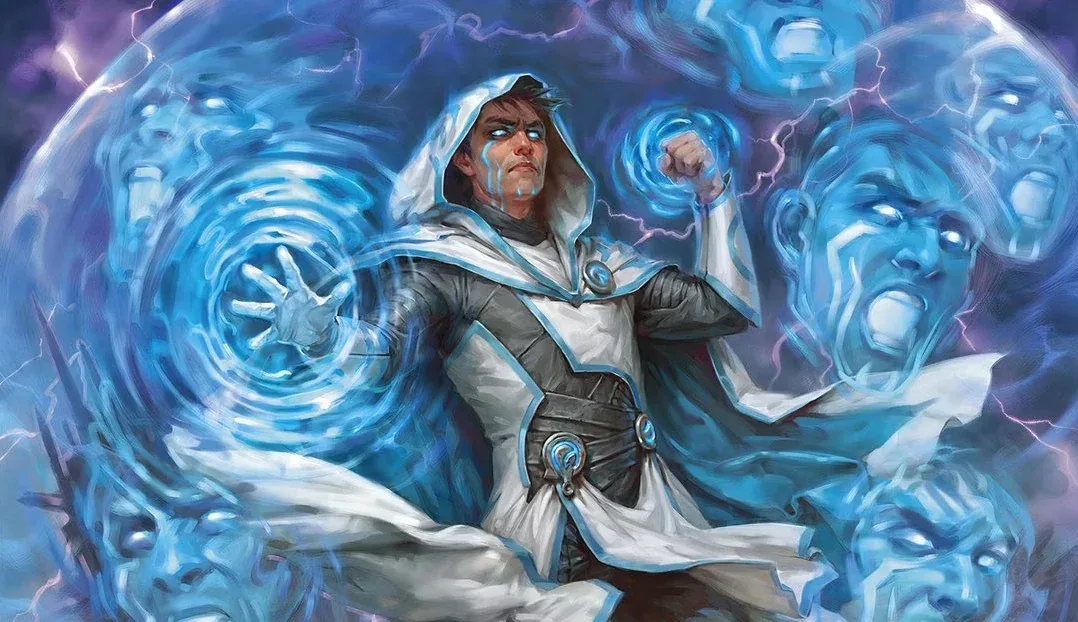
The deck is Multiverse Reforged, built around the four-color Jace, Multiverse Architect. Its premise matches a set storyline in which Jace, shaken by past trauma, attempts to remake reality. But the decision to make it the set’s lone preconstructed Commander offering was not simply a storytelling choice. Magic designer Gavin Verhey has explained that an unusually powerful, flexible deck can create a difficult problem if it has to share a release with products that feel substantially less compelling.
That is an important distinction. The issue is not that additional decks are inherently bad, nor that every Commander release needs to be limited to one box. The concern is the gap between them. If one deck becomes the clear favorite, stores can see the sought-after product disappear quickly while the less exciting sibling remains available. From a player’s view, that can mean uneven access to the deck they actually want. From a retailer’s view, it can mean inventory that is much harder to move.
What makes a Commander precon imbalance matter?
A preconstructed deck, often shortened to precon, is a complete deck sold ready for play. In Commander, each deck is led by a commander: generally a legendary creature that shapes the deck’s available colors and may be cast repeatedly from a special game zone. Commander games are commonly multiplayer and tend to reward decks that have a distinctive game plan, replayable interactions and room for upgrades.
That means players do not necessarily judge a precon only by whether it can win straight from the box. They may be looking for a particular character, color combination, mechanical theme or collection of cards that can become the base for a personalized build. A deck described as powerful and adaptable has appeal across several of those groups at once: players who want a strong ready-made option, players who value its individual cards, and players who want a flexible shell to modify.
Verhey characterized Multiverse Reforged as one of the strongest precons the team believes it has released. He also indicated that it was hard to conceive of another Reality Fracture deck that would be comparably exciting beside the Jace-focused design. The logic behind one deck, then, is less about withholding choices than preventing an obvious hierarchy within the same product wave.
That hierarchy can turn a normal choice between themes into a perceived winner-and-loser situation. A player deciding between two equally attractive decks can choose based on colors, favorite characters or play style. A player faced with one deck widely viewed as markedly stronger, more versatile or more desirable may feel pushed toward it instead. The other deck can become difficult to recommend even if it serves a different audience well.
Reality Fracture concentrates its big idea
By limiting Reality Fracture to Multiverse Reforged, the release concentrates its Commander ambitions around Jace and four colors. In Magic, a four-color identity gives a deck access to an especially broad slice of the game’s card pool. That does not automatically make a deck dominant, but it supports the description of this particular precon as adaptable: more colors can enable a wider selection of effects and strategies than a narrower color identity.
Related coverage includes Why Magic: The Gathering Is Limiting Some Sets to One Commander Deck.
The result is a product designed to carry the set’s marquee Commander moment by itself. It also avoids asking another deck to compete directly with a conspicuous Jace build that is loaded with powerful spells. For shoppers, a single-deck release is simpler to parse. For those hoping for several different entry points into a set, it is naturally less satisfying.
That trade-off helps explain why a one-precon set can draw disappointment even when its sole deck is well received. More decks usually mean more themes, commanders and potential new cards. They can also let a crossover or story-rich set represent a larger cast. Yet a bigger lineup does not guarantee that every box will be equally appealing in actual play or in the market.
Recent releases show both sides of the decision
The contrast is visible in two recent licensed releases. A Marvel-themed Magic set released at the beginning of summer came with four Commander precons, each led by different heroes or villains. That quantity made sense as a way to bring more recognizable figures into the product line. But the Fantastic Four deck was widely viewed as the weakest of the group straight out of the box and attracted far less discussion online than its counterparts.
“Out of the box” matters here. It refers to the deck as sold, before an owner replaces cards or makes other upgrades. Commander players frequently customize precons, so a less impressive starting deck can still become interesting with enough changes. But the initial experience remains important: it shapes reviews, conversation, recommendations and the sense of whether a box offers a satisfying immediate game.
March’s Teenage Mutant Ninja Turtles release took the opposite route. It had one Commander deck, Turtle Power, using all five colors and team-up mechanics. Rather than split major ideas between several products, that structure allowed the release to place its central concepts together in one deck. Some fans were surprised or disappointed that there were not more Commander decks, but the format gave the single product permission to be expansive rather than restrained by the need to reserve concepts for companion boxes.
Neither model is universally superior. Four decks can better represent a broad ensemble of characters, while one can establish a more concentrated and potentially more complete identity. The problem described by Verhey emerges when the lineup has multiple decks but does not give them comparable reasons to exist for players. Theme alone may not be enough if one box is perceived to have substantially better gameplay value.
Why shelf balance is part of game design
The most revealing part of the explanation is that it connects design with distribution. Commander deck construction is not only about mana curves, mechanics or which legend appears on the front of the package. It also intersects with what stores are left holding after the strongest option sells through.
That does not mean creators can precisely control demand. Different communities want different things, and interest can be driven by a beloved character, a particular card or a mechanic that only appeals to a niche. Still, avoiding a large quality or excitement disparity is a reasonable product-design goal. A release where several decks are genuinely distinct but similarly attractive lets players choose more freely; a release with one clear runaway favorite can create frustration before anyone has even shuffled up.
The wider games business faces comparable questions whenever a publisher must decide whether to focus resources on one centerpiece or distribute them across a broader lineup. That tension is visible far beyond card games, including in larger debates over which projects receive priority within major studios, as in this report on priorities surrounding Star Wars Battlefront and Mass Effect. The situations are not the same, but the underlying question is familiar: does concentrating the strongest material make for a better result, or does a broader slate provide healthier choice?
A 2027 plan points in the other direction
Despite the case for allowing some sets to have a single precon, Magic head designer Mark Rosewater has confirmed a much more standardized plan for 2027: every set is set to receive four Commander precons. Across six sets, that amounts to 24 decks for the year.
The reaction captures the tension. Some players prefer releases to have however many decks suit the set—whether that is one, two, four or even five. Others welcome more precons because they create more new cards and more potential strategies. Both positions can coexist. More decks increase the menu; flexibility can make each menu item feel more purpose-built.
The key question for the 2027 approach will not merely be whether 24 decks is a large number. It will be whether each group of four can avoid the problem Verhey identified. That asks for more than different box art or different commanders. Each deck needs a recognizable play identity and a persuasive reason for its intended audience to choose it, without appearing like the conspicuously weaker alternative next to a release’s breakout hit.
Reality Fracture makes the argument for concentration unusually clearly. If Multiverse Reforged really is among the company’s most powerful precons, then building a less exciting companion simply to meet a numerical expectation could have created the exact shelf imbalance the team wanted to avoid. The coming four-deck cadence will test the opposite proposition: that Magic can offer a much larger Commander pipeline while keeping every deck from feeling like the one players leave behind.