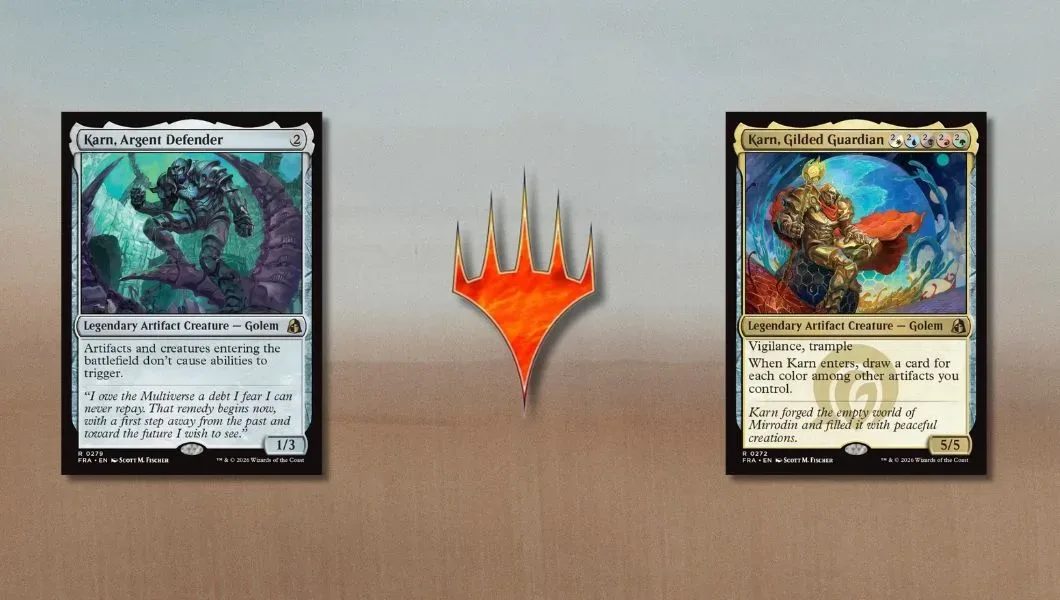
Magic: The Gathering’s Reality Fracture arrives with a notably lean Commander offering: one preconstructed deck rather than a pair. That deck, Multiverse Reforged, is being positioned as anything but a small side release. Game designer Gavin Verhey says many people internally regard it as “among the most powerful” Commander preconstructed decks the game has ever released.
It is an unusually direct assessment for a product category often judged in relative terms. Preconstructed Commander decks, commonly shortened to “precons,” are ready-to-play decks made for Magic’s popular multiplayer format. Their appeal is partly accessibility—players can sit down with a complete deck without building a list from scratch—but they also become starting points for upgrades, rebuilds and experiments. Multiverse Reforged appears designed to serve both audiences, while carrying more ambition than its lone-deck status might initially suggest.
Why Reality Fracture has one Commander deck
Reality Fracture closes a Magic saga through alternate-reality takes on recognizable characters from the game’s past. Its Commander contribution follows the single-deck approach also used for this year’s Teenage Mutant Ninja Turtles release. The immediate question is why a set with a broad theme and many cards would receive only one precon.
Verhey’s explanation is rooted in the practical difficulty of launching two decks with unequal appeal. When one is perceived as much more exciting, demand can concentrate on that product while the less popular deck remains on store shelves. That imbalance is awkward for retailers and for players who may find the deck they actually want harder to locate. Lorwyn Eclipsed was the most recent set this year to introduce two Commander precons, but Reality Fracture took another route.
Rather than divide attention between two concepts, the team focused its effort on a single deck centered on Jace and the wider Echoverse concept. Verhey said the decision let the team give Multiverse Reforged additional resources, including new cards, a high-profile theme and a four-color identity.
That design choice matters beyond simple product count. A lone deck can give a set’s Commander identity a clearer focal point. It also means the deck has to carry a bigger share of the release’s appeal on its own. Multiverse Reforged’s combination of Jace, alternate versions of legends and a multicolor construction is plainly intended to make that one slot feel substantial.
For more detail on the rationale behind the one-deck approach, see why Magic: The Gathering sometimes puts just one Commander deck in a set.
What “four-color identity” means here
Commander is built around a chosen commander, generally a legendary creature or other card allowed to lead a deck. A deck’s color identity establishes which colors of Magic cards can be included. In everyday deckbuilding terms, a four-color commander opens access to four of Magic’s five colors, creating a much wider potential card pool than a one- or two-color list.
Related coverage includes Magic: The Gathering's Multiverse Reforged Commander Deck Is Being Positioned as a Historic Powerhouse.
That breadth is not automatically a guarantee of strength. More colors can also make a deck’s mana—the resources used to cast cards—more demanding to manage. Still, a four-color identity gives designers significant room to include varied effects and lets players explore more directions if they later change the deck.
Multiverse Reforged’s structure is especially suited to that flexibility. It includes alternate-reality versions of legendary Magic characters, including The Ur-Sphinx, alongside Jace as a planeswalker commander. A planeswalker is a powerful character card type with its own abilities; in this case, Jace is not just part of the deck’s story but its central Commander option.
A toolbox feel, with a stronger official reading
One early way of reading Multiverse Reforged is as a “toolbox” deck. In card-game language, a toolbox approach usually means a list contains a wide spread of individually useful pieces rather than relying on a single narrow interaction. The abundance of distinct legendary cards makes that impression understandable: different legends can offer different tactical roles and can suggest several potential rebuild paths.
Verhey agrees that the theme naturally creates that feeling. He pointed to the quantity of individually compelling new legends and said he could imagine similar themes appearing in the future. For players who enjoy dismantling a precon and recombining its strongest or most interesting parts, that is a meaningful part of the deck’s pitch.
But he also pushed back on the idea that Multiverse Reforged should be viewed only as a collection of components. The internal view, he said, is that it is exceptionally powerful out of the box—meaning in its original preconstructed configuration, before players add cards, remove cards or tune it to their local groups.
The distinction is important. A deck can be good upgrade material yet require extensive changes before it performs well. Conversely, a strong ready-to-play deck is immediately useful to someone who wants to join Commander games with minimal preparation. Multiverse Reforged is being presented as both: a deck with many appealing legendary pieces and a finished product intended to make an impact without modification.
What the power-level claim does—and does not—tell players
“Among the most powerful” is a bold internal judgment, but it is not the same as a precise ranking or a promise that the deck will dominate every table. Commander games can vary enormously based on player expectations, deck construction, multiplayer politics and the cards each group chooses to use. The supplied information does not identify a numerical power rating, a specific matchup record or an official comparison list.
What the statement does establish is intent: Wizards of the Coast sees Multiverse Reforged as a high-performing precon, not merely a flavorful collection of Reality Fracture characters. For prospective players, that should set expectations appropriately. Someone choosing the deck because they like Jace or alternate-universe legends may be getting a more forceful starting point than the typical “buy it, play it, improve it later” product framing suggests.
It may also be worth discussing the deck’s expected level before a first game, particularly in groups where Commander nights include a wide range of precons and personalized lists. That is not an accusation that the deck is unsuitable for casual play; it is a practical response to the fact that power perceptions shape multiplayer games. Clear expectations can prevent a deck celebrated for its strength from becoming a mismatch at the table.
Practical takeaways for Commander players
- For new buyers: Multiverse Reforged is presented as a complete deck with notable strength before any upgrades, not only as a source of singles.
- For tinkerers: Its four-color construction and many legendary cards suggest several possible directions for rebuilding it, even though individual upgrade paths were not specified.
- For existing playgroups: Treat the internal power claim as a useful prompt for a pre-game conversation, rather than a universal prediction of every match.
- For retailers and collectors: The move to one deck reflects an attempt to avoid a two-product split where one precon rapidly sells through and the other lingers.
A concentrated Commander release for Reality Fracture
Reality Fracture’s Commander strategy is clear: one deck, a recognisable centerpiece in Jace, a four-color identity, and an ensemble of alternate-reality legends. The result is meant to appeal to players interested in the set’s theme as well as those seeking a potent Commander deck ready for immediate games.
There is also a broader design signal in Verhey’s comments. The legend-heavy “toolbox” feeling is not being treated as an accident; it is an aspect of the concept that could return in later themes. Whether future decks take that path remains uncertain, but Multiverse Reforged gives the idea a particularly high-profile trial.
For now, the most consequential detail is the confidence behind the box. A single Reality Fracture precon might look like a restrained release on paper. Multiverse Reforged, however, is being framed as a deliberately resourced, flexible and unusually powerful Commander deck—one that asks players to look beyond the number of precons and pay attention to the one that made the cut.