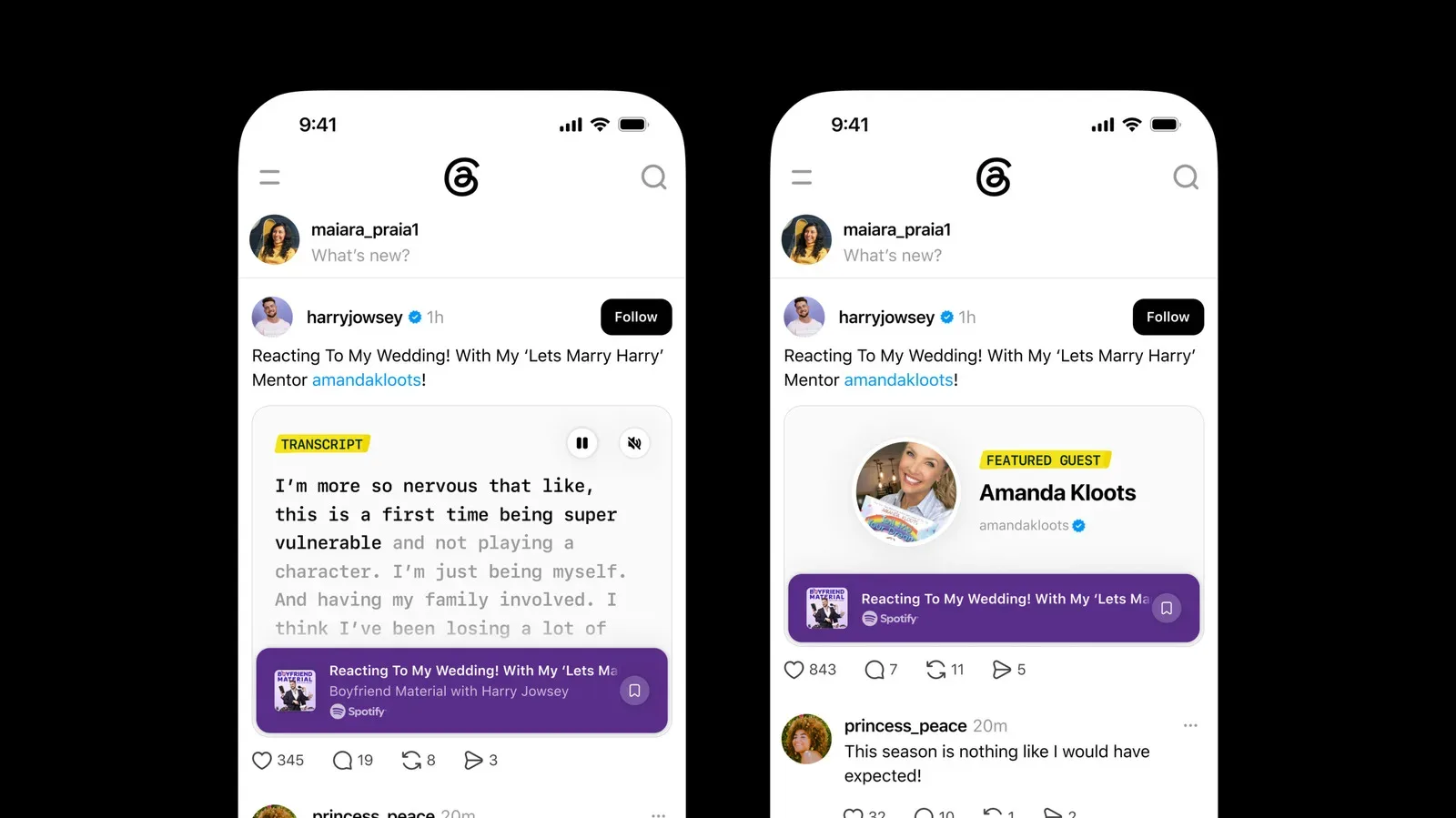
Threads is making a more explicit play for podcast promotion. The social platform has added tools that let users share episode transcripts, save episodes for later and measure the traffic and interest generated by Threads posts. Together, the additions turn a basic episode link into a more substantial promotional card—and give publishers a clearer reason to keep returning to the platform after a show goes live.
The update matters because a podcast link has a difficult job on a fast-moving social feed. It needs to catch attention, explain why an episode is worth someone’s time and then persuade that person to leave their current scrolling session for a listening app or website. Threads’ new presentation options aim to make that first step more useful without requiring a prospective listener to immediately commit to a full episode.
For gaming-focused shows in particular, the appeal is straightforward. A host can point followers to a discussion about a major release, a studio’s future or a retro discovery, while providing enough context for people to decide whether the subject is for them. The platform is not creating podcasts; it is adding a more developed layer between a show’s publishing destination and the social post used to publicize it.
What changes when a podcast episode is shared
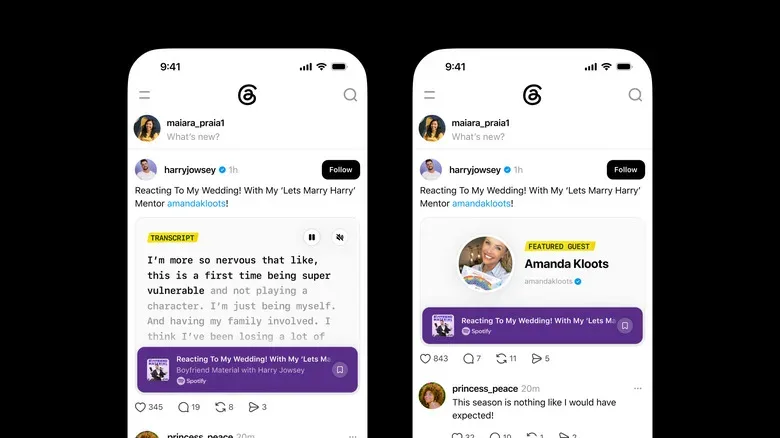
Posts that share an episode link can now show several kinds of supporting material. If a show has a video component, the post can display a video clip. It can also present a written transcript excerpt, or spotlight a featured guest when that person is tagged. An episode link can play an audio preview when tapped.
These are distinct tools rather than different names for the same feature:
- Video clip: a short visual segment associated with a video podcast. Its usefulness depends on the show actually having video material.
- Transcript: written text from part of the episode. In practical terms, this lets the post communicate a discussion point or memorable exchange in a format that works while a person is reading a feed rather than listening with sound on.
- Guest highlight: a presentation option tied to a tagged guest. It gives audiences an immediate indication of who is involved in the episode.
- Audio preview: a sample that can be played from the episode link, providing a low-commitment way to hear the show.
The result is a more flexible pitch. A creator with a video podcast can lead with an on-camera moment. A primarily audio show can use text and an audio preview instead. And a guest-driven episode can foreground the person audiences may already recognize. Each format supplies a different answer to the same question: why should someone stop scrolling for this particular episode?
Transcripts may be especially useful on a text-oriented service. Audio is inherently sequential: listeners generally need to press play and spend time with it before knowing whether a conversation is relevant. A transcript excerpt can put the subject, tone or hook directly in front of someone. It does not replace an episode, but it can make the value proposition legible at a glance.
That is potentially helpful for creators covering topics that need specificity. A generic “new episode is out” post has little to distinguish it from every other launch notice. A concise spoken excerpt about a game’s design, an industry debate or a guest’s expertise tells followers far more. Of course, a transcript selection still needs care. A line removed from its broader conversation can make a point sound sharper, stranger or more decisive than it was in context. The new feature improves discoverability, not the editorial judgment involved in choosing what to showcase.
A save button acknowledges that interest is not immediate listening
Threads has also added a “save it for later” button for episodes. That is a small interaction, but an important one in the path between discovery and listening.
People commonly encounter recommendations when they cannot begin a long-form audio program: during work, while commuting, before bed, or midway through a separate media session. A direct link asks them either to leave Threads now or rely on memory later. Saving gives interested people a middle option. They can signal intent at the moment the episode catches their eye, then come back when they are ready.
For publishers, saved episodes are not equivalent to completed listens or new subscribers. The available information describes saves as a metric Threads can display; it does not establish that every save produces downstream listening. Still, the action is more meaningful than a passive impression. It indicates that a user encountered the post and found the episode potentially worth revisiting.
The practical implication is that episode posts can be designed for delayed consumption as well as instant clicks. A post does not have to treat the first few minutes after publication as its only opportunity. An evergreen interview, a season recap or an in-depth discussion may remain useful in a saved list even after the initial conversation has moved on.
Analytics put external traffic back in view
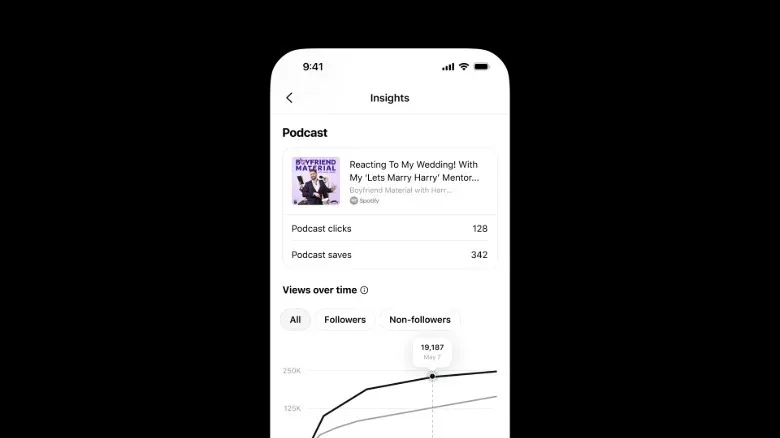
On the creator side, Threads can show podcast insights including how many people clicked on an episode or saved it. The platform can also send reminders encouraging users to share episodes after they premiere.
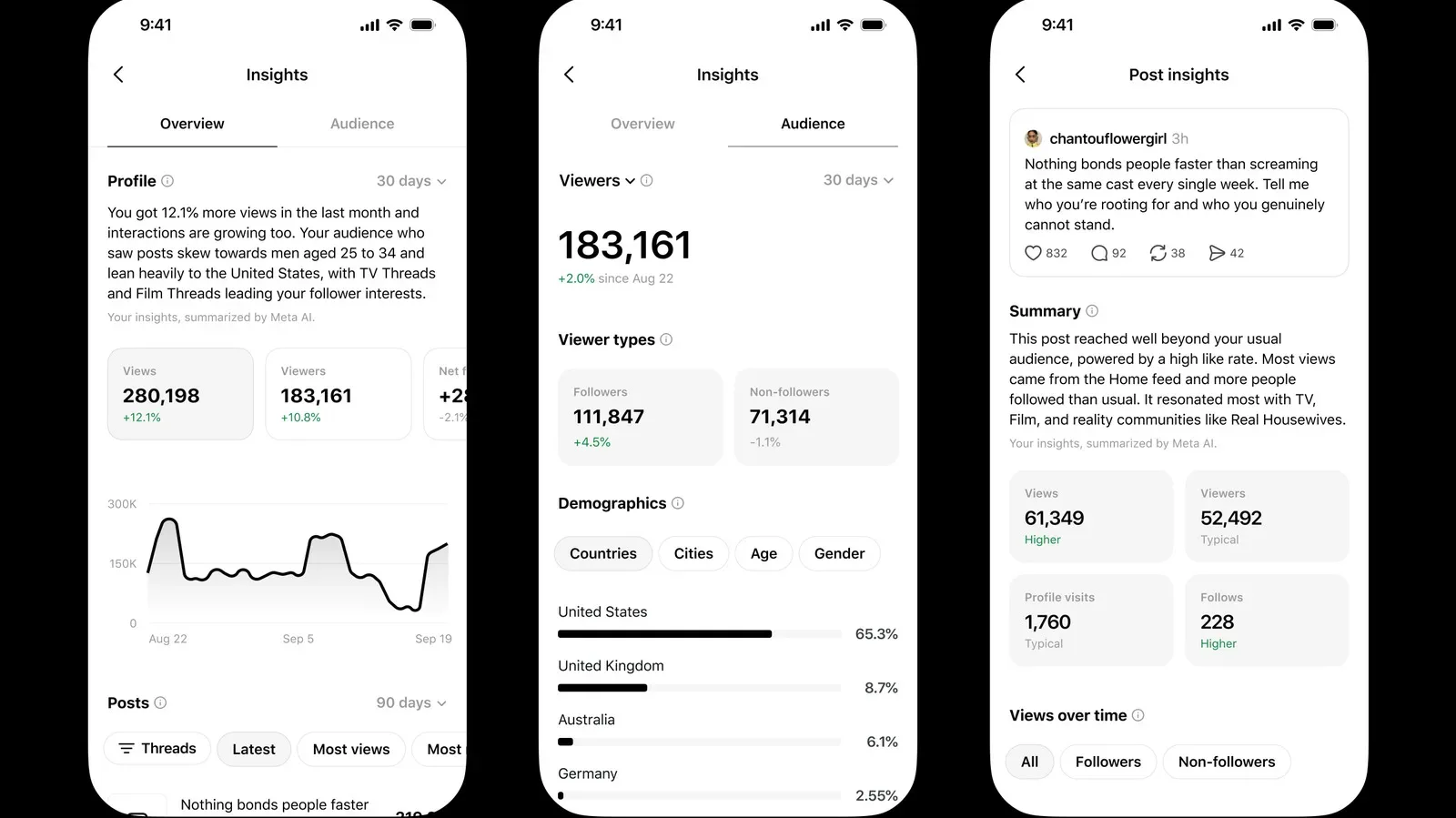
This is a notable emphasis because external link clicks are typically downplayed in Threads’ wider in-app analytics. Podcast promotion is different by necessity: the episode itself usually lives elsewhere. If a platform wants to be a serious discovery layer for podcasts, it needs to acknowledge whether posts are actually sending people toward the show.
Click metrics indicate that users selected the episode link. They are useful for comparing which post treatments motivate an immediate visit—for example, a guest-focused post versus a transcript-led one. They do not, on their own, reveal whether that visitor finished an episode, followed a show or became a regular listener.
Save metrics capture a separate kind of response: deferred interest. A post with fewer clicks but more saves may be reaching people who want to return later. That can be valuable for longer episodes or material that demands more attention than a quick social-media visit allows.
Neither number should be overstated. They are indicators inside Threads, not a complete measurement of podcast performance. A creator cannot reasonably treat a click as proof of listening, nor a save as proof of a subscription. But the metrics can help answer narrower, practical questions: Did the transcript entice more people than the video? Did tagging a guest lead to greater engagement? Did a reminder after premiere catch an audience that missed the initial post?
That feedback loop is the most consequential part of the package. A platform can offer attractive visual treatments, but creators need to understand which ones lead to action. By making both clicks and saves visible, Threads gives podcast accounts a way to compare promotional approaches using signals related to the episode rather than relying only on general social engagement.
Why video podcasts fit social feeds so readily
Threads’ expansion follows podcast-specific experimentation in 2025 and arrives in a media environment where video podcasts have become highly reusable social material. A long conversation can yield short clips for video apps, text excerpts for discussion-driven services and full episodes for streaming platforms. That flexibility makes podcasts particularly useful to platforms competing for a role in discovery.
It is worth separating the terms here. A video podcast is a podcast with a video component; it may still be consumed primarily as audio by many listeners. A short-form clip is a brief segment extracted from that longer program and used as promotion or standalone social content. Threads’ tools accommodate both the video-derived clip and the underlying episode link, while transcripts provide a third presentation that is native to reading.
The strategy is sensible for a still-growing social platform. Podcasts offer a continuous supply of moments, guests and topics that can be adapted for different feeds. In return, a social platform that can reliably turn those posts into listening interest has a chance to become part of a show’s regular release routine rather than merely another account to maintain.
For an entertainment or gaming podcast, that could mean using Threads as a place to put a focused discussion in front of followers before asking them to commit to the full runtime. It could also mean more transparent experimentation. A show might use a transcript to introduce a nuanced argument, a video excerpt when personality and reaction are the draw, or a guest tag when the guest’s audience is likely to care. The new insights offer at least a basic way to see which route prompted clicks or saves.
There is also a potential audience benefit. People who prefer reading can assess an episode through an excerpt. People who want to sample a host’s delivery can use the audio preview. People who are busy can save the episode instead of abandoning it. None of these choices requires Threads to become the primary listening destination, which appears central to the approach: the platform is positioning itself as a better bridge to shows hosted elsewhere.
What creators can reasonably take from the update
The tools reward a more intentional posting habit, but they do not eliminate the core difficulty of making something worth sharing. An episode still needs a clear topic, a compelling guest, an illuminating exchange or a clip that stands on its own. Threads can make those elements easier to package; it cannot manufacture them.
- Match the format to the strongest hook. Use a transcript when exact wording and a clear idea are persuasive. Use video where an expression, demonstration or interpersonal moment adds value. Highlight a guest when their involvement is the principal draw.
- Write posts for both immediate and delayed interest. The save button means not every reader needs to listen now. Explain the episode clearly enough that a person can recognize why they saved it when they return later.
- Read clicks and saves as different signals. Clicks suggest prompt curiosity; saves suggest planned follow-up. Neither is a substitute for broader listening data, but the contrast can guide future Threads posts.
- Use post-premiere reminders with a purpose. A reminder can reach people after launch, but a second post is most useful when it offers a different angle rather than repeats the original announcement.
For the broader games-and-entertainment ecosystem, this reinforces how much promotion now sits between a full work and a social audience. Whether the work is a show, a stream or a long-form conversation, people often first encounter it as a clip, a line of text or a guest tag. Threads is building tools around that reality—and, unusually for a platform that often de-emphasizes outbound links, is making the resulting traffic more visible for podcasts.
The update does not promise an audience, and the available metrics should not be confused with proof of completed listening. It does, however, give podcast publishers a more complete set of ways to be discovered on Threads: show a moment, quote a moment, preview a moment, let people save it, then see whether those choices generated clicks or later interest. For a platform seeking a durable role in podcast discovery, that is a considerably more focused proposition than the standard link post.
Creators navigating other difficult corners of online game culture may also find our look at why buying an official video game T-shirt has become so weirdly difficult useful context for how visibility, official channels and fan-facing promotion can become unexpectedly complicated.