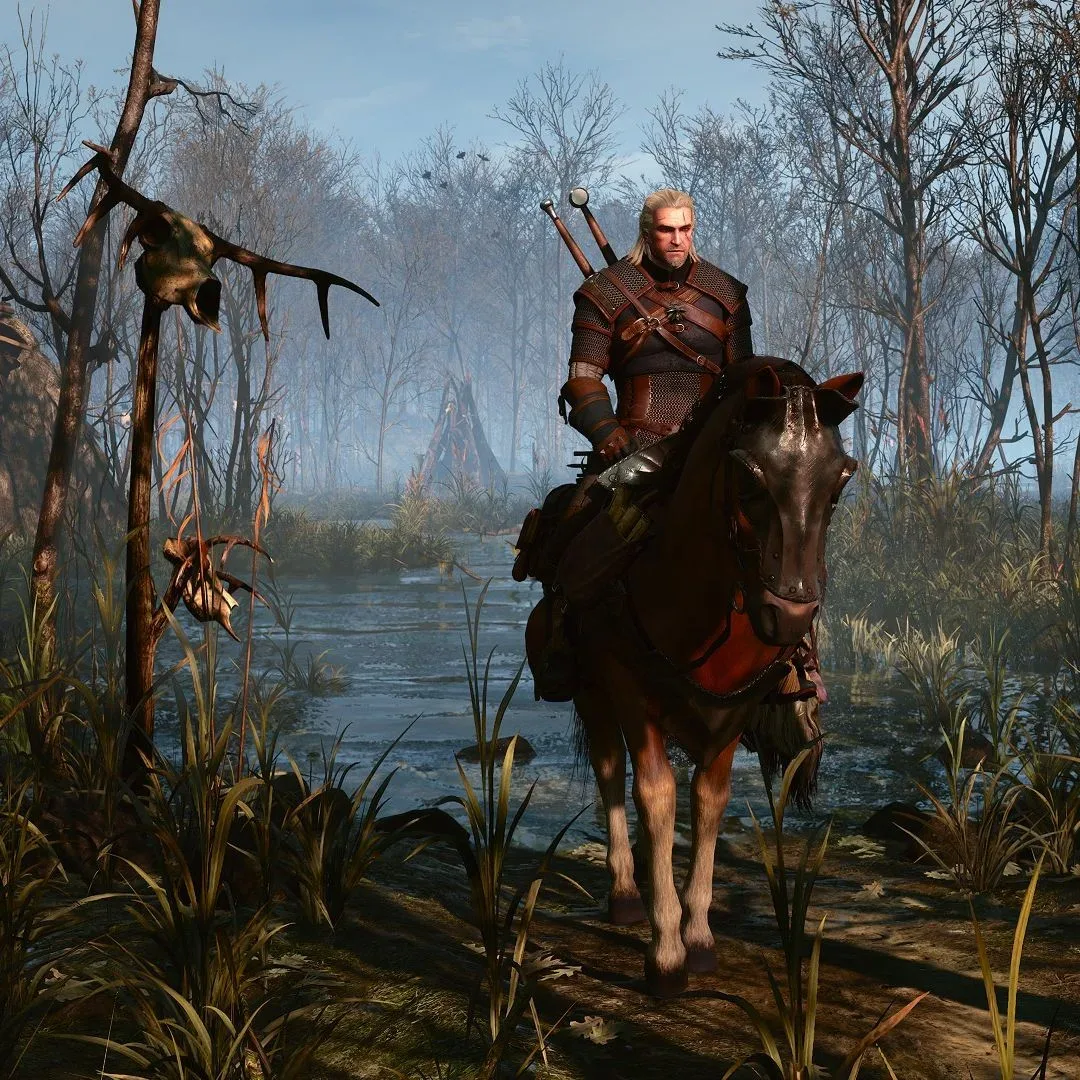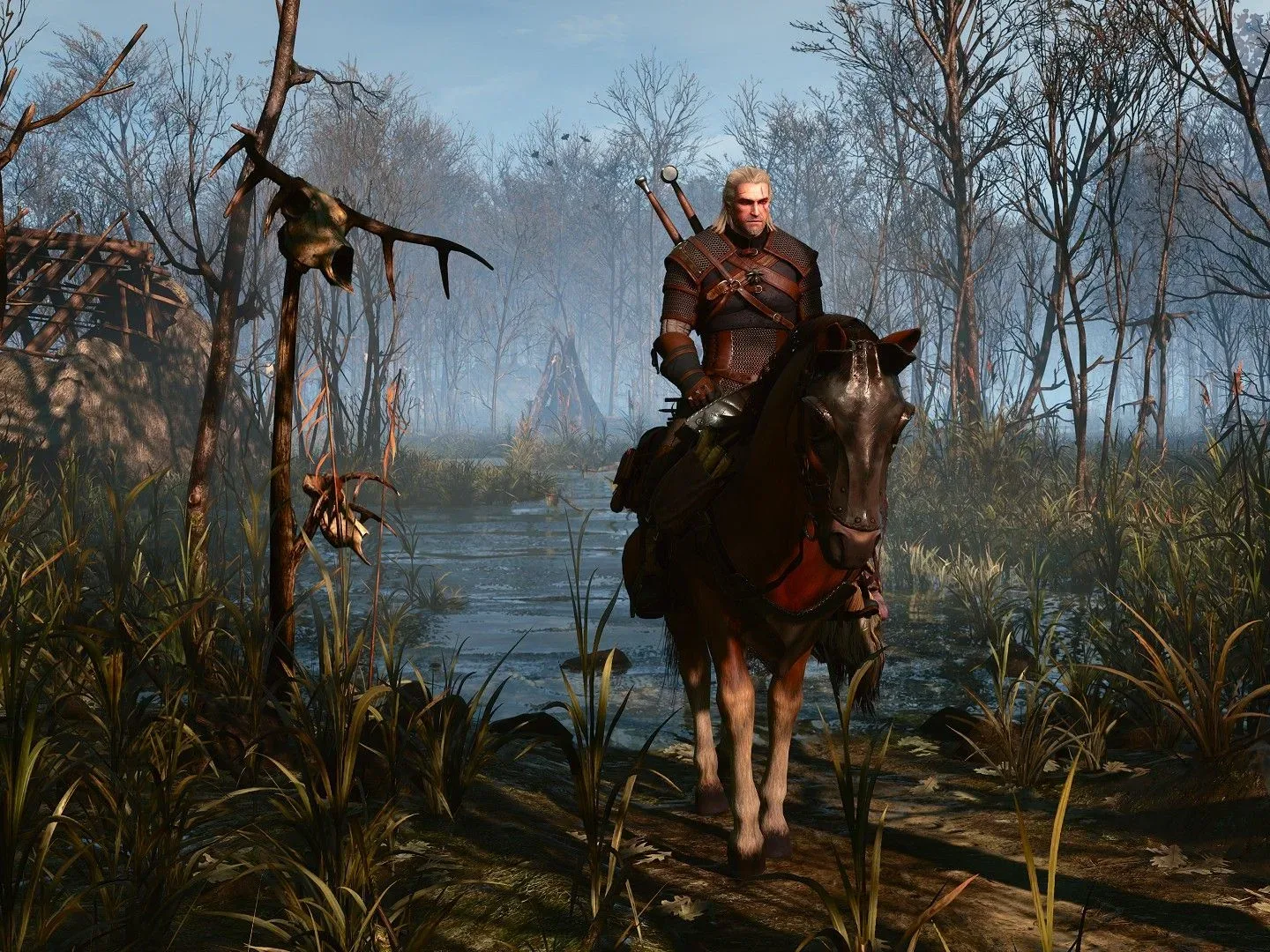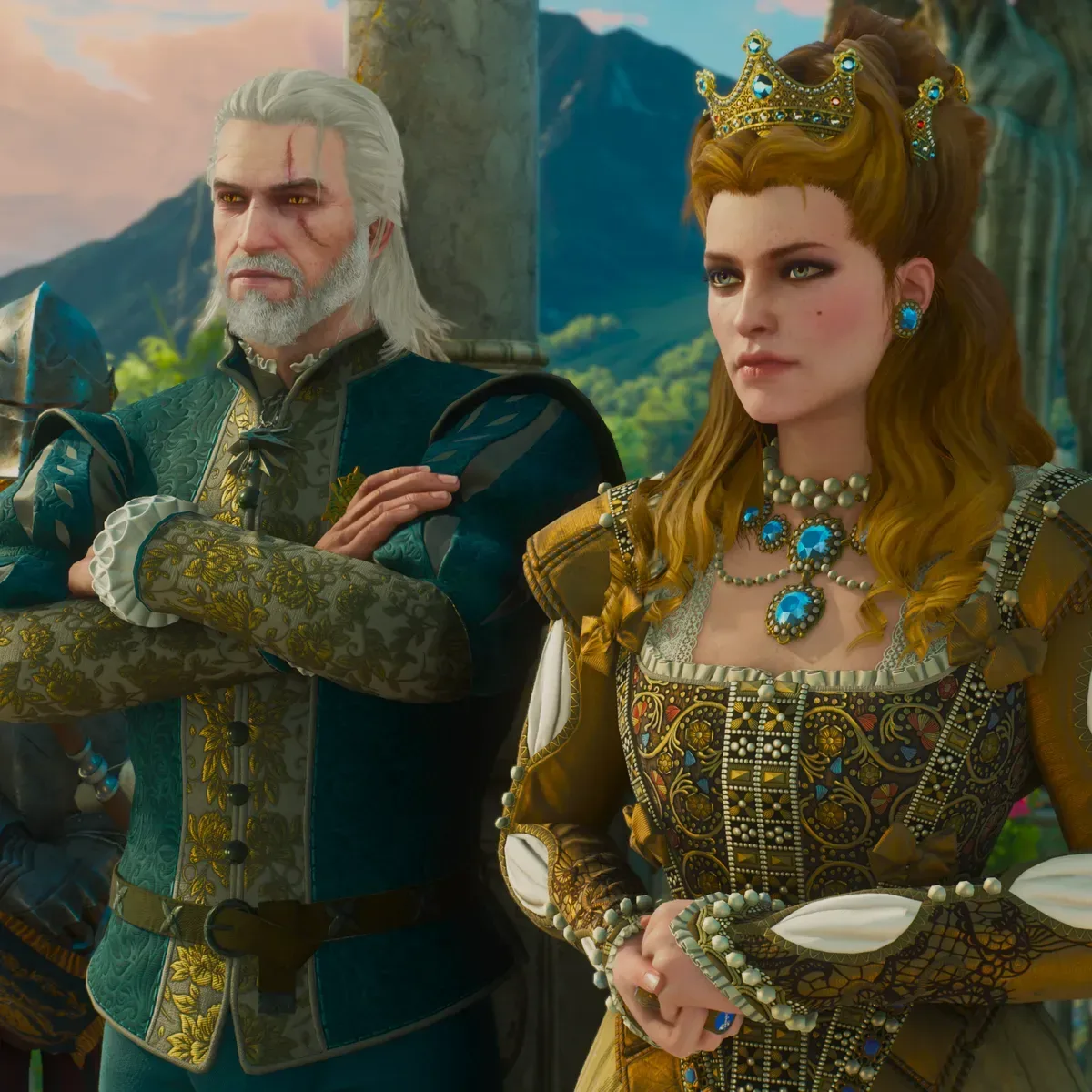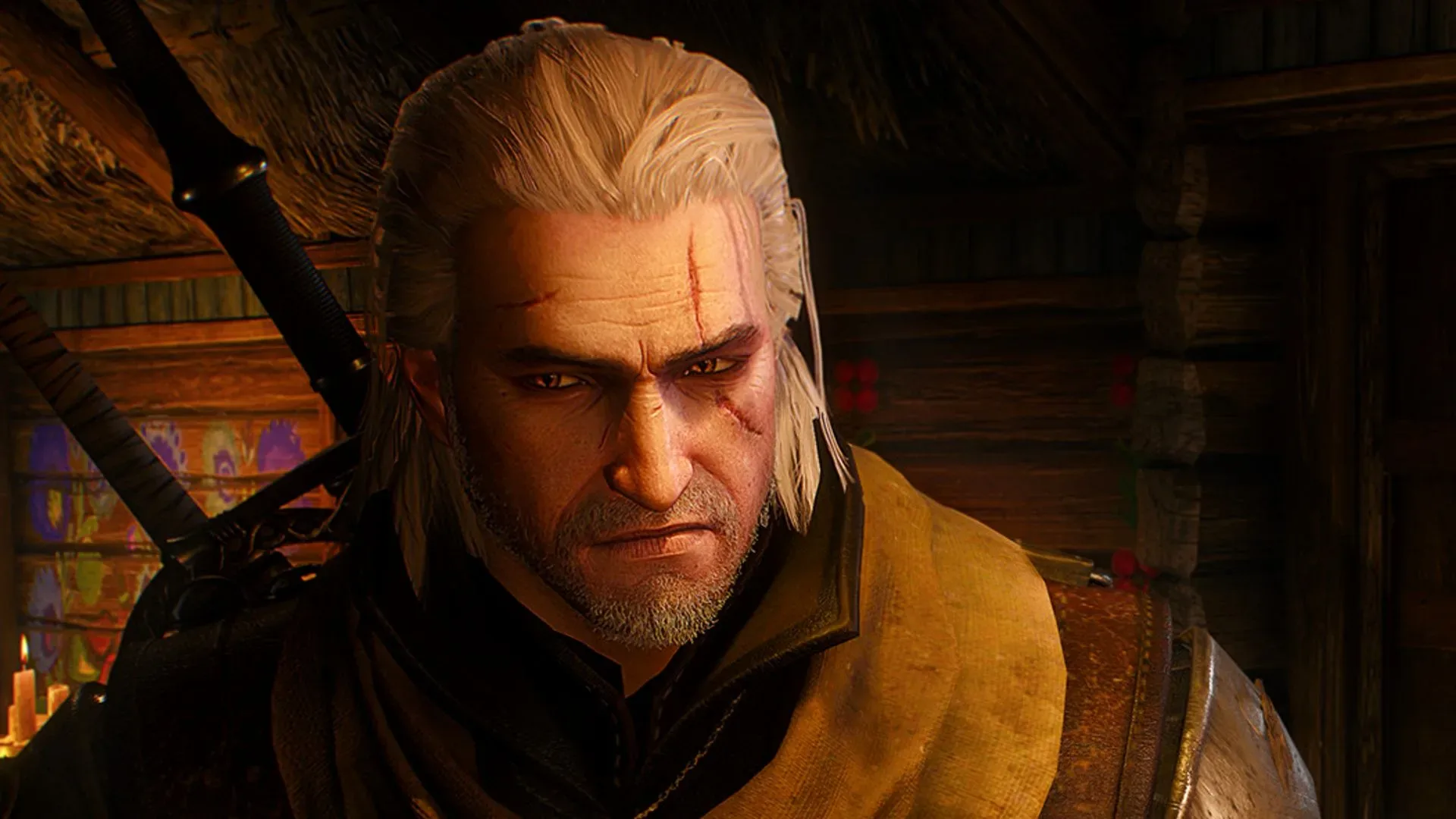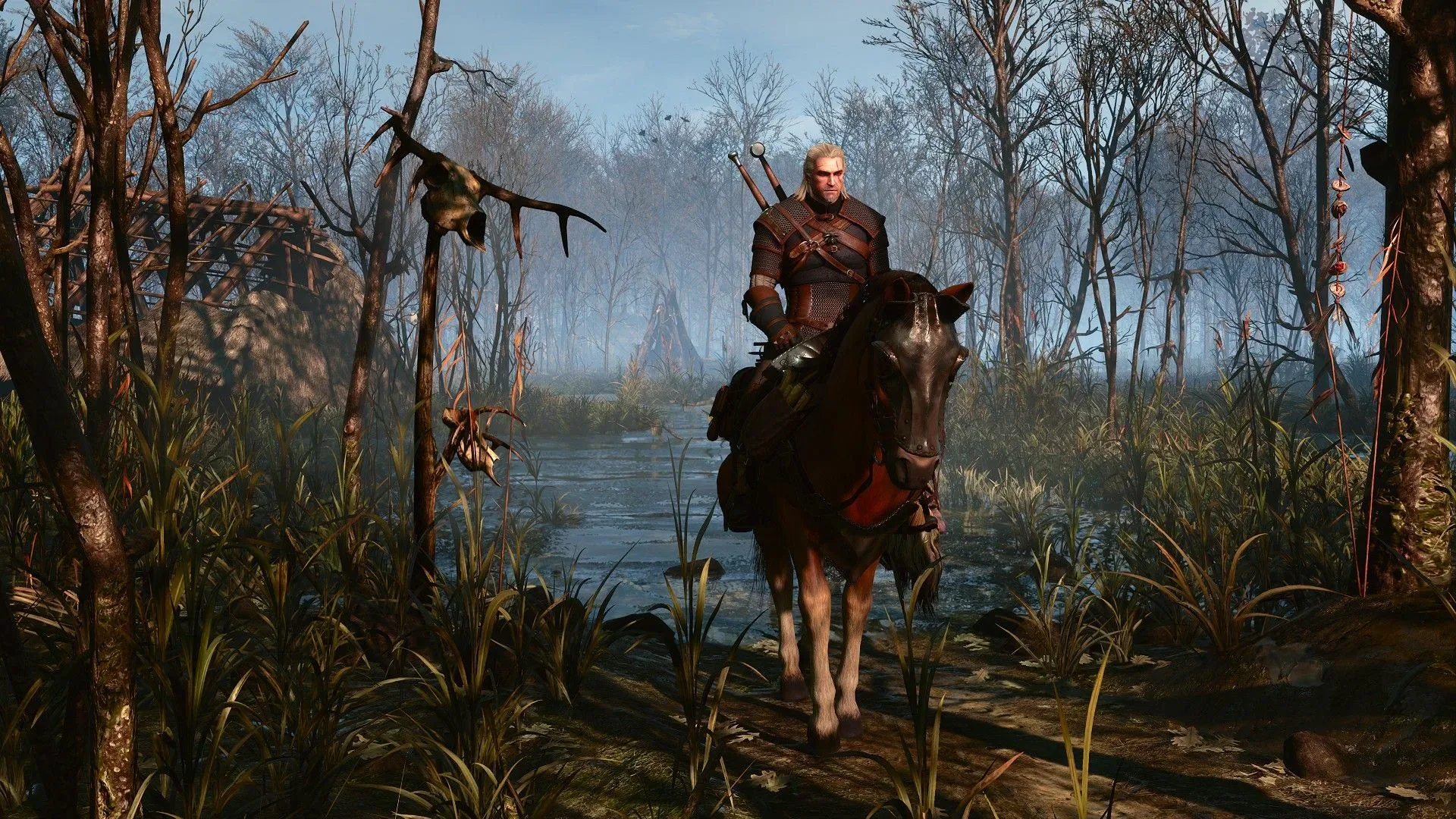
The Witcher 3: Wild Hunt’s remaster is due September 29, and its newly detailed changes reach well beyond audiovisual improvements. The update revises how character progression is structured, changes map information for unfinished quests, adds an accessibility-focused Bard’s Ballad mode, gives meditation a visual time-lapse, and expands the game’s photo mode.
For returning players, the most immediately consequential change may be the new approach to skills. Imported saves will have their accumulated skill points reset, while the progression system itself is moving away from its prior point-spending requirement for unlocking abilities. That means anyone continuing an existing adventure should expect to revisit their build rather than simply carry it forward unchanged.
The remaster’s patch notes describe skills as part of a dedicated skill tree, with three ranks per skill. New abilities are unlocked through prerequisite skills instead of by reaching a stated skill-point threshold. It is a structural change to build planning, not merely a new coat of paint on old menus.
A skill system that asks players to plan a route
In role-playing games, a skill tree is a visual and mechanical layout showing how abilities connect. A prerequisite is an ability a player must obtain before another becomes available. Under the remaster’s revised system, advancement is therefore based on choosing a route through connected skills.
For more context, explore Anne Hathaway Skips Hot Ones Press Challenge During Verity Tour on Doctor’s Advice.
That distinction matters. A system based primarily on point totals lets players unlock an ability once they have spent enough points in a broader category. A prerequisite system instead makes the earlier choices part of the requirement. Players are asked not only how many points they want to invest, but which foundational abilities lead to the option they want later.
Each skill now having three ranks also clarifies that an ability can be developed in stages. The available details do not specify the effects, costs, or individual prerequisites for every rank, so players should avoid assuming that a favourite previous setup will map directly onto the remaster. The sensible approach is to inspect the revised trees before committing reset points.
That advice is especially relevant to imported saves. A reset can be a welcome opportunity to reassess a character, but it also means a build that once felt familiar may require a fresh set of decisions. Several skills have also been renamed to better match what they do. No specific renames have been outlined, making a careful read-through useful for anyone who remembers abilities by their former labels.
What save-import players should do first
- Open the skill trees before spending reset points.
- Check renamed skills rather than relying on old names from memory.
- Follow prerequisite paths to see which abilities are needed for a desired later unlock.
- Consider the three-rank structure when deciding whether to spread points broadly or deepen a smaller selection of skills.
This is not evidence that every previous build has been weakened or strengthened; the supplied patch details do not establish that. It is, however, enough to say that the way a build is assembled has changed. Players returning after a long break may find the reset useful, while those deep into an existing save will want to make their selections deliberately.
Unfinished questlines get a clearer map signal
The world map is also receiving a targeted quality-of-life adjustment. Incomplete questlines will now have their own marker. In a game built around a large number of activities and ongoing story threads, that distinction can reduce the time spent determining what remains unresolved.
A quest marker is the map or interface symbol used to identify an objective, activity or point of interest. The new marker is specifically for questlines that are not complete. It does not imply a change to quest objectives themselves; rather, it changes how players can identify and sort their next possible activity on the map.
The practical value is straightforward: players who are returning to an older save, switching between story threads, or simply trying to avoid leaving a chain unfinished should have a more direct way to locate those open threads. For a lengthy RPG, reducing navigation friction can be as useful as adding a new combat feature. The remaster’s broader list of changes is covered in this overview of the skill, accessibility and map updates.
There is an important limit to keep in mind: the details only say that incomplete questlines receive a separate marker. They do not define every map-filter option, explain how markers interact with all quest states, or state that quests are being rewritten. The confirmed change is better visibility for work still in progress.
Bard’s Ballad is designed to reduce cognitive load
The biggest new accessibility feature is Bard’s Ballad, a mode intended for players who experience mental fatigue or difficulty concentrating. It streamlines gameplay by simplifying certain mechanics and disabling selected features, with the aim of making the adventure smoother and more focused.
Cognitive load describes the amount of mental effort required to take in information, remember it and act on it. In games, that effort can come from tracking multiple systems, following several tasks, parsing interface elements, making rapid decisions, or keeping track of objectives over a long session. Reducing cognitive load does not necessarily mean removing all challenge. It means reducing some of the demands that compete for a player’s attention.
The exact mechanics simplified by Bard’s Ballad have not been listed, and neither have the features that will be disabled. That uncertainty is significant: players should not presume particular combat, exploration or interface changes until the mode’s full in-game description is available. Still, the stated design goal is unusually clear. Bard’s Ballad is not framed as a cosmetic preset; it is a mode meant to make a very large RPG more manageable for people who may find its ordinary demands tiring or hard to concentrate on.
Accessibility settings are most useful when they recognise that a player’s needs can differ from one game session to the next. The information available does not say whether Bard’s Ballad can be adjusted in individual pieces, changed at any time, or combined with other options. What is confirmed is a focused mode built around simplifying parts of play and reducing mental burden.
Meditation gains a time-lapse instead of only a menu transition
Meditation is also changing presentation. Rather than moving only to a menu, it will now show a short time-lapse. This is a smaller alteration than the skill-tree redesign, but it touches an action likely to be used repeatedly throughout an adventure.
A time-lapse compresses the visual passage of time into a brief sequence. Here, it provides a more visible transition when the player meditates. The confirmed information does not indicate any change to what meditation does mechanically. The adjustment is about conveying the passing of time rather than leaving that moment entirely to interface navigation.
It is a useful example of how remaster work can concern rhythm as well as resolution or lighting. A brief visual transition can help connect a menu-driven action to the game world, particularly during longer play sessions where such actions recur. It should not be mistaken for evidence of a larger overhaul to time systems; only the new time-lapse presentation has been detailed.
Photo mode gets wider control over character scenes
Players interested in staging screenshots will also get additional photo-mode options. The most notable confirmed feature is the ability to add any character to a frame after choosing the shot.
Photo mode is a collection of tools that lets players compose images inside a game. A character-placement option changes the process from simply capturing an existing moment to arranging a scene more intentionally. It can help players build a group image, alter the focus of a composition, or create a shot around a particular character without waiting for an exact in-game encounter to occur.
The update is said to include many more camera-work options, though the precise controls have not been specified. As with Bard’s Ballad, the restraint matters: there is confirmation of expanded tools and post-shot character insertion, but not a full feature list. Players should expect a broader creative toolkit, not assume unlisted lenses, poses, filters or export functions.
What the remaster changes—and what remains unclear
The confirmed changes divide into two useful groups. The first alters systems and clarity: the prerequisite-based, three-rank skill trees; the imported-save point reset; renamed skills; and distinct markers for unfinished questlines. The second improves how players experience and present the game: Bard’s Ballad’s effort to reduce cognitive load, meditation’s time-lapse, and enhanced photo controls.
For existing players, the central preparation is simple. Treat the first post-import skill allocation as a new planning exercise, read the revised names and dependencies, and use the new map distinction to regain bearings in open questlines. For new players, the changes suggest a version that provides more support around navigation, concentration and personal build direction without any confirmed rewrite of the game’s story or quests.
More content is also expected in the future, with Songs of the Past planned for next year. No further details about that project are included here. For now, the immediate story is a remaster attempting to improve not just how The Witcher 3 looks and sounds, but how players organise decisions, find unfinished business, and tailor the journey to their own attention and comfort.