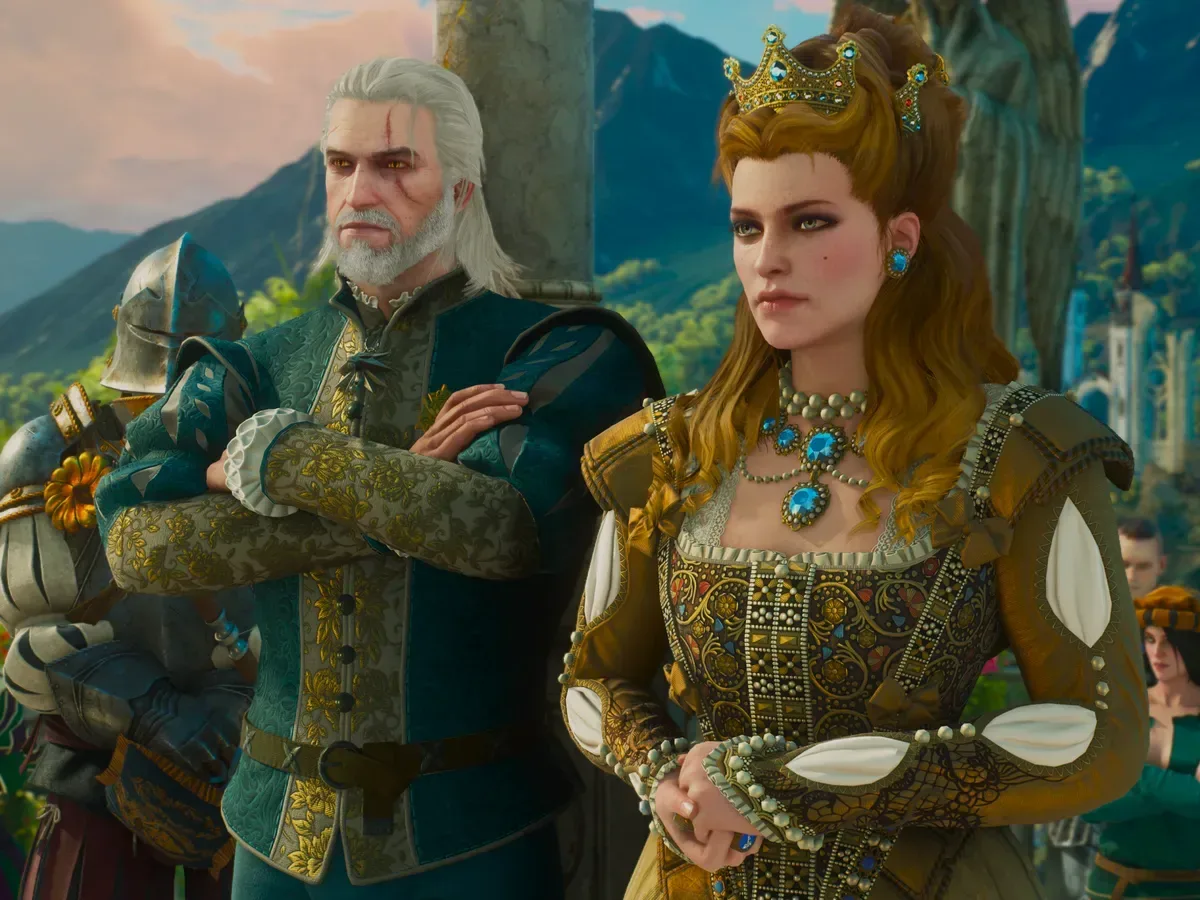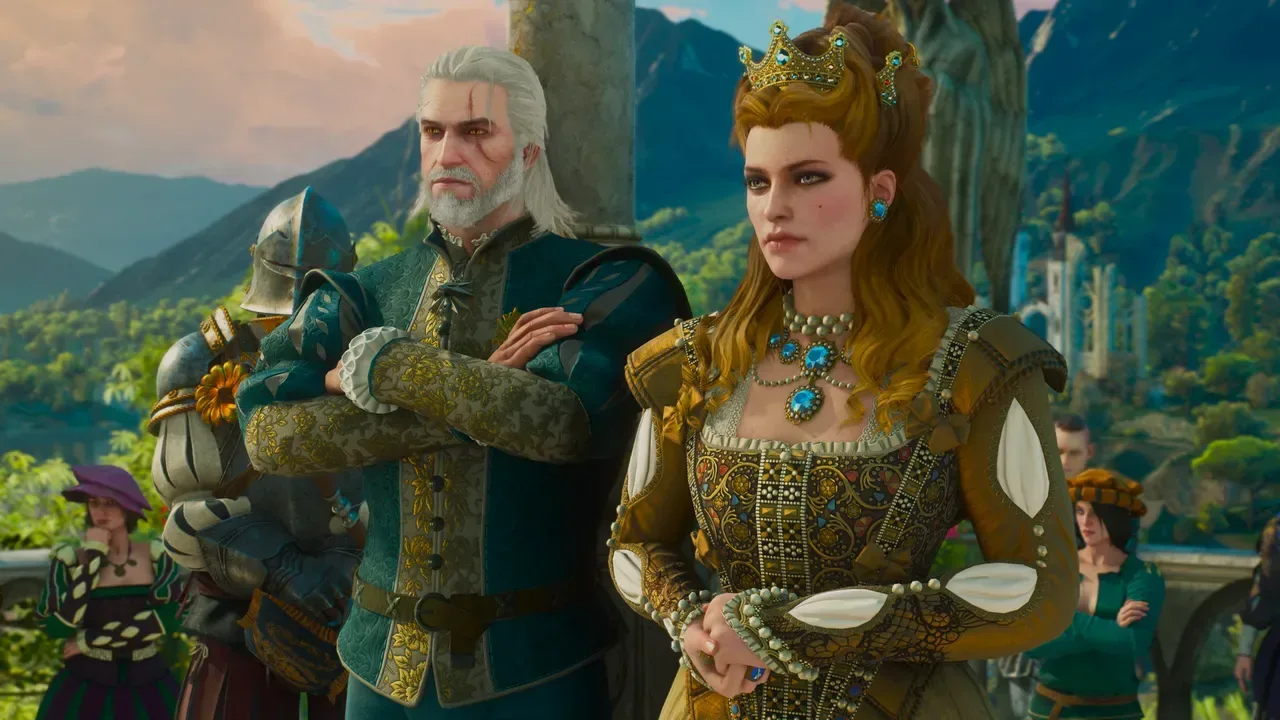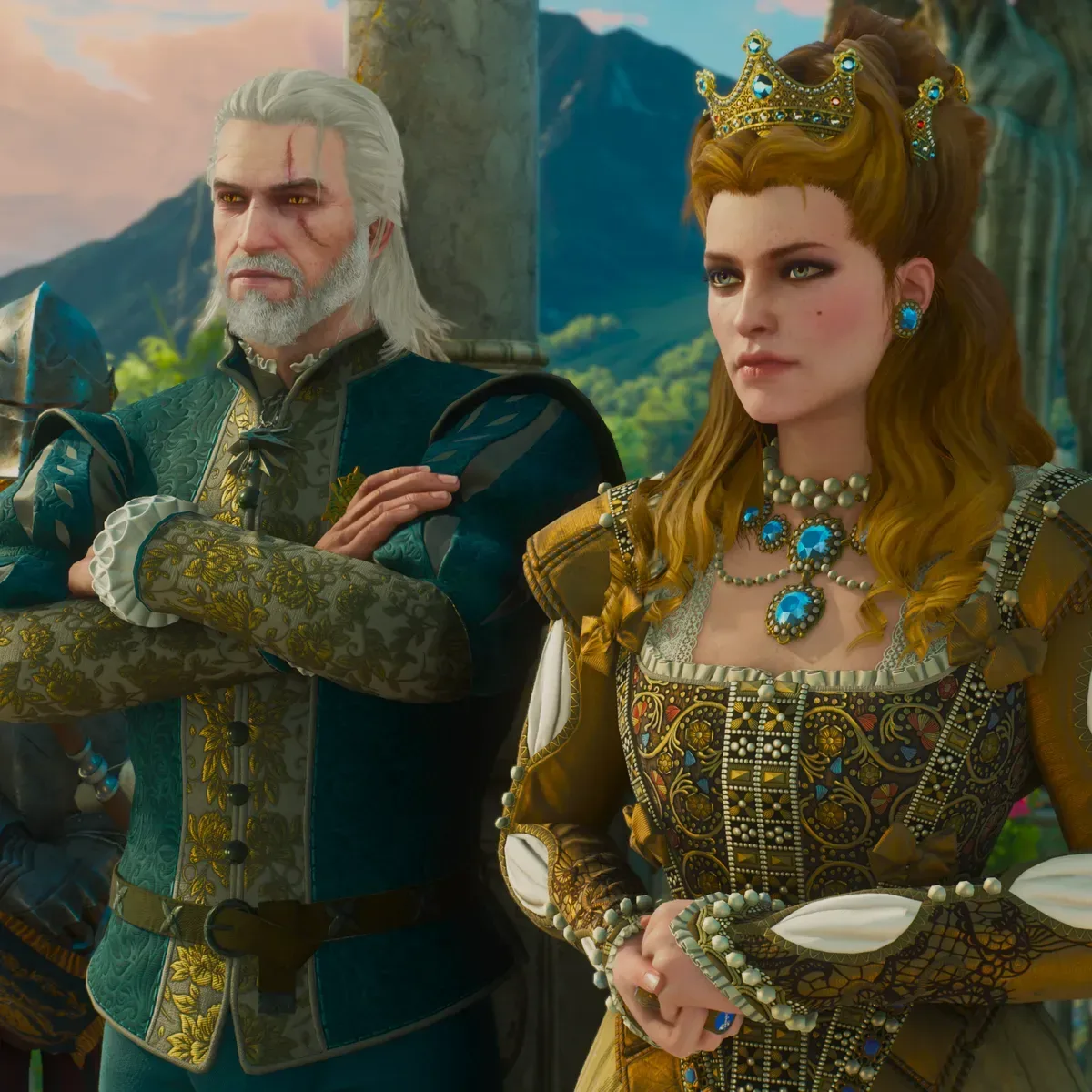
The Witcher 3: Wild Hunt — Remastered is positioned as more than a straightforward visual pass. The free update, due September 29 for PC, PlayStation 5, Xbox Series X|S, and Nintendo Switch 2, combines rendering upgrades with a rebuilt skill tree, combat revisions, traversal changes, accessibility support, and cross-platform mod integration.
That distinction matters. A conventional remaster can leave the systems underneath largely untouched and concentrate on image quality or performance. This update instead reaches into the decisions players repeatedly make: how Geralt develops, how fights read and respond, what exploration tools reveal, and how equipment can look. For returning players, the practical question is not simply whether the Continent looks sharper. It is whether a familiar build, route, or approach to encounters will feel substantially different.
The update’s scope is organized around four areas: visuals, combat, quality of life, and miscellaneous additions. Some details are platform-specific, but the wider promise is clear: a version of the game intended to modernize both its presentation and its moment-to-moment play.
A remaster that changes character progression
The most consequential gameplay item is the reimagined skill system. The skill tree has been rebuilt, with new abilities and skills intended to offer more flexibility and make players’ choices more meaningful to their preferred style of play.
In role-playing games, a skill tree is the framework through which a character gains new capabilities and specializations over time. Rebuilding one is a bigger intervention than tweaking a few damage values. It can change how players plan a character, what combinations appear attractive, and which trade-offs define a given build. The supplied details do not spell out every branch or ability, so it would be premature to declare which existing strategies have been strengthened or weakened. But the description establishes that progression has been redesigned rather than merely polished.
That makes this an update worth approaching with a degree of curiosity from veteran players. Someone returning with a fixed memory of how Geralt should be developed may find new incentives to experiment. New players, meanwhile, should encounter a system explicitly intended to give their choices greater impact. Neither group should assume that older guides to individual skill selections map perfectly onto the remastered structure.
Combat aims for more responsive encounters
Combat receives changes across several overlapping layers: animations, finishers, camera behavior, signs, and enemy responses. The stated goal is action that feels more dynamic, fluid, and responsive.
The revised combat package includes:
Related coverage includes The Witcher 3: Wild Hunt -- Remastered Details Major Combat, Visual and Accessibility Changes.
- Revamped animations and new finishing moves.
- An adaptive camera, meaning the game’s viewpoint can adjust in response to action rather than remaining entirely fixed in its behavior.
- Refreshed visual effects for every witcher sign: Aard, Igni, Yrden, Quen, and Axii.
- Updated enemy behavior intended to make encounters with creatures such as wolves and drowners more reactive.
These components are best understood together. Animation affects how movement and attacks are communicated; camera work affects how easily the player can track the action; enemy behavior determines whether a fight feels predictable or responsive. A new visual effect for a sign does not, by itself, confirm altered mechanics or damage, and the available details do not claim a full balance rewrite for each sign. Still, visual clarity can influence how confidently a player reads an ability in the middle of combat.
The enemy behavior note may be especially important because it calls out foes often treated as routine opposition. If common encounters react in more immersive ways, the change could raise the baseline engagement of ordinary travel and exploration rather than reserving all novelty for major battles. Exactly how aggressive, coordinated, or situational those enemies become has not been detailed, so expectations should remain tied to the announced description rather than assumptions about a radically different combat game.
Exploration tools become more deliberate
The quality-of-life changes are not all simple convenience features. The reworked witcher senses are described as cleaner visually, but also more selective: new clues appear only when players focus on the appropriate elements.
Witcher senses function as an investigative and navigational aid. By making clue revelation more dependent on attention, the redesign appears intended to make discovery feel less automatic. That could make the tool more immersive, but it also means players should expect to use it with more purpose than before. The feature is not being removed; its presentation and the conditions for surfacing information are changing.
Movement is also receiving a refresh. Geralt and Roach have new animations intended to give travel and traversal a more fluid, realistic feel. This is one of the less easily measured parts of an update, yet it can be meaningful in an open-world game: travel animation is seen constantly, whether the player is riding between locations, turning toward a point of interest, or moving through a settlement.
Elsewhere, the interface is being streamlined. A revised main menu is meant to provide quicker access to important features, while quest and tutorial notifications are being refreshed to keep information clearer and more concise. These changes may be most noticeable for people beginning a new game, although returning players who have not navigated the game’s menus in some time may also appreciate less friction.
Transmog separates style from statistics
One of the clearest practical additions is transmog, short for transmogrification. It lets weapons and armor adopt a different appearance without giving up their underlying statistics.
In plain terms, players will be able to retain the gameplay benefits of a chosen item while presenting Geralt with another look. This separates fashion from optimization, a useful option in a game where equipment choices can otherwise make cosmetic preference compete with desired stats. The announcement does not define the complete list of appearances or restrictions, so it should not be read as confirmation that every visual combination will be possible. The important confirmed point is the feature’s basic purpose: visual customization without sacrificing the selected gear’s performance.
Visual upgrades and what the platform notes actually say
The remaster includes improved textures for environments, non-player characters, and monsters, alongside major foliage work and revised lighting, rendering, and ray tracing. These are broad visual systems, so their combined effect is intended to add detail and depth across the Continent rather than confine improvements to a handful of showcase locations.
Ray tracing is a rendering technique that models aspects of how light behaves to improve lighting-related effects. Path tracing, announced as PC-exclusive, is a more comprehensive lighting approach within this family. The update identifies it as part of the package for the most visually striking PC version, but it does not provide performance targets or hardware requirements. Players should therefore avoid treating the feature’s existence as a guarantee of a particular experience on every PC.
PlayStation 5 Pro support is more specific: PlayStation Spectral Super Resolution, or PSSR, is said to enable 60 frames per second with ray tracing enabled. PSSR is an image-upscaling technology, meaning it is designed to help produce a higher-resolution-looking image from a lower-resolution base while managing performance. The announced benefit is noteworthy because high-end lighting features and a smooth frame rate often compete for processing resources. The claim here is limited to PS5 Pro support; it does not establish equivalent modes for every other platform.
Mods, photo options and Bard’s Ballad
Cross-platform mod support arrives through mod.io integration. Mods are user-created alterations that can range from new quests, weapons, and equipment to balance adjustments. The key word is cross-platform: the integration is intended to open custom content beyond a single platform ecosystem. The announcement does not lay out the approval process, the exact mod catalog, or feature parity between platforms, so those operational details remain unconfirmed.
An expanded Photo Mode will add poses, camera controls, frames, filters, models, and other options. This is a focused creative addition rather than a gameplay overhaul, but it fits naturally beside extensive visual work: more control over the camera and presentation gives players better tools to capture the revised landscapes, characters, and combat moments.
The accessibility addition, Bard’s Ballad, is explicitly designed for players with cognitive limitations, including attention deficits or cognitive fatigue. It adjusts selected gameplay elements to better suit those needs, with automatic self-healing offered as an example. Cognitive fatigue can make sustained concentration, tracking multiple systems, or repeatedly reacting under pressure more difficult. Features that reduce selected demands can make an adventure more approachable without implying that all players need or will use the same settings.
The significance of Bard’s Ballad lies in its specificity. It is not presented as a vague accessibility label; it identifies a group of player needs and names an example of the kind of adjustment involved. The exact full range of options has not been listed, but the feature signals an effort to let more players shape the game’s demands around their circumstances.
Nintendo Switch 2 gets distinct control options
The Nintendo Switch 2 version has its own set of input-focused features. Motion controls can be used for witcher signs, crossbow shots, bombs, potions, and controlling Roach’s pace. Gyro aiming is intended to offer more precise combat aiming, while mouse mode provides another control method.
The touchscreen can handle map and menu navigation and can also be used to play Gwent. Taken together, these options offer players several ways to interact with the same systems: standard controls, motion input, gyro-assisted aiming, mouse mode, and touchscreen input where applicable. Whether a player prefers any of them will be personal, but the range is meaningful for a role-playing game that asks players to manage inventory, maps, abilities, riding, combat, and a card game.
What players should take from the full list
The Witcher 3: Wild Hunt — Remastered’s defining feature is breadth. It upgrades the image, but it also revisits the game’s progression framework, combat feedback, ordinary enemy encounters, investigative flow, movement, interface, customization, accessibility, creative tools, mod support, and Switch 2 controls.
For prospective players, it is a free update rather than a separate paid edition on the confirmed platforms. For returning players, it is sensible to treat it as a fresh version of a familiar game rather than a texture pack: the rebuilt skills and revised combat in particular could change the rhythm of a replay. And for players weighing platform differences, the confirmed specifics matter—PC gets path tracing, PS5 Pro gets its PSSR-backed 60 fps ray-tracing mode, and Switch 2 offers its own control suite.
Those preparing to install a substantial update may also want to keep their storage workflow tidy; properly ejecting an external drive after a transfer still matters. Beyond that practical housekeeping, the main advice is simpler: start with an open mind about builds and combat habits. Geralt may be returning to the same roads, but the systems guiding him down them are changing in unusually far-reaching ways.